
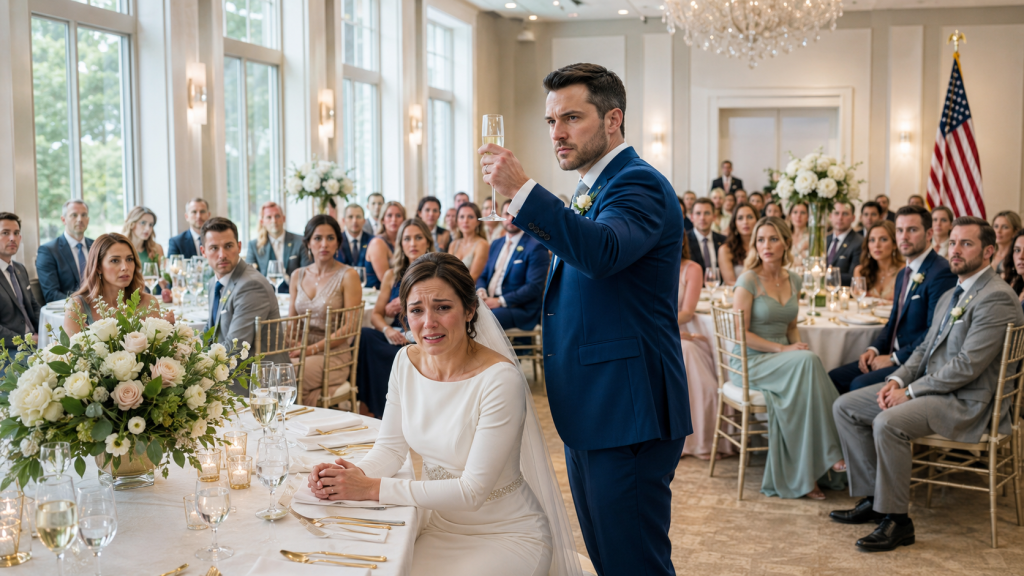
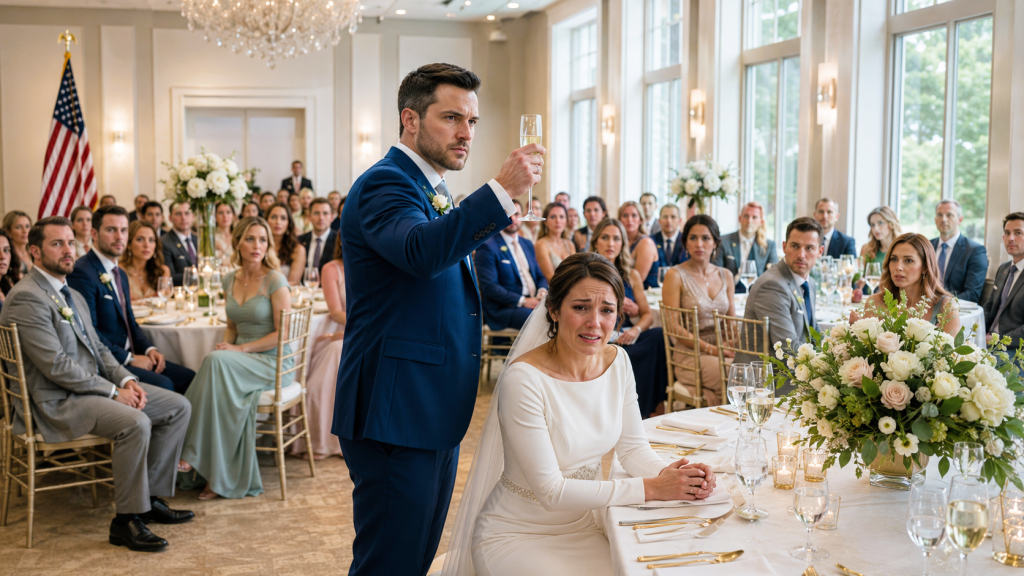
Ethan looked at me carefully. “Claire,” he said, his voice softer now, “I think tonight you deserve the truth.” The entire reception hall had gone so quiet that I could hear the soft clinking of glassware from the catering station behind us.
My fingers tightened around the edge of the table. “What money?” Ethan looked down at the envelope in his hand. For the first time all evening, the calm expression on his face cracked slightly. Not with fear. With anger.
Three weeks before our wedding, my father had called Ethan privately. At first, Ethan assumed Robert was trying to repair things.
He thought maybe my father was finally realizing how cruel it was to skip his eldest daughter’s wedding because his younger daughter wanted to spend the week in Bali.
Instead, my father offered him money.
Twenty-five thousand dollars.
All Ethan had to do was convince me to postpone the wedding.
My father apparently described it as a “reasonable compromise.”
He told Ethan that I had always been difficult when I felt overlooked.
He said I had a tendency to become emotional whenever Madison received attention.
He even suggested that I would eventually calm down if Ethan simply “handled me properly.”
My face burned as Ethan repeated those words.
Across the room, several of my relatives exchanged horrified looks.
My Aunt Diane slowly put down her wineglass.
My cousin Tyler muttered something under his breath.
But Ethan was not finished.
“When I refused,” he continued, “Robert got frustrated.”
He looked directly at me.
“And that’s when he told me something else.”
I felt my stomach tighten.
Ethan unfolded the paper.
“He said I should be grateful Claire wasn’t asking questions about the Bennett Family Education Trust.”
The words meant nothing to me.
I frowned.
“The what?”
That reaction seemed to tell Ethan everything.
“You really don’t know.”
“No.”
A murmur spread through the room.
Aunt Diane suddenly looked pale.
That frightened me more than Ethan’s announcement.
I turned toward her.
“You know what he’s talking about?”
Diane looked trapped.
My mother’s younger sister had always been the quiet relative.
She was the one who showed up when I graduated college.
The one who mailed birthday cards even when my parents forgot.
The one who never openly criticized my parents but occasionally gave me looks that suggested she knew far more than she said.
That night, she finally stopped protecting them.
“My parents created that trust,” she said.
Her voice was barely above a whisper.
My grandparents.
My mother’s parents.
“They created one for each granddaughter.”
Madison and me.
My throat went dry.
“For what?”
“Education, first-home assistance, emergencies, and eventually whatever remained was supposed to be transferred directly to you.”
I stared at her.
“How much?”
Diane hesitated.
That hesitation was worse than any answer.
“How much?”
“Originally?”
She looked toward Ethan.
Then back at me.
“About four hundred thousand dollars each.”
A strange laugh escaped my mouth.
Not because anything was funny.
Because the number did not make sense.
Four hundred thousand dollars.
I had graduated college with nearly seventy thousand dollars in student loans.
I had worked nights at a hotel front desk during my final year.
I had skipped trips.
I had lived with three roommates.
I had spent years paying off debt while my parents told me that becoming financially independent would “build character.”
“What do you mean, each?”
Diane swallowed.
“Your grandparents believed strongly in helping both of you equally.”
I could barely process what she was saying.
“My parents told me Grandma and Grandpa left everything to Mom.”
“They left most of the estate to your mother,” Diane said. “But not everything.”
The room seemed to tilt.
I remembered my grandmother’s funeral.
I had been twenty-two.
Madison had been nineteen.
My mother had told us there was no significant inheritance.
Only a few personal items.
I received my grandmother’s pearl earrings.
Madison received a gold bracelet.
That was what I thought remained of their legacy.
Jewelry.
Photographs.
A few pieces of furniture.
Not hundreds of thousands of dollars.
Ethan continued.
“When Robert mentioned the trust, I started asking questions.”
My heart pounded.
“What questions?”
“He wouldn’t answer.”
Of course he wouldn’t.
“But he said something strange. He told me that if you had known how much money your grandparents had left you, you might have become ‘entitled.’”
I felt something inside me go completely still.
That word.
Entitled.
My father had used that word my entire life.
When I asked why Madison got a new car at sixteen while I shared my mother’s ten-year-old sedan, I was entitled.
When I asked why they paid Madison’s apartment deposit after refusing to help me with mine, I was entitled.
When I wondered why they flew across the country for Madison’s sorority ceremony but missed my graduate-school commencement, I was entitled.
Whenever I noticed inequality, they turned my observation into a personality defect.
And apparently they had done it while controlling money that belonged to me.
“Where is it?” I asked.
Nobody answered immediately.
Then Diane said, “I don’t know.”
But her face told me something different.
“You know something.”
She looked down.
“I know your grandfather made your mother trustee until you turned twenty-five.”
I was thirty-one.
Six years past that deadline.
My pulse hammered in my ears.
“What was supposed to happen at twenty-five?”
“The account should have transferred to you.”
It had not.
I looked at Ethan.
“How did you find this?”
He reached into his jacket again.
This time he removed several printed pages.
“When your father mentioned the trust, I called an attorney.”
My eyes widened.
“You did what?”
“I didn’t want to accuse your family without proof.”
That was Ethan.
Even furious, he wanted evidence.
He had always been careful like that.
He worked in corporate compliance, and facts were his language.
Emotion mattered.
But documentation mattered more.
“We found public probate records connected to your grandparents’ estate,” he continued. “Enough to confirm the trust existed.”
People around us shifted closer.
The wedding reception had stopped being a reception.
It had become something else entirely.
A reckoning.
“And then?” I asked.
“And then your father called me again.”
Ethan’s expression hardened.
“He realized I was investigating.”
My stomach dropped.
“What did he say?”
“He told me to leave it alone.”
“Exactly?”
Ethan stared down at the paper.
“He said, ‘Claire doesn’t need to know everything her mother and I have done for this family.’”
A cold wave moved through me.
Not done for me.
Done for this family.
Those were very different things.
Aunt Diane suddenly stood.
“I need to say something.”
Every head turned.
Her hands were shaking.
“I should have told you years ago.”
I stared at her.
“Told me what?”
She took a breath.
“Your grandparents were worried about your mother.”
My mother.
Linda Bennett.
The woman who taught Sunday school when I was a child.
The woman who lectured me about responsibility.
The woman who told me financial struggles made me stronger.
Diane continued.
“Your grandfather noticed money disappearing from accounts near the end of his life.”
The room became even quieter.
“He confronted Linda.”
My mother.
About missing money.
I could barely breathe.
“What money?”
“Family money.”
“How much?”
“I don’t know exactly.”
Diane looked ashamed.
“But enough that your grandfather changed part of his estate plan.”
That explained the trusts.
He had not trusted his own daughter with unrestricted access.
So he created separate accounts for his granddaughters.
Except somehow my parents had still controlled mine.
“What about Madison’s trust?” I asked.
Diane looked away.
There it was.
The answer I was starting to fear.
“What about Madison’s trust?”
“I believe she received hers.”
My chair scraped loudly as I stood.
“She what?”
Several people gasped.
Diane nodded.
“When she turned twenty-five.”
That had been three years earlier.
I suddenly remembered that year.
Madison had quit her marketing job.
She told everyone she wanted to “find herself.”
She rented a luxury apartment in Los Angeles.
She traveled through Greece.
Then Mexico.
Then Thailand.
She bought a white Range Rover.
My parents told me Madison had become successful through social media partnerships.
I believed them.
I even congratulated her.
Meanwhile, I had been working sixty-hour weeks while saving for a townhouse.
I had eaten instant noodles for dinner because I was determined to pay off the last twelve thousand dollars of my student loans.
Madison had been living on her inheritance.
Her inheritance.
The same inheritance I apparently never received.
“Did she know?”
Diane stayed silent.
That silence answered me.
“Did Madison know I had one too?”
“I think so.”
Something inside me broke.
Not loudly.
Not dramatically.
It simply cracked.
For years, I had defended my sister.
Whenever friends noticed how differently my parents treated us, I made excuses.
Madison was younger.
Madison needed more support.
Madison struggled with anxiety.
Madison was sensitive.
Madison had not found her direction yet.
I had spent my entire life shrinking my own hurt to make room for hers.
And she had known.
I looked at Ethan.
“Do you have proof?”
“Yes.”
He handed me a page.
It showed distributions from my grandparents’ estate.
Two granddaughter trusts.
Same initial funding.
Same creation date.
My name.
Madison’s name.
I stared at my own name until the letters blurred.
Then I noticed something else.
There had been transfers.
Multiple withdrawals.
From my account.
Not mine.
Authorized by my mother as trustee.
“What are these?”
Ethan’s jaw tightened.
“That’s what the attorney is helping us determine.”
I scanned the dates.
One caught my attention.
Eight years earlier.
A withdrawal for ninety-five thousand dollars.
That was the same year my parents renovated their kitchen.
Another withdrawal.
Forty thousand dollars.
The year Madison studied abroad in Paris.
Another.
Sixty-two thousand.
The year my parents helped Madison buy her first condo.
My knees nearly gave out.
“They used my money.”
Nobody answered.
I looked at Diane.
“They used my money.”
“I’m so sorry.”
“They told me they couldn’t help with college.”
Diane covered her mouth.
“They told me I needed to learn responsibility.”
My voice cracked.
“They let me take out loans while they were spending money my grandparents left for me.”
Ethan came beside me.
I did not realize I was shaking until he touched my arm.
The room was filled with relatives.
Friends.
Coworkers.
People who had watched me walk down the aisle alone.
People who had wondered why my parents were missing.
Now they knew.
And somehow the humiliation I had feared all day disappeared.
Because the shame was no longer mine.
It belonged exactly where it should have been.
Across the Pacific Ocean, my parents were apparently in Bali with Madison.
Celebrating.
Posting photographs.
Enjoying cocktails beneath palm trees.
While my husband revealed what they had spent years hiding.
Then my phone started vibrating.
Once.
Twice.
Again.
And again.
Someone at the reception had clearly texted them.
Maybe more than one person.
I looked at the screen.
Mom.
I almost laughed.
After three months of silence, suddenly she had time to call.
I let it ring.
Then my father called.
Then Madison.
I turned the phone facedown.
Ethan leaned toward me.
“You don’t have to deal with them tonight.”
“No.”
I looked around the reception.
At the flowers.
The candles.
My friends.
The people who had actually shown up.
“I’m getting married tonight.”
A cheer rose somewhere from the back.
Then laughter.
Warm laughter.
Supportive laughter.
The tension finally cracked.
I looked at Ethan.
“You dropped a financial scandal into our wedding speech.”
He gave me the smallest smile.
“I panicked.”
“You panicked?”
“I had a longer speech prepared.”
That made me laugh for real.
The room applauded.
And for the next hour, we tried to reclaim our wedding.
We danced.
We cut another slice of cake because someone had forgotten to photograph the first.
My best friend, Natalie, dragged me onto the dance floor.
Aunt Diane cried when she hugged me.
My college roommate told me that walking down the aisle alone had been one of the bravest things she had ever seen.
For the first time all day, I believed her.
Then, at 10:47 p.m., my father sent a text.
We need to speak immediately.
I ignored it.
Another arrived.
Ethan has misunderstood a private family matter.
Then my mother.
Please do not let him embarrass this family.
That one almost made me drop my phone.
Embarrass the family.
Not hurt you.
Not we are sorry.
Not we can explain.
Their concern was humiliation.
Image.
Control.
I handed the phone to Ethan.
He read the messages.
“Want me to block them?”
“Not yet.”
Because suddenly I wanted evidence.
Every text.
Every voicemail.
Every threat.
Every explanation.
I wanted all of it.
The next morning, I woke beside my husband in the vineyard suite.
For a few seconds, everything felt peaceful.
Sunlight spilled through the curtains.
My wedding dress hung near the window.
Ethan was still asleep.
Then I remembered.
The trust.
My parents.
Madison.
My phone contained thirty-seven missed calls.
Fourteen from my mother.
Twelve from my father.
Nine from Madison.
Two from an unknown number.
There were also messages.
My father had changed tactics several times during the night.
First anger.
Then authority.
Then guilt.
Then panic.
Claire, call me.
This is not appropriate to discuss with outsiders.
Your grandparents trusted us to make responsible decisions.
You do not understand how expensive raising children is.
We used funds for family purposes.
You benefited from many of those decisions.
That last line made my blood boil.
I benefited?
From Madison’s condo?
From their kitchen remodel?
From their vacations?
I kept scrolling.
Then came the threat.
If lawyers get involved, you could destroy your mother financially.
I stared at it.
Ethan was awake now.
He read over my shoulder.
“That’s not a denial.”
“No.”
“It’s practically an admission.”
“Yes.”
I called the attorney before breakfast.
Her name was Melissa Grant.
She had already been expecting me.
Ethan had spoken with her days earlier but had refused to authorize any action without my consent.
Melissa explained everything calmly.
Trustees had fiduciary duties.
If my mother had withdrawn money for purposes that violated the trust terms, she could be required to repay it.
Potentially with interest.
Records could be demanded.
Bank statements.
Tax filings.
Property records.
Transfer histories.
My father’s involvement could matter too.
“How much is left?” I asked.
Melissa paused.
“We don’t know yet.”
That scared me.
“But based on what Ethan found?”
“Probably not what should be.”
I closed my eyes.
“How bad?”
“There were several large transfers.”
“How many?”
“At least eleven.”
My chest tightened.
“And there may be more.”
I looked out at the vineyard.
People were cleaning up chairs from my wedding.
Yesterday, those empty seats had felt like the worst thing my parents could do to me.
Now they felt almost insignificant.
“Start whatever you need to start.”
Melissa’s voice became firm.
“You understand this could become adversarial very quickly.”
“It already is.”
Within forty-eight hours, letters were sent.
Formal demands.
Preservation notices.
Requests for accounting records.
That was when the family war exploded.
My mother called Aunt Diane screaming.
My father accused Ethan of turning me against them.
Madison posted a vague quote online about “jealous people ruining family bonds over money.”
Then she deleted it when half our cousins responded asking whether she meant the inheritance.
Three days later, she called me directly.
I answered.
Not because I wanted reconciliation.
Because I wanted to hear what she would say.
“Claire.”
Her voice sounded exhausted.
“What?”
“Can we please talk like sisters?”
“We haven’t talked like sisters in years.”
“That’s unfair.”
I almost laughed.
“You knew.”
Silence.
“You knew I had a trust.”
Another pause.
“Mom told me there was one.”
“When?”
“When I got mine.”
Three years earlier.
She had known for three years.
“And you never said anything.”
“Mom said yours was different.”
“How?”
“She said Grandpa put conditions on it.”
“That’s a lie.”
“I know that now.”
I said nothing.
Madison started crying.
Real tears, maybe.
Or frightened ones.
“I didn’t know they were taking from yours.”
“You knew I had nothing.”
“That’s not the same thing.”
“You watched me pay student loans.”
“I thought you were choosing to.”
“I thought I had to.”
She went quiet.
I could hear wind on her end of the call.
Maybe she was still in Bali.
Maybe she was standing on some beautiful terrace while explaining why she had kept quiet about hundreds of thousands of dollars.
“Why did you tell Mom and Dad to skip my wedding?”
“I didn’t.”
That surprised me.
“What?”
“I told them I could miss the retreat.”
I stopped.
“What did you say?”
“I said I could leave Bali early.”
My heart beat harder.
“But Mom said you would be devastated.”
“I was annoyed.”
Madison sniffed.
“I thought you should move the wedding because the venue could probably change it.”
“They couldn’t.”
“I know that now.”
“But you told them you could come?”
“Yes.”
“When?”
“Two months ago.”
The whole story shifted.
My parents had told me Madison refused to cancel.
They said she was heartbroken.
They said she had planned the retreat for months.
They said changing the wedding would keep the family together.
But apparently even Madison had offered to compromise.
“Why didn’t you tell me?”
“Because Mom told me she was handling it.”
There it was again.
Our mother.
Handling things.
Managing perceptions.
Controlling information.
“Madison, put Mom on the phone.”
“She’s not here.”
“Where is she?”
“At the hotel.”
“And Dad?”
“With her.”
“Where are you?”
“At the airport.”
I froze.
“You’re leaving?”
“Yes.”
“Why?”
Her voice broke.
“Because Dad told me this morning that if I don’t publicly support them, they’ll demand back the money they gave me for my condo.”
I felt cold.
“The money they gave you?”
She did not respond.
“Madison.”
“I didn’t know where it came from.”
“Did they use my trust money for your condo?”
“I don’t know.”
“You said they gave you sixty thousand.”
“How do you know that?”
Because I had seen the transfer.
I told her the date.
The amount.
The trust account.
Madison started sobbing.
“Oh my God.”
The sound was different now.
Not defensive.
Terrified.
“They told me it was Dad’s bonus.”
I sat on the edge of the bed.
For the first time, I wondered whether Madison had been favored but also manipulated.
Those things could both be true.
She had benefited.
She had stayed silent.
But maybe she had not understood the full extent of what our parents had done.
“Come home,” I said.
There was a long silence.
“Will you hate me?”
“I don’t know.”
It was the most truthful answer I could give.
“But come home anyway.”
She did.
Two days later, Madison met me and Melissa in a conference room in San Francisco.
She brought everything.
Bank statements.
Old emails.
Messages from our mother.
Screenshots.
Property documents.
A spreadsheet my father had once sent her by accident and then demanded she delete.
She had not deleted it.
That spreadsheet changed everything.
It listed family assets.
Accounts.
Transfers.
And something called Claire Reserve.
My trust.
There were notes beside several withdrawals.
Kitchen.
Madi Paris.
Madi condo.
Robert business bridge.
Family tax.
Emergency.
We stared at the document.
My parents had kept records of spending my inheritance.
They had simply assumed I would never see them.
Melissa leaned back.
“This is substantial.”
“How substantial?”
“Potentially very.”
The largest transfer was not the kitchen.
Not Madison’s condo.
Not travel.
It was one hundred and eighty thousand dollars transferred into my father’s company eight years earlier.
A company he later sold at a profit.
That meant my money might have helped save or grow his business.
He never told me.
Instead, he lectured me about working harder.
Our attorney began tracing transactions.
The more she found, the worse it became.
My grandparents had left me approximately four hundred twelve thousand dollars.
With investment growth, conservative estimates suggested it could have been worth more than six hundred thousand by the time I turned twenty-five.
Instead, when investigators located the remaining trust balance, there was just over thirty-eight thousand dollars.
My parents had spent almost everything.
When Melissa told me, I did not cry.
I sat perfectly still.
Ethan squeezed my hand.
Madison sat across from me, pale.
“Claire,” she whispered.
I looked at her.
“You got yours.”
She nodded.
“How much?”
“About five hundred eighty thousand.”
Of course she did.
My trust had been drained.
Hers had been protected.
That was the clearest summary of my childhood anyone could have written.
I asked Madison to leave the room.
She did.
Then I finally cried.
Not because of the money.
Money mattered.
Of course it mattered.
But it was not the deepest wound.
The deepest wound was realizing how many moments of my life had been manufactured.
Every hardship my parents claimed would “build me.”
Every refusal.
Every lecture.
Every accusation that I was jealous.
Every time they told me Madison needed help and I should be mature enough not to complain.
They had not simply favored her.
They had financed that favoritism using something my grandparents had intentionally left to me.
When the legal complaint was filed, my parents returned from Bali immediately.
My father called me from the airport.
I answered.
“Withdraw it.”
No greeting.
No apology.
Just an order.
“No.”
“You have no idea what you’re doing.”
“I know exactly what I’m doing.”
“Your mother could face serious consequences.”
“Then she should hire a lawyer.”
His voice rose.
“You would do this to your own mother?”
I almost admired the audacity.
“You used my inheritance.”
“We used family assets to support the family.”
“It wasn’t family money.”
“It was administered by your mother.”
“For me.”
“That is your interpretation.”
“No. That was Grandpa’s legal instruction.”
He was silent.
Then he tried another tactic.
“You always were ungrateful.”
I smiled.
For the first time, the word did not hurt.
“You should probably stop talking to me without your attorney.”
Then I hung up.
Three months later, mediation began.
My parents walked into the conference center with two lawyers.
My mother looked thinner.
My father looked furious.
Neither hugged me.
Neither apologized.
Madison came separately.
She had agreed to testify if necessary.
That decision destroyed whatever remained of her relationship with our parents.
My mother refused to speak to her.
My father removed her from several accounts.
Madison moved out of the condo and put it on the market.
She said she could not stand living in something that might have been partially purchased with my stolen money.
I did not tell her she had to sell it.
She chose to.
That mattered.
During mediation, my parents argued that many withdrawals had indirectly benefited me.
Family vacations.
Home renovations in a house where I once lived.
Business income that helped pay household expenses.
Our attorney dismantled those arguments one by one.
I had already moved out before most of the renovations.
I had not attended several of the vacations.
The business transfer had been used to cover commercial debt.
And the trust documents were explicit.
The funds were for my benefit.
Not theirs.
My father finally lost his temper.
“This entire thing is happening because she refused to move a wedding date.”
The mediator stared at him.
“No, Mr. Bennett.”
She spoke slowly.
“This is happening because hundreds of thousands of dollars appear to have been removed from a trust belonging to your daughter.”
For once, my father had nothing to say.
The settlement took months.
My parents agreed to repay a substantial portion of the missing funds.
My father had to liquidate investments.
My mother surrendered a share of a rental property she had inherited separately.
The remaining trust balance transferred immediately to me.
There were additional legal fees.
Tax consequences.
And because some transactions raised questions beyond civil liability, their attorneys strongly encouraged them to resolve the matter before further escalation.
I did not become a millionaire.
There was no magical check that erased everything.
But I recovered enough to change my life.
More importantly, I recovered the truth.
And truth changed things money never could.
Six months after my wedding, Madison came to my house carrying a cardboard box.
Ethan opened the door.
She looked nervous.
“I found these.”
Inside were letters from our grandmother.
Several were addressed to me.
Unopened.
They had been stored in my parents’ attic.
One had been written months before Grandma died.
My hands shook as I opened it.
The letter was short.
She told me she was proud of me.
She said I had always worked too hard to prove I deserved things that should have been given freely.
She told me not to mistake independence for being unloved.
Then she mentioned the trust.
She said she hoped it would help me travel, buy a home, or create whatever life made me happy.
My mother had never given me the letter.
I cried harder reading those two pages than I had during the entire lawsuit.
Ethan sat beside me.
Madison sat across from us.
“I’m sorry,” she said.
This time I believed she understood what she was apologizing for.
Not simply the wedding.
Not simply Bali.
Years.
Silence.
Convenience.
Being protected while I was expected to endure.
“I should have asked questions,” she said.
“Yes.”
“I should have told you about the trust.”
“Yes.”
“I liked being the favorite.”
That surprised me.
She wiped her eyes.
“And I think I pretended not to notice what it cost you.”
That was the first truly honest thing she had ever said about our childhood.
I did not forgive her immediately.
Life is not a movie.
One apology does not erase thirty years.
But we started talking.
Carefully.
Slowly.
Sometimes painfully.
She went to therapy.
So did I.
We learned something strange.
Favoritism had hurt both of us.
I had been taught I was too demanding whenever I wanted fairness.
Madison had been taught that love meant being rescued constantly.
I became hyper-independent.
She became dependent.
Neither of us had been allowed to become fully ourselves.
Our parents had assigned us roles.
Responsible daughter.
Fragile daughter.
And then rewarded us whenever we performed them.
Breaking those roles was harder than winning any lawsuit.
A year after the wedding, Ethan and I bought a small home outside Sonoma.
Not extravagant.
Not huge.
But ours.
We used part of the recovered inheritance for the down payment.
On moving day, I stood in the empty kitchen and thought about my grandparents.
This, I decided, was closer to what they had intended.
Not marble countertops in my parents’ house.
Not rescuing my father’s company.
Not funding resentment between two sisters.
A home.
A beginning.
Something stable.
A month later, I received a letter from my mother.
Not a text.
Not an email.
A handwritten letter.
It was six pages long.
Most of it was explanation.
She wrote about financial pressure.
About my father’s struggling business.
About believing I was stronger than Madison.
About telling herself she would eventually replace the money.
About how one withdrawal became another.
Then another.
She wrote that she had convinced herself I did not need help because I always found a way.
That sentence stayed with me.
You always found a way.
Parents sometimes praise the child who survives neglect as though survival proves the neglect was justified.
I found a way because I had no choice.
That did not mean I should have been forced to.
Near the end, my mother wrote something closer to an apology.
She said she had confused my strength with permission to give me less.
That was probably the most truthful sentence she had ever written.
I did not respond.
Not then.
Maybe one day I would.
Maybe I would not.
Forgiveness and reconciliation are not the same thing.
I learned that too.
My father never apologized.
He sent two emails through lawyers.
Then one birthday card without a message.
Eventually he stopped contacting me altogether.
I heard from relatives that he still believed Ethan had manipulated me.
Apparently accepting that narrative was easier than admitting his daughter had finally stopped obeying him.
I was fine with that.
Ethan and I celebrated our first anniversary at the same vineyard where we married.
Not with two hundred people.
Just us.
The venue manager remembered us.
She laughed when she saw me.
“Your wedding was memorable.”
“That’s one word for it.”
We walked to the ceremony site.
The chairs were gone.
The arch was gone.
The vines stretched beneath golden afternoon sunlight.
I stopped near the spot where those two empty front-row seats had been.
For months after the wedding, I had thought about them.
Two empty chairs.
At the time, they symbolized rejection.
I had looked at them while walking down the aisle and thought, My own parents chose not to come.
But a year later, I saw them differently.
Those seats were not proof that I was unloved.
They were proof that my parents had been given a place in my life and chose not to occupy it.
That was their decision.
Not my value.
Ethan slipped his hand into mine.
“Thinking about them?”
“Yes.”
“Still hurts?”
“A little.”
He nodded.
“I think some things always will.”
I leaned against him.
Then I laughed.
“What?”
“I still can’t believe you exposed an inheritance scandal during your wedding toast.”
He grinned.
“You told me never to keep important secrets.”
“I meant surprise birthday parties.”
“You should have been more specific.”
I laughed so loudly that two people touring the venue looked over.
And that was when I realized something.
The memory of my wedding no longer belonged to my parents.
For months, I had thought their absence would define that day forever.
It did not.
What I remembered now was Ethan waiting at the end of the aisle.
Natalie fixing my veil.
Aunt Diane squeezing my hand.
My college friends cheering.
Two hundred people standing when Ethan told the truth.
Not because they enjoyed scandal.
Because they understood what I had not yet understood.
I had spent my whole life asking two people to choose me while overlooking everyone who already had.
A year and a half after the wedding, Madison got engaged.
She called me before posting anything online.
“I want to ask you something.”
“What?”
“Will you be my maid of honor?”
I was silent.
She rushed to fill it.
“You can say no.”
“I know.”
“And I understand if it’s too much.”
I looked at Ethan across the kitchen.
He raised his eyebrows.
“What date?”
She laughed nervously.
“October seventeenth.”
“Any Bali trips planned?”
She burst out laughing.
So did I.
It was the first time either of us had joked about it.
Then I said yes.
Our parents were not invited to her wedding.
That was Madison’s decision.
My mother sent several messages asking me to convince her.
I did not.
My father accused me of turning Madison against them.
I did not respond.
For once, I refused to become the bridge everyone expected me to be.
People create the distance they later complain about.
That was not my responsibility to repair.
At Madison’s wedding, I stood beside her while she adjusted her veil.
She looked terrified.
“You okay?”
“What if everything goes wrong?”
“Something will.”
Her eyes widened.
I smiled.
“The flowers will be late. Someone will drink too much. A relative will say something weird.”
“That’s comforting.”
“But if you’re marrying the right person, none of that will matter.”
She looked at me.
Then she started crying.
“Don’t.”
“I’m sorry.”
“You’ll ruin your makeup.”
She hugged me anyway.
Before walking down the aisle, she whispered, “I’m sorry you had to do this alone.”
I knew exactly what she meant.
Not the marriage.
The aisle.
I squeezed her hand.
“So am I.”
Then I smiled.
“But I wasn’t as alone as I thought.”
She nodded.
And walked toward the people who had shown up for her.
That sentence stayed with me.
People who show up.
That became my new definition of family.
Not blood.
Not obligation.
Not shared last names.
Showing up.
When life is inconvenient.
When celebration conflicts with vacation plans.
When supporting someone requires sacrifice.
When telling the truth costs you something.
Ethan showed up.
My friends showed up.
Aunt Diane eventually showed up.
Madison, imperfectly and much later than she should have, finally showed up too.
My parents did not.
And for years, I would have interpreted that as evidence of something missing in me.
Now I understood differently.
Sometimes people fail to love you properly because loving you properly would require them to change.
Some people would rather lose you than surrender the version of you they can control.
My father needed me to be the daughter who tolerated being overlooked.
My mother needed me to be strong enough to require nothing.
Madison needed me to be the sister who never questioned why she received more.
The moment I stopped playing that role, they called me selfish.
Difficult.
Proud.
Disrespectful.
But boundaries often look like cruelty to people who benefited from your lack of them.
That was the lesson my father accidentally taught me.
He told me refusing to move my wedding would teach me respect and humility.
He was right about one thing.
I learned something.
I learned that respect does not mean obedience.
Humility does not mean accepting mistreatment.
Family does not mean sacrificing yourself so everyone else remains comfortable.
And love does not require you to keep swallowing pain quietly.
Years later, I still have the photograph from our wedding ceremony.
It hangs in our hallway.
Ethan and I are standing beneath the vineyard arch.
He is smiling.
I am smiling.
The sunlight catches the edge of my veil.
If you look closely, you can see two empty chairs in the front row.
I used to think about editing them out.
I never did.
I keep them there intentionally now.
Because those chairs tell part of the story.
They remind me of the woman I was when I walked down that aisle.
Heartbroken.
Embarrassed.
Still hoping my parents might appear at the last second.
And they remind me of the woman who walked away from that wedding.
Married.
Loved.
No longer willing to beg anyone to recognize her worth.
My parents skipped my wedding because I refused to rearrange my life around my sister’s vacation.
They believed absence would punish me.
They believed humiliation would force me back into my place.
Instead, their empty seats created the space where the truth finally arrived.
And when Ethan stood in front of two hundred people and exposed the secret they thought would stay buried forever, he did more than defend his wife.
He gave me permission to stop protecting people who had never protected me.
The wedding I once feared would always be remembered for who was missing became the day I finally noticed who was there.
And that changed everything.
💬THE END! THANK YOU FOR READING!