
 Reading Time: 15 minutes
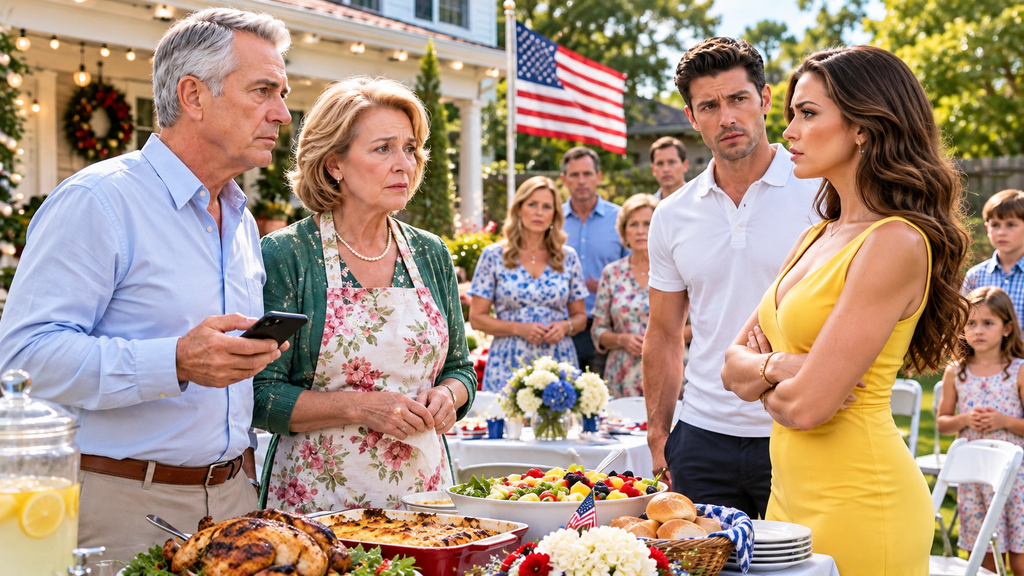
My wife stayed awake for two nights, preparing 38 dishes for 75 relatives at our granddaughter’s birthday celebration. Her hands were sore, but she still arranged every plate with care. My daughter-in-law looked at the food and said, “This is too simple. Let’s take everyone to a restaurant instead.” I didn’t argue. I quietly took one photo and made a single decision. By the next morning, they were calling nonstop and asking me to undo it.
My name is Henry, though everyone in the family calls me Hank. I am seventy-one years old, retired from the Chicago transit system, and married to Gloria, the woman who has been beside me for forty-six years.
Gloria is sixty-nine.
For most of those forty-six years, she has been the person everyone called when they needed something.
Need a birthday cake?
Call Gloria.
Need food for Thanksgiving?
Call Gloria.
Someone sick?
Gloria showed up with soup.
Someone moving?
Gloria brought sandwiches.
Someone getting married?
Gloria spent three days cooking.
She never complained.
That was probably our biggest mistake.
People started believing her kindness was an unlimited resource.
The list arrived at our kitchen table less than twenty-four hours before the party.
My daughter-in-law, Tiffany, unfolded one sheet of paper and slid it toward Gloria as casually as if she were handing her a grocery receipt.
“Mom, I just need you to handle the food.”
Gloria adjusted her reading glasses and studied the page.
Thirty-eight dishes.
Roast chicken with no garlic.
Beef stew with extra onions.
Gluten-free cornbread.
Dairy-free macaroni and cheese.
Vegan stuffed peppers.
Homemade croissants.
Three flavors of macarons.
Red velvet cake.
Peach cobbler.
Fresh lemonade.
Nearly every item had a separate instruction written beside it.
Gloria looked up.
“How many guests?”
“Seventy-five,” Tiffany said.
“It’s Kayla’s eighteenth birthday. You run a restaurant. This shouldn’t be that difficult.”
My son, Kevin, stood behind his wife with his phone in his hand.
He glanced at the list.
Then immediately returned his attention to the screen.
I waited for him to speak.
He didn’t.
Gloria folded the paper carefully.
“Okay.”
That one word had carried our family through forty years.
Okay when bills arrived early.
Okay when Kevin needed new school shoes.
Okay when he wanted to attend college and we didn’t know how we would pay for it.
Okay when Tiffany was pregnant and Gloria spent nights cooking meals for them.
Okay when Kayla was born and Gloria practically lived at their house for three months.
But this time, I heard something different beneath it.
Resignation.
I looked at Tiffany.
“We’re talking about feeding seventy-five people.”
“I know.”
“And you want all of this by tomorrow afternoon?”
“You’re making it sound complicated.”
Gloria touched my wrist.
“Hank.”
I stopped.
Tiffany smiled.
“I knew we could count on you.”
She and Kevin left ten minutes later.
The moment the door closed, I picked up the list again.
“We don’t have to do this.”
Gloria was already opening the refrigerator and counting eggs.
“It’s Kayla’s birthday.”
“That doesn’t make this reasonable.”
“No,” she said softly. “But Kayla didn’t make the list.”
That was Gloria.
Even when someone treated her badly, she found a reason to protect them.
An hour later, we were driving north through wet city streets, searching three different grocery stores for specialty flour, puff pastry, fresh basil, and ingredients Tiffany had decided were essential.
The final receipt was $587.
I knew exactly where that money came from.
Gloria had been saving her restaurant tips in a coffee can beneath the register because the oven at Gloria’s Corner needed repairs.
She folded the receipt and handed it to me without mentioning the oven.
“You’re using the oven money.”
“We’ll make it back.”
“When?”
She smiled.
“When people eat.”
I didn’t answer.
I knew my wife.
Once she decided something was for family, there was no stopping her.
We reached home shortly before midnight.
Gloria tied on her apron.
I started coffee.
For the next several hours, our kitchen became a quiet production line.
She mixed dough, seasoned meat, prepared custard, rotated baking trays, and labeled dishes according to every dietary request.
I peeled potatoes and washed mixing bowls from a chair beside the kitchen island because twenty years of driving buses had left my lower back too stiff for long periods of standing.
At one in the morning, Tiffany sent another message.
She had forgotten two guests who avoided red meat.
And another who was vegan.
Could Gloria add a few more options?
“Nothing fancy,” the message said.
Gloria turned the phone facedown and continued kneading dough.
At 4:07, a sharp breath woke me.
I had fallen asleep in the chair.
Gloria stood beside the oven with one hand pressed against the other.
A red mark crossed two fingers where she had touched the edge of a hot rack.
“Sit down,” I said.
“The croissants—”
“Can wait.”
“They can’t.”
For five minutes, I held a cold towel against her fingers while she watched the stove.
Her eyes were red from exhaustion.
“Why didn’t you wake me?”
“You looked peaceful, Hank.”
That sentence stayed with me.
She had spent the night carrying an impossible request, yet she was still protecting my rest.
By sunrise, nearly every surface in the kitchen held something she had made.
Then Gloria prepared two extra dishes that had never appeared on Tiffany’s list.
Tomato soup for Kevin, because it was the only thing he would eat when he was sick as a child.
Peach cobbler, because he had learned to make his first one in that very kitchen at fourteen.
She placed the soup near the end of the table where our son would sit.
That afternoon, six folding tables stretched across our backyard beneath balloons and simple string lights.
We had borrowed chairs from the church hall and neighbors along our block.
Thirty-eight dishes waited beneath lids and sheets of foil.
Gloria stood beside me with a narrow bandage around her fingers.
“It’s beautiful,” I told her.
She leaned her head against my shoulder for one quiet second.
“Thank you.”
Kevin and Tiffany arrived early.
Tiffany walked around the yard taking photographs before she greeted Gloria.
Her parents arrived next and described the setup as “homey” with carefully polite smiles.
Kayla entered with several friends.
One girl held up her phone and filmed the tables as though our backyard were something amusing to share.
By three-fifteen, all seventy-five guests had arrived.
Children moved between the chairs.
Relatives gathered near the garage.
The smell of roasted chicken, butter, herbs, and warm cobbler filled the October air.
For several minutes, I thought everything might be all right.
Then Tiffany picked up an empty glass and tapped it with a spoon.
The yard became quiet.
“I have a little announcement,” she said.
She explained that she had reserved a private dining room at Rosewood.
The restaurant was more elegant.
Kayla deserved “something special” for her eighteenth birthday.
Then she looked toward Gloria.
“You can keep the food, of course. Don’t let it go to waste.”
No one spoke.
A chair scraped across the concrete.
Then another.
Guests began gathering purses, coats, and children.
Some avoided our eyes.
Others offered quick goodbyes that sounded more uncomfortable than sincere.
Kevin walked past the tomato soup without noticing it.
He did not look at his mother.
Kayla followed her friends through the side gate without turning around.
Within minutes, the backyard was empty.
Six tables.
Seventy-five chairs.
Thirty-eight untouched dishes.
The balloons moved gently against the chain-link fence while steam still rose beneath the foil.
Gloria stood in the kitchen doorway holding a serving spoon.
She didn’t cry.
That somehow hurt more.
I walked over and put my arm around her.
“You okay?”
She nodded.
Then she whispered, “I just wanted Kayla to have a beautiful birthday.”
“I know.”
She looked at the untouched food.
“Do you think I embarrassed them?”
I turned toward her.
“Gloria, they embarrassed themselves.”
She gave me a tired smile.
“I don’t want to fight with my son.”
“We don’t have to.”
“What are we going to do with all this?”
I looked at the tables.
Then I looked at my wife.
“We’re going to feed people who appreciate it.”
I called the church down the street.
Then the women’s shelter.
Then a local firefighters’ station.
Within two hours, every dish had somewhere to go.
Neighbors came with containers.
A nurse from the hospital brought several coworkers.
The firefighters sent someone with two large coolers.
By sunset, the backyard was empty again.
But this time, it didn’t feel abandoned.
It felt peaceful.
Gloria sat beside me on the porch.
“Thank you,” she said.
“For what?”
“For not making me feel foolish.”
I looked at her hands.
The bandage.
The swollen fingers.
The tiny cracks in her skin from washing dishes and kneading dough.
“You aren’t foolish,” I said. “You’ve just been generous to people who got comfortable receiving.”
She leaned back.
“I think I taught them to expect too much.”
I didn’t argue.
Because I knew she was right.
The next morning, my phone started ringing.
It was Kevin.
I let it ring.
Then Tiffany.
Then Kevin again.
Then Tiffany.
Then Kayla.
Then Kevin.
By 8:15, there were eleven missed calls.
At 8:22, Kevin sent a text.
Dad, call me immediately.
I ignored it.
At 8:29:
This has gotten out of control.
At 8:31:
Mom needs to fix this.
That was when I finally understood.
They weren’t calling because they regretted humiliating Gloria.
They were calling because something had gone wrong.
I made coffee.
Gloria sat across from me.
“Are you going to answer?”
“No.”
She looked surprised.
“You always answer Kevin.”
“I know.”
My phone rang again.
This time, it was not Kevin.
It was Tiffany’s mother.
I answered.
“Hello?”
Her voice was shaking.
“Hank, what did you do?”
I frowned.
“I haven’t done anything.”
“You canceled the reservation?”
“What reservation?”
“The restaurant.”
I looked at Gloria.
Then I heard Tiffany yelling in the background.
“What do you mean the reservation is canceled?”
Her mother lowered her voice.
“Rosewood called this morning. They said the private room was never paid for.”
I sat back.
“Never paid for?”
“No.”
A strange silence followed.
Then Tiffany’s mother whispered, “The deposit came from a credit card that was declined.”
I remembered Tiffany’s confidence the day before.
Her certainty that everything would be taken care of.
I asked, “How much was the bill?”
“Almost fourteen thousand dollars.”
I slowly put down my coffee.
Gloria stared at me.
Fourteen thousand dollars.
For one dinner.
The same people who had rejected thirty-eight homemade dishes because they were “too simple.”
The same people who had walked away from seventy-five servings of food.
I didn’t feel satisfied.
I felt tired.
Then Tiffany’s mother said something that changed everything.
“Hank, the restaurant says they are holding your son personally responsible.”
“Why?”
“Because the credit card authorization was made in his name.”
I looked at Gloria.
Kevin had been hiding something.
And apparently, the birthday dinner was only the beginning.
Part 2
By nine that morning, Kevin was standing on our porch.
I saw him through the kitchen window.
He looked nothing like the confident man who had walked into our backyard the day before.
His shirt was wrinkled.
His hair was uncombed.
His face was pale.
He knocked once.
Then again.
I didn’t open the door.
Gloria came beside me.
“That’s our son.”
“I know.”
“Let him in.”
I turned to her.
“Are you sure?”
She nodded.
“He’s still my son.”
I opened the door.
Kevin stepped inside.
“Dad.”
“Kevin.”
He looked past me.
“Where’s Mom?”
“She’s here.”
Gloria walked into the hallway.
Kevin’s eyes immediately dropped to her bandaged fingers.
For a moment, guilt crossed his face.
Then it disappeared.
“Mom, you need to help me.”
Gloria’s expression changed.
“Help you with what?”
“The restaurant.”
“What restaurant?”
“Rosewood.”
She looked confused.
“You canceled the party?”
“No. Tiffany did.”
“Then why are you asking me?”
Kevin rubbed his forehead.
“They’re demanding payment.”
“For a reservation you made?”
“They won’t accept my explanation.”
I almost laughed.
“What explanation?”
Kevin looked at me.
“You don’t understand.”
“I understand perfectly.”
“No, Dad. You don’t.”
He lowered his voice.
“Tiffany put the reservation under my business account because she said we’d reimburse it after the party.”
“And?”
“My company account is frozen.”
That got my attention.
“Why?”
He didn’t answer.
Gloria stepped forward.
“Kevin.”
He looked at her.
“What’s happening?”
“I made some mistakes.”
“What kind of mistakes?”
“Financial ones.”
I sat down.
“How much?”
He stared at the floor.
“It’s complicated.”
“How much?”
“About two hundred thousand.”
Gloria’s face went pale.
“Kevin…”
He rushed to explain.
“It wasn’t stolen. I didn’t gamble it away. I invested in something that went bad.”
“What did you invest in?”
He hesitated.
“Tiffany’s event company.”
Gloria slowly sat down.
“Tiffany has an event company?”
“She started one last year.”
I remembered the expensive clothing, the vacations, the constant talk about appearances.
Kevin continued.
“She had a big client lined up. The contract collapsed. We had deposits to return.”
I looked at him.
“So you’ve been using your business account to cover her debts.”
He nodded.
“How much do you owe?”
“More than I can handle.”
“And the restaurant?”
“Fourteen thousand.”
I stared at him.
“You brought seventy-five people to a restaurant you couldn’t pay for?”
“I thought the credit line would clear.”
“But it didn’t.”
“No.”
“And yesterday, you let your mother spend two nights preparing thirty-eight dishes while you knew you might not even have money for the restaurant.”
Kevin looked ashamed.
“I didn’t know the restaurant would fail.”
“That isn’t what I asked.”
He said nothing.
I stood.
“You knew there was a possibility.”
His silence answered me.
Gloria looked at him.
“Why didn’t you tell me?”
Kevin’s eyes filled with tears.
“Because I was embarrassed.”
She shook her head.
“You weren’t embarrassed when you asked me to cook.”
“Mom…”
“You weren’t embarrassed when Tiffany gave me that list.”
“I know.”
“You weren’t embarrassed when you watched me stand there with bandaged fingers.”
He lowered his head.
“No.”
Gloria’s voice remained quiet.
“That is what hurts.”
Kevin looked at her.
“I thought you would understand.”
“I do understand.”
She paused.
“You were afraid.”
Kevin nodded.
“But you made your fear my responsibility.”
He started crying.
I had not seen my son cry since he was sixteen.
For a moment, I wanted to put my arms around him.
Then I remembered Gloria sitting alone beside seventy-five empty chairs.
I stayed where I was.
Kevin wiped his face.
“Can you help me?”
I asked one question.
“Do you want help, or do you want me to make the consequences disappear?”
He looked confused.
“What’s the difference?”
“The difference is whether you learn anything.”
He sat quietly.
I continued.
“I can pay fourteen thousand dollars today.”
Kevin looked up.
“But I won’t.”
His face fell.
“Dad—”
“Not because I don’t have it.”
I walked toward the kitchen.
I opened a drawer and removed a folder.
“For forty years, your mother and I have rescued you.”
I placed it on the table.
“College tuition.”
I opened the first page.
“Your first apartment.”
Another page.
“Your business loan.”
Another.
“Medical bills.”
Another.
“Your wedding.”
Another.
“The down payment on your house.”
Kevin stared at the papers.
“You kept records?”
“Your mother did.”
Gloria looked embarrassed.
“I didn’t mean to.”
“I did.”
I placed the folder in front of him.
“You owe us nothing financially.”
Kevin looked relieved.
Then I said, “But you owe yourself the truth.”
He stared at me.
“You’ve spent your entire adult life believing someone would catch you when you fell.”
I pointed toward the folder.
“We always did.”
Then I looked at Gloria.
“And yesterday, you let your mother fall.”
Kevin covered his face.
Gloria stood.
“I don’t want your money.”
He looked at her.
“I don’t want your apology just because you need something.”
He nodded slowly.
“I understand.”
“Do you?”
“Yes.”
She walked toward him.
“I love you.”
Kevin started crying again.
“But loving you doesn’t mean protecting you from every consequence.”
He nodded.
Then the front door opened.
Tiffany walked inside without knocking.
Her face was furious.
“Kevin, what is taking so long?”
She stopped when she saw us.
Her eyes moved to the folder.
“What is that?”
I said nothing.
She looked at Gloria.
“Did you tell him not to help us?”
Gloria blinked.
“I didn’t tell him anything.”
Tiffany stepped forward.
“This is ridiculous.”
Kevin stood.
“Tiffany.”
“You promised me your father would cover the restaurant.”
“I never promised that.”
“You said he always helps.”
Kevin looked down.
“I shouldn’t have said that.”
Tiffany turned toward me.
“Hank, this isn’t the time for pride.”
“Pride?”
“Yes. You can afford fourteen thousand dollars.”
“That isn’t the point.”
“What is the point?”
“The point is that yesterday you rejected food worth more than what you’re demanding today.”
She crossed her arms.
“That food was embarrassing.”
Gloria flinched.
I stepped forward.
“You should leave.”
Tiffany laughed.
“You’re throwing me out?”
“Yes.”
“This is Kevin’s family home.”
“No.”
I pointed toward the door.
“This is my home.”
She stared at me.
Then she said something I will never forget.
“If you don’t help us, Kayla’s birthday will be ruined.”
I looked at her.
“Her birthday was ruined when you taught her that someone’s love is measured by the price of a restaurant.”
Tiffany’s mouth fell open.
Before she could answer, Kevin spoke.
“Mom.”
Gloria looked at him.
“I’m sorry.”
He hugged her.
She hugged him back.
Tiffany stood behind him, stunned.
Then Kevin turned to his wife.
“We’re not going to Rosewood.”
“What?”
“We can’t afford it.”
“You said you had it handled.”
“I lied.”
Her face hardened.
“You’re unbelievable.”
“No,” Kevin said quietly. “I’ve been weak.”
That stopped her.
He took a breath.
“I’ve spent years trying to keep everyone happy. Mom. Dad. You. Kayla. Everybody.”
He looked at Gloria.
“And I hurt the person who loved me without asking for anything back.”
Tiffany’s eyes narrowed.
“So what now?”
Kevin looked at me.
“I fix it.”
I nodded.
“That is your decision.”
He picked up the folder.
“Can I keep this?”
“Why?”
“To remind myself.”
I let him take it.
Tiffany walked out.
Kevin followed.
At the door, he turned.
“Dad?”
“Yes?”
“Can I come back next Sunday?”
“For dinner?”
He smiled weakly.
“If Mom will have me.”
Gloria answered before I could.
“She will.”
The door closed.
For the first time in two days, our house became quiet.
I looked at my wife.
“You okay?”
She smiled.
“My hands still hurt.”
“I know.”
“I think I need to cancel the restaurant oven repair.”
“No.”
She looked at me.
“I already called the repairman.”
She smiled.
“You did?”
“Yes.”
“And how are we paying?”
I pointed toward the coffee can.
“We’re using the money where it belongs.”
She laughed.
It was the first real laugh I had heard from her all week.
Three weeks later, something unexpected happened.
Kevin came to our restaurant.
Not for money.
Not for food.
He brought a box.
Inside were seventy-five handwritten cards.
One from every person who had eaten the food we had prepared.
The firefighters had written one.
The nurses had written one.
The shelter residents had written several.
A little boy from the neighborhood had drawn a picture of Gloria standing beside a table covered in food.
At the bottom he had written:
THANK YOU FOR FEEDING EVERYBODY.
Gloria cried.
Kevin stood quietly.
“I wanted you to see these.”
She wiped her eyes.
“You didn’t have to.”
“I did.”
Then he pulled out his phone.
“I also have something else.”
He showed us a bank statement.
He had sold his expensive car.
He had closed Tiffany’s event company.
He had negotiated a repayment plan with the people he owed.
He had taken a second job on weekends.
“You sold the car?”
“Yes.”
“What does Tiffany think?”
“We’re separated.”
Gloria looked surprised.
“Kevin…”
“I don’t know if our marriage will survive.”
He paused.
“But I know I have to survive as a man before I can be someone’s husband.”
I looked at him.
For the first time in years, I saw the boy he used to be.
Not the arrogant businessman.
Not the desperate husband.
Just my son.
“I’m proud of you,” I said.
He looked down.
“I thought you’d say that after I paid everything.”
“No.”
I shook my head.
“I’m proud because you finally stopped asking someone else to pay.”
He smiled.
Months passed.
Christmas came.
This time, nobody asked Gloria to cook thirty-eight dishes.
Kevin called two weeks before Christmas.
“Mom, what can I bring?”
Gloria laughed.
“Your appetite.”
“Seriously.”
“Bring yourself.”
He did.
He arrived with a simple pie he had made himself.
It was slightly burned on the edges.
Gloria took one bite.
“Well?”
Kevin asked nervously.
She smiled.
“Needs work.”
He laughed.
“That’s what I thought.”
Then he hugged her.
Kayla came too.
She was eighteen now.
She walked into the kitchen and looked at Gloria.
“Grandma?”
“Yes?”
“I owe you an apology.”
Gloria’s expression softened.
“For what?”
“For walking away from your food.”
Gloria shook her head.
“You were following the adults.”
“I should have stayed.”
“You’re young.”
“I wasn’t that young.”
Gloria reached for her hand.
“It’s okay.”
Kayla shook her head.
“No, Grandma. It isn’t.”
She pulled a small envelope from her purse.
Inside was a photograph.
It showed the backyard from the day of her birthday.
The tables were full.
The food was untouched.
But Kayla had taken the photograph before everyone left.
On the back she had written:
I didn’t understand that day. Now I do.
Gloria pressed the photograph against her chest.
“Why did you keep this?”
“Because I didn’t want to forget what really happened.”
She hugged her grandmother.
I stood in the doorway watching them.
And I realized something.
The party had not been ruined.
Not really.
The restaurant dinner never happened.
The expensive decorations were forgotten.
The guests who walked away disappeared from our lives.
But the food had fed firefighters.
It had fed nurses.
It had fed families who were having a difficult month.
And it had taught our son a lesson that money could never have taught him.
A few months later, Gloria’s Corner expanded.
Not because we suddenly became rich.
Because something unexpected happened.
The local hospital asked Gloria to provide meals for families who spent long nights beside sick relatives.
Then a community center contacted us.
Then a church.
Soon, our little restaurant became known for something beyond food.
People said Gloria’s meals tasted like home.
One Saturday morning, Kevin came in early to help.
He carried boxes while Gloria supervised from the kitchen.
“You’re doing it wrong,” she told him.
He laughed.
“Mom, I haven’t even started.”
“Exactly.”
I watched them from behind the counter.
My wife caught me staring.
“What?”
I shook my head.
“Nothing.”
She smiled.
“You’re thinking.”
“I am.”
“That’s dangerous.”
I laughed.
Then Kevin called from the kitchen.
“Dad! Where do these go?”
I pointed toward the storage room.
“Anywhere Mom can’t find them.”
Gloria shouted, “I heard that!”
The three of us laughed.
And that was the moment I understood why I had taken that photograph on the day of the party.
Not because I wanted revenge.
Not because I wanted to embarrass my son.
I took it because I needed proof.
Proof of what we had given.
Proof of what they had rejected.
Proof that kindness could be taken for granted until someone finally decided to stop giving it away.
The picture stayed in my phone.
I never posted it.
I never sent it to the family.
I never used it to hurt anyone.
I kept it as a reminder.
A reminder that boundaries are not cruelty.
That saying no is not selfish.
That love does not require endless sacrifice.
And that sometimes the most powerful decision you can make is simply to stop rescuing people who refuse to learn how to stand.
Years later, Kayla asked me about that photograph.
“Grandpa, why didn’t you show everyone?”
I smiled.
“Because it wasn’t taken to punish anyone.”
“What was it for?”
I looked across the restaurant.
Gloria was laughing with a customer.
Kevin was carrying a tray.
The kitchen smelled like fresh bread.
I answered quietly.
“To remind me that your grandmother’s kindness deserved respect.”
Kayla nodded.
Then she smiled.
“I think everyone knows that now.”
I looked at my wife.
She caught my eye.
And after forty-six years of marriage, I realized something simple.
Sometimes the people who hurt us don’t need revenge.
They need consequences.
And sometimes the best ending isn’t watching someone lose everything.
It’s watching them finally understand what they almost lost.
That night, after closing the restaurant, Gloria and I sat outside beneath the same string lights we had used for Kayla’s birthday.
She rested her head on my shoulder.
“Do you ever regret it?” she asked.
“Regret what?”
“Not paying that restaurant bill.”
I smiled.
“Not for one second.”
She laughed softly.
“Me neither.”
Then she squeezed my hand.
And for the first time, the silence around us felt completely peaceful.
Because the lesson had never been about thirty-eight dishes.
It had never been about fourteen thousand dollars.
It had never even been about a birthday.
It was about knowing when your kindness is being loved…
and when it is simply being used.
And once you learn the difference, you stop begging people to appreciate what you give.
You simply give it where it matters.
THE END! THANKS FOR READING!