
I married a stranger from a hospital waiting room so he wouldn’t die alone — after our one-week marriage, his lawyer handed me his backpack, saying, “He wanted you to know the truth.”
I was twenty-nine and still trying to find my way through the grief of losing my mother. People like to describe grief as something you move through.
A tunnel.
A storm.
A season.
Something with an ending.
Mine didn’t feel like that.
It felt like waking up every morning in the same house, only someone had quietly removed one of the walls during the night.
Everything was technically still there.
My bed.
My coffee cup.
My job.
My phone.
My bills.
My routines.
But nothing felt protected anymore.
Nothing felt permanent.
My mother, Evelyn, had died eleven months earlier after a sudden stroke.
She was sixty-three.
Healthy enough that none of us had ever discussed death seriously.
Healthy enough that I still had unopened birthday gifts for her in my closet when it happened.
Healthy enough that the Friday before she died, she called me at work just to remind me to take an umbrella because rain was coming.
I remember rolling my eyes.
“Mom, I’m twenty-nine.”
“And twenty-nine-year-olds don’t get wet?”
“I own an umbrella.”
“You also lose umbrellas.”
“That happened once.”
“Three times.”
“Twice.”
“Sarah.”
“Fine. I’ll bring the umbrella.”
That was the last normal conversation we ever had.
The next morning, my aunt Joanne called.
My mother had collapsed in her kitchen.
By the time I reached the hospital, she was unconscious.
Doctors used careful words.
Swelling.
Bleeding.
Damage.
Uncertain recovery.
Possible complications.
Then, after two days, the language changed.
Severe.
Irreversible.
Comfort.
Family decision.
I held her hand when she died.
Her hand was warm.
That detail stayed with me longer than anything else.
Warm.
She was still warm when the monitor went silent.
Afterward, everyone seemed to expect grief to follow an understandable schedule.
The funeral happened.
Relatives flew home.
Flowers wilted.
People stopped bringing casseroles.
My coworkers stopped asking how I was doing every day.
The world became normal again.
Except mine hadn’t.
I couldn’t stand the silence in my apartment.
I couldn’t sit on my couch without imagining her calling.
I couldn’t walk past the grocery store bakery without remembering the ridiculous lemon cake she bought every year even though nobody except her liked it.
So I started volunteering at St. Matthew’s Medical Center.
At first, I signed up because I needed somewhere to be on Saturday mornings.
Anywhere except home.
I helped at the information desk.
Delivered flowers.
Walked elderly visitors to elevators.
Carried blankets.
Collected abandoned wheelchairs.
Then one evening, a nurse named Denise found me sitting alone in the volunteer lounge.
She was in her fifties, blunt, warm, and impossible to lie to.
“You hate the front desk,” she said.
I looked up.
“I do not.”
“You alphabetized the pen cup.”
“It was bothering me.”
“You need people.”
“I work with people.”
“You point them toward radiology.”
“That still counts.”
Denise sat across from me.
“There’s a volunteer companion program.”
I frowned.
“What does that mean?”
“Some patients don’t have family nearby. Some don’t have family at all. Volunteers sit with them.”
“For how long?”
“As long as needed.”
“Doing what?”
“Talking. Reading. Listening. Sometimes nothing.”
I knew what she wasn’t saying.
“Are they dying?”
“Sometimes.”
The answer hit me strangely.
I looked toward the hallway.
“Why would anyone volunteer for that?”
Denise shrugged.
“Why did you?”
I didn’t answer.
Because I knew.
Three days later, I joined.
The first patient I sat with was an eighty-one-year-old woman named Margaret who had spent forty-seven years teaching fourth grade.
She complained about hospital pudding for an hour and then asked me to read Psalms until she fell asleep.
Another was a former bus driver named Raymond who insisted I memorize the names of all six of his grandchildren even though none of them lived nearby.
One man barely spoke.
One woman asked me to paint her nails.
Another asked me to tell her stories about my mother.
That surprised me.
I had expected being around death to make my grief worse.
Instead, it gave the pain somewhere to go.
I could not save these people.
I could not change what was happening.
But I could sit beside them.
I could make sure somebody heard the last joke they ever told.
I could hold a cup of water.
I could straighten a blanket.
I could make a room feel less empty.
That became enough.
Then I met Thomas.
He was seventy-two.
Thin.
Gray-haired.
Sharp-eyed.
And dying from advanced heart failure.
The first time I saw him, he was sitting in a wheelchair near the large window at the end of the cardiac floor.
A green backpack rested between his feet.
Rain streaked the glass behind him.
I was carrying three crossword books and a plastic cup of coffee when he said, “If you’re going to pretend you aren’t lost, stop looking at the room numbers.”
I turned.
He was watching me.
“I’m not lost.”
“Then you’re worried.”
“Excuse me?”
“You’ve checked that coffee lid four times.”
I glanced down.
I had.
“That doesn’t mean I’m worried.”
“It means either that or you’ve been traumatized by hot beverages.”
Despite myself, I laughed.
He smiled.
It was a tired smile.
But genuine.
“You’re Thomas?”
“That depends. Are you from billing?”
“No.”
“Then yes.”
I walked over.
“My name is Sarah. I’m a volunteer companion.”
He looked at the blue vest I was wearing.
“I gathered that.”
“Denise said you might want company.”
“Denise says many things.”
“She also said you’re difficult.”
“That’s defamatory.”
“So you don’t want company?”
He looked toward the rain again.
“I didn’t say that.”
I sat.
We talked for forty minutes.
Mostly about nothing.
The weather.
Hospital food.
Whether crossword puzzles were secretly designed to humiliate people over fifty.
He asked what I did for work.
I told him I worked in accounts payable for a shipping company.
“That sounds thrilling.”
“It isn’t.”
“Good. I worried you might be lying.”
I asked what he had done before retirement.
“Business.”
“What kind?”
“Several kinds.”
“That’s vague.”
“It’s meant to be.”
I raised an eyebrow.
He raised one back.
That became the rhythm between us.
I returned the next afternoon.
Then the next.
By the fourth day, I knew Thomas hated weak coffee, hospital television, lavender soap, and anyone who used the phrase “everything happens for a reason.”
“That one particularly annoys me,” he said.
“Why?”
“Because sometimes things happen because somebody was careless, selfish, frightened, cruel, unlucky, or simply human.”
He shifted against his pillow.
“Reason is often something we invent afterward so we can sleep.”
I looked at him.
“That’s cheerful.”
“I’m dying. I’ve earned the right to be unpleasantly philosophical.”
I smiled.
“You seem unusually calm about dying.”
“I’m not calm.”
“You look calm.”
“That isn’t the same thing.”
He turned toward the window.
“I’m afraid of pain.”
He paused.
“And I’m afraid of being forgotten before I’m even gone.”
That sentence stayed with me.
Thomas had no visitors.
No children.
No wife.
No siblings.
At least none he mentioned.
Whenever hospital staff asked about next of kin, he said, “None living.”
Once, I asked if there was anyone he wanted me to call.
He shook his head.
“Everyone I loved is either dead or better off without me.”
“That sounds dramatic.”
“It probably is.”
“Do you believe it?”
His face changed.
“Yes.”
He refused to explain further.
On my fifth visit, I brought him coffee from a café across the street.
He took one sip and nearly coughed.
“Sarah.”
“What?”
“This could dissolve metal.”
“You said hospital coffee was weak.”
“There are options between weak and industrial solvent.”
“Drink it.”
He drank it.
By the sixth day, his condition worsened.
He could no longer walk without help.
The doctors moved him into a private room.
That afternoon, rain tapped softly against the window.
Thomas had been unusually quiet.
I sat beside him reading a mystery novel aloud.
Halfway through a chapter, he reached for my hand.
“Sarah.”
I stopped reading.
“Yes?”
“Marry me.”
For several seconds, I thought I had misunderstood.
“What?”
“Marry me.”
I stared at him.
“Thomas.”
“Yes?”
“You’re very sick.”
“I’ve noticed.”
“This isn’t funny.”
“I’m not joking.”
My heart started pounding.
“We barely know each other.”
“We know more than many people know before they marry.”
“That is absolutely not true.”
“It was worth trying.”
I pulled my hand back.
“Why would you ask me that?”
His expression became serious.
“I don’t want the hospital making every final decision because there is nobody listed as family.”
“You can sign documents.”
“I have.”
“Then you don’t need a wife.”
“No.”
That answer surprised me.
“At least you admit it.”
Thomas looked down.
“I don’t want to die as a nameless file.”
“You aren’t nameless.”
“That isn’t what I mean.”
He took a slow breath.
“I’ve spent most of my adult life alone.”
“By choice?”
“Eventually.”
His fingers tightened around the blanket.
“I thought I deserved it.”
There it was again.
That strange shadow in everything he said.
I leaned closer.
“Thomas, what did you do?”
He looked at me for a long moment.
Then shook his head.
“Not today.”
“That’s not reassuring.”
“I know.”
“Then why should I marry you?”
“Because when you walk into this room, I stop feeling like I’ve already disappeared.”
My throat tightened.
He continued quietly.
“I’m not asking you to pretend this is some great romance.”
“Good.”
“I’m asking for seven days.”
“You don’t know you have seven days.”
“No.”
“Could be seven weeks.”
He smiled faintly.
“That would make this awkward.”
I laughed despite myself.
Then immediately felt guilty for laughing.
Thomas squeezed my hand.
“I want my last days to belong to something other than illness.”
I went home that night and stared at my ceiling until three in the morning.
I made lists.
Reasons not to do it.
Legal complications.
Emotional manipulation.
Impulsiveness.
Grief.
Possible regret.
Then I wrote one reason to do it.
No one should die believing they mattered to nobody.
The next morning, I returned.
Thomas was asleep.
I sat beside him until he woke.
“I have conditions.”
His eyes opened slowly.
“Good morning to you too.”
“No money.”
He blinked.
“What?”
“If you have money, property, insurance, investments, anything—I don’t want it.”
“Sarah—”
“I mean it.”
“You don’t even know if I have money.”
“Exactly.”
He studied me.
“I already have an attorney.”
“Then call him.”
Thomas sighed.
“You’re serious.”
“Yes.”
“All right.”
“And if you change your mind at any point, we stop.”
“I won’t.”
“You don’t know that.”
“I do.”
“And no lying to me.”
The moment I said it, something flickered across his face.
So fast I almost missed it.
“Thomas?”
“I understand.”
I should have pressed him.
I didn’t.
Two days later, a hospital chaplain married us.
Denise was my witness.
An orderly named Marcus stood beside Thomas.
I wore a yellow sweater because my mother used to say yellow made people look braver than they felt.
Thomas wore a clean white shirt beneath his hospital gown.
There were no flowers.
No music.
No rings.
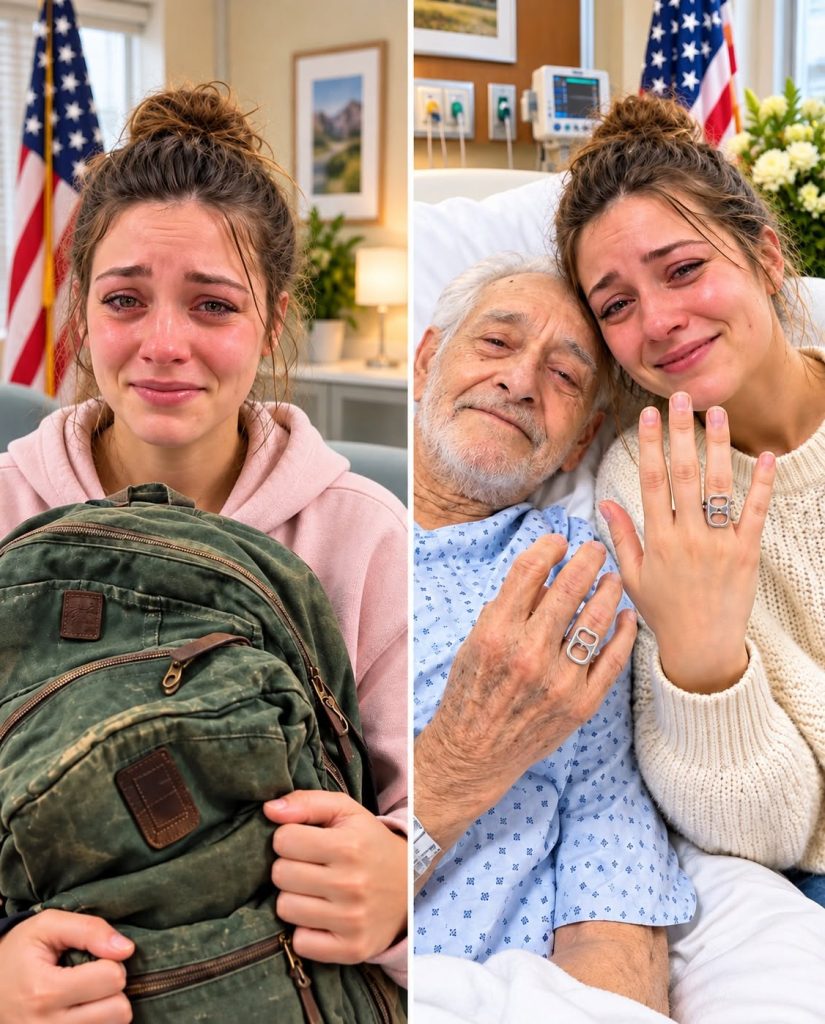
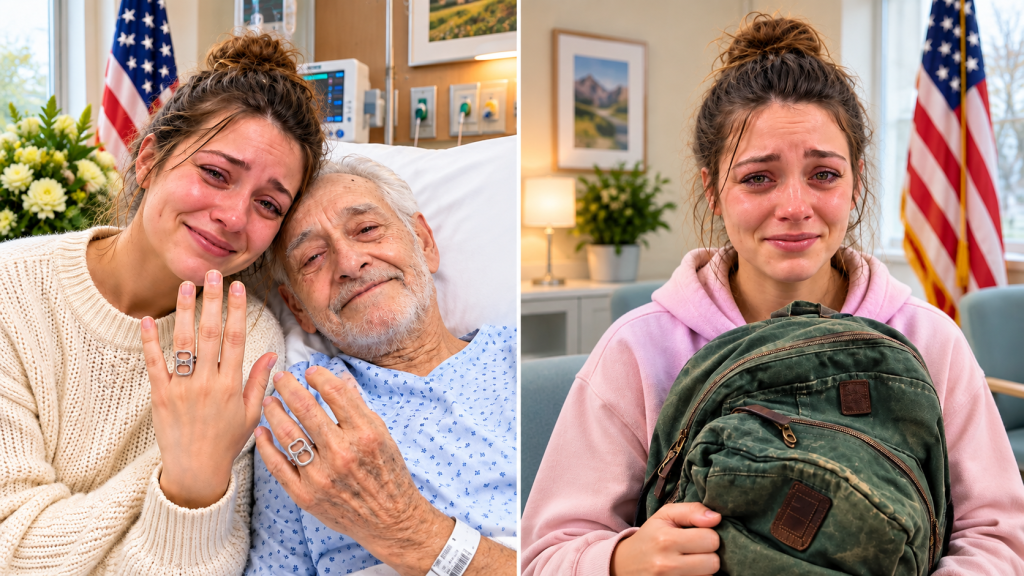
When the chaplain asked whether we wanted to exchange rings, Thomas looked around the room.
Then his eyes landed on an unopened soda can.
“Marcus.”
Marcus looked confused.
“Yes?”
“Hand me that.”
Thomas pulled the metal tab from the top.
He held it between two fingers.
Denise started laughing.
“You cannot be serious.”
“It’s stainless-looking.”
“It’s aluminum.”
“Even better.”
He slipped the tab onto my finger.
It was too large.
I curled my hand so it wouldn’t fall.
“There,” he whispered. “Now it’s respectable.”
I laughed.
Then I cried.
Thomas looked startled.
“Did I do something wrong?”
“No.”
“Are you sure?”
“Yes.”
I wiped my face.
“You’re ridiculous.”
“That sounds dangerously affectionate, wife.”
“Don’t get used to it.”
He grinned.
For the next seven days, I barely left the hospital.
I took emergency leave from work.
I slept in the reclining chair beside his bed.
I read novels aloud.
I argued with him about old films.
I smuggled in decent soup.
He complained about everything.
The pillows.
The lighting.
My taste in music.
My coffee.
Especially my coffee.
On the third night of our marriage, he woke from a nightmare.
He grabbed my wrist.
“Don’t leave.”
“I’m not leaving.”
“Promise.”
“I promise.”
His breathing slowly settled.
In the morning, he pretended it hadn’t happened.
I let him.
On the fourth day, Thomas asked about my mother.
I had mentioned her before, but never in detail.
“What was she like?” he asked.
I smiled.
“Stubborn.”
“That sounds genetic.”
“She was generous.”
“Also genetic.”
“Stop interrupting.”
“Continue.”
I told him about her terrible lemon cake.
Her habit of sending birthday cards three weeks early.
Her love of crossword puzzles.
Her inability to throw away reusable containers.
Her belief that every problem could be improved by feeding someone.
Thomas listened with unusual intensity.
At one point, his eyes filled with tears.
“Are you okay?”
He turned his face away.
“Just tired.”
I believed him.
On the fifth day, he gave me the green backpack.
“Put this somewhere safe.”
I lifted it.
It was heavier than I expected.
“What is in here?”
“My sins.”
I looked at him.
He smiled.
I assumed it was a joke.
I put the backpack in the cabinet.
That evening, I noticed Thomas staring at it.
“Do you want something from the bag?”
“No.”
“You sure?”
“Yes.”
He looked at me.
“Sarah?”
“What?”
“If you discovered something terrible about someone after they died, would you hate them forever?”
The question unsettled me.
“That depends.”
“On what?”
“What they did.”
“Suppose they were sorry.”
“That doesn’t undo it.”
“No.”
“Suppose they tried to make up for it.”
“Still doesn’t undo it.”
He nodded.
“What if they became a better person?”
I thought about my mother.
She used to say that an apology mattered most when nobody was watching what you did afterward.
“I guess becoming better matters.”
“Enough?”
“Enough for what?”
“Forgiveness.”
I looked at him.
“Thomas, what are you trying to tell me?”
He closed his eyes.
“That I am a coward.”
“About what?”
But he refused to answer.
The next morning, his doctors told me his heart was failing quickly.
His kidneys were worsening.
His blood pressure was dropping.
They spoke gently.
Hours, perhaps a day.
Thomas seemed to understand before I said anything.
He looked at my face.
“That bad?”
I sat beside him.
“Yes.”
He nodded.
“Well.”
“That’s all you have to say?”
“I’ve used most of my dramatic lines already.”
I cried.
He reached for my hand.
The soda tab was still around my finger.
“You kept it.”
“Of course.”
“It’s ugly.”
“It’s my wedding ring.”
His mouth trembled.
“I’m sorry.”
“For the ring?”
“For more than that.”
I leaned closer.
“Tell me.”
He looked toward the green backpack.
Then back at me.
“I should have told you sooner.”
“Told me what?”
But exhaustion overtook him.
He slept for several hours.
That night, the room became very quiet.
The nurses dimmed the lights.
Machines hummed softly.
I sat beside Thomas with my hand around his.
Shortly before midnight, he opened his eyes.
“Sarah.”
“I’m here.”
“Your mother would be proud of you.”
Everything inside me stopped.
“What?”
He swallowed.
“Evelyn would be proud.”
My blood went cold.
I had never told him my mother’s first name.
Not once.
“Thomas.”
His eyes closed.
“How do you know my mother’s name?”
His breathing slowed.
“Thomas?”
I pressed the call button.
A nurse hurried in.
Thomas squeezed my hand one last time.
Then his grip relaxed.
One breath.
Then another.
Then silence.
He died seven days after we married.
I sat beside him long after the nurse left.