
 Reading Time: 38 minutes
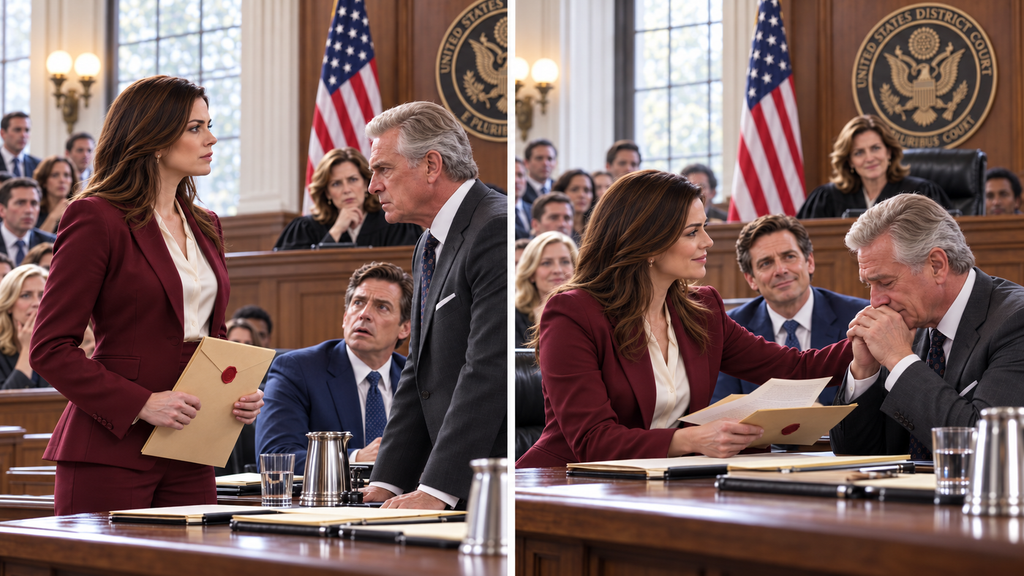
“Sir… do you know what your daughter is?” My father stared at Judge Okafor. For the first time that morning, he didn’t look amused. His attorney, Gerald Foss, shifted beside him.
Dad gave a small laugh. It was the kind of laugh he always used when he felt control slipping and wanted everyone else to believe it hadn’t. “My daughter?”
He glanced toward me with open contempt.
“She’s an Army officer, Your Honor. Technically.”
Technically.
Even then.
Even with the judge holding a file that had made her drop her pen.
He still couldn’t say one sentence about me without trying to make me smaller.
Judge Okafor didn’t smile.
“No, Mr. White.”
She looked down at the document again.
Then back at him.
“That is not what I asked.”
The courtroom had become so quiet that I could hear the air-conditioning vent above the gallery.
Dad’s fingers tightened around his expensive fountain pen.
Foss leaned closer.
“Your Honor,” he said carefully, “if this exhibit contains classified military information, perhaps opposing counsel should be permitted—”
“It contains no material requiring a closed courtroom.”
Her voice cut through his sentence.
“It contains information verified by the United States Department of Defense.”
Foss stopped speaking.
Judge Okafor turned a page.
Then another.
My sister Lauren sat behind Dad.
Her face had gone pale.
She had been so confident twenty minutes earlier.
She had walked to the witness stand wearing a cream suit and our mother’s pearl earrings.
She had sworn under oath that our grandmother had been “confused and frightened” in the months before her death.
She had testified that I manipulated Gran.
That I isolated her.
That I pressured her into changing her estate plan.
She cried at exactly the right moments.
Dad had watched her with approval.
Now Lauren was staring at the folder as if something inside it might crawl across the courtroom and touch her.
Judge Okafor looked directly at my father.
“Your complaint states that your daughter, Lieutenant Colonel Rebecca White, personally pressured Eleanor White into changing her estate documents between March 4 and April 17 of last year.”
Dad swallowed.
“That is correct.”
The judge lifted one page.
“Your daughter was not in North Carolina.”
Foss stood.
“Your Honor—”
“Sit down, Mr. Foss.”
He sat.
The judge continued.
“Lieutenant Colonel White was not even in the continental United States.”
Dad’s forehead creased.
“She could have called.”
Judge Okafor’s eyes hardened.
“According to the records before me, for twenty-eight of the forty-four days during which you claim your daughter was coercing your mother, your daughter was operating from a restricted military facility outside the United States under communication limitations imposed by the Department of Defense.”
Dad blinked.
I watched him calculate.
He had always been good at calculation.
Money.
Leverage.
Weakness.
The cost of someone’s loyalty.
The price of someone’s fear.
But this equation was changing too quickly.
The judge continued.
“For twelve additional days, she was in military transit.”
Another page.
“And for the remaining four days, she was hospitalized at Walter Reed following injuries sustained during an operation the record describes only in its declassified summary.”
A murmur moved through the gallery.
I kept my eyes on the judge.
Not on Dad.
Never on Dad.
My father’s attorney stood again.
“Your Honor, none of that excludes telephone communication.”
Judge Okafor looked at him.
“That would be a useful argument, Mr. Foss, if your own evidentiary filing did not specifically claim repeated in-person meetings.”
Foss froze.
I almost felt sorry for him.
Almost.
Judge Okafor reached toward the thick binder he had submitted earlier.
She flipped to one of his exhibits.
“Page one hundred eighty-seven.”
The clerk handed the binder to Foss.
He opened it.
His face changed.
I knew exactly what he was reading.
The affidavit Lauren had signed.
The one saying she had personally seen me entering Gran’s house on March 16.
The date was burned into my memory.
March 16.
I had been seven thousand miles away.
Foss turned toward Lauren.
She looked down.
Judge Okafor spoke quietly.
“Ms. Lauren White testified under oath this morning that she saw Lieutenant Colonel White enter Eleanor White’s residence on March 16 at approximately 3:00 p.m.”
She lifted the red-sealed page.
“According to authenticated United States military travel records, Lieutenant Colonel White was approximately seven thousand miles away.”
Nobody moved.
Then Dad turned toward Lauren.
Not dramatically.
Not angrily.
Just slowly.
That was worse.
Lauren whispered, “Dad…”
He didn’t answer.
Judge Okafor continued.
“Satellite-secured facility entry logs place Lieutenant Colonel White at her duty location twelve minutes before your witness claims to have seen her walking into a house in Winston-Salem.”
Lauren’s mouth opened.
Nothing came out.
Foss stood.
“Your Honor, my client’s daughter may simply have been mistaken regarding the date.”
The judge’s eyes moved to him.
“Your witness testified that she remembered the date because it was her wedding anniversary.”
Foss slowly sat again.
I heard someone in the gallery inhale.
Judge Okafor looked at Lauren.
“Ms. White.”
Lauren raised her head.
“Yes?”
“Did you see your sister enter your grandmother’s home on March 16?”
Lauren’s lips trembled.
Dad spoke without looking at her.
“Answer the judge.”
That was the voice he had used on us as children.
Flat.
Dangerous.
Lauren’s shoulders tightened automatically.
Some things survive adulthood.
Fear can age with you.
Judge Okafor noticed.
“So can I assume,” she said, “that your father has instructed you regarding your testimony?”
Foss shot to his feet.
“Objection.”
“This is not a jury trial, Mr. Foss.”
“Still—”
“Sit down.”
He did.
Lauren looked at me.
For the first time all day, there was no hostility in her face.
Only panic.
I remembered her at eleven years old.
Standing outside Dad’s study.
Holding a broken vase.
I had broken it.
She had taken the blame because I was nine and already terrified.
Dad had grounded her for a month.
Somewhere along the way, that girl disappeared.
Or maybe she had simply learned the lesson better than I did.
Survive by choosing the stronger side.
Lauren whispered, “I may have confused the date.”
Judge Okafor nodded slowly.
“We will return to that.”
Dad leaned toward Foss.
His whisper was low.
But I heard it.
“Fix this.”
Foss murmured, “I’m trying.”
Dad’s head snapped toward him.
“Try harder.”
The judge’s eyes lifted.
“Mr. White, would you like to share your conversation with the court?”
“No, Your Honor.”
“Then I strongly suggest you remain silent.”
Dad leaned back.
I watched the veins in his neck.
And something strange happened.
I didn’t feel triumph.
For years I had imagined what it would be like to finally prove him wrong.
I thought it would feel warm.
Vindicating.
Maybe even joyful.
It didn’t.
It felt quiet.
Almost cold.
Because when you spend your whole life trying to earn love from someone who profits from withholding it, eventually the victory is discovering you no longer need the prize.
Judge Okafor turned another page in my file.
Her expression changed again.
“This is the part I find particularly concerning.”
Foss rubbed a hand across his jaw.
Dad said nothing.
The judge looked at me.
“Lieutenant Colonel White, did you prepare this document?”
“No, Your Honor.”
“Who did?”
“The Department of Defense Office of Inspector General produced the certification. The accompanying personnel summary was authorized for release yesterday evening.”
Dad’s head turned sharply.
Yesterday.
That word bothered him.
Because he had spent months watching me.
Tracking me.
Pressuring me.
Feeding allegations to anyone who would listen.
And until yesterday, he thought nothing had moved.
He thought silence meant helplessness.
Judge Okafor looked back at the page.
“The court has verified the authentication number with the contact listed on the certification.”
Foss frowned.
“You already verified it?”
“Yes.”
He looked genuinely surprised.
“When?”
The judge’s expression was almost offended.
“When the court took its recess forty-three minutes ago.”
Dad looked at Foss.
Foss avoided his eyes.
Then Judge Okafor asked the question again.
“Mr. White, do you know what your daughter is?”
Dad finally seemed irritated.
“I told you. She is a lieutenant colonel.”
The judge shook her head.
“That is her rank.”
She closed the file halfway.
“Your daughter is a recipient of the Silver Star.”
The courtroom erupted.
Not loudly.
More like a wave of whispers crashing at once.
Dad stared at me.
Lauren covered her mouth.
Foss turned so quickly that his chair scraped across the floor.
I didn’t move.
Judge Okafor continued.
“She has also received two Bronze Star Medals, one with Valor, a Purple Heart, and multiple commendations whose underlying citations remain partially redacted.”
Dad’s face became strangely blank.
The judge looked at him.
“You have repeatedly referred to her in this courtroom as a ‘lowly grunt.’”
Silence.
Then Dad laughed again.
But this time the sound was hollow.
“Well, military medals don’t determine property ownership.”
“No,” Judge Okafor said.
“They do not.”
Dad’s confidence flickered back.
Only slightly.
“But they do become relevant when you accuse the recipient of forging her own military records.”
His expression collapsed.
I watched Foss close his eyes.
That was the moment the attorney understood.
Not just that they might lose.
That the floor beneath the entire case had disappeared.
Judge Okafor opened another document.
“Mr. White, your supplemental complaint, filed twenty-two days ago, alleges that Lieutenant Colonel White fabricated military deployment records to create an alibi.”
Dad said carefully, “That was information provided to us.”
“By whom?”
He glanced at Foss.
Foss looked at Dad.
Neither answered.
The judge waited.
“By whom, Mr. White?”
Foss rose.
“Your Honor, attorney-client privilege—”
“I did not ask you, Counselor.”
Dad’s jaw tightened.
“My sources are private.”
Judge Okafor leaned back.
“Not when you put their claims into a verified pleading.”
Dad’s fingers moved toward his water glass.
He missed it slightly.
Just slightly.
But I saw it.
The judge saw it too.
She turned toward me.
“Lieutenant Colonel White, does your submission address the source of those forged-record allegations?”
“Yes, Your Honor.”
“Explain.”
I stood.
For the first time that day, I looked directly at my father.
“The military opened an administrative review after receiving six anonymous complaints questioning my conduct and eligibility for my clearance.”
Dad stared at me.
I continued.
“Three complaints were mailed.”
“Three were electronic.”
“Two included documents represented as copies of my military records.”
Foss shifted.
Judge Okafor asked, “Were the documents genuine?”
“No.”
“And the source?”
“The electronic submissions were traced during an authorized internal investigation.”
Dad’s eyes narrowed.
I kept my voice even.
“They originated from an office network registered to White Meridian Holdings.”
The room went still.
White Meridian Holdings.
Dad’s company.
His company.
Dad rose halfway from his chair.
“That is ridiculous.”
Judge Okafor struck the gavel.
“Sit down.”
“That company employs over two hundred people.”
“Sit down, Mr. White.”
“You cannot possibly attribute—”
The gavel came down harder.
“Sit.”
He sat.
For the first time in my life, someone had given my father an order he couldn’t punish them for giving.
I wish I could say it healed something in me.
It didn’t.
But it loosened something.
Judge Okafor looked at me.
“Continue.”
“Two electronic complaints originated from the corporate network.”
I paused.
“The third came from a residential IP address associated with my father’s lake property.”
Dad’s face changed.
Foss whispered something I couldn’t hear.
Dad ignored him.
Judge Okafor said, “Mr. Foss, did you know this?”
“No, Your Honor.”
Dad turned toward him.
Foss repeated, more firmly, “I did not know.”
That interested me.
Because Gerald Foss was ruthless.
But he wasn’t stupid.
There is a difference between a lawyer willing to stretch an argument and a lawyer willing to become evidence.
Dad had not told him everything.
Of course he hadn’t.
Dad never told anyone everything.
Knowledge was control.
Judge Okafor looked back at me.
“Was your father identified personally?”
“The investigation is ongoing.”
Foss stood immediately.
“Then I object to any implication that my client committed wrongdoing when no final agency finding has been issued.”
This time the judge nodded.
“Sustained in part.”
Dad exhaled.
Too soon.
Judge Okafor continued.
“The court will not treat an open investigation as proof of criminal conduct.”
She looked directly at him.
“However, the court may consider the authenticated technical records for the limited purpose of evaluating the credibility and provenance of allegations that this plaintiff placed before this court.”
Dad’s exhale stopped.
The judge turned to the clerk.
“Mark the certification as Defendant’s Exhibit Twelve.”
The clerk nodded.
Foss rubbed both temples.
Dad leaned toward him.
“This is theater.”
Foss whispered back, “No.”
One word.
No.
Dad looked at him.
And for the first time that morning, his own attorney did not look obedient.
The judge reached for the next page.
“The military matter still does not decide title to the property.”
Dad straightened.
There.
That was the rope he grabbed.
“Exactly.”
Judge Okafor’s eyes moved toward him.
“I was not inviting comment.”
Dad closed his mouth.
She looked at me.
“Lieutenant Colonel White, you also submitted a certified trust instrument.”
“Yes, Your Honor.”
Foss frowned.
“What trust instrument?”
I looked at him.
“The one your client has had for eleven years.”
Dad stopped breathing.
Not literally.
But close enough that I saw his chest freeze.
Foss turned toward him.
“What is she talking about?”
Dad didn’t answer.
I reached into my briefcase.
Not the red folder this time.
A blue one.
It was thinner.
Older.
The corners were worn.
Gran had kept it in a metal box beneath a stack of recipe cards.
Judge Okafor watched me hand it to the clerk.
The clerk gave it to her.
Dad stood abruptly.
“Your Honor, we have never seen that document.”
I looked at him.
“That’s interesting.”
His eyes found mine.
Because he recognized my tone.
It was the tone he had trained into me without realizing it.
Calm before impact.
I continued.
“Considering your signature is on page nine.”
The gallery erupted again.
Judge Okafor struck the gavel.
“Order.”
Dad stared at me.
“You’re lying.”
I almost smiled.
There it was.
The accusation he always used when reality refused to obey him.
You’re lying.
When I was sixteen and showed him the diner receipts proving I had paid twice for groceries.
You’re lying.
When I was nineteen and told him Lauren had borrowed my car and damaged it.
You’re lying.
When I was twenty-two and said my commissioning ceremony mattered to me.
You’re lying.
It had never meant he thought I was lying.
It meant he needed me to doubt myself.
Judge Okafor examined the document.
Foss walked toward the bench only when invited.
He read over the copy.
His face slowly drained of color.
He turned around.
“Arthur.”
Dad didn’t look at him.
Foss’s voice hardened.
“Arthur, what is this?”
Dad sat motionless.
Judge Okafor read aloud.
“Eleanor Grace White Irrevocable Residential Trust.”
She turned several pages.
“Executed eleven years ago.”
More pages.
“Property transferred into trust at that time.”
Foss looked furious now.
Not theatrically furious.
Professionally furious.
The kind of anger that comes when someone realizes his own client has driven him blindfolded toward a cliff.
Judge Okafor continued.
“Successor beneficiary Rebecca Elaine White.”
My father finally spoke.
“My mother didn’t understand what she signed.”
Foss snapped his head toward him.
Judge Okafor stopped reading.
Dad realized too late what he had just admitted.
The judge said slowly, “You are familiar with the document.”
Dad’s face tightened.
“I may have seen something years ago.”
Foss whispered, “Stop talking.”
Dad ignored him.
“My mother signed a lot of papers.”
Judge Okafor turned to page nine.
“Is this your signature?”
Dad stared.
He didn’t answer.
The judge’s voice sharpened.
“Mr. White.”
“Yes.”
One word.
Barely audible.
Foss sank into his chair.
Judge Okafor looked at the document again.
“You signed as an acknowledgment witness.”
Dad recovered quickly.
“It doesn’t matter. She revoked it.”
The judge’s eyes lifted.
“Where is the revocation?”
Silence.
Dad looked at Foss.
Foss looked at the table.
“There was one.”
Judge Okafor waited.
Dad continued.
“My mother changed her mind.”
“Where is the document?”
“My mother’s attorney handled it.”
“Which attorney?”
Dad named a man.
“Charles Pembroke.”
That was when I knew Dad had lost.
Not the house.
Not the case.
Something bigger.
Because he had just stepped into the one trap I had not set.
Gran had.
Judge Okafor looked toward the defense table.
I said nothing.
She checked the papers again.
Then turned toward the clerk.
“Please retrieve the court’s sealed supplemental submission received from Pembroke & Hale yesterday.”
Dad’s head jerked up.
Foss whispered, “Oh, God.”
The clerk disappeared through the side door.
My father looked at me.
“What did you do?”
I met his eyes.
“Nothing.”
And that was true.
For once, Dad’s disaster had not been created by me.
The clerk returned carrying a white envelope.
Judge Okafor opened it.
Removed a letter.
Read silently.
Then looked at my father.
“Charles Pembroke died eight months ago.”
Dad nodded quickly.
“Yes.”
“His law partner, Samuel Hale, has certified the firm’s complete estate-planning file for Eleanor White.”
Dad’s lips parted.
“There is no revocation.”
Silence.
The judge continued.
“There is, however, a memorandum dated six years after the trust was created.”
She read.
“Client reports continued pressure from son Arthur regarding residence. Client states intention that property remain outside probate and ultimately pass to granddaughter Rebecca.”
Dad looked at me as if I had reached across the courtroom and struck him.
I didn’t blink.
Judge Okafor read another line.
“Client requests that son not be informed of additional estate amendments due to fear of financial retaliation.”
Lauren made a small sound behind him.
Dad turned around.
She was crying now.
Not elegantly.
Not the controlled tears from the witness stand.
These were ugly, frightened tears.
The kind people cry when a story they have told themselves for years finally breaks.
Dad hissed, “Pull yourself together.”
Lauren stared at him.
The judge heard.
“Mr. White.”
He faced forward.
“Speak to your daughter that way again in my courtroom and I will have you removed.”
Dad’s mouth tightened.
Lauren wiped her face.
And then she did something I didn’t expect.
She stood.
Foss looked back.
“Ms. White, sit down.”
Lauren shook her head.
Judge Okafor said, “Do you need assistance?”
Lauren’s voice trembled.
“I need to correct my testimony.”
Dad turned.
“Lauren.”
She flinched.
But she stayed standing.
The judge watched her carefully.
“You understand you are still under oath.”
“Yes.”
“You may expose yourself to serious consequences.”
Lauren swallowed.
“I know.”
Dad’s chair scraped.
“Your Honor, my daughter is emotional.”
Lauren looked at him.
“No.”
One word.
Dad froze.
Lauren’s entire body shook.
But her voice grew stronger.
“I’m not emotional.”
She stared at our father.
“I’m scared.”
He whispered, “Sit down.”
Lauren shook her head.
“You said the records would never be checked.”
Foss closed his eyes.
The courtroom exploded.
Judge Okafor struck the gavel repeatedly.
“Order!”
Dad stood.
“She is confused.”
Lauren shouted back.
“You told me Rebecca was going to lose her clearance anyway!”
“Lauren.”
“You said if I didn’t help you, you’d cut off the girls’ college accounts.”
Dad’s face became unrecognizable.
Not because he was angry.
I had seen him angry.
This was fear wearing anger’s clothes.
Foss grabbed his arm.
“Arthur, stop.”
Dad ripped his arm away.
Lauren was crying harder.
“You made me sign it.”
“I did no such thing.”
“You wrote it!”
The entire courtroom seemed to inhale at once.
Judge Okafor’s voice became quiet.
Dangerously quiet.
“Ms. White.”
Lauren looked toward her.
“Did your father prepare the affidavit you signed?”
Lauren nodded.
Foss stood.
“I need to confer with my client.”
The judge ignored him.
“Did you know the statement about March 16 was false?”
Lauren looked at me.
I saw shame there.
Years of it.
“Yes.”
The word barely came out.
Judge Okafor leaned back.
“And you testified to it today.”
“Yes.”
“Knowing it was false.”
Lauren covered her face.
“Yes.”
Dad whispered, “Idiot.”
I heard him.
So did the judge.
Lauren did too.
She lowered her hands.
Something in her face changed.
Maybe that one word did what thirty-five years of manipulation had failed to do.
Maybe there comes a point where fear runs out.
She reached into her handbag.
Dad stood.
“What are you doing?”
Lauren pulled out her phone.
Foss immediately said, “Do not—”
Lauren held it toward the judge.
“I have messages.”
Dad went completely still.
Judge Okafor looked toward the clerk.
“Take possession of the device for identification purposes only. We will determine admissibility after counsel has an opportunity to review the material.”
Lauren handed it over.
Dad stared at her.
“You ungrateful little—”
“Enough.”
Judge Okafor’s gavel struck so hard I felt the sound in my chest.
“Mr. White, one more outburst and the marshal will remove you.”
Dad sat.
Foss leaned close.
I watched him whisper.
This time Dad listened.
Not because he respected Foss.
Because he was beginning to understand that words could now cost him.
The judge looked at Lauren.
“You may sit.”
Lauren sat.
But not behind Dad.
She walked across the aisle.
For one strange second, I thought she might sit beside me.
She didn’t.
She chose an empty bench in the gallery.
Halfway between us.
That felt appropriate.
She was not suddenly my ally.
Twenty minutes of truth did not erase years of harm.
But she had stopped standing behind him.
Sometimes that is where change begins.
Judge Okafor called a recess.
“Thirty minutes.”
The gavel fell.
Everyone moved at once.
Foss pulled Dad toward the side conference room.
Lauren remained seated.
I closed my briefcase.
Then I heard my father’s voice.
“Rebecca.”
I looked up.
He had stopped beside me.
Foss stood several feet away.
Dad leaned close enough that only I could hear.
“This is your last chance.”
I almost laughed.
Even now.
Last chance.
His language had not changed since I was a child.
My last chance to apologize.
My last chance to obey.
My last chance to come home.
My last chance to deserve him.
“What happens,” I asked quietly, “if I don’t take it?”
His eyes hardened.
“You think those medals make you untouchable?”
“No.”
“You think a judge can protect you?”
“No.”
His nostrils flared.
“Then what exactly do you think you have?”
I looked at him.
“My name.”
For the first time, I said it without meaning his.
“My career.”
His jaw tightened.
“My house.”
His face twitched.
“And a life you don’t control.”
He stared at me.
Then smiled.
It was ugly.
“You’re still my daughter.”
I closed the latch on my briefcase.
“Biologically.”
That hit him harder than shouting ever could have.
He stepped closer.
“You will regret humiliating me.”
I stood.
I was not especially tall.
Dad had always seemed enormous when I was a child.
Standing there now, I realized how much of his height had been constructed from fear.
I looked him directly in the eye.
“You humiliated yourself.”
Foss grabbed his elbow.
“Arthur.”
Dad let himself be pulled away.
I watched him leave.
Then I sat again.
My hands were shaking.
Not visibly.
But enough that I pressed them against my thighs.
“Rebecca?”
Lauren.
I didn’t turn immediately.
She approached slowly.
Her mascara had run.
For years, Lauren had always looked perfect.
Perfect hair.
Perfect home.
Perfect daughters.
Perfect husband.
Perfect Christmas cards.
She looked more human in that moment than I had seen her in decades.
“Can I sit?”
I looked at the chair beside me.
“You can.”
She sat.
For several seconds, neither of us spoke.
Then she whispered, “I’m sorry.”
I stared at the empty judge’s bench.
“I know.”
“No.”
Her voice broke.
“You don’t.”
I looked at her.
Lauren twisted her wedding ring.
“He threatened the girls.”
“I heard you.”
“No, I mean before that.”
She wiped her face.
“When Grandma changed the trust, he started moving money.”
“What money?”
“The education accounts.”
I frowned.
Dad had established college accounts for Lauren’s daughters years earlier.
At least, that was the family story.
“He told me if I helped him, the girls would be secure.”
“And if you didn’t?”
“He said the accounts would disappear.”
I studied her face.
“Lauren, those accounts belong to the girls.”
She laughed bitterly.
“You think that matters to him?”
I said nothing.
She looked down.
“He controls everything.”
“I know.”
“You left.”
Her voice wasn’t accusing.
It sounded almost envious.
“You left and joined the Army.”
I looked away.
“Yes.”
“I stayed.”
The silence between us filled with our childhood.
Different rooms.
Same house.
Different survival strategies.
She chose obedience.
I chose distance.
Both had costs.
Lauren whispered, “Do you remember the Christmas you got that bill?”
I laughed once.
No humor.
“I remember every line item.”
“Dad told everyone you asked for money instead of presents.”
My head turned.
“What?”
She nodded.
“He said you wanted cash.”
I stared at her.
“That envelope was an invoice.”
“I know that now.”
“How?”
“Grandma showed me.”
That surprised me.
“When?”
“Years later.”
Lauren looked toward the courtroom doors.
“She kept copies of everything.”
That sounded like Gran.
Sweet smile.
Soft voice.
Steel spine.
Lauren continued.
“She said Dad had spent his whole life rewriting events until everyone remembered the version that benefited him.”
I swallowed.
That sounded exactly like Gran.
“Why didn’t you tell me?”
Lauren’s face crumpled again.
“Because by then I had built my whole life around staying on his good side.”
I didn’t rescue her from the statement.
She needed to sit in it.
So did I.
After a moment, she said, “There’s more.”
Of course there was.
With Dad, there was always more.
“What?”
Lauren looked around.
Then lowered her voice.
“Grandma didn’t just leave you the house.”
I stared at her.
“I know about the investment account.”
Lauren shook her head.
“Not that.”
My stomach tightened.
“What are you talking about?”
She reached into her bag.
Then stopped herself.
“The clerk has my phone.”
“What’s on it?”
“Pictures.”
“Of what?”
“Documents Dad kept in his office.”
I felt the old soldier instinct click into place.
Not panic.
Assessment.
“What documents?”
Lauren leaned closer.
“Transfers.”
“From where?”
“Grandma’s accounts.”
A cold feeling moved through me.
“How much?”
“I don’t know.”
“How much, Lauren?”
She whispered.
“Maybe eight hundred thousand.”
For a second, the courtroom disappeared.
Not because of the money.
Because of Gran.
Her worn cardigan.
Her chipped blue mug.
The way she saved rubber bands in a kitchen drawer.
Eight hundred thousand dollars.
“Did Dad take it?”
“I think so.”
“When?”
“Over the last three years of her life.”
I stared at her.
“And you knew?”
“Not until after she died.”
“Why didn’t you say anything?”
Lauren looked at me as though the answer should have been obvious.
“Because I was afraid of him.”
I stood.
She flinched.
Not from anger.
From old reflex.
I hated that.
I hated what he had made of both of us.
I walked several steps away.
Then stopped.
“Did Gran know?”
“I don’t know.”
“Did he have power of attorney?”
“Limited financial authority.”
“For what?”
“Paying property taxes and household expenses when she was hospitalized.”
My mind moved quickly.
“Did you show the documents to Foss?”
Lauren shook her head.
“Dad doesn’t know I photographed them.”
I turned.
“Why did you?”
She looked embarrassed.
“Insurance.”
That one word told me she was more like him than either of us wanted to admit.
But maybe that wasn’t entirely a bad thing.
Survival can teach ugly skills.
What matters is what you eventually use them for.
“You need to tell the judge.”
Lauren looked terrified.
“I know.”
“No.”
I walked back toward her.
“You need to understand what happens after you tell her.”
She swallowed.
“What?”
“This doesn’t stay in the family anymore.”
Lauren’s eyes filled.
“It hasn’t been a family for a long time.”
That hurt.
Because it was true.
The courtroom door opened.
The marshal called us back.
Dad returned with Foss.
Something had changed between them.
Foss no longer walked beside my father.
He walked slightly ahead.
Distance.
Professional distance.
The kind lawyers create when they begin thinking about their own exposure.
Judge Okafor took the bench.
Everyone stood.
Then sat.
She looked down at the papers.
“During recess, counsel requested a conference.”
Foss stood.
“Yes, Your Honor.”
Dad looked irritated.
Foss continued.
“My firm is moving to withdraw as counsel.”
A gasp came from the gallery.
Dad turned toward him.
“You said you were considering it.”
Foss stared straight ahead.
“I am moving now.”
Dad stood.
“You work for me.”
Judge Okafor struck the gavel.
“Sit down.”
Dad ignored her.
“You don’t walk out in the middle of my case.”
Foss finally looked at him.
“I am required to withdraw if continued representation would violate my ethical obligations.”
Dad’s face reddened.
“Ethical obligations?”
Foss’s voice stayed controlled.
“You withheld material documents from my firm.”
“I did no such thing.”
“You signed that trust.”
“Eleven years ago.”
“And you told us no such instrument existed.”
Dad’s eyes flashed.
“I told you it was revoked.”
“You told us there had never been a transfer.”
Silence.
There it was.
A tiny sentence.
A huge fracture.
Judge Okafor leaned forward.
“Mr. Foss.”
He looked toward her.
“Are you stating that your client gave your firm information inconsistent with the certified trust instrument?”
Foss hesitated.
Attorney-client privilege had entered the room like a wall.
“I am stating only the basis necessary for withdrawal, Your Honor.”
She nodded.
“Understood.”
Dad sat slowly.
He looked smaller.
Then Lauren stood again.
“Your Honor.”
Dad closed his eyes.
Judge Okafor looked toward her.
“Yes?”
“There’s something else.”
Dad turned.
“Lauren.”
She looked at him.
And this time she didn’t flinch.
“I photographed financial records in my father’s office.”
Silence.
“I believe they show transfers from my grandmother’s accounts.”
Dad erupted.
“That is theft!”
Lauren shouted back.
“You took her money!”
The courtroom exploded.
The gavel came down.
“Enough!”
Judge Okafor looked at Lauren.
“Do you have the images?”
“They’re on my phone.”
The clerk held up the device.
Judge Okafor turned toward Foss.
His expression suggested he wanted to become invisible.
The judge said, “This matter may now implicate issues far beyond the title dispute before me.”
Dad pointed toward Lauren.
“She illegally entered my office.”
Lauren laughed.
“You gave me the door code.”
“For family emergencies.”
“You told me to get tax documents for the accountant.”
Dad stopped.
Lauren continued.
“The safe was open.”
“That does not give you permission to photograph confidential records.”
Judge Okafor’s voice cut through them.
“This court will not decide the legality of any search by a private party today.”
She looked toward the clerk.
“Preserve the device without examining additional content.”
The clerk nodded.
Judge Okafor then looked at my father.
“Mr. White, you are advised not to destroy, alter, or transfer any potentially relevant financial records.”
Dad stared at her.
“Am I under arrest?”
“No.”
“Then I would like to leave.”
“We are not finished.”
His jaw tightened.
Judge Okafor looked down.
“As to the civil claims currently before this court…”
I held my breath.
This was what I had come for.
The house.
Gran’s house.
The porch where she taught me to shell peas.
The hallway with the pencil marks from our heights as children.
The bedroom where she kept Mom’s photographs.
The oak tree where she tied a yellow ribbon every time I deployed.
Dad thought it was real estate.
To me, it was the one place in our family where love had not been transactional.
Judge Okafor continued.
“The plaintiff’s theory rests on the assertion that the property entered Eleanor White’s probate estate and was then improperly devised to the defendant as a result of undue influence.”
She lifted the trust.
“The certified record establishes that the property was transferred to an irrevocable trust eleven years before Eleanor White’s death.”
She looked at Dad.
“Therefore it was not part of the probate estate in the manner plaintiff has alleged.”
Dad’s face was stone.
“The plaintiff also alleges that the defendant exercised coercive influence during a period when authenticated records establish she was absent from the jurisdiction, including dates on which a plaintiff witness falsely claimed to have observed her in person.”
Lauren stared at the floor.
Judge Okafor’s tone sharpened.
“In addition, evidence presented by the plaintiff regarding supposed forged military documents is materially undermined by authenticated Department of Defense records.”
Dad’s hand gripped the edge of the table.
Judge Okafor paused.
“The plaintiff’s claim to title is dismissed.”
I didn’t breathe.
Nobody moved.
Then she added:
“With prejudice.”
Dad shot to his feet.
“No.”
The word echoed.
Judge Okafor looked at him.
Dad stared at the bench like she had spoken in another language.
“No.”
Foss touched his arm.
Dad jerked away.
“That house is mine.”
The judge’s face hardened.
“No, Mr. White.”
“My mother promised me that property.”
“The recorded instrument says otherwise.”
“She was manipulated.”
“You have produced no credible evidence supporting that claim.”
“She was my mother!”
His voice cracked.
And there it was.
Not grief.
Entitlement.
Judge Okafor leaned forward.
“And your daughter was her granddaughter.”
Dad turned toward me.
His face was full of hatred.
Not disappointment.
Not hurt.
Hatred.
Because I had something he believed should belong to him.
Property.
Recognition.
A life.
Judge Okafor continued.
“The court is additionally referring the apparently false sworn testimony and related filings to the appropriate authorities for review.”
Lauren covered her mouth.
Dad stared.
“Meaning?”
“Meaning,” Judge Okafor said, “this court does not ignore possible perjury or fraudulent filings.”
Dad looked toward Foss.
Foss did not look back.
The judge added, “The financial materials raised today are not properly before me for adjudication. However, the clerk will preserve the relevant proffer and transmit notice to the appropriate office.”
Dad’s face turned white.
“What office?”
Judge Okafor’s expression did not change.
“The United States Attorney’s Office will determine whether any federal issue warrants investigation. State authorities may also receive notice where appropriate.”
For the first time in my life, my father had nothing to say.
Judge Okafor gathered her papers.
Then paused.
Her eyes moved toward me.
“Lieutenant Colonel White.”
I stood.
“Yes, Your Honor.”
Her voice softened slightly.
“The court does not award property based on military service.”
“I understand.”
“And decorations do not make one litigant more entitled to justice than another.”
“Yes, Your Honor.”
“But falsehoods do not become facts merely because they are repeated loudly.”
My throat tightened.
She looked toward Dad.
“Nor does contempt become truth simply because it comes from a parent.”
Nobody moved.
I stared at her.
For a dangerous second, I thought I might cry.
Not because I had won.
Because someone had said it out loud.
Dad’s contempt had never been truth.
I knew that logically.
I had known for years.
But there are things your mind understands long before the child inside you accepts them.
Judge Okafor closed the folder.
“This matter is concluded.”
The gavel fell.
Dad lost the house at 12:47 p.m.
But that wasn’t when he lost me.
He had lost me much earlier.
I just hadn’t realized it.
Outside the courtroom, reporters were already gathering.
I had no idea who alerted them.
Possibly someone from the gallery.
Possibly Dad himself before the hearing, when he thought he would walk outside holding a victory.
That would have been like him.
He loved witnesses when he expected applause.
Foss came toward me first.
“Lieutenant Colonel.”
I stopped.
He looked ten years older than he had that morning.
“I want to make something clear.”
I waited.
“I did not know about the trust.”
“I believe you.”
He looked surprised.
“Why?”
“Because you looked like you were going to throw up when you saw it.”
For the first time, Gerald Foss almost smiled.
Then it disappeared.
“He lied to me.”
“Yes.”
“I have represented Arthur for twelve years.”
“I’m sorry.”
He studied me.
“That sounded sincere.”
“It was.”
“After what I did in there?”
“You were doing your job.”
His eyes moved toward the courtroom doors.
“Not all of it.”
I said nothing.
He looked back at me.
“The questioning about your grandmother’s mental state…”
“I remember.”
“I pushed harder than I should have.”
“You pushed as hard as he paid you to.”
He nodded once.
“That is not always the defense lawyers think it is.”
Then he walked away.
Lauren came out next.
She looked toward the reporters.
Then toward me.
“I can’t go home.”
I understood what she meant.
Not physically.
Emotionally.
There was no home to go back to.
“You can stay at Gran’s house tonight.”
Her eyes widened.
“Rebecca…”
“One night.”
I raised a hand.
“This isn’t forgiveness.”
She nodded quickly.
“I know.”
“It isn’t a reset.”
“I know.”
“And it doesn’t mean I trust you.”
Tears filled her eyes.
“I know.”
I looked at her.
“But you told the truth when it finally cost you something.”
Lauren nodded.
“That matters.”
Her face crumpled.
She hugged herself.
I wanted to hug her.
I didn’t.
Not yet.
Some bridges should not be rebuilt in a single afternoon.
Dad came through the doors.
Everyone turned.
Cameras lifted.
He wore the same immaculate suit.
But the man inside it had changed.
Or perhaps the costume had finally stopped working.
A reporter called:
“Mr. White, did you knowingly file false statements?”
Another:
“Are you under investigation?”
Another:
“Did you transfer funds from your mother’s accounts?”
Dad ignored them.
His eyes found me.
He walked directly through the crowd.
Lauren stepped behind me instinctively.
I noticed.
So did he.
“Rebecca.”
I didn’t answer.
He stopped two feet away.
“You think this is over?”
Cameras pointed toward us.
I could have humiliated him.
I could have repeated every cruel thing he had ever said.
I could have made him famous for all the wrong reasons.
Instead, I said quietly:
“Yes.”
That confused him.
“No, it isn’t.”
“For me it is.”
His eyes narrowed.
“You destroyed this family.”
Lauren whispered behind me, “Dad…”
He ignored her.
“You turned your grandmother against me.”
“No.”
“You poisoned Lauren.”
“No.”
“You humiliated me in front of strangers.”
“No.”
His voice rose.
“Stop saying no!”
Cameras clicked.
I looked at him.
“No.”
He stared.
And suddenly I was sixteen again.
An invoice beneath my bedroom door.
Twenty-two.
Standing in uniform while he joked about me in front of officers.
Twenty-nine.
Answering his voicemail from Afghanistan while he complained that I had missed Lauren’s anniversary dinner.
Thirty-seven.
Listening to him tell Gran that I had chosen “war over family.”
Forty-one.
Standing in a federal courthouse while he tried to take the one place that had ever felt safe.
I was all those versions of myself.
And none of them were afraid anymore.
Dad stepped closer.
“You will always be the daughter who failed me.”
A few reporters went silent.
I smiled.
Not because it was funny.
Because at last I understood.
“I know.”
His face shifted.
He expected denial.
I continued.
“I failed to become you.”
Lauren inhaled behind me.
Dad stared.
“I failed to learn that money is love.”
His mouth opened.
“I failed to believe fear is respect.”
Cameras clicked faster.
“I failed to abandon people the moment they stopped being useful.”
His face went red.
“And I failed to spend my entire life begging for your approval.”
I stepped closer.
“So you’re right.”
The courtyard had become completely silent.
“I failed you.”
I paused.
“And it may be the best thing I ever did.”
Dad’s face twisted.
“You ungrateful—”
I turned away.
That was the final insult.
Not shouting.
Not revenge.
Turning away.
He called my name.
I kept walking.
“Rebecca!”
I didn’t stop.
For forty-one years, I had spent pieces of myself turning around whenever Arthur White called.
That afternoon was the first time I let him speak to my back.
Gran’s house smelled like dust and cedar when I opened the door.
I hadn’t stayed there since the funeral.
The lawsuit had made the place feel contaminated.
Dad’s attorneys sent appraisers.
Inspectors.
Photographers.
Every room became evidence.
That afternoon, it became a house again.
Lauren stood behind me carrying an overnight bag.
Neither of us spoke.
The grandfather clock in the hallway ticked steadily.
I touched the old wooden table beneath it.
Gran’s keys were still in the ceramic bowl.
Her blue gardening gloves still hung from a hook.
Lauren began crying.
Quietly.
“I hate that she died thinking we hated each other.”
I looked at her.
“She didn’t.”
Lauren wiped her cheek.
“How do you know?”
“Because Gran knew everything.”
That made her laugh through tears.
“Yeah.”
“She probably knew before we did.”
We walked into the kitchen.
There were pencil marks on the doorframe.
Lauren at eight.
Me at five.
Lauren at eleven.
Me at eight.
Mom had written the dates before she died.
Gran continued afterward.
Dad had once offered to have the frame refinished.
Gran almost threw him out of the house.
I ran my fingers over my mother’s handwriting.
Lauren whispered, “I barely remember her voice.”
“I do.”
She looked at me.
“Really?”
“Sometimes.”
“What did she sound like?”
I leaned against the wall.
“Like you.”
Lauren started crying again.
This time I hugged her.
Not forgiveness.
Not yet.
But grief.
Grief is allowed to cross borders that trust cannot.
We stood there for a long time.
Then the doorbell rang.
Lauren stiffened.
“So soon?”
I looked toward the front window.
A black sedan was parked outside.
My instincts sharpened.
I walked to the door.
A man in his sixties stood on the porch holding a leather portfolio.
He looked familiar.
Then I recognized him from Gran’s funeral.
“Ms. White?”
“Yes.”
“Samuel Hale.”
Charles Pembroke’s law partner.
The attorney whose letter had just destroyed Dad’s claim.
“I apologize for coming unannounced.”
Lauren appeared behind me.
Mr. Hale saw her.
His expression changed slightly.
“Both of you are here.”
I frowned.
“Is that a problem?”
“No.”
He looked almost relieved.
“It may actually make this easier.”
Nothing about that sentence sounded easy.
I invited him inside.
He refused coffee.
Refused water.
Sat at Gran’s dining table.
Then placed the leather portfolio in front of him.
“Your grandmother left instructions.”
My heart tightened.
“What kind of instructions?”
“Instructions that I was not permitted to execute until one of two events occurred.”
Lauren sat beside me.
“What events?”
“Arthur ceased contesting the trust.”
He paused.
“Or a court finally adjudicated his claim.”
I stared.
“So today.”
“Yes.”
He opened the portfolio.
Inside was a sealed envelope.
My name was written across it.
Rebecca.
Gran’s handwriting.
My throat closed.
Mr. Hale placed it on the table.
“There is also one for Lauren.”
Lauren started crying before he even set hers down.
“And one final item.”
He removed a small digital recorder.
Old-fashioned.
Silver.
I stared at it.
“What is that?”
“Your grandmother.”
Lauren whispered, “What?”
Mr. Hale folded his hands.
“Eleanor anticipated that Arthur might challenge her estate plan.”
Of course she did.
“She did not want Rebecca forced to defend her intentions alone.”
He looked at me.
“So she recorded them.”
My hands went cold.
“Can we hear it?”
Mr. Hale nodded.
He pressed play.
Static.
Then a familiar breath.
And suddenly Gran was alive.
Not alive.
But in the room.
Her voice came through thin and soft.
“If you are hearing this, Arthur has probably done exactly what I expected him to do.”
Lauren covered her mouth.
I stopped breathing.
Gran continued.
“And if he did, he is probably furious that I did not leave him the house.”
A faint laugh.
Her laugh.
My eyes filled immediately.
“I want to make something clear. Rebecca did not ask me for this house.”
I looked down.
“She actually told me twice to divide it equally.”
Lauren looked at me.
I hadn’t told her that.
Gran’s voice continued.
“I said no.”
A pause.
“This house should belong to the person who understood what it was for.”
My tears fell onto the table.
“It was never an investment.”
Gran’s voice became softer.
“It was where my girls came when the rest of the family became too loud.”
Lauren sobbed.
“It was where Rebecca slept after her mother died because Arthur told her crying was weakness.”
My jaw tightened.
Lauren grabbed my hand.
I let her.
“It was where Lauren hid in the pantry the night Arthur broke the dining chair and then told everyone she had imagined it.”
Lauren gasped.
I turned.
I hadn’t known that.
Her fingers squeezed mine.
Gran continued.
“I saw more than my son thought I saw.”
Silence on the recording.
Then:
“I loved him.”
Her voice broke.
“I still love him.”
That was somehow the saddest part.
“But loving someone does not require giving them every weapon they demand.”
I closed my eyes.
“This house goes to Rebecca because Rebecca never asked me what it was worth.”
A faint rustle.
“She asked me whether the roof leaked.”
I laughed through tears.
Gran continued.
“She asked whether I had enough firewood.”
Another pause.
“She repaired my porch herself after Arthur sent me an estimate for twelve thousand dollars from one of his friends.”
Lauren gave a wet laugh.
“She sat with me after surgery.”
Gran’s voice became fragile.
“And when she went away with the Army, she always called when she could.”
I pressed my fist against my mouth.
“I know Arthur tells people she abandoned this family.”
A breath.
“She did not.”
Then Gran said the words I had spent a lifetime wanting from the wrong person.
“She made me proud.”
My shoulders broke.
There is no dignified way to describe what happened.
I put my head down on the table and cried.
Not quiet tears.
Not soldier tears.
Not the restrained tears I had allowed myself at funerals, memorials, hospitals.
I cried like the nine-year-old girl whose mother had died.
Like the sixteen-year-old girl who paid rent for her childhood bedroom.
Like the twenty-two-year-old officer whose father had mocked her in front of strangers.
Like every version of me that had secretly believed maybe he was right.
Lauren wrapped both arms around me.
Gran’s voice continued.
“And Lauren.”
My sister froze.
“If you are listening too, sweetheart, I hope you finally understand something.”
Lauren leaned toward the recorder.
“You never had to earn your place either.”
Lauren made a sound I had never heard from another human being.
A wounded sound.
“Your father taught you that peace comes from pleasing him.”
Gran paused.
“It doesn’t.”
Another breath.
“Peace comes when you stop negotiating with someone who benefits from your fear.”
Lauren cried into my shoulder.
Mr. Hale looked away.
Gran’s voice softened.
“I wish I had protected both of you better.”
I whispered, “You did.”
Even though she couldn’t hear.
“You did, Gran.”
The recording continued.
“There is something else you need to know.”
Mr. Hale looked at me.
That was the moment the story changed again.
Gran said:
“The money Arthur took from me was not hidden from me.”
Lauren lifted her head.
I stared at the recorder.
“What?”
Gran continued.
“I knew.”
Lauren whispered, “Oh my God.”
“I knew about the transfers.”
My heart pounded.
“I knew because I let him believe I did not.”
Mr. Hale remained perfectly still.
Gran’s voice became stronger.
“If Arthur challenged the house, Charles has instructions to deliver the records.”
Lauren turned toward Hale.
He nodded.
Gran continued.
“The records show every transfer.”
I whispered, “Gran…”
“Every check.”
A pause.
“Every authorization he altered.”
Lauren squeezed my hand.
“And every dollar he moved.”
My grandmother had built a trap.
Not in anger.
Not for revenge.
As insurance.
Gran continued.
“I could have confronted him.”
Her voice trembled.
“But by then I knew confrontation would only teach him to hide better.”
Dad had underestimated her too.
Of course he had.
Men like my father often mistake gentleness for stupidity because they cannot imagine strength without noise.
“I wanted him to have the chance to stop.”
Gran’s breathing became audible.
“He didn’t.”
Then:
“So if he left my wishes alone, Charles was to seal the records permanently.”
I stared at Mr. Hale.
He nodded.
“But if Arthur tried to take the house from Rebecca…”
Gran paused.
“Then he chose what happened next.”
The recording clicked.
Static.
Then stopped.
No one spoke.
Finally I looked at Mr. Hale.
“What happens next?”
He opened the leather portfolio again.
He removed a binder.
It was thick.
Very thick.
“Mrs. White commissioned a forensic review before her death.”
Lauren stared.
“How much?”
Mr. Hale looked at us.
“Based on the analysis performed at the time…”
He paused.
“Approximately nine hundred forty-two thousand dollars.”
I sat back.
Lauren whispered, “Jesus.”
“Some transfers may have legitimate explanations.”
Mr. Hale spoke carefully.
“Others appear significantly more difficult to explain.”
I looked at the recorder.
Gran had known.
All along.
“Did she want him prosecuted?”
Mr. Hale hesitated.
“No.”
That surprised me.
“She wanted restitution.”
I looked at him.
“To whom?”
“Primarily to trusts established for her great-grandchildren.”
Lauren began crying again.
Her daughters.
Dad had threatened to take away their college money while using money that may have belonged to Gran.
The cruelty of it was almost elegant.
Mr. Hale continued.
“She also established a charitable fund.”
“For what?”
He looked at me.
“Military families facing emergency housing costs.”
I closed my eyes.
Of course she did.
Of course Gran had found a way to turn Dad’s greed into shelter for strangers.
Lauren stared toward the dark window.
“Does Dad know any of this?”
“No.”
Mr. Hale looked at us.
“Not yet.”
He learned the next morning.
Not from me.
That mattered.
For once, I did not deliver the consequence.
Reality did.
At 8:13 a.m., Dad received a formal preservation notice.
At 9:02, his company counsel contacted him.
At 10:40, investigators requested access to financial records.
At 11:17, Foss formally withdrew.
At 12:05, White Meridian Holdings placed Dad on temporary administrative leave from his own company pending review by the board.
That last one shocked everyone.
Except me.
Dad owned thirty-eight percent.
He always spoke as though he owned everything.
He didn’t.
Not quite.
By evening, my phone had twenty-seven messages from relatives who had ignored me during the lawsuit.
Aunt Cecilia:
Rebecca, we always believed in you.
No.
She hadn’t.
Cousin Michael:
So sorry you had to go through this.
He had testified in a deposition that Gran trusted Dad “more than anyone.”
Uncle Peter:
Family should come together now.
I deleted that one twice emotionally before deleting it physically.
Lauren sat on the porch with me.
“Are you going to answer any of them?”
“No.”
“Good.”
I looked at her.
She smiled weakly.
“I’m learning.”
My phone rang.
Unknown number.
I almost ignored it.
Then something made me answer.
“Rebecca White.”
Silence.
Then Dad.
“You blocked my number.”
“Yes.”
“So I borrowed another phone.”
I stood.
Lauren looked at me.
I walked toward the yard.
“What do you want?”
His voice sounded different.
Not humble.
Never humble.
But stripped.
“They froze company accounts.”
“I heard.”
“Your grandmother planned this.”
“Yes.”
“You knew.”
“No.”
“Don’t lie to me.”
I almost hung up.
Then I didn’t.
Not because he deserved the conversation.
Because I wanted one thing.
An ending.
“I heard the recording yesterday.”
Silence.
Then:
“She was sick.”
“No.”
“She hated me.”
“No.”
“Yes, she did.”
His voice cracked.
“She hated me.”
I looked toward the oak tree.
A piece of yellow ribbon still hung from one branch.
Faded by weather.
“She loved you.”
He went quiet.
I continued.
“That was the tragedy.”
His breathing changed.
“She loved you enough to keep giving you chances.”
“You don’t know what you’re talking about.”
“She knew about the money.”
Silence.
“She knew every transfer.”
Still nothing.
“She told her attorney not to act unless you came after the house.”
Dad whispered, “No.”
“Yes.”
“No.”
For the first time, he sounded like a child.
I almost felt pity.
Almost.
“She set me up.”
“No.”
“She set me up!”
“She gave you a choice.”
“She trapped me!”
“She gave you years to stop.”
He breathed heavily.
“You sound just like her.”
That was the nicest thing he had ever said to me.
I smiled through tears.
“Thank you.”
He went silent.
Then his voice hardened again.
“This can still be fixed.”
There he was.
Arthur White.
Back in the room.
“How?”
“You tell Hale you don’t want any investigation.”
“I don’t control that.”
“You can influence it.”
“No.”
“I will repay the money.”
“That’s between you and the estate.”
“Rebecca.”
“No.”
His voice sharpened.
“I am your father.”
I closed my eyes.
“That sentence has done a lot of work for you.”
He said nothing.
“You used it when you wanted obedience.”
I looked at Gran’s house.
“You used it when you wanted silence.”
A breeze moved through the oak leaves.
“You used it when you wanted forgiveness without apology.”
My voice stayed calm.
“But being my father was never supposed to be a title you could use against me.”
His voice dropped.
“You’re going to let them destroy me.”
“No.”
I looked toward the porch.
Lauren was watching.
“You did this yourself.”
“You always hated me.”
I sighed.
“No, Dad.”
And for once I called him that.
Not because he had earned it.
Because I was saying goodbye to the word.
“I spent half my life trying to make you love me.”
Silence.
“You had more power over me than anyone.”
I swallowed.
“And you wasted it proving you could hurt me.”
He whispered my name.
I continued.
“I don’t hate you.”
That was true.
“I just don’t need you anymore.”
He said nothing.
“I hope you become better.”
The words surprised even me.
“I really do.”
My eyes filled.
“But I will never again volunteer to be the person you practice becoming better on.”
I ended the call.
Then I blocked that number too.
Lauren walked toward me.
“What did he say?”
“The same things.”
“What did you say?”
I looked at her.
“Something different.”
The investigations took eleven months.
Dad was never hauled away in handcuffs from a gala.
There was no dramatic midnight raid.
Real consequences are usually slower.
More administrative.
More humiliating precisely because they keep arriving in envelopes.
The state investigation found evidence supporting multiple unauthorized transfers and false financial representations.
Dad’s attorneys negotiated.
Restitution became unavoidable.
The company board removed him as chief executive after an internal audit uncovered additional irregularities unrelated to Gran.
Nothing cinematic.
No secret vaults.
No offshore empire.
Just years of believing rules belonged to other people.
He avoided prison after a plea agreement involving financial offenses, restitution, probation, and restrictions connected to fiduciary management.
Some relatives called that mercy.
Others called it injustice.
I called it none of my business.
That surprised people.
They wanted me to hate him publicly.
They wanted me to become a symbol.
The decorated daughter.
The cruel father.
The courtroom victory.
People love simple stories.
But families are rarely simple.
Dad had been cruel.
He had also taught me how to change a tire when I was twelve.
He had charged me rent at sixteen.
He had also sat outside my room the night Mom died because neither of us knew what to say.
He mocked my military career.
But he kept every newspaper clipping about it in a drawer Lauren later found.
None of those good moments erased the damage.
None of the damage required me to erase the good moments.
Healing did not require lying in the opposite direction.
That was one thing I refused to inherit from him.
Lauren’s consequences were different.
She admitted giving false testimony.
Her lawyer negotiated a resolution that included cooperation.
It cost her.
Friends disappeared.
Her husband moved temporarily into a hotel after learning how much she had hidden.
Her daughters were furious.
For months, Lauren and I spoke only once a week.
Carefully.
No pretending.
No “we’re sisters, so everything is fine.”
Sometimes we talked for five minutes.
Sometimes two hours.
She started therapy.
So did I.
That shocked my soldiers more than the Silver Star story ever had.
One of my captains asked me:
“Ma’am, you?”
I said:
“Especially me.”
Strength that cannot ask for help is just another kind of fear.
My security clearance was restored completely.
The anonymous allegations were formally closed as unsubstantiated.
My commanding general called me into his office.
He was a quiet man named General Reyes.
He slid the final review across the desk.
“Clean.”
I nodded.
“Yes, sir.”
He studied me.
“You could have told me more.”
“Some of it was personal.”
“Some of it affected your career.”
“Yes, sir.”
He leaned back.
“Why didn’t you defend yourself louder?”
I thought about Dad.
Gran.
The courtroom.
“I was taught that the truth doesn’t need theatrics.”
General Reyes smiled slightly.
“That sounds wise.”
“My grandmother.”
“Of course.”
He looked down at my file.
“Your father referred to you as a lowly grunt?”
I sighed.
“Sir…”
“I’m just asking.”
“Yes.”
General Reyes nodded thoughtfully.
“Interesting.”
“Please don’t.”
His smile widened.
“I wasn’t going to say anything.”
“Yes, sir.”
“But for the record…”
“Sir.”
He raised both hands.
“Fine.”
Then his expression softened.
“You doing okay?”
That question almost broke me more than the courtroom had.
Not:
Are you fit for duty?
Not:
Will this affect your performance?
Are you doing okay?
I nodded.
Then changed my mind.
“Getting there.”
He nodded.
“That’s a better answer.”
A year after the trial, I retired from active duty.
Not because Dad had won.
That mattered to me.
I had already planned to leave before his lawsuit.
Twenty years.
Enough deployments.
Enough missed birthdays.
Enough folding my life into duffel bags.
My retirement ceremony took place on a cold November morning.
Lauren sat in the front row.
Her daughters sat beside her.
Mr. Hale came too.
General Reyes spoke.
He talked about leadership.
Integrity.
Service.
The usual words.
But this time they felt different.
Then he called me forward.
I stood in uniform one last time.
And in the second row, there was an empty chair.
For Gran.
I had placed her photograph on it.
The one from 1978.
She was thirty-nine.
Laughing.
Hair blowing across her face.
General Reyes handed me the folded flag.
People applauded.
I looked toward the empty chair.
For a second, I could almost hear her.
Not the recording.
Her real voice.
You did fine, sweetheart.
Afterward, Lauren found me near the parking lot.
“You okay?”
“No.”
She laughed.
“Good answer.”
I smiled.
We had gotten better at truth.
She handed me a small box.
“What is this?”
“Open it.”
Inside was Dad’s old fountain pen.
The one he had used in court.
I stared at it.
“Why do you have this?”
“He left some things with me.”
I looked up.
“You’re talking to him?”
“Sometimes.”
I nodded.
That was her choice.
I had learned not to make freedom conditional.
Lauren continued.
“He wanted you to have it.”
I almost handed it back.
Then she said:
“There’s a note.”
I unfolded the paper.
Three sentences.
Rebecca,
I spent your whole life believing respect had to be demanded.
You were the only person who proved me wrong.
I am sorry.
Arthur
Not Dad.
Arthur.
Maybe he understood.
Maybe he didn’t.
I stared at the note.
Lauren watched me.
“Do you forgive him?”
I folded it.
“I don’t know.”
That answer disappointed the old version of me.
She wanted clarity.
Good people forgive.
Bad people don’t.
Victims heal.
Villains apologize.
Families reunite.
Real life is messier.
“I don’t think forgiveness is a door,” I said.
Lauren waited.
“I think sometimes it’s just putting down something heavy.”
“Are you putting it down?”
I looked at the note.
Then at Gran’s photograph through the window of the ceremony hall.
“Yes.”
I placed Arthur’s note inside the box.
“But that doesn’t mean I’m picking him back up.”
Lauren smiled sadly.
“I think Gran would approve.”
“So do I.”
The house is still mine.
I did not sell it.
Dad always assumed I would.
He thought everything had a number.
Instead, I used part of my retirement savings and repaired it.
Not remodeled.
Repaired.
There is a difference.
The old floors still creak.
The kitchen cabinets are still slightly crooked.
The pencil marks remain on the doorway.
Mom’s handwriting is protected behind a thin piece of clear acrylic now.
The oak tree is healthier.
I had an arborist look at it.
On the porch, I installed a brass plaque.
Not my military rank.
Not my medals.
Not my name.
Just Gran’s words:
LOVE DOES NOT REQUIRE FEAR.
The charitable fund she created has helped thirty-seven military families so far.
Emergency rent.
Hotel rooms.
Security deposits.
Flights home after deaths.
Nothing enormous.
Everything enormous.
Lauren’s oldest daughter started college last fall.
Her tuition is being paid from the restitution that eventually returned to Gran’s estate planning trusts.
There was justice in that.
Not revenge.
Justice.
Money Dad once used to control his family became the thing that freed part of it.
As for Dad, I saw him once more.
Two years after the trial.
I was buying tomatoes at a farmers market.
I heard my name.
“Rebecca.”
I knew his voice immediately.
Some sounds never leave your nervous system.
I turned.
He looked older.
Smaller.
Gray hair.
No tailored suit.
No driver.
No attorney.
Just a man carrying a paper bag with apples.
For several seconds, neither of us spoke.
Then he said:
“I heard about the military fund.”
“Yes.”
“Your grandmother would have liked it.”
“She planned most of it.”
He nodded.
“I know.”
Silence.
He looked toward my hands.
No uniform.
No medals.
No briefcase.
Just me.
He swallowed.
“I watched your retirement ceremony online.”
That surprised me.
“How?”
“Lauren sent a link.”
Of course she did.
He looked ashamed.
“You looked happy.”
“I was.”
Another silence.
Then he said:
“I was proud.”
There it was.
The sentence.
The sentence I had wanted my entire life.
The sentence I had imagined hearing after commissioning.
After promotions.
After deployments.
After awards.
After surviving things I never told him about.
I had spent decades waiting for those three words.
I should have cried.
I should have felt complete.
Instead, I felt peaceful.
Because I no longer needed them.
I looked at him.
“That’s good.”
His face changed.
Not enough.
So he tried again.
“I said I was proud of you.”
“I heard you.”
He stared.
Maybe he finally understood what he had done.
He had withheld love so long that when he finally offered it, the starving child who needed it no longer existed.
That child had grown.
Found other tables.
Learned to feed herself.
Dad looked down at the apples.
“I thought you would say something.”
I considered him.
Then I smiled.
“Thank you.”
His eyes filled.
That shocked me.
Arthur White did not cry.
Not when Mom died.
Not at Gran’s funeral.
Not in court.
But there, between a honey vendor and a woman selling handmade soap, my father wiped his eye with the side of his thumb.
“I ruined it, didn’t I?”
I knew what he meant.
Not the court case.
Not the company.
Us.
I could have lied.
“No.”
But we were done with lies.
“Yes.”
He nodded.
I expected anger.
There was none.
Just grief.
“Can it be fixed?”
I looked at him for a long time.
“I don’t know.”
He accepted that.
That mattered.
“I’m trying.”
“I hope you keep trying.”
“Will I see you again?”
Maybe.
Maybe not.
I did not give him hope I didn’t feel.
“I don’t know.”
He nodded.
Then he did something I never expected.
He stepped aside.
No demand.
No guilt.
No threat.
He simply let me leave.
I walked away carrying tomatoes.
Halfway to my car, I started crying.
Quietly.
Not because he finally said he was proud.
Because for once, he loved me enough to accept that I might not come back.
Maybe that was his first real act of fatherhood.
Too late.
But real.
And sometimes real is enough to acknowledge without pretending it repairs everything.
On Gran’s birthday, I always sit beneath the oak tree.
Lauren usually comes.
Sometimes her girls.
We eat lemon cake because it was Gran’s favorite.
We tell stories.
Not the polished ones.
The real ones.
The year Gran accidentally backed her Buick into the mailbox.
The Thanksgiving she forgot to turn the oven on.
The time she chased a raccoon with a broom while yelling language none of us knew she knew.
We laugh.
We cry.
And every year before we leave, I tie one yellow ribbon to the tree.
The first time Lauren saw me do it, she asked why.
“Gran used to tie them when I deployed.”
Lauren touched the ribbon.
“What does it mean now?”
I looked at the house.
At the porch.
At Mom’s roses growing beside the steps.
At my sister standing beside me.
At a life that had once seemed like a battlefield.
Then I said:
“It means I came home.”
For years, I thought winning meant making my father regret underestimating me.
It didn’t.
Winning wasn’t the judge freezing over my military file.
It wasn’t the Silver Star.
It wasn’t Dad losing the house.
It wasn’t the investigation.
Or restitution.
Or watching his attorney walk away.
Those things were consequences.
Not victory.
Victory was waking up one morning and realizing his voice was no longer the first voice in my head.
Victory was opening a bill without remembering the invoice beneath my childhood bedroom door.
Victory was standing in Gran’s kitchen without feeling like I needed permission.
Victory was hearing my father finally say he was proud and discovering my heart no longer depended on the answer.
That was freedom.
Dad spent my whole life telling me:
“You’ll never be my pride.”
He thought pride was something he owned.
Something he could grant.
Something he could withhold until I became the daughter he wanted.
He was wrong.
Because the question was never whether I would become his pride.
The question was whether I would spend the rest of my life treating his approval like a verdict.
I don’t anymore.
The last time I stood in that federal courtroom, Judge Okafor had looked across the bench at the man who spent decades reducing me to whatever insult made him feel tallest.
Then she asked him:
“Sir… do you know what your daughter is?”
Dad thought the answer was lieutenant colonel.
The courtroom thought the answer was Silver Star recipient.
The newspapers later called me a decorated officer.
Gran had a simpler answer.
And hers is the only one I carry with me now.
I am Rebecca.
Her granddaughter.
Lauren’s sister.
A soldier who came home.
A woman who survived being loved incorrectly.
And finally—
finally—
someone who knows her own worth without asking anybody else to sign the paperwork.
💬THE END! THANK YOU FOR READING! ❤️🙏