
 Reading Time: 5 minutes
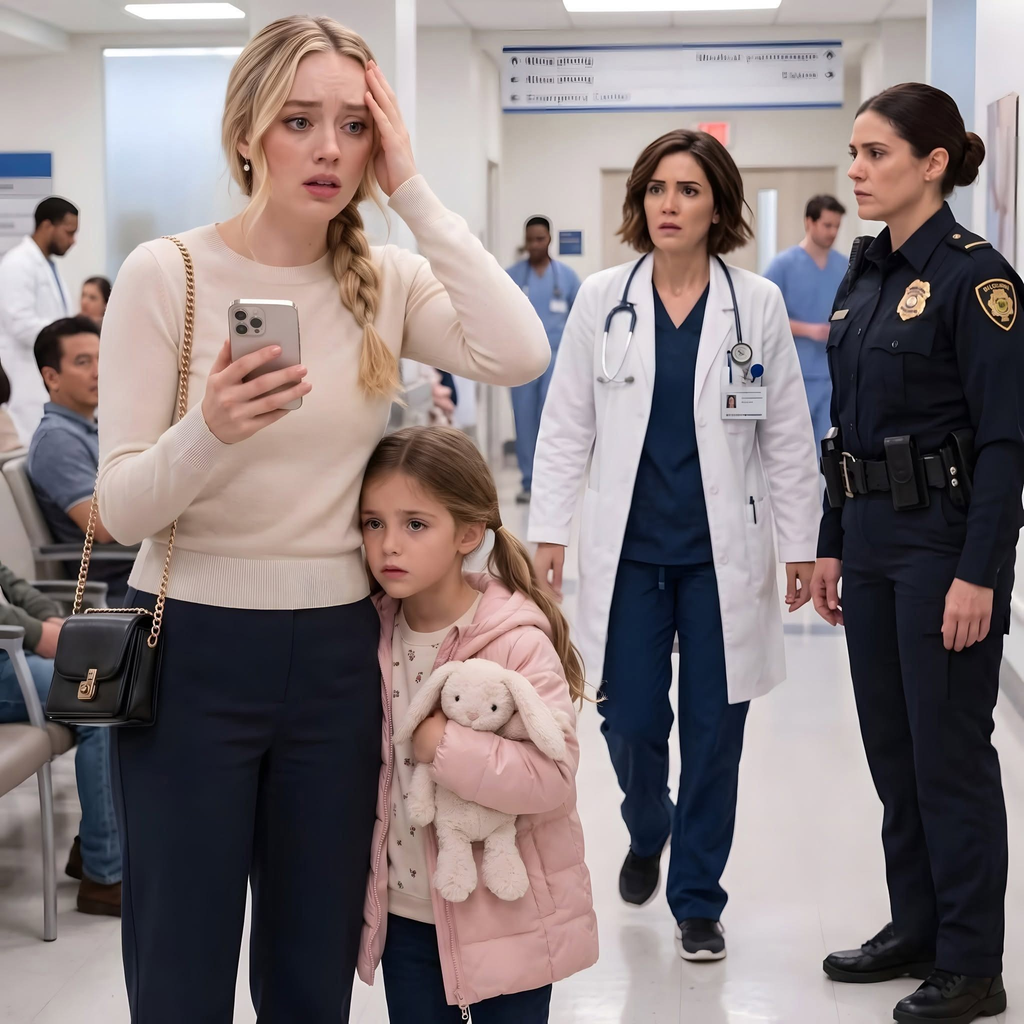
The room seemed to tilt.
I couldn’t breathe properly.
This wasn’t an infection.
It wasn’t an accident.
Someone had hurt my daughter.
I looked at Lily sleeping against my chest, her tiny fingers curled around the ear of her stuffed rabbit.
“Who?” I whispered.
Dr. Lawson sat beside me.
“We don’t know yet. And I need you to understand something very important. From this point forward, our priority is Lily’s safety. You do not need to investigate this yourself.”
I nodded, although my mind was already racing.
Daniel.
The name appeared in my thoughts before I could stop it.
I looked down at my phone.
He had sent another message.
Why aren’t you answering me?
Then another.
Is Lily sick?
And then:
Bring her home now.
I showed the messages to Dr. Lawson.
Her expression became serious.
“Please don’t respond yet.”
A few minutes later, a hospital social worker arrived, followed by a detective.
The detective introduced herself as Detective Morgan and spoke gently.
“We’re going to ask you some questions. Some of them may be difficult, but you don’t have to answer everything immediately.”
I told her everything.
The changes in Lily.
The times Daniel had stayed home with her.
The way Lily had recently avoided him.
The unexplained fear.
The messages.
Everything I could remember.
Then Detective Morgan asked the question I had been dreading.
“Is there anyone else who regularly has access to your daughter?”
I shook my head.
“No. Mostly me and my husband.”
She wrote something down.
“Does your husband know you’re at the hospital?”
“Yes.”
“Has he asked why?”
I showed her the messages.
She studied them carefully.
Then she looked at me.
“Do not take Lily home tonight.”
My heart dropped.
“Where will we go?”
“You’re already somewhere safe.”
That sentence nearly broke me.
Because until that moment, I had believed home was the safest place in the world.
While Detective Morgan spoke with the hospital staff, my phone rang.
Daniel.
I stared at the screen.
Detective Morgan held up her hand.
“Don’t answer.”
I didn’t.
The call ended.
Then it started again.
And again.
Eventually, a voicemail appeared.
I played it on speaker.
Daniel’s voice sounded irritated.
“Emily, this is ridiculous. Call me back. Whatever happened, we can talk about it at home.”
Detective Morgan looked at me.
“Has he ever spoken like that when Lily was upset?”
I swallowed.
“Yes.”
“Has he ever told you that she was being dramatic?”
“Yes.”
The detective nodded slowly.
“We’ll handle the rest.”
That night, I barely slept.
Lily remained curled beside me in a private hospital room.
Every time she stirred, I woke immediately.
At around three in the morning, Detective Morgan returned.
“We’ve spoken with your husband.”
My heart began pounding.
“What happened?”
“He came to the hospital.”
I sat upright.
“Is he here?”
“No. Security stopped him from entering the pediatric area.”
I closed my eyes.
“He demanded to see Lily,” she continued. “He also asked whether she had spoken to anyone.”
A cold feeling moved through me.
“Why would he ask that?”
Detective Morgan didn’t answer directly.
“Because of the medical findings and the circumstances, we’re treating this as a criminal investigation.”
I looked toward my sleeping daughter.
“What happens now?”
“Child protective services will help arrange a temporary safety plan. Your husband will not have unsupervised access to Lily while the investigation continues.”
For the first time since arriving at the hospital, I felt something other than fear.
Relief.
Small.
Fragile.
But real.
The next morning, investigators searched our home with the appropriate legal authorization.
I stayed at the hospital with Lily.
By afternoon, Detective Morgan called.
“We found information that requires further investigation.”
My stomach tightened.
“What information?”
“I don’t want to discuss details over the phone. But we have enough to move forward.”
Two days later, Daniel was taken into custody.
I never saw it happen.
I never wanted to.
My lawyer later explained that investigators had uncovered evidence contradicting several statements Daniel had made.
More importantly, they found inconsistencies surrounding the periods when Lily had been alone with him.
The case continued for months.
There were interviews.
Medical evaluations.
Court hearings.
Long nights when I wondered whether Lily would ever feel safe again.
But through all of it, I learned something I had not understood before.
Healing did not happen because someone was arrested.
Healing happened in tiny moments.
The first time Lily laughed again.
The first night she slept without asking me to leave the hallway light on.
The first morning she willingly walked into a room without checking whether I was nearby.
Her therapist taught her that none of what happened was her fault.
I repeated those words every day.
“You did nothing wrong.”
Sometimes she would nod.
Sometimes she would climb into my lap.
Sometimes she said nothing at all.
And that was okay.
Months later, the investigation reached the courtroom.
I sat beside Lily’s advocate.
Daniel sat across the room.
For the first time in years, he didn’t look powerful.
He looked like a man who had finally discovered that his lies could not control everyone around him.
The evidence was presented carefully and privately.
I never allowed myself to focus on the details.
I focused on Lily.
Eventually, the court issued protective orders that permanently changed his access to her.
The legal process continued, but Lily’s immediate safety was no longer in question.
One evening, nearly a year after that terrible bath-time conversation, I found Lily sitting at the kitchen table drawing.
She had drawn three people.
Her.
Me.
And a large yellow sun above us.
I smiled.
“That’s beautiful.”
She looked up.
“Mommy?”
“Yes?”
“Are we safe now?”
I sat beside her.
“Yes, sweetheart. We are.”
She thought about that for a moment.
Then she smiled.
“Good.”
She returned to her drawing.
I watched her color the sun until the page was almost completely yellow.
That night, after she went to bed, I stood alone in the hallway and remembered the woman I had been before that hospital visit.
I had trusted appearances.
I had explained away warning signs.
I had believed that because someone was my husband, he must also be safe for our child.
I would never make that mistake again.
But I also refused to let fear become Lily’s entire childhood.
We changed homes.
I returned to work.
I rebuilt friendships I had neglected.
And slowly, our life became ordinary again.
Not the old kind of ordinary.
A better kind.
One evening, Lily came running into the kitchen carrying a school certificate.
“Mommy! Look!”
I opened my arms.
She crashed into me, laughing.
I hugged her tightly.
For a moment, I closed my eyes.
I remembered the hospital.
The fluorescent lights.
The detective’s quiet voice.
The moment Lily had grabbed my sweater and whispered that she didn’t want to go home.
And I understood something I would carry for the rest of my life.
A child doesn’t always know how to explain what is wrong.
Sometimes they only show you.
A changed expression.
A sudden fear.
A refusal to go somewhere.
A sentence that seems small until you finally understand what it means.
That night, Lily rested her head against my shoulder.
“Mommy?”
“Yes?”
“Thank you for listening to me.”
My eyes filled with tears.
I kissed the top of her head.
“You never have to thank me for that.”
She smiled.
And as I held my daughter, I made myself one promise.
No matter how difficult the truth became, I would always believe her enough to listen.
Because sometimes the most important thing a parent can do isn’t knowing the answer.
It’s recognizing the moment their child is asking for help—and refusing to look away.
💬THE END! THANK YOU FOR READING! ❤️🙏