

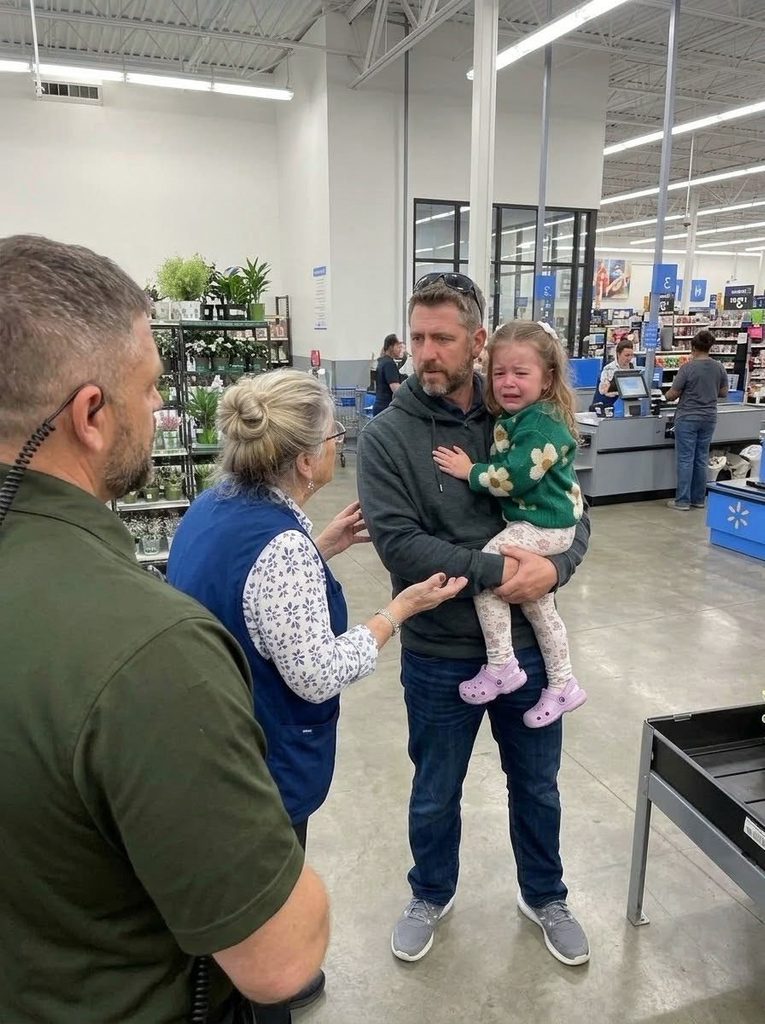
“But I didn’t touch him.” “That’s good. But he says you did.” “I called the police because a little girl was screaming that she didn’t know him.” The lawyer leaned back. “Did the police find anything?” “They came to the store. They took my statement. I don’t know what happened afterward.” “That’s unfortunate.”
I stared at him.
“Unfortunate for whom?”
He didn’t answer.
I eventually found another attorney through a woman at my church. Her name was Denise Harper. She was in her early forties, wore inexpensive suits, and had a habit of listening without interrupting.
After reading my statement, she put the papers down.
“Mrs. Keller, do you have the photographs?”
I handed her my phone.
She studied each one.
The first showed Wayne Haller looking directly at me.
The second showed the little girl in the back seat.
The third showed his license plate.
“Good,” Denise said.
“Good?”
“You documented what happened. That’s important.”
“Will it help?”
“It might. But I need you to understand something. Being right and proving you’re right are two different things.”
I understood that.
I’d spent thirty-one years delivering mail. I knew the difference between a letter being written and a letter actually reaching its destination.
Denise requested the police report.
Three days later, she called me.
“There’s something you need to know.”
My stomach tightened.
“What?”
“The police department opened an investigation that afternoon. They contacted the man whose name appeared on the driver’s license.”
“Wayne?”
“Yes. He told them the girl was his daughter and that there had been a custody disagreement.”
I gripped the kitchen counter.
“So they believed him?”
“Not exactly. They documented the complaint. But without an immediate confirmation of an abduction, they couldn’t establish what had happened.”
“What happened to the little girl?”
Denise was quiet.
“That’s what I’m trying to find out.”
For weeks, I heard nothing.
Then, in June, I received a phone call from a woman named Patricia Corliss.
She was the woman Quinn had mentioned.
Miss Corliss.
Her voice trembled.
“Are you Mavis Keller?”
“Yes.”
“Did you work at the store on Tuesday, March fourteenth?”
I sat down.
“Yes.”
“Did you see a little girl in pink rain boots?”
My throat tightened.
“Quinn?”
The woman began crying.
“Oh, thank God.”
I held the phone with both hands.
“Where is she?”
“She’s home. She’s safe.”
I closed my eyes.
For the first time in three months, I felt like I could breathe.
Miss Corliss explained that she ran a small licensed childcare center in Fort Smith. Quinn had been in her care for nearly a year.
Her mother, Sarah, worked long shifts at a rehabilitation center.
Wayne Haller was Sarah’s former boyfriend.
He was not Quinn’s father.
He had lived with Sarah for several months and had helped care for Quinn when she was younger. But their relationship ended the previous winter.
He had no legal custody rights.
On the Tuesday I’d seen him, he had arrived at the childcare center shortly before closing.
He told Patricia that Sarah had sent him.
Patricia knew something was wrong because Sarah had never authorized him to collect Quinn.
She refused to release the child.
Wayne argued.
Then he left.
Patricia assumed he’d gone.
She called Sarah, who confirmed that she had not sent him.
But by the time they realized Quinn was missing from the center’s side entrance, Wayne was already gone.
The police were called.
And then, forty minutes later, my 911 call came in.
“How did they find her?” I asked.
“Your photographs,” Patricia said.
I stopped breathing.
“What?”
“The license plate. The police used it to identify his vehicle. They found him at a relative’s house that evening. Quinn was with him.”
I covered my mouth.
Patricia continued.
“Sarah got there before midnight. Wayne was arrested after the investigation. There were court proceedings. It’s been terrible.”
I could hear her trying to steady herself.
“Mrs. Keller, I don’t know how to thank you.”
I began crying.
Not pretty crying.
The kind where your shoulders shake and you have to sit down because your legs don’t feel strong enough to hold you.
“I didn’t do anything,” I whispered.
“You did,” she said firmly. “You didn’t let her words disappear.”
After we hung up, I called Denise.
She listened carefully.
Then she said, “That’s very important information.”
“Can Patricia testify?”
“Possibly. I’ll contact her.”
“Will Sarah come?”
“That’s another question.”
I understood.
Sarah had been through enough.
But Denise made the request.
And two weeks later, Sarah agreed to meet us.
She arrived at Denise’s office carrying a photograph.
It showed Quinn sitting at a kitchen table, wearing a yellow sweater and smiling with her mouth full of strawberries.
Sarah placed it on the desk.
“This is my daughter.”
I smiled.
“She’s beautiful.”
Sarah nodded.
“She’s getting better. She still has nightmares sometimes. She doesn’t like being carried by strangers.”
I looked down.
“I’m sorry.”
“Why are you apologizing?”
“Because I keep thinking about how I stepped aside.”
Sarah’s expression softened.
“You called 911.”
“I should have done more.”
“You did what you could.”
I didn’t believe her.
Not completely.
Sarah looked at the photograph.
“Wayne used to be kind. That’s what makes this so difficult. Quinn knew him. He used to read her stories. She called him Daddy Wayne for a while.”
“Then why did she say he wasn’t her daddy?”
“Because she understood he wasn’t supposed to take her. Because she was scared. Because she knew something was wrong.”
Sarah looked at me.
“And because she had been told that if he ever came to get her again, she should scream.”
I felt cold.
“Had he tried before?”
Sarah nodded.
“Once. He showed up at my apartment. I got him to leave. I thought that was the end of it.”
She took a breath.
“I didn’t know he’d go to the daycare.”
I didn’t ask her why she hadn’t told the police sooner.
I didn’t need to.
People don’t always recognize danger while they’re still trying to convince themselves someone they once loved isn’t dangerous.
Before leaving, Sarah touched my hand.
“There’s something else.”
“What?”
“Quinn remembers you.”
I laughed softly.
“She does?”
“She talks about the sticker lady.”
I smiled.
“Did she keep it?”
Sarah nodded.
“She wouldn’t let me throw it away. It’s on her bedroom mirror.”
For the first time since March, I felt something other than fear when I thought about that afternoon.
But the lawsuit was still there.
And Wayne Haller’s attorney wasn’t interested in the truth.
He was interested in winning.
PART 3 — THE PRICE OF DOING THE RIGHT THING
By August, the case had become the most expensive thing I’d ever experienced.
Denise worked on a reduced fee, but there were still court filings, depositions, and preparation costs.
I sold Walter’s old fishing boat.
It wasn’t worth much, but every little bit helped.
I also stopped going to the grocery store where I’d worked.
I couldn’t stand walking past the entrance.
I imagined people recognizing me.
I imagined someone whispering, There’s the old woman who got sued for harassing a customer.
One afternoon, I ran into Mr. Darby at the pharmacy.
He was standing near the cold medicine.
For a moment, neither of us spoke.
Then he said, “Mavis.”
I nodded.
“Mr. Darby.”
He looked uncomfortable.
“I heard about the trial.”
“Yes.”
“I hope it works out.”
I studied his face.
“Did you know the little girl wasn’t his daughter?”
He looked down at the box in his hand.
“I didn’t know that at the time.”
“Did you ever call the police after I told you what she said?”
He didn’t answer.
“Mr. Darby?”
“I had a store to run, Mavis.”
I nodded slowly.
“I did too.”
He looked up.
“What?”
“Thirty-one years of delivering mail. Sometimes people opened the door and told me something wasn’t right. Sometimes children cried. Sometimes you had to pay attention to things that weren’t on the schedule.”
He swallowed.
“I was trying to protect the store.”
“And I was trying to protect a child.”
I walked away before he could respond.
That evening, Denise called.
“We received the latest filing from Haller’s attorney.”
“Anything new?”
“He’s insisting you caused him emotional harm and interfered with his relationship with Quinn.”
I almost laughed.
“His relationship?”
“That’s how they’re presenting it.”
“Can they do that?”
“They can make the argument. Whether it holds up is another matter.”
She paused.
“There’s something else. Haller’s attorney has requested your personnel records from the store. He wants to show you have a history of confronting customers.”
I frowned.
“I’ve worked there nine years. I’ve never been written up.”
“I know. We requested those records too.”
“Good.”
“But we need to prepare for the possibility that he’ll try to make you look unreasonable.”
I sat quietly.
Then I asked the question that had been bothering me for months.
“Denise, what happens if we lose?”
She didn’t soften her answer.
“We fight the judgment if there’s a legal basis. But I can’t promise you a particular result.”
“And if I can’t pay?”
“We’ll deal with that if it happens.”
After hanging up, I went into Walter’s old study.
His reading glasses were still on the desk.
I picked them up and turned them over in my hands.
He had always told me that doing the right thing was easy when it cost nothing.
The difficult part came afterward.
I wondered what he would have told me.
Then I remembered something he’d said years ago when a neighbor accused him of being foolish for helping an elderly man shovel snow.
Walter had shrugged.
“Maybe I am foolish. But I can sleep.”
I put his glasses back.
And I decided I wasn’t going to apologize for making that phone call.
In September, Denise received a call from the prosecutor’s office.
She asked me to come to her office the next morning.
When I arrived, she was holding a thick folder.
“There’s been a development in Wayne Haller’s criminal case.”
I sat down.
“Did he plead guilty?”
“Not exactly. His case has been resolved through a negotiated plea. He entered a plea to charges connected with unlawfully taking and retaining Quinn. The court also entered protective orders.”
I stared at her.
“So he admitted it?”
“He admitted conduct that supports the criminal case. He did not admit every allegation Sarah made.”
I nodded.
It was enough to understand.
Then Denise turned another page.
“There’s something we need to discuss about your civil trial.”
“What?”
“Wayne’s attorney has known about the criminal proceedings for some time. They are still pursuing the lawsuit.”
“Even after he admitted taking her?”
“Yes.”
I looked at the folder.
“How can he sue me?”
“People can file lawsuits even when their own conduct is questionable. That doesn’t mean they’ll win.”
Denise leaned forward.
“I want you to remember something. We’re not trying the criminal case again. We’re defending your actions. You saw a frightened child. You asked questions. You contacted the authorities. You documented what you witnessed.”
She paused.
“And the photographs are important.”
I thought about that.
Three photographs.
Three little pieces of evidence I’d taken with trembling hands.
Then Denise said something that surprised me.
“There’s another witness.”
“Who?”
“An employee from the store.”
I frowned.
“Who?”
“His name is Kevin Brooks. He worked in the parking lot that afternoon.”
I remembered him vaguely.
A young man who collected carts.
“Why didn’t he come forward earlier?”
“Because nobody asked him until we started interviewing former employees.”
Denise explained that Kevin had seen the entire confrontation from near the entrance.
He had watched Wayne pull away from the door.
He had seen me step aside.
And he had seen me take photographs.
But most importantly, he had heard Wayne say something while walking toward his car.
Something that wasn’t included in the police report.
Denise looked at her notes.
“He said Wayne told you, ‘You should have minded your own business. Now you’ve made this much harder than it needed to be.’”
I felt the hairs rise on my arms.
“Those were his exact words?”
“That’s what Kevin remembers.”
I stared at the desk.
That sentence changed everything.
Because it suggested Wayne knew exactly what he’d done.
And he knew I’d noticed.
Kevin agreed to testify.
But there was still one problem.
The store’s security cameras.
They had been working that afternoon.
Denise had requested the footage months earlier.
The store claimed it was no longer available because the recordings were routinely overwritten.
I felt sick when I heard that.
“There’s no copy?”
“Not that we’ve found.”
“So it’s just my word?”
“And the photographs. And the police records. And the witnesses.”
I nodded.
I had spent thirty-one years believing that if you kept the right records, the truth would eventually find its way to the right person.
Now I wasn’t so sure.
The trial date approached.
October arrived.
I bought a navy-blue blouse at a discount store.
I ironed it twice.
I put my wedding ring on.
And on the morning of the trial, I woke up before sunrise.
I made coffee.
I ate half a piece of toast.
Then I took something from the kitchen drawer.