
I pressed my thumb twice against the concealed emergency transmitter beneath my watchband.
Derek never noticed.
He was too busy enjoying the way everyone stared at me.
He gave the chain between the cuffs a little tug, smiling as though he had finally proven something important.
“There,” he said. “Maybe now you’ll learn not to argue with somebody who actually has authority.”
My wrists remained loose at my sides.
I could have responded in half a dozen ways.
I could have told him my rank.
I could have given him the names of people who returned my calls within thirty seconds.
I could have explained that the “boring paperwork job” he had mocked for fifteen years had included command responsibility for thousands of soldiers, briefings inside rooms where phones were forbidden, and decisions that had carried consequences across continents.
Instead, I looked at him.
“Derek, take the handcuffs off.”
He laughed.
“Still giving orders.”
My aunt Melissa covered her mouth, trying not to smile.
My uncle Ray shook his head.
“Oh, Caroline. Just play along. He’s teasing you.”
That sentence bothered me almost as much as the cuffs.
Teasing.
Our family had always had a word ready whenever cruelty became inconvenient.
They called insults jokes.
Humiliation became teasing.
Favoritism became tradition.
And silence became proof that the person being mistreated had accepted it.
Laura came toward us from the grill.
“Derek, seriously. Enough.”
He glanced at her.
“I’m not doing anything.”
“You put handcuffs on her.”
“Training demonstration.”
“You’re at a barbecue.”
“So?”
Laura lowered her voice.
“You’ve been drinking.”
Derek’s expression changed.
Only slightly.
But I saw it.
He had consumed at least three beers since I arrived. Perhaps more before that.
There was a bottle sitting near his chair.
His service weapon was holstered at his hip.
His department badge was clipped to his belt.
And he had just used department-issued restraints on a civilian during a private family gathering because he wanted applause.
I looked toward my mother.
She had gone strangely pale.
Not because she understood what Derek had done.
Because she knew I was no longer smiling.
My mother knew my moods better than anyone.
For decades, she had complained that I was too quiet.
Too serious.
Too secretive.
Yet one thing she had learned was that when I became completely still, something had changed.
“Caroline,” she said carefully, “maybe just apologize so Derek will take them off.”
I looked at her.
“Apologize for what?”
She opened her mouth.
Nothing came out.
Derek snorted.
“For disrespecting an officer.”
“You’re off duty.”
“Badge doesn’t turn off.”
“Your authority has limits.”
Several cousins made exaggerated sounds.
“Ooooh.”
Derek stepped closer.
“Want to test those limits?”
“No.”
“Sounds like you do.”
I kept my voice even.
“I asked you once to remove them. I’m asking you a second time.”
“And if I say no?”
“Then whatever happens next will be your decision, not mine.”
His smile widened.
He mistook calm for surrender.
He always had.
“Everybody hear that?” he said loudly. “Government paperwork Caroline is threatening me.”
“I didn’t threaten you.”
“Sounded like a threat.”
“It was a warning.”
“That’s even better.”
He reached into his pocket for his phone.
“Maybe I should arrest you for real.”
Laura stared at him.
“Derek!”
“For what?” Uncle Ray asked.
Derek shrugged.
“Disorderly conduct. Resisting. Threatening law enforcement. I’ll think of something.”
The backyard went quiet.
Some people laughed nervously.
Others realized the joke had stopped being funny.
My nephew Mason, who was sixteen, lowered his phone after apparently recording the entire thing.
I noticed that.
So did Derek.
“Hey,” he snapped. “Don’t record me.”
Mason hesitated.
“You were joking.”
“I said turn it off.”
Mason looked toward his mother.
Laura immediately stepped between them.
“Leave my son alone.”
Derek rolled his eyes.
“Everybody’s so sensitive now.”
Then came the sound.
Faint at first.
Engines.
Several of them.
Fast.
The street in front of Laura’s house was normally quiet, especially during neighborhood cookouts.
Everyone heard the vehicles before they saw them.
Derek turned toward the side gate.
“What the hell?”
The engines grew louder.
One of my younger cousins ran toward the driveway.
“There are SUVs coming.”
Uncle Ray laughed.
“Maybe somebody invited the president.”
Nobody else laughed.
I closed my eyes briefly.
I had hoped the response team would arrive quietly.
But the signal I had transmitted was not a casual request for transportation.
It was coded distress.
My protective detail had been stationed several blocks away, exactly as protocol required whenever I was attending a private event where I had asked them to maintain distance.
They knew I valued privacy with my family.
They also knew that two presses meant I could not safely speak.
The first black SUV turned into the street.
Then a second.
Then a third.
Then a fourth.
They moved with deliberate speed, not reckless but urgent, and stopped almost simultaneously along the curb.
Doors opened.
Men and women in plain clothes emerged.
Every one of them moved with purpose.
No shouting.
No confusion.
No hesitation.
My family froze.
Derek’s posture changed instantly.
His hand dropped toward his holster.
I spoke sharply.
“Don’t.”
He looked at me.
For the first time that afternoon, uncertainty crossed his face.
Four members of my protective detail entered through the open side gate.
Their eyes scanned hands, exits, windows, weapons.
Colonel Marcus Reed came first.
He had worked with me for nearly eight years.
He saw the cuffs.
Then he saw Derek.
His expression became cold.
“General Hayes?”
Silence.
Absolute silence.
Somewhere near the picnic table, a plastic cup tipped over.
I heard lemonade dripping onto the grass.
Derek stared at Marcus.
Then at me.
“General?”
Marcus stopped several feet away.
“Ma’am, are you injured?”
“No.”
“Was restraint voluntary?”
“No.”
His gaze moved to Derek.
“Sir, step away from Major General Hayes.”
My mother made a strange sound behind me.
Someone whispered, “Major General?”
Derek did not move.
“You federal?”
Marcus ignored the question.
“Step away from her.”
Derek looked around.
More personnel were visible near the driveway.
One was speaking into a radio.
Another positioned himself near the gate.
Derek suddenly remembered the weapon at his hip and raised both hands slightly.
“Okay. Everybody calm down. This is family stuff.”
Marcus stared at the handcuffs.
“You restrained her?”
“It was a joke.”
“Remove them.”
Derek swallowed.
Then he reached toward his belt.
Two members of the detail immediately shifted.
“Slowly,” Marcus said.
Derek’s face flushed.
“I’m getting the key.”
“State what you’re reaching for.”
“My handcuff key.”
He removed it carefully.
For once, nobody laughed at him.
His fingers shook as he unlocked the first cuff.
Then the second.
I rubbed my wrist.
There was a red mark where he had tightened the metal unnecessarily.
Marcus noticed it.
“Medical?”
“No.”
“Law enforcement response?”
I glanced at Derek.
He looked terrified now.
Not humiliated.
Terrified.
“No immediate response,” I said.
Derek exhaled.
That was his second mistake.
He thought I had saved him.
I had only prevented the situation from becoming chaotic.
Marcus nodded.
“Yes, ma’am.”
My mother stepped forward.
“Caroline?”
I turned.
Her eyes moved from me to the vehicles and back again.
“What did he call you?”
Nobody spoke.
My sister Laura looked as though she had forgotten how.
Marcus answered because he assumed the question was informational rather than personal.
“Major General Hayes, ma’am.”
My mother stared at me.
“You’re a general?”
“Yes.”
“For what?”
There was almost something absurd about the question.
I looked at her.
“The United States Army.”
Her mouth opened.
Closed.
Then opened again.
“No.”
I almost smiled.
“Yes.”
“But you said you worked in an office.”
“I work in many offices.”
“You said administration.”
“Sometimes.”
Derek finally found his voice.
“You’re telling me you’re a two-star general?”
I looked at him.
“I’m not telling you anything. Colonel Reed told you.”
Marcus’s expression remained neutral, but I knew him well enough to see the smallest flicker of amusement.
My cousin Trevor pulled out his phone.
“No way.”
He began searching my name.
Within seconds, his face changed.
“Oh my God.”
Everyone looked at him.
He held his phone up.
“It’s real.”
My aunt Melissa hurried over.
“What does it say?”
Trevor read from the screen.
“Major General Caroline Elizabeth Hayes… commanding general… twenty-eight years of service…”
He stopped.
His eyes moved rapidly.
“Decorations…”
Derek snapped, “Give me that.”
Trevor pulled the phone away.
“You have your own phone.”
Now everyone was searching.
For the first time in my life, I watched my family discover me through public biographies instead of asking me who I was.
The irony was difficult to ignore.
My mother sank into a patio chair.
Laura covered her mouth.
Uncle Ray kept saying, “Well, I’ll be damned.”
My aunt Melissa stared at the old blue sedan in the driveway.
“But she drives that.”
I actually laughed.
I couldn’t help it.
Everybody looked at me.
“Yes, Melissa. Generals are permitted to own used cars.”
She flushed.
“That’s not what I meant.”
“I know exactly what you meant.”
Marcus approached me quietly.
“Ma’am, we should probably move.”
I shook my head.
“Give me a few minutes.”
“Yes, ma’am.”
He retreated.
That small gesture caused another wave of silence.
My relatives had spent years watching me clear plates, refill drinks, tolerate interruptions, and sit at the end of tables because nobody considered my work important enough to discuss.
Now they were watching trained professionals wait for my instructions.
Derek rubbed the back of his neck.
“Caroline, come on. You know I was kidding.”
I looked at him.
“You put handcuffs on me without consent.”
“Family joke.”
“You threatened to manufacture charges.”
His face tightened.
“I wasn’t serious.”
“You told a minor to stop recording you.”
“That doesn’t mean anything.”
“You were drinking while carrying your service weapon.”
“I’m allowed to carry off duty.”
“That isn’t what I said.”
His eyes hardened.
There he was.
The old Derek.
The frightened man disappeared for a second, replaced by the cousin who had always believed aggression could repair embarrassment.
“So what?” he demanded. “Now you’re going to destroy my career because you outrank me?”
“No.”
He blinked.
“No?”
“I don’t outrank you.”
Confusion spread across his face.
“You just—”
“I’m Army. You’re a county sheriff’s deputy. Different chains of authority.”
A few people almost smiled.
Derek didn’t.
“What happens to your career will depend on your actions, your department’s policies, the evidence, and whatever you choose to do next.”
His eyes moved toward Mason.
The phone was still in my nephew’s hand.
Then toward the driveway.
My dash camera faced almost directly toward the side yard entrance.
Derek noticed.
“You recorded this?”
“My vehicle records automatically.”
His face drained of color.
“You always record family?”
“I record my vehicle surroundings.”
He stared at me.
“This is insane.”
“No, Derek. What’s insane is believing a badge allows you to handcuff relatives because they don’t laugh at your jokes.”
My mother stood.
“That’s enough.”
Everyone turned toward her.
For a moment, I thought she meant Derek.
Then she looked at me.
“Caroline, you’ve made your point.”
Something inside me went very quiet.
“What point?”
“You embarrassed him.”
I stared at her.
“Mom, he handcuffed me.”
“And he took them off.”
“After my security detail arrived.”
“But he took them off.”
Derek seized the opening.
“Exactly.”
Laura looked at our mother in disbelief.
“Mom.”
“What?” she demanded. “I’m trying to keep the family together.”
I nodded slowly.
There it was.
The sentence I had heard in one form or another since childhood.
Keep the family together.
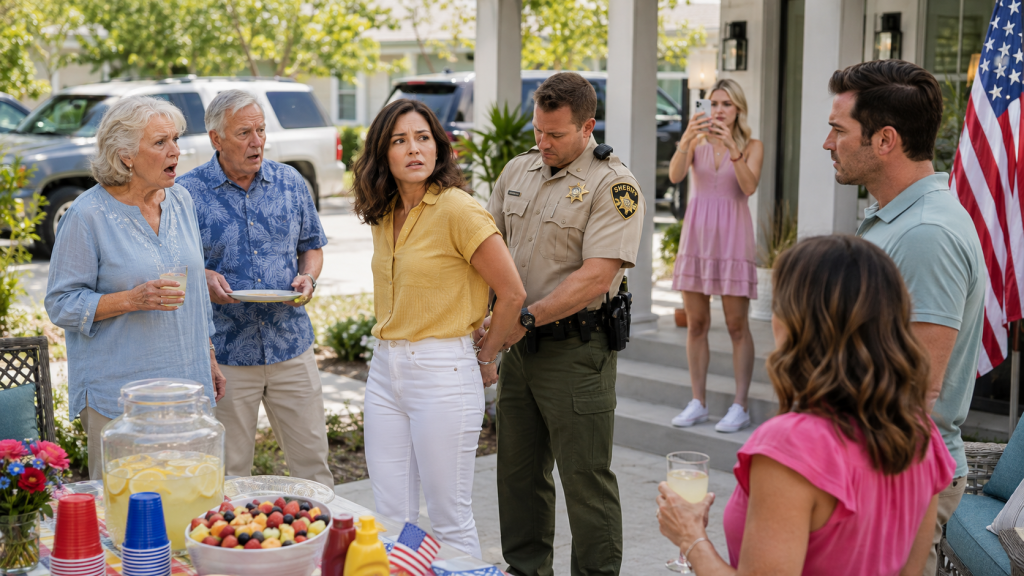
Usually it meant the person who had been hurt needed to become quieter so the person who caused the harm would not feel uncomfortable.
My mother reached for my arm.
I stepped back.
Her hand froze.
“Caroline.”
“No.”
Her expression changed.
“What?”
“I’m not doing this anymore.”
“Doing what?”
“Making myself smaller so this family can stay comfortable.”
Nobody moved.
I looked around the backyard.
At the relatives who had laughed when Derek mocked my work.
At the aunt who had once asked whether I was “too difficult” to find a husband.
At the uncle who spent twenty years calling me Private Paperwork even after I repeatedly explained I had commissioned as an officer.
At cousins who had asked me for money and contacts and favors while telling their children not to end up “stuck” like Caroline.
Then I looked at my mother.
“You want to know why I never told you?”
Her eyes filled.
“I thought you couldn’t.”
“That was part of it. Much of my work was classified. Specific assignments, locations, operations. But my rank wasn’t classified.”
She stared.
“You could have told us?”
“Yes.”
The pain on her face surprised me.
“Then why didn’t you?”
I took a slow breath.
“Because years ago, when I made captain, I came home planning to tell everyone.”
She looked confused.
“I don’t remember that.”
“I do.”
The cookout had been at Uncle Ray’s house.
I had been thirty.
Still young enough to believe a promotion might finally make my family see me differently.
I had carried the news around for two days waiting for the right moment.
Then Derek’s older brother had announced that he had become assistant manager at an auto dealership.
My mother had spent twenty minutes praising him.
When someone asked about me, she had waved her hand.
“Caroline still does her Army office thing.”
Everyone laughed.
So had I.
Then I went home without telling anyone.
“I realized something that day,” I said. “You weren’t interested in learning who I was. You were interested in keeping the story you had already written about me.”
My mother shook her head.
“That’s not fair.”
“Isn’t it?”
“We were proud of you.”
“When?”
She stared at me.
I waited.
No answer came.
“When were you proud?” I asked quietly. “Was it when you told Aunt Melissa I probably stayed in the military because I couldn’t make it in the private sector?”
Melissa looked at the grass.
“Was it when you told Laura not to ask me for career advice because I had never had a real career?”
Laura’s eyes widened.
“You said that?”
My mother looked away.
“Was it when Derek got promoted to deputy second class and you made a cake, but when I was promoted to colonel you didn’t know because you never once asked what rank I held?”
“I didn’t understand military ranks.”
“You could have asked.”
That silenced her.
“You never asked.”
I turned toward everyone else.
“None of you did.”
Uncle Ray cleared his throat.
“We figured you’d tell us if something important happened.”
“I tried.”
“When?”
“Hundreds of times.”
He frowned.
I gave a small smile.
“Every time someone asked how work was, and then interrupted me two sentences later.”
No one responded.
Laura began crying.
That hurt more than I expected.
She came closer.
“I’m sorry.”
I looked at her.
Of everyone in the family, Laura had probably been the least cruel.
But even she had participated in the pattern.
“You didn’t know,” I said.
“I should have.”
“Yes.”
She nodded.
Not defensive.
Not angry.
Just accepting it.
That mattered.
Then Derek ruined the moment.
“So this is what you wanted?”
I turned toward him.
“What?”
“You wanted everybody to feel guilty?”
“No.”
“You come here with your secret security people and your cameras and whatever else, waiting for somebody to mess up so you can prove you’re better than us.”
Marcus glanced toward me.
I raised one finger slightly.
He stayed where he was.
Derek stepped closer.
“You’ve always thought you were better.”
“I’ve never said that.”
“You didn’t have to.”
He pointed toward the street.
“Look at this circus.”
“The circus arrived because you restrained a protected senior military officer while armed.”
His jaw tightened.
“Stop saying it like that.”
“How should I say it?”
“You’re my cousin.”
“That did not stop you.”
His face went red.
For a second, I saw the same reckless impulse that had made him close the cuffs.
He wanted control back.
He wanted the backyard to return to the version of reality where he was the impressive one and I was the family joke.
But everyone had their phones out now.
Everyone had seen.
The illusion could not be restored.
He turned toward Mason.
“Delete that video.”
Laura immediately said, “No.”
Derek ignored her.
“Mason, delete it.”
The sixteen-year-old looked terrified but shook his head.
“No.”
“Give me the phone.”
I stepped between them.
“Do not approach him.”
Derek stopped.
“You ordering me now?”
“I’m protecting my nephew.”
“You think I’m going to hurt him?”
“I think you’ve demonstrated poor judgment today.”
His mouth twisted.
“Careful.”
Marcus moved one step forward.
Derek noticed.
His shoulders dropped.
That should have been the end of it.
It wasn’t.
A white sheriff’s cruiser turned onto the street.
Apparently one of the neighbors had called after seeing the convoy and unfamiliar armed personnel.
Another cruiser followed.
Derek whispered a curse.
Two uniformed deputies got out.
The first was Sergeant Linda Morales.
I recognized her immediately.
Not personally.
From a charity event six months earlier where I had spoken on veterans’ transition programs.
She recognized me too.
Her eyes widened slightly.
Then she saw Derek.
Then the handcuffs hanging from his belt.
Then the red marks around my wrists.
“Deputy Hayes,” she said.
Derek straightened.
“Sergeant.”
“Explain.”
He glanced at me.
“Family misunderstanding.”
Morales looked toward me.
“Ma’am?”
I respected her immediately for not accepting his description.
“My cousin applied department-issued handcuffs to me without permission after a disagreement about my parked vehicle. I requested twice that they be removed. He refused until my protective detail arrived.”
Morales’s expression became unreadable.
“Were you placed under arrest?”
“No.”
“Were you informed you were detained?”
“No.”
“Did he identify a legal basis for restraint?”
“He claimed I was disrespecting law enforcement. Later he mentioned disorderly conduct, resisting, and threatening an officer, and said he would ‘think of something.’”
Derek exploded.
“Oh, come on!”
Morales turned.
“Deputy.”
“It was a joke.”
“Stop talking.”
That shocked him more than anything else had.
“Sergeant—”
“Stop. Talking.”
He obeyed.
Morales asked whether there were recordings.
Mason raised his phone.
“I recorded most of it.”
I gestured toward my car.
“Dash camera may have captured portions.”
Other relatives began admitting they had video too.
Derek looked around as if betrayed.
But nobody had created his actions for him.
They had only preserved them.
Sergeant Morales requested Derek’s service weapon temporarily while the matter was assessed.
He resisted verbally.
Then seemed to remember how many cameras were pointed toward him.
He handed it over.
Next came his badge.
Then his department radio.
By the time Morales told him he was being placed on administrative leave pending review, the man who had strutted toward me thirty minutes earlier seemed ten years older.
My mother began crying.
“Can’t we settle this privately?”
Morales looked at her.
“Ma’am, this involves a deputy’s conduct while displaying departmental authority and carrying department equipment. It is no longer solely a private family issue.”
My mother looked at me as though I could reverse gravity.
“Caroline.”
I shook my head.
“No.”
“Please.”
“No.”
“You could tell them you don’t want to complain.”
“I haven’t decided what formal complaint I will make.”
Derek laughed bitterly.
“There it is.”
I looked at him.
“What?”
“Revenge.”
“No.”
“Then drop it.”
“That isn’t how accountability works.”
He stared at me.
“You really would ruin your own cousin.”
I walked closer.
“No, Derek. Listen carefully, because this is the last time I will explain it. If your career is damaged, it will be because you used your badge, restraints, and threats to humiliate someone you believed was powerless.”
His eyes flickered.
I continued.
“You didn’t make a mistake because you didn’t know who I was. You made a mistake because you thought I was nobody.”
The words landed harder than shouting could have.
Everyone heard them.
Including my mother.
Especially my mother.
Derek looked away first.
Sergeant Morales and the other deputy escorted him toward the cruiser to take a formal statement away from the family gathering.
He was not arrested.
Not that day.
But his authority was gone.
And I could tell from the way Morales documented every detail that the department intended to take the matter seriously.
The cookout was over.
No one said it.
It simply ceased to exist.
Children stopped playing.
Food sat untouched.
Ice melted in coolers.
The patriotic music someone had been playing through a speaker had ended, leaving the backyard strangely quiet.
I walked toward the picnic table and picked up the fruit salad I had brought.
Laura stared at me.
“What are you doing?”
“Taking my bowl.”
For some reason, she laughed through her tears.
I did too.
It was so ordinary that it broke something open.
Then she hugged me.
Really hugged me.
Not the quick family hug we exchanged at holidays.
She held on.
“I’m sorry,” she whispered.
“I know.”
“No. I mean for years.”
I closed my eyes.
“I know.”
She stepped back.
“Why didn’t you tell me?”
“Would you have believed me?”
She thought about it.
“I don’t know.”
“That’s why.”
Her face crumpled.
I touched her shoulder.
“You can do better now.”
She nodded.
Behind her, my mother waited.
I knew that look.
She wanted a private conversation.
Normally I would have stayed.
Normally I would have spent an hour managing her emotions about something done to me.
Not this time.
“I’m leaving.”
“Caroline, please.”
“We can talk later.”
“When?”
“When I’m ready.”
Her eyes filled again.
“You’ve never spoken to me like this.”
“That’s part of the problem.”
Marcus opened the rear passenger door of the first SUV.
I paused.
Then looked at my old sedan.
“Have someone drive my car.”
“Yes, ma’am.”
Aunt Melissa stepped forward suddenly.
“Caroline?”
I turned.
She looked embarrassed.
“Are you really responsible for all those people?”
I knew what she meant.
The biography Trevor had found mentioned the number of personnel under my command.
“Yes.”
“How many?”
“Enough.”
She looked astonished.
“And important things?”
I almost laughed.
“Yes, Melissa. Important things.”
She nodded slowly.
Then said something I did not expect.
“I’m sorry I treated you like you were stupid.”
The bluntness made me smile.
“Thank you.”
“I did.”
“I know.”
“I was jealous.”
That surprised me.
“Of what?”
“You never seemed to need anyone’s approval.”
I thought about that.
For years I had believed they mocked me because they considered me weak.
Perhaps some of them had.
But Melissa’s confession reminded me that families create roles for complicated reasons.
The successful one.
The irresponsible one.
The favorite.
The difficult one.
The peacemaker.
The failure.
Once assigned, those roles could become prisons because changing one person’s role forced everyone else to reconsider their own.
I had escaped mine everywhere except home.
Until that afternoon.
I got into the SUV.
The door closed.
Through the tinted window, I watched my family standing in Laura’s yard.
Nobody waved.
Nobody knew what gesture fit anymore.
As we drove away, Marcus sat across from me.
“You all right?”
“Yes.”
He waited.
I smiled faintly.
“You’re allowed to ask me that as a friend, Marcus.”
“Then no rank involved?”
“No rank involved.”
He leaned back.
“That was a spectacularly bad barbecue.”
I laughed.
It came out unexpectedly loud.
“Yes.”
“Food looked decent.”
“Fruit salad was excellent.”
“You made it?”
“Bought it.”
He nodded gravely.
“Strategic decision.”
That made me laugh harder.
For the first time since the cuffs closed, my body released some of its tension.
Then my phone started vibrating.
Messages.
Dozens.
Cousins.
Aunts.
Uncles.
People who had barely contacted me in years.
Some apologized.
Some asked questions.
Some simply wrote versions of the same sentence.
I had no idea.
One message came from Trevor.
YOU HAVE A WIKIPEDIA PAGE???
I smiled.
Then another appeared.
From my mother.
I’m sorry.
I stared at those two words for a long time.
I did not answer.
Not because I wanted to punish her.
Because an apology made too quickly can sometimes become another demand.
Forgive me immediately so I do not have to feel what I did.
I needed to know whether she understood.
The department investigation began the next morning.
I cooperated.
I submitted my dash camera footage.
Mason submitted his recording with Laura’s permission.
Three other relatives provided videos.
The evidence left little room for reinterpretation.
Derek had approached me.
He had mocked me.
He had invented a parking issue.
He had applied restraints without consent.
He had refused repeated requests to remove them.
He had invoked his status as law enforcement.
And he had discussed inventing possible charges.
The department also confirmed he had consumed alcohol while armed.
An internal affairs investigator interviewed me two days later.
She was professional and thorough.
At the end, she asked a question I had expected.
“General Hayes, do you believe Deputy Hayes acted as he did because of your position?”
“No.”
She looked up.
“I believe he acted that way because he did not know my position.”
She waited.
I continued.
“He believed I was an ordinary civilian with no power to challenge him effectively. That is the part I consider most concerning.”
She wrote something down.
“I understand.”
I leaned forward.
“If he had known who I was, none of this would have happened. That does not reassure me.”
“No, ma’am.”
“It should worry you.”
“It does.”
That was the only thing I wanted from the investigation.
Not vengeance.
Recognition of the real problem.
Two weeks later, Derek called.
I almost didn’t answer.
Then I did.
“Caroline.”
His voice sounded different.
No swagger.
“Derek.”
“Can we talk?”
“We are.”
He exhaled.
“I got suspended.”
“I heard.”
“Without pay.”
I said nothing.
“My lawyer says I might be fired.”
“That’s possible.”
Another silence.
Then he said, “I hated you.”
The confession was so unexpected that I stopped walking.
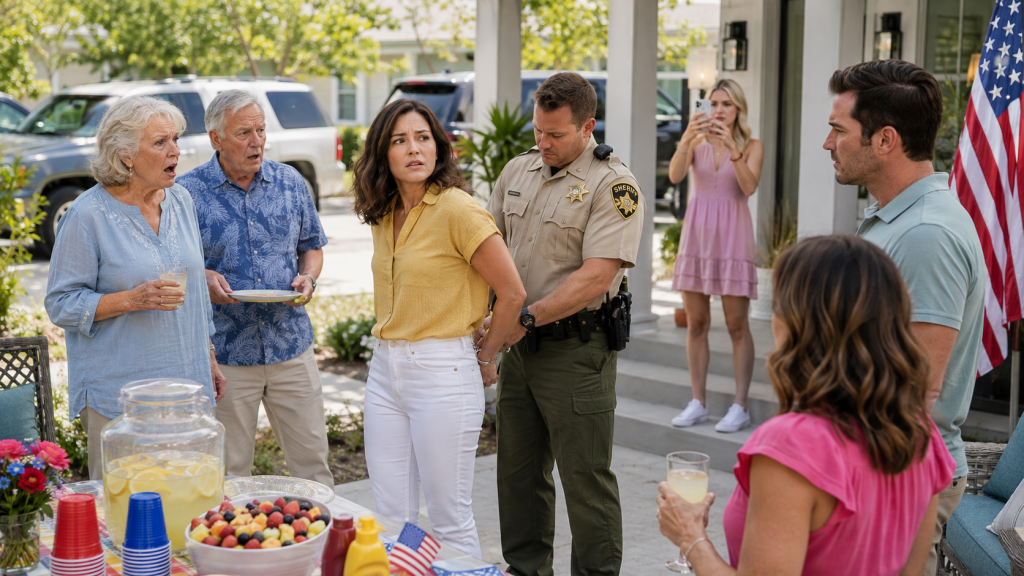
I was in my office, alone except for the city skyline beyond the windows.
“Why?”
He laughed once.
No humor in it.
“Because Grandma always compared me to you when we were kids.”
I frowned.
“She did?”
“You don’t remember?”
“No.”
“She’d say you were disciplined. You got scholarships. You left town. You never got arrested. Never needed money. Never screwed anything up.”
I sat down.
“I didn’t know.”
“After she died, everybody started acting like I was the successful one because I became a deputy. I liked it.”
There it was.
More honest than I had ever heard him.
“And when I came home,” I said, “I threatened that.”
“You didn’t even have to do anything.”
“No.”
“You’d sit there while everybody praised me, and you wouldn’t care.”
“I cared more than you realized.”
He was quiet.
Then he said, “When you wouldn’t move your car, I wanted to make you look small.”
The simplicity of it hurt.
Not because I had doubted it.
Because he finally said it aloud.
“I know.”
“I didn’t know you were a general.”
“That should not matter.”
“I know.”
For the first time, he sounded as though he actually did.
He swallowed audibly.
“I keep thinking about that.”
“Good.”
“I mean it. If I knew who you were, I never would’ve touched you.”
“That is exactly why your department is concerned.”
“I know.”
He breathed out.
“I’ve done stuff like that before.”
My grip tightened around the phone.
“What kind of stuff?”
“Nothing that bad.”
“Derek.”
“Pulled people over because they annoyed me. Got rougher than I needed to. Scared some teenagers once because they mouthed off.”
My stomach turned cold.
“Have you told internal affairs?”
“No.”
“You need to.”
“My lawyer would kill me.”
“Your lawyer’s job is to protect your legal interests. I’m not giving you legal advice.”
“Then what are you giving me?”
“A choice.”
He was silent.
I continued.
“You can spend the rest of your life insisting the problem was that you accidentally humiliated someone powerful. Or you can understand that the problem was believing powerless people were safe to humiliate.”
He began crying.
Quietly.
I had never heard Derek cry.
Not at funerals.
Not when his father had surgery.
Not ever.
“I’m scared,” he said.
“I know.”
“What if I lose everything?”
“Then you rebuild.”
“How?”
“The same way everyone else does. Without a badge protecting your ego.”
He laughed through tears.
“That was harsh.”
“It was accurate.”
“Yeah.”
We spoke for another ten minutes.
I did not forgive him.
Not then.
But three days later, Derek contacted internal affairs again and amended his statement.
He disclosed several previous incidents.
The investigation expanded.
One complaint that had been dismissed months earlier was reopened.
Another motorist was contacted.
Body-camera footage was reviewed.
In the end, Derek resigned before the department completed termination proceedings.
His law-enforcement certification was referred for review.
For several months, he blamed no one.
That impressed me more than any apology he could have written.
He got a job managing inventory for a construction company.
The first time I heard about it was from Laura.
“He says he likes it.”
“Good.”
“He’s seeing a therapist too.”
“Also good.”
Then she hesitated.
“Mom wants to see you.”
I looked down at the report on my desk.
It had been almost four months since the cookout.
My mother had sent messages.
Not constantly.
That mattered.
She had apologized twice in writing.
She had not demanded an answer.
Finally I said, “I’ll call her.”
That Sunday, I drove to her house.
In my blue sedan.
No security vehicles visible.
Though Marcus would have objected to my definition of visible.
My mother opened the door before I knocked.
She looked smaller somehow.
Older.
There were two cups of coffee on the kitchen table.
We sat.
For nearly a minute, neither of us spoke.
Then she said, “I was a bad mother to you.”
I looked at her.
“That’s a very large sentence.”
“I’ve had four months to think about it.”
“Mom—”
“No. Let me finish.”
So I did.
She folded her hands.
“When you were little, you were the child I didn’t worry about.”
I knew where this was going.
Laura had been emotional.
Our brother Daniel, who lived overseas and rarely attended gatherings, had struggled in school.
I had been the easy one.
Good grades.
Clean room.
No trouble.
“I thought being independent meant you didn’t need the things the others needed.”
“Attention?”
“Yes.”
“Praise?”
“Yes.”
“Protection?”
Her eyes filled.
“Yes.”
I looked toward the window.
She continued.
“Then you became so capable that I started resenting it.”
I turned back.
“Why?”
“Because you didn’t need me.”
The answer was painfully human.
Not good.
Not fair.
But human.
“So I made jokes,” she said. “I acted like what you did wasn’t important. I think part of me wanted you to need my approval.”
“That worked.”
She blinked.
“What?”
“I did need it.”
Her face collapsed.
I had not intended to hurt her.
But truth sometimes hurts without cruelty.
“I spent years wondering what achievement would finally make you proud.”
“I am proud.”
“I know now.”
“No.” She reached across the table but stopped before touching me. “I mean I was always proud. I just didn’t say it because…”
“Because?”
“Because if I admitted how extraordinary you were, I had to admit I hadn’t helped you become that.”
I stared at her.
That was something I had never considered.
She wiped her face.
“I’m sorry.”
This time the apology felt different.
Not a request.
Not a shortcut.
A statement.
I reached across the table and took her hand.
“I forgive you.”
She cried harder.
“But,” I said.
She laughed weakly.
“There’s a but.”
“There’s definitely a but.”
She nodded.
“Okay.”
“I’m not going back to the old family role.”
“You shouldn’t.”
“I’m not going to laugh when people insult me just to keep dinner comfortable.”
“Good.”
“I’m not going to hide every achievement because somebody else might feel insecure.”
“Good.”
“And if you introduce me as the daughter who does paperwork for the Army again, I’m leaving.”
She laughed so suddenly she almost spilled her coffee.
“Fair.”
We spent the afternoon talking.
Really talking.
She asked about my career.
Not the classified parts.
The human parts.
Where I had served.
What leadership meant to me.
Which promotion had been hardest.
Which one had made me proudest.
She asked whether I had ever been afraid.
I told her yes.
Often.
She seemed surprised.
“You never look afraid.”
“That’s because looking calm is frequently part of the job.”
“Like at the barbecue.”
“Especially at the barbecue.”
Months passed.
The next Fourth of July arrived faster than I expected.
Laura hesitated before organizing another cookout.
Eventually she sent the family group a message.
Same place. Same time. New rule: nobody handcuffs anybody.
I laughed for ten minutes.
Then I answered.
I’ll bring fruit salad.
When I arrived, there were fewer people than the year before.
Not because the family had broken apart.
Because things had changed.
Some relatives had drifted away after being forced to examine how they treated one another.
Others had grown closer.
Derek was there.
He stood beside the grill wearing khaki shorts and a plain shirt.
No badge.
No gun.
No swagger.
When he saw me, he approached slowly.
“Hey.”
“Hey.”
He looked toward my wrists.
Then back at my face.
“I still think about it.”
“You probably should.”
He nodded.
“I’m sorry.”
“I know.”
He handed me a soda from the cooler.
“I heard you got another medal.”
I raised an eyebrow.
“Who told you?”
“Your mom.”
Of course.
“She showed everyone the newspaper article.”
I looked toward the patio.
My mother was holding court beneath an umbrella.
The moment she noticed me watching, she waved wildly.
“There’s my daughter!” she shouted.
Several people turned.
I braced myself.
Then she added proudly, “Major General Caroline Hayes!”
I covered my face.
Laura burst out laughing.
“Oh, now she’s gone too far the other direction.”
My mother came toward me.
“I told the neighbors.”
“I’m aware.”
“And my book club.”
“Mom.”
“And the pharmacist.”
“Why does the pharmacist need to know?”
She shrugged.
“It came up.”
“It absolutely did not come up.”
She smiled.
For the first time, I understood something.
I had spent years believing the great revelation would be my family discovering my rank.
It wasn’t.
The black SUVs had been dramatic.
The uniforms, titles, security detail, investigation—all of it had shattered their assumptions.
But those things had not healed anything.
Healing happened afterward.
In uncomfortable conversations.
In boundaries.
In apologies that did not demand immediate forgiveness.
In changed behavior.
Derek lost the career he had built his identity around and discovered he could still become a decent man without authority attached to his belt.
My mother learned that pride expressed too late was still better than pride never expressed at all.
Laura stopped playing peacemaker and began telling relatives when they crossed lines.
And I learned something too.
Silence had protected me professionally.
But I had carried it into places where it no longer served me.
There is a difference between humility and disappearing.
For twenty years, I had allowed my family to confuse the two.
That evening, fireworks began just after nine.
Everyone moved chairs toward the open stretch of lawn.
Children lay on blankets.
The sky flashed red, white, blue, then gold.
I sat between my mother and Laura.
Derek stood near the fence with Mason, arguing good-naturedly about baseball.
My mother leaned toward me.
“Can I ask you something?”
“Sure.”
“Why the blue sedan?”
I laughed.
“You’re still bothered by the car?”
“I just don’t understand.”
“It runs.”
“That’s your entire reason?”
“It’s paid off.”
She stared at me.
“You command thousands of people.”
“Yes.”
“You have a security detail.”
“Yes.”
“And you drive a twelve-year-old sedan.”
“Correct.”
She shook her head.
“I raised a strange woman.”
I smiled.
“You raised a general.”
Her eyes filled.
This time I let her have the moment.
“Yes,” she said softly. “I did.”
A firework exploded overhead.
Gold scattered across the dark sky.
I thought about the woman I had been one year earlier.
Walking into this same backyard carrying fruit salad.
Listening to relatives laugh.
Letting them think silence meant weakness.
Maybe the greatest lesson of my career had never come from a battlefield or briefing room.
Power is not making people afraid of what happens when they disrespect you.
Power is knowing exactly who you are before anyone else recognizes it.
Derek had believed the handcuffs made him powerful.
They had not.
The black SUVs had made my family believe I was powerful.
They had not done that either.
Rank could be removed.
Titles could change.
Careers could end.
Authority could disappear.
What remained was character.
The ability to stay calm when humiliation invited rage.
The willingness to demand accountability without turning accountability into revenge.
The courage to leave a role others created for you.
And the discipline to refuse to become cruel simply because cruelty had once been used against you.
Later that night, as people began packing leftovers, Derek walked over carrying two empty containers.
He held them up.
“Laura says I’m supposed to take potato salad.”
“Congratulations.”
He smiled.
Then he looked serious.
“Caroline?”
“Yes?”
“If you hadn’t been a general, what would’ve happened?”
I knew exactly what he meant.
I considered the question.
“Maybe nothing.”
He looked down.
“That’s what bothers me.”
“It should.”
He nodded.
Then he looked at me.
“I’m trying to be somebody who would’ve taken those cuffs off even if nobody was coming.”
For the first time since that terrible afternoon, I felt something inside me release completely.
Not forgetfulness.
Not approval of what he had done.
Something better.
Hope.
“That,” I said, “is the person you should become.”
He nodded.
“I’m working on it.”
“I know.”
He started walking away.
Then I called after him.
“Derek.”
He turned.
“If you ever put handcuffs on me again, I’m keeping them.”
He stared.
Then laughed.
“Deal.”
My mother shouted from the patio.
“What are you two laughing about?”
“Nothing!” Derek called.
I looked toward the street.
My blue sedan sat exactly where I had parked it.
Nobody had complained.
Nobody had threatened to tow it.
Nobody cared.
I smiled at the absurdity.
One year earlier, that car had supposedly been the reason for everything.
But of course it never had been.
The argument had never really been about parking.
The cuffs had never really been about authority.
And my silence had never meant failure.
It had taken a backyard full of witnesses, a frightened cousin, four black SUVs, and twenty years of buried resentment for my family to finally understand something I had known all along.
I did not need them to be impressed by me.
I needed them to respect me.
There was a difference.
Admiration looks upward.
Respect looks directly at you.
For most of my life, my family had done neither.
Now, finally, they were learning.
So was I.
As I prepared to leave, my mother hugged me beside the driveway.
“Call me when you get home.”
“I’m forty-seven.”
“I’m your mother.”
“Major general.”
“Still my daughter.”
I smiled.
“Fine.”
She stepped back and looked toward the sedan.
“You really won’t let me buy you a better car?”
“Absolutely not.”
“What about a new one?”
“No.”
“One with heated seats?”
I hesitated.
She pointed triumphantly.
“I knew it.”
“Goodnight, Mom.”
She laughed.
I got into the car.
As I started the engine, headlights appeared farther down the street.
Two dark SUVs waited at a respectful distance.
My mother noticed them.
She shook her head, smiling.
I rolled down the window.
“What?”
“Nothing.”
“That doesn’t look like nothing.”
She walked closer.
“I was just thinking how ridiculous we all were.”
“About what?”
“For thinking you were the failure.”
I looked toward my family gathered beneath the porch lights.
Then back at her.
“You know what’s funny?”
“What?”
“I never was.”
She smiled.
“I know that now.”
I put the car into reverse.
And for once, I did not feel the need to prove anything else.
I had spent twenty years being underestimated.
I had survived it.
I had even learned from it.
But I would never again participate in my own diminishment just to keep other people comfortable.
Not for family.
Not for tradition.
Not for peace that existed only because I stayed silent.
The woman they had called a failure drove home that night in an old blue sedan, followed discreetly by a security detail, with fireworks fading behind her.
Tomorrow there would be briefings.
Decisions.
Responsibilities most of my relatives would never fully understand.
But tonight, none of that mattered.
I was simply Caroline.
Not the disappointment.
Not the joke.
Not the woman who “did paperwork.”
Not even the general.
Just Caroline.
And after all those years, that name was finally enough.
💬THE END! THANK YOU FOR READING!