
 Reading Time: 14 minutes
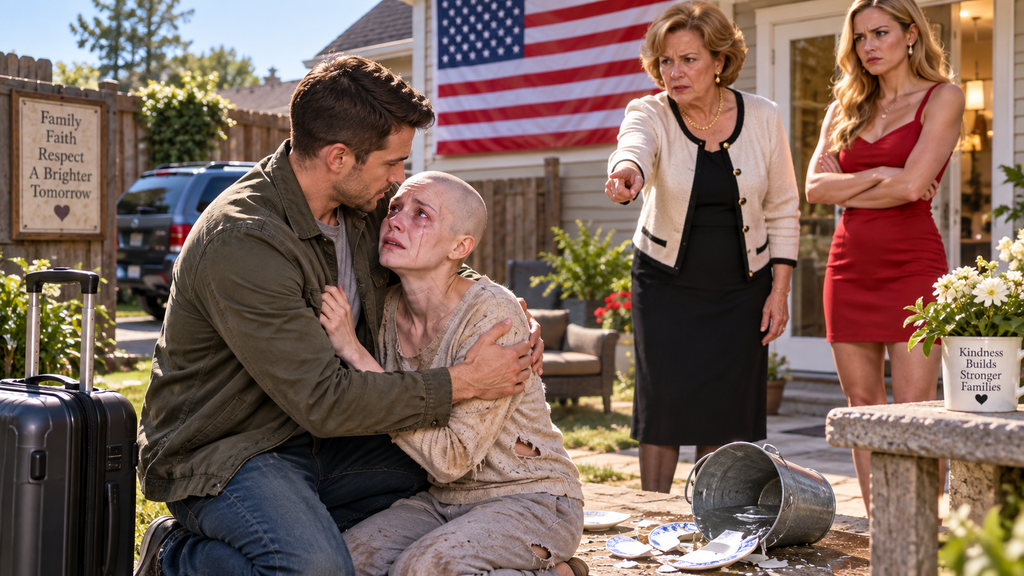
“You’re right,” I said. “Coming in here yelling won’t fix anything.”
My mother’s shoulders relaxed.
Brianna stopped watching me like I was about to explode.
Lucy remained pressed against my side, trembling beneath the thin sweater she was wearing.
“We can talk like a family,” I continued. “In fact, I have some news I was planning to give you tomorrow.”
My mother’s expression changed.
“What news?”
I looked at her.
“I received a settlement.”
Brianna’s eyes immediately widened.
“What kind of settlement?”
I smiled faintly.
“A large one.”
My mother stepped closer.
“How large?”
I looked down at my phone.
“Large enough that I don’t have to worry about money for the rest of my life.”
The change in their faces was almost immediate.
My mother became warm.
Brianna became interested.
Even Lucy looked at me with confusion.
“How much?” Brianna asked.
I hesitated deliberately.
“Just over a million dollars.”
My mother’s mouth opened.
“A million?”
“Yes.”
“Canadian dollars?” Brianna asked.
“U.S. dollars.”
The silence that followed was almost funny.
My mother suddenly reached for my arm.
“Oh, Nathan. Why didn’t you tell us?”
“Because I didn’t know until yesterday.”
That part was true.
What I didn’t tell them was that the settlement wasn’t from my job.
Four months earlier, the metalworking company I worked for had been involved in a major industrial dispute after a machinery manufacturer admitted that a defective component had caused a series of accidents.
I had been one of the employees affected.
A lawyer representing several workers had contacted me.
At first, I refused.
I didn’t think I had enough money to participate in a lawsuit.
The lawyer told me I didn’t need to.
He simply asked me to provide records.
I did.
Months passed.
Then, while I was sitting in a motel room in Calgary, my lawyer called.
“Nathan, we have a settlement offer.”
The number he gave me had made me sit down.
It was more money than I had ever seen in my entire life.
I accepted.
But I hadn’t told my family.
Not yet.
I wanted to come home first.
I wanted to see Lucy.
I wanted to surprise everyone.
Instead, I had discovered that my wife had been starving while my family spent my money.
And now I knew something else.
Greed had a way of making people careless.
My mother squeezed my arm.
“A million dollars.”
“Approximately.”
Brianna stepped closer.
“Then everything is going to be okay.”
I looked at her.
“What is?”
“The house.”
“What about the house?”
She laughed nervously.
“You know. Everything we’ve done while you were away.”
I glanced toward the renovated living room.
The expensive furniture.
The new appliances.
The SUV.
The salon equipment visible through the garage window.
“Yes,” I said. “Everything.”
My mother smiled.
“I always knew you would come through for us.”
I didn’t correct her.
Instead, I looked at Lucy.
“Can you walk?”
She nodded weakly.
“I think so.”
I put my arm around her.
“We’re leaving.”
My mother’s smile disappeared.
“Leaving?”
“Yes.”
“You just got home.”
“I’m taking Lucy to the hospital.”
“There is no need to create a scene.”
I looked directly at her.
“My wife has cancer.”
Nobody spoke.
“I’ve been gone four years,” I said. “I trusted you with her. You told me she was fine.”
My mother looked away.
“I did what I thought was best.”
“For whom?”
She didn’t answer.
I helped Lucy toward the driveway.
Brianna followed us.
“Where are you taking her?”
“To a hospital.”
“Which one?”
“That’s none of your business.”
She stopped.
I opened the passenger door of the SUV.
Lucy stared at it.
“Is this ours?”
“It was supposed to be.”
She looked at me.
“What?”
I didn’t answer.
I helped her inside.
Then I got behind the wheel.
As I started the engine, my phone rang.
It was my lawyer in Canada.
I answered through the car speakers.
“Nathan, I need you to confirm something.”
“Go ahead.”
“The settlement funds have cleared. Your account is active.”
My mother was standing beside the driver’s window.
She could hear everything.
My lawyer continued.
“Also, I reviewed the documents you sent me. If you’re intending to pursue recovery of the funds transferred to your family, we need to move quickly.”
My mother’s face changed.
I ended the call.
Lucy looked at me.
“Recovery?”
I started driving.
“Not now.”
She reached for my hand.
“Nathan.”
I looked at her.
“We’ll talk when you’re safe.”
At the hospital, the doctors moved quickly.
Blood tests.
Scans.
Records.
Questions.
When the oncologist finally sat across from us, I could see that she was choosing her words carefully.
“Mrs. Barnes has been through a tremendous amount without consistent treatment.”
I clenched my jaw.
“Can she be treated?”
“Yes.”
“Then that’s what we’re going to do.”
The doctor nodded.
“There are several options. We need updated imaging before deciding which is most appropriate.”
Lucy looked at me.
“What about the cost?”
I took her hand.
“Don’t worry about the cost.”
She stared at me.
“How can you say that?”
“Because I can.”
She started crying.
Not because of the diagnosis.
Because for the first time in nearly a year, someone had told her she didn’t need to calculate whether she could afford to live.
That night, Lucy slept in a hospital bed while I sat beside her.
I didn’t sleep.
I opened my laptop.
I went through every bank statement.
Every transfer.
Every message.
Every receipt.
My mother had received between two and three thousand dollars from me almost every month.
Some months more.
There were payments labeled:
HOUSE.
FOOD.
LUCY.
MEDICAL.
EMERGENCY.
I clicked into the medical category.
There were almost no expenses.
Then I opened the house category.
New furniture.
Kitchen renovation.
Landscaping.
Electronics.
Luxury appliances.
Then I saw Brianna’s salon.
Equipment.
Lease deposit.
Renovation.
Signage.
Furniture.
Nearly thirty thousand dollars.
Then the SUV.
Forty-two thousand.
My stomach tightened.
I had sent money believing my wife was being cared for.
Instead, they had built a lifestyle.
At 2:17 in the morning, I called my lawyer.
His name was Daniel Reed.
He answered immediately.
“Nathan?”
“I need help.”
“Tell me.”
I explained everything.
The money.
The property.
Lucy.
The medical neglect.
My mother’s control of the accounts.
Daniel listened.
When I finished, he said something that I would never forget.
“Do not accuse them of anything you can’t prove.”
“I understand.”
“Do not threaten them.”
“I won’t.”
“Do not tell them everything you know.”
I looked toward Lucy.
“I won’t.”
“Document everything.”
“I already have.”
“Good.”
He paused.
“There’s something else.”
“What?”
“Your mother may have created more legal problems than she realizes.”
“What do you mean?”
“Some of the money transfers were specifically described as medical support for your wife.”
I sat up.
“Yes.”
“If she knowingly redirected those funds for other purposes, that’s something your attorney here can examine.”
“I need someone local.”
“I’ll find you one.”
Daniel sent me a name before sunrise.
Rachel Morgan.
A financial attorney in Columbus who specialized in family asset disputes.
At eight in the morning, she met me at the hospital cafeteria.
She was in her early fifties, wore glasses, and carried a black folder.
“Mr. Barnes?”
“Nathan.”
She shook my hand.
“Daniel gave me the basic outline.”
I handed her a flash drive.
“Everything is on there.”
She plugged it into her laptop.
For almost an hour, she reviewed the records.
Finally, she looked at me.
“You’ve got a serious situation.”
“I know.”
“Do you own the house?”
“I believe so.”
“Believe?”
“My father left it to me.”
“Do you have the deed?”
“My mother kept the paperwork.”
Rachel looked at me.
“That’s the first thing we’re going to verify.”
She searched the county property database.
Then stopped.
“What?”
She turned the laptop toward me.
The property was still registered in my father’s name.
My heart sank.
“How?”
Rachel continued reading.
Then she found a transfer document.
My father had transferred the property into a trust before his death.
The trustee was…
Theresa Barnes.
My mother.
I stared at the screen.
“She told me the house belonged to me.”
Rachel shook her head.
“Legally, it may not be that simple.”
“Then where did my money go?”
Rachel clicked through more records.
“The trust has an operating account.”
I looked at her.
“Whose name?”
She pointed.
“Your mother’s.”
I felt cold.
“How much?”
She opened the latest statement.
The balance was less than eight thousand dollars.
I had sent nearly one hundred thousand.
Rachel closed the laptop.
“Don’t confront her yet.”
“Why?”
“Because if she knows we’re looking, she may start moving things.”
I nodded.
“What do we do?”
“First, we secure Lucy’s medical records.”
“Done.”
“Second, we obtain the full trust documents.”
“Okay.”
“Third, we identify every account your money entered.”
“And then?”
“Then we find out what happened to it.”
I looked toward the hospital room.
Lucy was still asleep.
“I don’t want revenge.”
Rachel nodded.
“Good.”
“I want my wife safe.”
“Then that’s where we start.”
Three days later, Lucy began treatment.
It wasn’t easy.
She was weak.
She became exhausted quickly.
Some days she could barely finish a conversation.
But she was receiving care again.
She had clean clothes.
Proper meals.
A warm bed.
And someone sitting beside her every night.
Me.
One afternoon, she finally asked the question I had been avoiding.
“Why didn’t I tell you?”
I looked at her.
“You tried.”
She shook her head.
“No. I didn’t try hard enough.”
“You were scared.”
“I was terrified.”
“Of what?”
She looked toward the window.
“Your mother told me if I caused trouble, she’d make sure you divorced me.”
My chest tightened.
“She said you were working too hard to come home to a sick wife.”
I closed my eyes.
“Why did you believe her?”
“Because she showed me messages.”
“What messages?”
“She said you were tired of me.”
I stared at her.
“Lucy, I never said that.”
“I know now.”
She began crying.
“She said you were building a new life in Canada. She said you would leave me if you knew how sick I was.”
I felt tears burning behind my eyes.
“I sent you money.”
“I know.”
“Every month.”
“I know.”
“Why didn’t you spend it?”
She looked at me.
“I never received it.”
The room became silent.
“What?”
“Your mother told me there wasn’t enough.”
I stood up.
“Lucy.”
She reached for my hand.
“Please don’t leave.”
“I’m not leaving.”
I sat back down.
She whispered, “I thought you had forgotten me.”
“I never forgot you.”
“I thought you stopped loving me.”
“I never stopped.”
She closed her eyes.
“Then why did you stay away so long?”
That question hurt more than anything.
“Because I thought I was building something for us.”
She smiled sadly.
“We were already something.”
I lowered my head.
“I know.”
Two weeks later, Rachel had the first major discovery.
She came to the hospital carrying a thick binder.
“Nathan.”
“What did you find?”
“Your mother made several transfers from the trust account.”
“To whom?”
“Brianna.”
“How much?”
Rachel opened the binder.
“Thirty-two thousand.”
I felt sick.
“Anything else?”
“Your mother’s personal account received eighteen thousand.”
“For what?”
“Unknown.”
“Anything involving Lucy?”
“Yes.”
She turned another page.
“There are payments to a private medical clinic.”
My heart jumped.
“How much?”
“Eleven thousand.”
“Why?”
Rachel looked at me.
“The payments weren’t for Lucy.”
“Who were they for?”
She slid the invoice across the table.
Brianna.
Cosmetic procedures.
I stared at the page.
My sister had used money intended for my wife’s medical care to pay for elective procedures.
I didn’t say anything.
Rachel watched me carefully.
“You need to breathe.”
“I am.”
“No, you’re trying not to explode.”
I looked at the floor.
“I promised myself I wouldn’t become like them.”
“Then don’t.”
That evening, I called my mother.
She answered cheerfully.
“Nathan! How is Lucy?”
“She’s improving.”
“Thank God.”
“I need to ask you something.”
“Anything.”
“Where did the medical money go?”
Silence.
“What do you mean?”
“The money I sent.”
“I spent it on the household.”
“Not on Lucy.”
“Nathan, we had expenses.”
“Thirty-two thousand to Brianna?”
She stopped talking.
I continued.
“Eighteen thousand to your personal account?”
“That’s not what you think.”
“Eleven thousand to Brianna’s cosmetic clinic?”
My mother’s voice changed.
“Who have you been talking to?”
“That doesn’t matter.”
“You have no right to investigate me.”
“I have every right.”
She became angry.
“After everything I’ve done for you?”
I almost laughed.
“You shaved my wife’s head.”
“She needed to learn discipline.”
I closed my eyes.
“Don’t ever say that again.”
“You don’t understand what she was like.”
“I understand exactly what she was like.”
“What?”
“She was sick.”
My mother said nothing.
“And you knew.”
“Of course I knew.”
“Then why did you let her suffer?”
“You were sending money.”
“Exactly.”
“You sent it to me.”
“For her.”
“You trusted me.”
“Yes.”
“And now you’re acting like I’m some criminal.”
I looked out the window.
“I haven’t called you a criminal.”
“You don’t have to.”
She began crying.
Then her voice softened.
“You’ve always been ungrateful.”
I hung up.
That was the last conversation I had with her for a long time.
The following week, Rachel filed the first formal requests for records.
My mother responded through a lawyer.
She claimed the money had been gifts.
She claimed I had voluntarily given her control.
She claimed Lucy had refused treatment.
She claimed the house renovations were necessary.
She claimed the SUV belonged to the family.
Every claim was documented.
Every claim was false.
The evidence showed otherwise.
Then something unexpected happened.
Brianna called me.
“Can we talk?”
“No.”
“Nathan, please.”
“I have nothing to say.”
“I didn’t know.”
I was silent.
“I didn’t know Mom was lying about Lucy.”
“You knew she lived in the shed.”
Brianna started crying.
“I thought Lucy wanted to.”
“You thought my wife wanted to sleep in a storage shed?”
“I don’t know.”
“You knew I sent money.”
“I knew.”
“You knew Mom bought the SUV.”
“Yes.”
“You knew she renovated the house.”
“Yes.”
“Then you knew something was wrong.”
She didn’t answer.
Finally, she whispered, “I’m sorry.”
I closed my eyes.
“Where did the money go?”
“I don’t know everything.”
“Tell me what you know.”
She hesitated.
“Mom opened another account.”
“Where?”
“At the local credit union.”
“Whose name?”
“Hers.”
“Anything else?”
“She has a safe deposit box.”
My heart stopped.
“Where?”
Brianna gave me the branch.
“How do you know?”
“Because she made me drive her there.”
“What was inside?”
“I don’t know.”
I thanked her and ended the call.
Rachel arranged for the proper legal process.
Two days later, we discovered what my mother had been hiding.
Inside the safe deposit box were documents.
Receipts.
Copies of transfers.
Several pieces of jewelry.
And an envelope with my name on it.
I opened it.
Inside was a letter from my father.
It had been written eight months before his death.
Nathan,
If you’re reading this, something has happened that I hoped never would.
I know your mother.
I love your mother.
But I also know that she has always believed money gives people control over others.
That’s why I created the trust.
The house is yours.
Not hers.
You are the beneficiary.
She is only the temporary trustee.
And there is one condition.
If the trustee ever uses trust funds for personal benefit, the trustee can be removed.
I read the letter twice.
Then a third time.
My father had seen this possibility years ago.
Rachel looked at the document.
“This changes everything.”
I nodded.
“What happens now?”
“We petition to remove the trustee.”
“And the house?”
“Protected.”
“And the money?”
“We pursue recovery.”
I looked at the letter again.
My father had written something else at the bottom.
Take care of Lucy.
She has always loved you more than you know.
I folded the letter carefully.
For the first time since returning home, I cried.
Not because I was angry.
Because my father had somehow known.
Weeks passed.
Lucy slowly improved.
Her hair remained gone.
Her body was still frail.
But her eyes became brighter.
She began eating more.
She started walking short distances around the hospital.
One afternoon, she stood in front of the mirror and touched her bare head.
“I look different.”
I stood behind her.
“You look beautiful.”
She smiled.
“You’ve always been a terrible liar.”
I laughed.
“I learned from you.”
She turned.
“I don’t want the money.”
“What?”
“The settlement.”
I looked at her.
“I don’t want it if it turns you into someone you aren’t.”
I took her hand.
“It won’t.”
“I don’t need a mansion.”
“I know.”
“I don’t need a new car.”
“I know.”
“I just want a little house with a porch.”
I smiled.
“And a garden?”
“And a garden.”
“Maybe a dog?”
She laughed.
“Maybe.”
I kissed her forehead.
“Then that’s what we’ll build.”
The court hearing came six months later.
My mother arrived with her attorney.
Brianna sat behind her.
I sat beside Rachel.
Lucy sat beside me.
She had gained weight.
Her hair had begun growing back.
She wore a blue dress and carried herself with a strength I hadn’t seen in years.
The judge reviewed the trust documents.
Then the financial records.
Then the transfers.
My mother’s lawyer argued that the money had been used for family expenses.
Rachel presented receipts.
Medical funds had paid for luxury furniture.
Household funds had paid for Brianna’s salon.
Emergency money had paid for an SUV.
And money specifically designated for Lucy’s treatment had been diverted elsewhere.
Then Rachel presented photographs of the living conditions.
The judge looked at my mother.
“Why was Mrs. Barnes living in an exterior storage building?”
My mother looked down.
“She preferred privacy.”
Lucy quietly shook her head.
The judge noticed.
“Mrs. Barnes?”
Lucy looked up.
“I did not.”
My mother closed her eyes.
The judge continued.
“Did your son send money for your daughter-in-law’s medical care?”
“Yes.”
“Did she receive that care?”
My mother said nothing.
The silence was answer enough.
In the end, my mother was removed as trustee.
The house was placed under proper management until the legal process was complete.
The funds that could be traced were ordered returned to the trust.
My mother and Brianna faced separate financial consequences.
But I never celebrated.
There was nothing satisfying about watching your own family collapse.
The real victory happened months later.
Lucy and I moved into a small farmhouse outside town.
It wasn’t enormous.
It didn’t have granite countertops.
It didn’t have expensive furniture.
It had a porch.
A vegetable garden.
A kitchen with yellow curtains.
And a little bedroom overlooking the fields.
The first morning we woke there, Lucy walked outside with a cup of coffee.
She stood beneath the sunlight and took a deep breath.
“Listen.”
I smiled.
“To what?”
“Nothing.”
She closed her eyes.
“No one is yelling.”
I walked over and wrapped my arms around her.
“No one is taking anything.”
She leaned against me.
“And no one is telling us we’re a burden.”
I kissed her forehead.
“We’re home.”
A year later, we planted tomatoes.
Lucy’s hair had grown back into soft curls.
She still had difficult medical appointments.
There were still days when fatigue forced her back into bed.
But she was alive.
And she was loved.
One afternoon, an envelope arrived.
It contained the final accounting from the trust.
Most of the missing money had been recovered.
The house was officially ours.
My father had left us more than property.
He had left us protection.
That evening, Lucy and I sat on the porch.
She looked at me.
“Do you ever regret going to Canada?”
I thought about it.
“I regret not coming home sooner.”
She nodded.
“But you came home.”
“Yes.”
She took my hand.
“And you believed me.”
I looked toward the fields.
“I should have believed you from the beginning.”
She squeezed my fingers.
“Then believe me now.”
“What?”
“You saved me.”
I shook my head.
“No.”
She smiled.
“You did.”
“No,” I said again. “You survived.”
She looked at me for a long moment.
“And you finally came back.”
I smiled.
“Yes.”
She rested her head on my shoulder.
For years, I had believed that money was what would secure our future.
The settlement had seemed like a miracle.
The hundred thousand dollars I had sent home had seemed like proof that I was taking care of my family.
But I learned something much more important.
Money doesn’t prove love.
Sacrifice doesn’t guarantee loyalty.
And family isn’t defined by blood, shared property, or the people who call you their son when they need something.
Family is the person who stays beside you when you’re weak.
The person who doesn’t measure your worth by what you can provide.
The person who sees you at your worst and still says, “We’re going to figure this out.”
Lucy had needed that person.
And I should have been there.
I couldn’t undo the four years.
I couldn’t erase the nights she spent alone.
I couldn’t return the money my mother had wasted.
But I could make sure the rest of Lucy’s life was different.
And I could finally stop confusing providing for someone with loving them.
One evening, almost two years after I returned from Canada, we were sitting on the porch when a familiar car stopped at the end of our driveway.
My mother stepped out.
She looked older.
Smaller.
She stood beside the mailbox for several seconds before walking toward us.
Lucy looked at me.
“Do you want me to go inside?”
“No.”
My mother stopped at the porch steps.
“I don’t expect forgiveness,” she said.
I said nothing.
“I just wanted to see you.”
I looked at Lucy.
Then back at my mother.
“You can sit.”
She sat in the chair across from us.
For a while, nobody spoke.
Finally, she looked at Lucy.
“I’m sorry.”
Lucy didn’t answer immediately.
Then she said quietly, “I needed you.”
My mother lowered her head.
“I know.”
“You were supposed to take care of me.”
“I know.”
“You told Nathan I was fine.”
“I know.”
“And I believed you.”
My mother began crying.
“I was wrong.”
Lucy looked at her for a long time.
Then she said something I never expected.
“I hope you become a better person.”
My mother wiped her eyes.
“Do you forgive me?”
Lucy looked at me.
Then back at her.
“Forgiveness doesn’t mean you get your old place in my life.”
My mother nodded slowly.
“I understand.”
She stood.
Before she left, she looked at me.
“I was proud of the money you sent.”
I shook my head.
“I wasn’t sending money to make you proud.”
“I know.”
“I was sending it because I loved you.”
She nodded.
“I know that now.”
Then she walked away.
Lucy watched her disappear down the driveway.
“Do you forgive her?”
I took a deep breath.
“I’m trying.”
She smiled.
“That’s enough.”
I looked around our little farmhouse.
The porch.
The garden.
The blue evening sky.
The woman beside me.
Everything I had once thought I needed was gone.
The money had come.
The house had been protected.
The truth had finally been uncovered.
But none of those things were the reason I felt rich.
I felt rich because Lucy was sitting beside me.
Alive.
Safe.
Free.
And when she placed her hand in mine, I understood something my father had known long before I did.
A person can work for years trying to build a better life.
But sometimes the greatest thing you can build isn’t a bigger house.
It isn’t a bigger bank account.
It isn’t a better reputation.
Sometimes it’s simply a home where nobody is afraid to come through the front door.
And after everything we had lost, Lucy and I finally had one.
Our own.
And this time, nobody was taking it away.
THE END! THANKS FOR READING!