

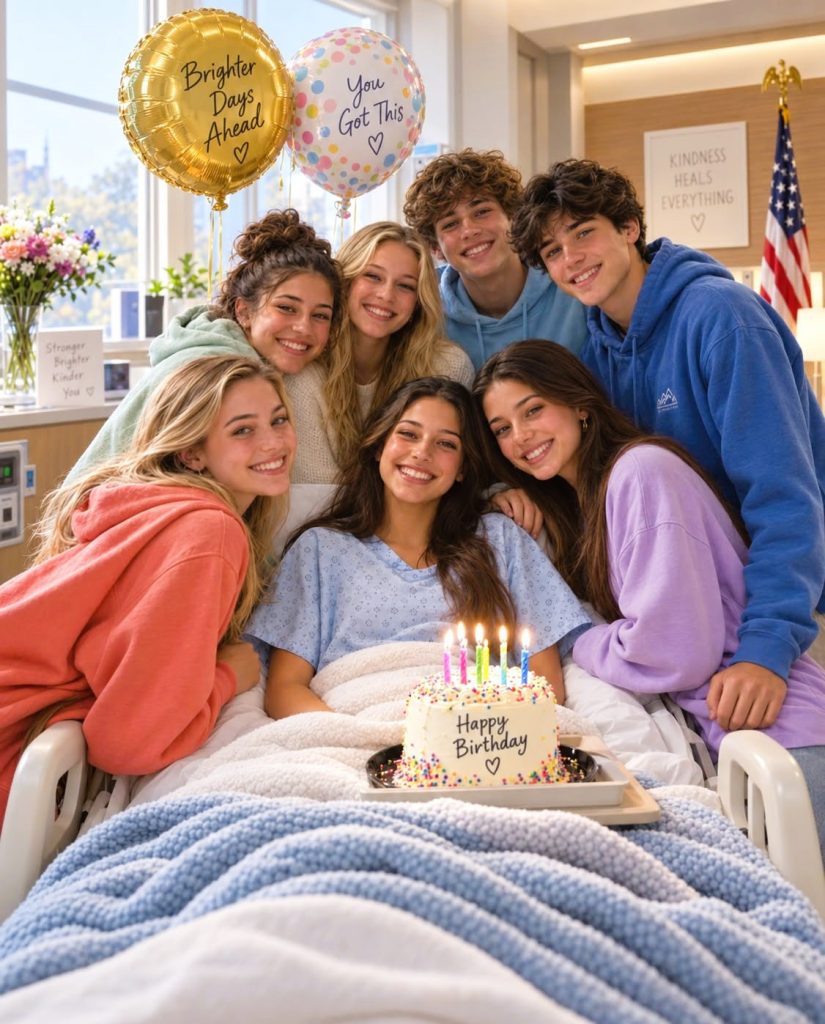
My daughter, Claire, was sixteen years old, gentle in a way that sometimes frightened me. Not weak. Not timid. Gentle. There is a difference.
She noticed when someone was sitting alone. She remembered birthdays nobody else remembered. She carried extra pencils because she knew someone would forget one. When she was eleven, she once walked home in the rain because she had given her umbrella to an elderly woman waiting at the bus stop.
That was Claire.
And for reasons I could never understand, kindness did not make school easier for her.
It made her a target.
At school, Claire had almost no friends.
Her classmates mocked the secondhand sweaters she liked to wear, hid her backpack during lunch, whispered whenever she raised her hand in class, and once wrote a cruel word across her locker in permanent marker.
I wanted to march into the school every time.
Claire always stopped me.
“They’ll get bored eventually, Mom,” she would say.
They never did.
The worst of them was a boy named Rocky Bennett.
Rocky was popular, athletic, loud, and surrounded by the kind of students who laughed before they even knew what the joke was.
He had pulled Claire’s chair away once when she was about to sit down.
He had taken a photograph of her eating alone and posted it in a group chat with a humiliating caption.
He had even called her “charity shop Claire” because most of her clothes came from thrift stores.
I spoke to his parents twice.
I spoke to the school counselor.
I spoke to the vice principal.
Every conversation ended with the same words.
“We’re monitoring the situation.”
Nothing changed.
Claire kept getting up every morning.
She kept packing her lunch.
She kept walking through those school doors.
I used to watch her from the car and wonder how someone so young had learned to carry humiliation so quietly.
Then, in early October, everything changed.
It began with exhaustion.
Claire started coming home and falling asleep on the couch before dinner.
At first, I blamed school.
She was taking advanced biology and chemistry, volunteering in the library, and preparing for college entrance exams.
Then she stopped eating.
“Not hungry,” she would say.
A few days later, she complained about headaches.
Then dizziness.
Then nausea.
I made an appointment with our family doctor, but the morning before we were supposed to go, I heard something crash upstairs.
I ran to Claire’s room.
She was on the floor beside her bed.
Her face was frighteningly pale.
“Claire?”
She opened her eyes but seemed unable to focus on me.
“Mom?”
That one word came out so weakly that something inside me went cold.
I called an ambulance.
By the time we reached the hospital, Claire could barely sit upright.
Doctors ran blood tests.
They checked for infection.
They checked her heart.
They checked her kidneys and liver.
They asked about medications, food allergies, supplements, travel, illnesses at school.
Nothing immediately explained what was happening.
Claire was admitted overnight.
Overnight became three days.
Three days became six.
And every day, she seemed a little weaker.
Her fever came and went.
Her hands sometimes trembled.
She developed strange abdominal pain and bouts of dizziness so severe that nurses would not allow her to walk unassisted.
I barely left the hospital.
I slept in a chair beside her bed.
I showered in the small family bathroom down the hall.
I drank terrible vending-machine coffee at two in the morning and stared at medical monitors as though I could force them to tell me what was wrong with my child.
For the first four days, nobody from school visited.
Not one student.
Not one card.
Not one text that Claire showed me.
Mrs. Evans, her homeroom teacher, called twice.
The school counselor sent an email.
But Claire’s classmates?
Nothing.
I hated them for that.
I hated every one of those children who had spent years making my daughter feel invisible.
Then, on the fifth afternoon, I heard laughter in the hallway.
At first, I thought another patient had visitors.
Then I heard squeaking sneakers.
Whispers.
Someone shushing someone else.
A nurse appeared at Claire’s door with a strange smile.
“Mrs. Carter?”
“Yes?”
“You may want to come outside.”
I stepped into the hallway.
And froze.
Nearly Claire’s entire class was standing there.
Twenty-seven teenagers filled the corridor.
Some held balloons.
Some carried cards.
One girl had cupcakes.
Another had a bouquet of yellow flowers.
Rocky stood near the back holding an enormous stuffed brown bear almost as tall as he was.
For several seconds, nobody spoke.
I honestly thought I might be dreaming.
Then a girl named Marissa stepped forward.
“Can we see Claire?”
I stared at her.
Marissa had once poured chocolate milk into Claire’s backpack.
I knew because I had spent forty minutes cleaning Claire’s textbooks in our kitchen sink.
“You want to see Claire?”
Marissa lowered her eyes.
“If she wants us.”
I walked back into the room.
Claire looked at me.
“What?”
“There are some people here.”
The students slowly filed through the door.
When Claire saw them, her mouth fell open.
“Why are you guys here?”
Nobody answered at first.
Then Rocky stepped forward and lifted the ridiculous stuffed bear.
“This idiot has been blocking half the hallway,” he said quietly. “So you better appreciate him.”
Claire stared at him.
Then, unexpectedly, she laughed.
It was the first real laugh I had heard from her since we entered the hospital.
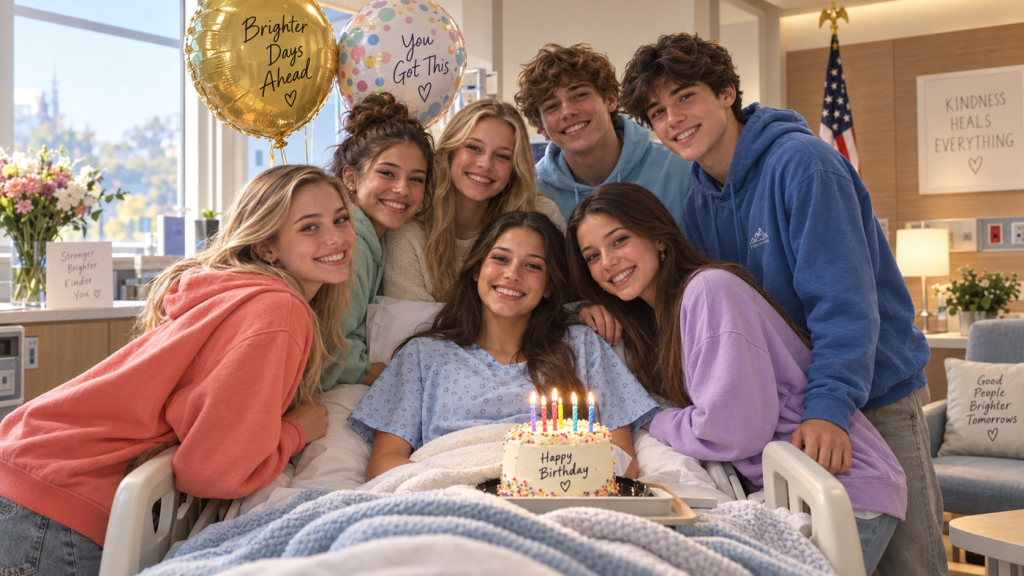
Within twenty minutes, the room had transformed.
Someone connected a phone to a small speaker.
They played music quietly.
They ate cupcakes.
They signed cards.
They taped photographs and colorful notes to the wall.
Claire smiled so much that evening that her cheeks hurt.
When everyone finally left, she looked at the decorated room.
“I don’t understand.”
“Neither do I.”
“Maybe they feel bad.”
“Maybe.”
Claire touched one of the cards beside her bed.
It said, Come back soon. School is weird without you.
She smiled.
The next afternoon, they returned.
Not all of them.
About twelve.
They brought Claire’s homework, though almost none of it got done.
The next day, eight students came.
The day after that, fifteen.
They played cards.
They brought movies.
They smuggled in fries even though the nurse made them remove them immediately.
Rocky came every single day.
And that bothered me more than anything.
I knew what he had done to Claire.
I remembered every meeting.
Every complaint.
Every excuse.
Yet now he sat beside her bed helping her solve crossword puzzles and arguing about movies as though they had been friends for years.
Something did not fit.
So I called Mrs. Evans.
“I’m surprised too,” she admitted.
“You don’t know why they’re coming?”
“I know several students have been worried about her.”
“They were never worried before.”
There was a pause.
“Sometimes teenagers realize they’ve been cruel when something serious happens.”
I wanted to believe that.
I really did.
But I had spent sixteen years being Claire’s mother.
I knew when she was hiding something.
And every time I asked why her classmates had suddenly changed, she avoided my eyes.
“It doesn’t matter, Mom.”
“It matters to me.”
“They’re being nice now.”
“That doesn’t erase what happened.”
“I know.”
“Then tell me what changed.”
She would smile faintly.
“Maybe they did.”
A week after Claire was admitted, the room was full again.
Five students sat on the floor.
Two were arguing over a card game.
Marissa was braiding another girl’s hair.
Claire looked tired but happy.
I stepped into the hallway to give them space.
A few seconds later, the door opened behind me.
Rocky came out.
He closed the door carefully.
“Mrs. Carter?”
I turned.
For the first time since I had known him, Rocky did not look confident.
His face was pale.
His eyes were red.
I started to thank him for visiting Claire.
He backed away.
“Do you really have no idea what Claire did?”
I stared at him.
“What do you mean?”
His jaw tightened.
“Or are you pretending?”
“Rocky, I don’t know what you’re talking about.”
He looked toward Claire’s door.
“You really don’t know.”
“Aren’t you here to cheer her up?”
Rocky pulled his phone from his pocket.
His hands were trembling.
“We promised Claire we’d never tell.”
“Tell me what?”
“We can’t hide it anymore.”
He unlocked his phone.
Then he held it toward me.
“Watch this.”
I pressed play.
The first video was filmed in a school hallway.
Claire stood beside a small girl I recognized from the middle-school wing attached to the high school.
Three boys were standing nearby.
One was Rocky.
The recording shook as someone laughed behind the camera.
The younger girl was crying.
Rocky said something I couldn’t fully hear.
Then Claire stepped between them.
“If you want someone to laugh at, laugh at me.”
Rocky’s expression changed.
Even through the screen, I could see it.
Claire continued.
“Leave her alone.”
The video ended.
Another clip began.
Claire was in the cafeteria.
A boy sat alone with an empty tray.
Claire placed half of her lunch in front of him.
“You didn’t eat yesterday either,” she said.
“I’m not hungry.”
“Then save it for later.”
Another clip.
Claire placing a backpack outside the counselor’s office.
Another.
Claire handing money to a girl near the vending machines.
Another.
Claire sitting on the bathroom floor beside Marissa, who was crying so hard she could barely speak.
The next video showed Claire confronting two students who were holding a phone.
“Delete it.”
“No.”
“If you post that video, I’ll tell Mrs. Evans who recorded it.”
The students looked furious.
Claire didn’t move.
Eventually, one of them deleted something.
“What is this?” I whispered.
Rocky swallowed.
“Her.”
I looked at him.
He wiped his eyes angrily.
“We thought she hated us.”
“Why would she help you?”
“That’s what we couldn’t understand.”
He scrolled.
There were dozens of videos.
Screenshots.
Messages.
Photographs.
Stories I had never heard.
Claire had quietly returned Rocky’s wallet after he lost it, without telling anyone he had been carrying nearly three hundred dollars from a weekend job.
She had helped Marissa when Marissa had a panic attack in the bathroom.
She had anonymously left grocery gift cards in another student’s locker after learning that his father had lost his job.
She had stopped classmates from sharing an embarrassing recording of a boy having an anxiety episode.
She had sat with a girl named Jenna for almost two hours after Jenna’s parents announced they were divorcing.
She had tutored another student in chemistry for weeks without ever mentioning it.
And somehow, she had done most of it while those same students continued to mock her.
“Why?” I whispered.
Rocky’s face crumpled.
“Because she knew things.”
“What things?”
“That my dad had lost his business.”
I stared at him.
Rocky looked down.
“Those clothes I used to make fun of her for?”
“Yes.”
“My family was basically broke last year.”
I said nothing.
“My mom was buying my shoes on credit. My dad was pretending everything was fine. Claire found me behind the gym one day because I was freaking out. I thought everyone would find out.”
“What did she do?”
“She promised she wouldn’t tell.”
“And then you kept bullying her?”
His eyes filled again.
“Yes.”
“Why?”
“Because I was stupid.”
His voice cracked.
“Because when I was around everyone else, I wanted them laughing with me instead of at me.”
I felt anger rise in my chest.
Rocky did not defend himself.
“I know,” he whispered. “I know how bad that sounds.”
“It sounds cruel.”
“It was.”
He took a breath.
“But that isn’t the worst thing.”
The air changed.
I looked at his phone.
“What is the worst thing?”
Rocky scrolled to a final video.
“This was taken the day before she got sick.”
The screen showed the rear section of the school.
I recognized the old science building.
Behind it was a greenhouse used by the environmental science program.
The video was filmed from far away.
Claire stood near the greenhouse door.
A man wearing a gray work jacket was moving containers from the back of a maintenance truck.
Another person stood beside him.
The person’s face was mostly hidden.
Claire approached.
The sound was faint.
I turned up the volume.
“You can’t leave those here,” Claire said.
The man replied, “Go back inside.”
“What is that?”
“School equipment.”
Claire pointed toward one of the containers.
“The label says agricultural concentrate.”
My stomach tightened.
The person beside the man moved closer to Claire.
“You weren’t supposed to see that.”
Claire stepped backward.
The camera shook.
Then Claire stumbled against the wall.
The recording ended.
I couldn’t even make it three seconds into replaying it before my knees gave out.
Rocky grabbed my arm before I hit the floor.
“Mrs. Carter!”
I leaned against the wall.
“What happened after that?”
“I don’t know everything.”
“Who filmed this?”
“Jenna.”
“Why didn’t she tell anyone?”
“She thought it was just some maintenance thing.”
“And Claire?”
“She came back to class about twenty minutes later.”
“How did she look?”
“Bad.”
“How bad?”
“Like she’d been crying. Or sick.”
My heart began pounding.
“Did she say anything?”
Rocky nodded.
“She told us not to go near the greenhouse.”
“Why?”
“She wouldn’t say.”
I grabbed the phone.
“What exactly happened there?”
“We don’t know.”
“Then why didn’t you show this to someone sooner?”
“Claire made us promise.”
“That promise stopped mattering when she ended up in a hospital.”
“I know.”
Rocky’s voice broke.
“That’s why I’m telling you.”
I went straight to the nurses’ station.
Within minutes, Claire’s doctor, Dr. Patel, was standing with me in a small consultation room watching the video.
He replayed it twice.
“Do you recognize the containers?” I asked.
“No.”
“Could they have caused this?”
“It’s possible, but we cannot conclude that from a video.”
“What do we do?”
“We identify what was in them.”
He ordered another toxicology panel and contacted the hospital’s poison control specialist.