
 Reading Time: 18 minutes
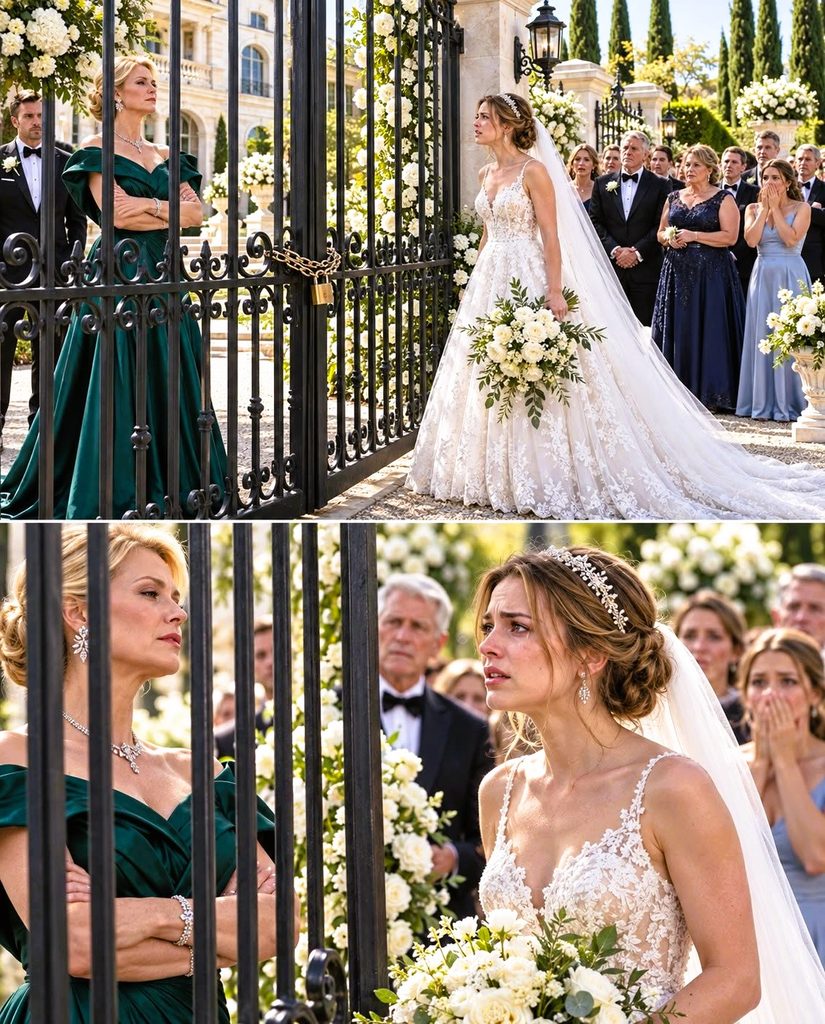
“I knew you’d come back to apologize,” Julian smirked, stepping forward. I shut off the engine. Behind me, the two moving trucks rumbled at the curb.
Six movers climbed out. Their boots hit the pavement one after another. Julian’s smile slowly disappeared. I opened my door and stepped onto the driveway.
“No, Julian.”
I reached into the passenger seat and picked up the thick leather binder.
“I came back for my things.”
He stared at the trucks.
Then at me.
Then back at the trucks.
“What things?”
I almost laughed.
Not because anything was funny.
Because after everything I had done for that family, he genuinely had no idea how much of the life surrounding him belonged to someone else.
“Everything I paid for.”
His face tightened.
“You can’t be serious.”
“I’ve never been more serious.”
The front door flew open.
Eleanor came marching outside in a cream robe and slippers.
Her hair was wrapped in rollers.
“What is all this noise?”
Then she saw me.
Her expression changed immediately.
“Well.”
She folded her arms.
“The runaway bride returns.”
I said nothing.
Eleanor smiled.
“I suppose you’ve had enough time to think about the spectacle you caused yesterday.”
Behind me, one of the movers opened the back of the first truck.
Eleanor’s smile faltered.
“What are they doing?”
I opened my binder.
“Working.”
Julian stepped closer.
“Evelyn, stop playing games.”
“I’m not playing anything.”
I removed the first receipt.
“Living room sectional. Four thousand eight hundred dollars.”
I removed another.
“Dining table and eight chairs. Three thousand two hundred.”
Another.
“Refrigerator. Twenty-eight hundred.”
Another.
“Washer and dryer. Twenty-four hundred.”
Another.
“Television. Seventeen hundred.”
Eleanor stared at me.
I kept going.
“Guest bedroom furniture.”
I turned a page.
“Patio furniture.”
Another.
“Custom light fixtures.”
Another.
“Upstairs bedroom set.”
Another.
“Kitchen appliances.”
Another.
“Window treatments.”
I closed the binder.
“And that’s just what can be removed without damaging the structure.”
Julian laughed nervously.
“You gave us those things.”
“No.”
“I have the messages.”
His expression froze.
I opened the binder again.
“You remember when I told you I wanted written records because my accountant questioned why I was spending so much money on property I didn’t own?”
He said nothing.
“I saved every conversation.”
Eleanor stepped closer.
“You were marrying into this family. Of course you contributed.”
“Contributed?”
I looked at her.
“You called me every time you wanted something.”
Her cheeks flushed.
“I did no such thing.”
I pulled out my phone.
“Would you like me to read the messages?”
Silence.
I found the first one.
“March eighth.”
I read aloud.
“‘Evelyn, darling, since you’re already replacing the kitchen cabinets, could you pay for the quartz countertops too? Julian says you’re doing very well financially.’”
Eleanor’s lips parted.
I scrolled.
“April nineteenth.”
I continued.
“‘The sofa you selected isn’t really my taste. I found another one for forty-eight hundred. Since you’re buying it anyway, I’d rather have the nicer one.’”
Julian glanced toward his mother.
I continued.
“June second.”
“‘Can you transfer another seven thousand? The contractor says the upstairs bathroom will look cheap unless we replace the tile.’”
“Enough,” Eleanor snapped.
“No.”
My voice stayed quiet.
“That’s the problem.”
I looked directly into her eyes.
“For eighteen months, nobody in this family ever said enough.”
A curtain moved across the street.
Then another.
Neighbors were watching.
Yesterday, that would have embarrassed me.
Today, I didn’t care.
I turned toward the movers.
“Start with the living room.”
They headed toward the house.
Eleanor jumped in front of the doorway.
“You are not entering my home!”
The crew stopped.
Their supervisor looked at me.
I expected that.
So I took another document from the binder.
“That’s why I brought this.”
Julian snatched it.
His eyes moved across the page.
“What is this?”
“Authorization.”
“From who?”
“Your mother.”
Eleanor’s face changed.
“What?”
I looked at her.
“Eight months ago, you signed an agreement acknowledging that several items purchased for the renovation remained my personal property until Julian and I were legally married.”
Eleanor stared at me.
“You told me that was for insurance.”
“No. I told you it would help document ownership for insurance purposes.”
I paused.
“You didn’t read it.”
Her face drained.
She grabbed the paper from Julian.
“I never agreed to this!”
“Your signature is at the bottom.”
“That means nothing!”
“It means enough that I had an attorney review everything before I came here.”
That was the first moment I saw fear.
Not panic.
Not yet.
Just fear.
A tiny crack in Eleanor’s certainty.
Julian stepped toward me.
“Attorney?”
“Yes.”
“You hired a lawyer?”
“I called one from Uncle Arthur’s car yesterday.”
His eyes widened.
“You planned this?”
“No, Julian.”
I shook my head.
“You planned this.”
“You and your mother just never imagined I might stop cooperating.”
The movers entered.
Eleanor followed them, shouting.
“You touch that sofa and I’ll call the police!”
The supervisor stopped.
“You’re welcome to do that, ma’am.”
She actually did.
Eleven minutes later, a patrol car pulled up.
By then, Eleanor had transformed herself into a victim.
She hurried toward the officer.
“Thank goodness! This woman is trying to rob my house!”
The officer looked from her to me.
“Ma’am?”
I handed him the documents.
“My name is Evelyn Vance. These are purchase records and an ownership agreement for removable personal property inside the home. My attorney advised me to keep everything documented.”
The officer examined the papers.
Julian hovered behind his mother.
“She’s angry because I broke up with her.”
I looked at him.
“I canceled our wedding after your mother locked me outside the property for three hours.”
The officer blinked.
Even he seemed unsure he had heard correctly.
Eleanor jumped in.
“That has nothing to do with this!”
“No,” I said.
“It doesn’t.”
I pointed toward the paperwork.
“That’s why I’m discussing receipts instead.”
The officer looked through several pages.
Then he looked at Eleanor.
“This appears to be a civil property dispute. I can’t adjudicate ownership from the driveway.”
Eleanor smiled triumphantly.
“Exactly. So make them leave.”
He raised a hand.
“I didn’t say that.”
Her smile disappeared.
He continued.
“If these documents are accurate and the items belong to Ms. Vance, you may want to contact your attorney before interfering.”
Eleanor stared at him.
“But this is my house!”
“The house may be yours. The contents are a separate question.”
I nearly saw the words strike her physically.
For Eleanor, the distinction had never existed.
If something entered her house, it became hers.
Money.
Furniture.
Labor.
People.
Especially people.
She turned to Julian.
“Do something!”
Julian looked at me.
For the first time since I had known him, I saw him realize that his mother’s commands could not automatically produce reality.
“Evelyn.”
His voice softened.
“Can we talk privately?”
“No.”
“Please.”
“Whatever you have to say can be said here.”
He looked embarrassed.
Good.
Yesterday he had been perfectly comfortable discussing my supposed arrogance in front of fifty people.
Today he wanted privacy.
“I think everybody got emotional yesterday,” he said.
“Everybody?”
“You know what I mean.”
“No. Explain.”
He rubbed his forehead.
“My mother went too far.”
Behind him, Eleanor gasped.
“Julian!”
He ignored her.
“But you went too far too.”
There it was.
The balance he always needed.
His mother could set the house on fire, but if I complained about the smoke, somehow we were both responsible.
“You canceled a wedding over three hours,” he said.
“No.”
I stepped closer.
“I canceled a marriage over the next thirty years.”
He stared at me.
“I saw my future yesterday.”
His jaw tightened.
“I saw every Thanksgiving where she insults me and you ask me to ignore it.”
I pointed toward Eleanor.
“Every Christmas where she demands something and you tell me to keep the peace.”
My voice began trembling, but I didn’t stop.
“Every financial decision where she gets a vote.”
“Every argument where you disappear.”
“Every child we might have had learning that Grandma can humiliate Mom because Dad is too frightened to say no.”
Julian’s face changed.
I swallowed.
“And someday, I would have looked in the mirror and wondered why I stayed.”
Nobody spoke.
Even Eleanor was quiet.
I wiped a tear from my cheek.
“So no, Julian.”
“I didn’t cancel our wedding because I stood outside a gate.”
“I canceled it because while I stood outside that gate, you showed me exactly what kind of husband you would be.”
The mover supervisor approached.
“Ms. Vance?”
“Yes?”
“Could you identify the dining set?”
I walked inside.
The transformation had already begun.
The television was gone.
The leather sectional had been wrapped and carried outside.
The expensive lamps were disconnected.
The rug had been rolled.
The living room looked enormous.
And strangely ordinary.
I stood in the doorway.
Eleanor came behind me.
Her voice was low.
“You’re enjoying this.”
I turned.
“No.”
“You are.”
“No, Eleanor.”
I looked around the room I had helped create.
“I loved this house.”
That surprised her.
“I loved imagining holidays here.”
My voice cracked.
“I pictured children running through that hallway.”
For the first time, my anger gave way to grief.
“I pictured Julian and me visiting you when you were old.”
She looked away.
“I chose those cabinets with you.”
I pointed toward the kitchen.
“I spent four Saturdays comparing tile because you said you wanted the home your husband never had enough money to give you.”
Her face hardened again.
“Don’t bring my husband into this.”
“I’m not insulting him.”
I lowered my voice.
“I’m telling you that I tried to love you.”
That silenced her.
“I tried so hard to become part of this family that I kept proving myself with money.”
I shook my head.
“That was my mistake.”
Eleanor’s eyes narrowed.
“Then leave the things.”
“No.”
“Why?”
“Because generosity without respect becomes exploitation.”
She scoffed.
“You think because you make more money than us, you’re better than us.”
There it was.
The accusation beneath everything.
I shook my head.
“I never thought I was better than you.”
“Yes, you did.”
“No.”
“You walked around here with your career and your expensive clothes and your—”
“My expensive clothes?”
I stared at her.
“You picked a four-thousand-dollar sofa using my credit card.”
Her mouth snapped shut.
“You weren’t offended by my money when it was renovating your bathroom.”
I stepped closer.
“You only resented it when you realized you couldn’t control the woman earning it.”
Her face reddened.
“You arrogant little—”
“Mom!”
Julian finally shouted.
The room went still.
Eleanor stared at him.
“What did you say?”
He swallowed.
“I said stop.”
She looked genuinely stunned.
It might have been the first time he had raised his voice to her in years.
Maybe ever.
But it was one day too late.
He turned to me.
“Evelyn, please.”
I shook my head.
“Don’t.”
“I can fix this.”
“You can’t.”
“I’ll move out.”
That surprised Eleanor.
“What?”
Julian stepped toward me.
“I’ll get an apartment. We don’t have to live near Mom. We can postpone the wedding.”
“Julian—”
“I’ll go to counseling.”
“Julian.”
“I’ll do whatever you want.”
“Stop.”
He did.
I looked at him for several seconds.
“Why didn’t you say any of that yesterday?”
His eyes dropped.
There was my answer.
Because yesterday he thought I would stay.
Today he was losing things.
That distinction mattered.
“You don’t suddenly respect me,” I said.
“You suddenly understand there are consequences.”
He shook his head.
“That isn’t fair.”
“Maybe.”
I turned away.
“But neither was leaving your fiancée outside a locked gate in her wedding dress.”
By noon, the first truck was nearly full.
The house looked stripped.
Not destroyed.
Not vandalized.
Just stripped of everything I could document as mine.
The sofa.
Television.
Dining furniture.
Several beds.
Patio set.
Freestanding appliances.
Artwork I had purchased.
Decorative mirrors.
Lamps.
Kitchen equipment.
Even the expensive espresso machine Eleanor had insisted was necessary because “instant coffee looked cheap when guests came over.”
But the biggest surprise had not happened yet.
That came at 12:17.
A silver sedan pulled behind the police cruiser.
Uncle Arthur stepped out.
And he wasn’t alone.
A woman in a navy suit emerged from the passenger side carrying a briefcase.
Julian frowned.
“Who is that?”
“My attorney.”
Eleanor went pale.
The woman approached.
“Ms. Vance?”
“Rachel.”
We shook hands.
Rachel Moreno was a commercial attorney Arthur had known for almost fifteen years.
She had spent half the night reviewing the documents I sent her.
She turned toward Eleanor.
“Mrs. Mercer?”
“Yes?”
Rachel handed her an envelope.
“You should read this.”
Eleanor refused to take it.
“What now?”
Rachel remained calm.
“A notice regarding reimbursement claims and outstanding financial obligations.”
Julian looked at me.
“Outstanding what?”
I lifted the leather binder.
“The eighty-five thousand dollars.”
Silence.
Absolute silence.
Eleanor finally took the envelope.
Her fingers trembled as she opened it.
The first page contained a detailed summary.
Roofing contribution.
$14,600.
Electrical work.
$6,850.
Plumbing.
$5,900.
Flooring.
$11,400.
Cabinetry.
$13,200.
Bathroom remodeling.
$9,750.
Exterior work.
$5,600.
Window replacement.
$8,300.
Contractor overages.
Appliance and furnishing balances.
Materials.
Delivery fees.
Deposits.
It went on.
And on.
And on.
Some items were clearly mine and removable.
Others had become part of the house and couldn’t simply be ripped out.
But Rachel had discovered something else.
Something I had forgotten.
For many of the renovation expenses, Eleanor had sent written promises that she would repay me after refinancing the house.
She never did.
Not one dollar.
I had never pursued her because I believed I was about to marry her son.
But a promise written casually in a text message can still become evidence.
Eleanor reached the final page.
Her face went white.
“What is this number?”
“Eighty-five thousand, four hundred and sixty dollars,” Rachel replied.
“You expect me to pay that?”
Rachel remained expressionless.
“I expect you to discuss it with counsel.”
“I don’t have that kind of money!”
I stared at her.
Yesterday, that sentence might have softened me.
Today, I remembered standing outside the gate.
“Then perhaps you shouldn’t have treated the person you owed it to like garbage.”
Eleanor looked at Julian.
“Tell her!”
He stared at the papers.
“Mom… did you promise to pay her back?”
“I said things.”
“That isn’t what I asked.”
Eleanor looked cornered.
“I thought she was going to be family!”
Julian closed his eyes.
“So did I,” I whispered.
That hurt him.
I saw it.
But pain doesn’t automatically mean injustice.
Sometimes pain is simply what truth feels like when it arrives too late.
Rachel opened her briefcase.
“There is another issue.”
Eleanor’s eyes widened.
“What now?”
Rachel removed several photocopies.
“During my review, I found repeated transfers from Ms. Vance’s account to Mr. Mercer.”
Julian stiffened.
My head turned.
“What?”
Rachel looked at me.
“I mentioned these briefly this morning, but I wanted the underlying statements before raising the issue.”
She handed me the pages.
There they were.
Transfers.
$2,000.
$1,500.
$3,200.
$950.
$4,000.
All to Julian.
Some I recognized.
Others I didn’t.
My stomach tightened.
“Julian?”
He stared at the floor.
“Explain.”
Nothing.
“Julian.”
“They were loans.”
“No.”
I flipped through the pages.
“I know about the car repair.”
Another page.
“I know about the dental bill.”
Another.
“I know about the credit card.”
I held up the statements.
“I don’t know about these.”
Eleanor interrupted.
“That’s between you and him.”
I looked at Julian.
“Where did the money go?”
He didn’t answer.
And suddenly I knew.
I looked at Eleanor.
Then back at Julian.
“Oh my God.”
He whispered my name.
“You were giving it to her.”
“Evelyn—”
“You were taking money from me and giving it to your mother?”
“She needed help.”
“How much?”
Silence.
“How much, Julian?”
He rubbed both hands over his face.
“About twelve thousand.”
I felt something inside me go completely still.
Not break.
Breaking hurts.
This was colder.
This was the moment after breaking, when there is nothing left to fracture.
“Did you tell me?”
“No.”
“Did you intend to?”
“I was going to replace it.”
“With what?”
“I was figuring that out.”
“You make forty-three thousand dollars a year.”
His face flushed.
“That doesn’t mean—”
“You were going to replace twelve thousand dollars secretly while paying rent, insurance, food, and your own debt?”
He said nothing.
I looked at Rachel.
“Add it.”
Julian’s head snapped up.
“What?”
“If there’s a legal basis, add it to whatever needs to be addressed.”
“Evelyn, come on.”
I stared at him.
“You stole from me.”
“I borrowed it.”
“Borrowing requires permission.”
His eyes filled with tears.
“I was trying to help my mother.”
“And I was trying to build a life with you.”
My voice broke.
“Do you understand what you did?”
He reached toward me.
I stepped back.
“No.”
My voice became a whisper.
“You don’t get to touch me anymore.”
His hand dropped.
Eleanor suddenly started crying.
Not delicate tears.
Big, furious, desperate sobs.
“This is what you wanted!”
She pointed at me.
“You wanted to destroy my family!”
I stared at her.
“No.”
“You did!”
“No, Eleanor.”
I pointed toward the locked gate.
“You did this yesterday.”
She shook her head violently.
“Because you needed to learn respect!”
“Respect?”
My voice rose for the first time.
“You made a bride stand in the street while her family watched because a psychic told you she had bad energy!”
The mover supervisor turned away, clearly pretending not to listen.
I continued.
“You wanted me to understand that if I married your son, you would control the doorway.”
I pointed toward Julian.
“And he wanted me to accept it.”
My voice softened.
“So I did understand.”
I closed the binder.
“I understood perfectly.”
The second truck was loaded shortly after two.
The house looked different now.
The expensive polish was gone.
The living room had two old folding chairs.
The dining room was empty.
There was a rectangular patch on the hardwood where the rug had protected the floor from sunlight.
The kitchen looked strangely hollow without the refrigerator and movable appliances I had purchased.
Eleanor stood in the middle of it.
For the first time, she didn’t look powerful.
She looked small.
But what happened next surprised even me.
As I prepared to leave, Eleanor said quietly:
“Wait.”
I stopped.
She disappeared upstairs.
Julian watched her go.
A minute later, she returned carrying a wooden box.
She handed it to me.
I didn’t take it immediately.
“What is this?”
“Open it.”
Inside was a stack of envelopes.
Bank statements.
Receipts.
And underneath them, a photograph.
Julian looked over my shoulder.
His face drained.
“Mom?”
The photograph showed Julian’s father standing beside Eleanor outside the house years earlier.
Behind it was a handwritten note.
I looked at Eleanor.
“What am I looking at?”
She sat down on one of the folding chairs.
Then she said something that changed the entire story.
“The house is in foreclosure.”
Julian stared at her.
“What?”
She covered her face.
“The house is in foreclosure.”
He laughed once.
A confused, frightened sound.
“No, it isn’t.”
“Yes.”
“How?”
She didn’t answer.
“Mom, how?”
“I borrowed against it.”
“When?”
“Several times.”
His face changed.
“How much?”
Eleanor started crying again.
“More than I should have.”
“How much?”
She whispered the number.
“One hundred and seventy-six thousand.”
Julian staggered backward.
I stared at her.
The property had originally been almost paid off.
“How?”
“I refinanced after your father died.”
“Why?”
“Bills.”
Julian shook his head.
“What bills?”
Eleanor wouldn’t look at him.
Rachel stepped closer.
“Mrs. Mercer, you should probably stop speaking until you have independent legal advice.”
But Julian demanded an answer.
“What bills, Mom?”
Eleanor’s mouth trembled.
“I made investments.”
I felt cold.
“What kind of investments?”
She glanced at me.
Then away.
“Online opportunities.”
Rachel’s expression changed.
Julian looked confused.
“What does that mean?”
Eleanor finally whispered:
“Cryptocurrency.”
Julian stared.
“You don’t know anything about cryptocurrency.”
“The man helping me did.”
“What man?”
“He was an investment adviser.”
“Who?”
She hesitated.
I already knew the answer was going to be bad.
“His name was Adrian.”
“Was?”
Eleanor began sobbing.
“He disappeared.”
Nobody spoke.
The truth emerged slowly.
Painfully.
Eleanor had met “Adrian” through an online spiritual-investment group recommended by the same psychic reader she trusted.
He claimed wealthy investors were quietly buying digital assets before a major market event.
He promised extraordinary returns.
She sent him money.
At first, the website showed profits.
So she sent more.
Then more.
She refinanced the house.
Then borrowed against a retirement account.
Then took cash advances.
When Julian secretly sent her my money, he thought he was helping her cover ordinary bills.
He hadn’t known where the money was really going.
Eventually the investment website stopped allowing withdrawals.
Then Adrian vanished.
The supposed profits vanished with him.
And Eleanor was left with debt.
A mountain of it.
Julian sank into a folding chair.
“You told me the mortgage was almost paid.”
“It was.”
“You lied.”
“I was going to fix it.”
“With what?”
She had no answer.
He looked at me.
And something awful happened.
I recognized myself in his face.
That shock.
That disbelief.
That humiliation when you realize someone you trusted has been rewriting reality around you.
For half a second, I wanted to comfort him.
Then I remembered yesterday.
He had watched me suffer and chosen convenience.
Compassion did not require reconciliation.
I could feel sorry for him without returning to him.
That distinction saved me.
Rachel quietly said, “Evelyn, we should go.”
I nodded.
Julian stood.
“Wait.”
I turned.
He looked destroyed.
“Did you know?”
“About the foreclosure?”
“Yes.”
“No.”
He nodded.
Then he looked at the empty room.
“I’ve ruined everything.”
I didn’t answer.
“I should have defended you.”
“Yes.”
“I should have walked out that gate.”
“Yes.”
“I should have left with you.”
“Yes.”
His eyes filled.
“Is there anything I can do?”
I thought carefully before answering.
“Yes.”
Hope flashed across his face.
“Tell the truth.”
He stared at me.
“To your attorney.”
I looked at his mother.
“To the bank.”
Then back at him.
“To yourself.”
His hope disappeared.
“And after that?”
“Build a life where you don’t need another person to tell you when something is wrong.”
I walked toward the door.
“Evelyn.”
I stopped without turning.
“I did love you.”
My eyes closed.
That was the cruelest part.
I believed him.
“I know.”
My voice shook.
“I loved you too.”
Then I walked outside.
Three weeks passed.
I moved into a small apartment overlooking the Chicago River.
For the first few nights, I barely slept.
People imagine walking away from a bad relationship feels powerful.
Sometimes it doesn’t.
Sometimes freedom feels like grief.
Sometimes you wake up at 3:00 a.m. and reach toward the other side of the bed before remembering there is nobody there.
Sometimes you open your phone and almost send the message.
Sometimes you wonder whether you overreacted.
Then I would remember the gate.
Not Eleanor.
The gate.
And Julian standing on the other side of it.
That memory became my answer.
My family surrounded me without suffocating me.
Arthur brought takeout every Thursday.
My mother came over with plants because she said apartments needed something alive in them.
My sister helped me sell several pieces of furniture I didn’t want anymore.
I donated others.
I kept one thing.
The dining table.
Not because it reminded me of Eleanor.
Because I had chosen it.
Because I liked it.
And I decided she didn’t get to ruin beautiful things for me.
The legal dispute took months.
Much of the renovation money was complicated because improvements permanently attached to real property are not the same as removable personal belongings.
Rachel never promised miracles.
That mattered to me.
I wasn’t interested in revenge disguised as law.
I wanted accountability.
Ultimately, attorneys negotiated.
Some claims were dropped.
Some debts were documented.
Some money was repaid through a settlement after Eleanor sold several assets.
The house itself became entangled in her financial crisis.
I stayed away from most of it.
I didn’t need to watch her lose everything.
I only needed to stop financing it.
Then, five months after the wedding that never happened, I received a letter.
Not from Julian.
From Eleanor.
I almost threw it away.
Instead, I opened it.
Her handwriting looked smaller than I remembered.
She didn’t apologize immediately.
That would have been too easy.
She wrote about her husband dying.
About being terrified of becoming irrelevant.
About Julian being the last person she felt she could still control.
About seeing me arrive—educated, financially independent, confident—and feeling that her son would no longer need her.
She admitted that the psychic nonsense had been an excuse.
She had wanted to humiliate me.
She had wanted to establish dominance before the marriage began.
She wanted me to understand that she came first.
Then came the sentence I read four times.
“I thought if Julian chose you over me, I would lose my son. So I forced him to choose, and in doing so, I taught him to lose you.”
I sat beside my apartment window for a long time.
The letter ended with:
“I don’t expect forgiveness. I only want you to know that you were right to leave.”
I folded it.
Then I cried.
Not because I wanted Eleanor back in my life.
Not because I wanted Julian.
I cried because sometimes the apology you desperately wanted arrives after you’ve stopped needing it.
And that’s a strange kind of sadness.
A year after the canceled wedding, I received another message.
This one was from Julian.
I had not spoken to him in nine months.
He wrote only:
“I’m moving to Wisconsin. New job. New apartment. Mom and I have been in separate counseling. I finally understand why asking you to tolerate disrespect was disrespect itself. I don’t expect an answer. I hope you’re happy.”
I stared at the screen.
Then I typed:
“I hope you become happy too.”
I sent it.
That was all.
No dramatic reunion.
No second wedding.
No kiss in the rain.
Because some love stories are not supposed to survive.
Sometimes their purpose is to teach you what love must never require.
Two years later, Uncle Arthur walked beside me through a completely different set of gates.
They were open.
That mattered to me.
Beyond them stood a garden filled with white roses.
There were forty-two guests.
No psychic.
No humiliation.
No tests.
No one asking me to prove I deserved entry.
And waiting beneath an oak tree was a man named Daniel.
We had met eleven months after my canceled wedding.
I told him the entire story on our fourth date.
When I finished, he had sat silently for several seconds.
Then he asked:
“Why did you pay for their renovation?”
I laughed.
“That’s your takeaway?”
“No.”
He smiled.
“My takeaway is that you seem to show love by fixing things for people.”
That sentence stayed with me.
Because he was right.
I had spent years believing love meant solving.
Paying.
Helping.
Rescuing.
Proving.
Daniel taught me something different.
Love could also mean receiving.
It could mean boundaries.
It could mean someone saying, “I’ll handle it,” and actually handling it.
It could mean disagreement without punishment.
It could mean family without surrender.
As Arthur and I reached the beginning of the aisle, he squeezed my hand.
“You sure this time?”
I smiled.
“Very.”
He grinned.
“Gate’s open.”
I laughed through my tears.
“Yes.”
“The gate is open.”
Daniel was waiting.
And when I reached him, he didn’t tell me how lucky I was to join his family.
He didn’t tell me what kind of wife I needed to become.
He simply took my hands and whispered:
“You look beautiful.”
That was enough.
Years later, people still occasionally ask why I canceled my first wedding.
Some expect a dramatic answer.
They want me to say it was because of the psychic.
Or the gate.
Or the furniture.
Or the $85,000.
But none of those things were the real reason.
The real reason was much simpler.
For years, I thought disrespect became acceptable if you could explain where it came from.
Eleanor was lonely.
Julian was afraid of upsetting her.
They had money problems.
She had lost her husband.
He had grown up learning that obedience kept the peace.
Every cruel thing had an explanation.
But an explanation is not an excuse.
And love without boundaries eventually becomes permission.
That morning, standing outside those locked gates in my wedding dress, I finally understood something I wish I had learned much earlier:
Marriage doesn’t magically change people.
A wedding doesn’t transform cowardice into courage.
A ring doesn’t turn control into love.
And vows don’t repair boundaries that never existed.
The person standing beside you before the wedding is the person you’re marrying.
So when Julian lowered his eyes and told me to obey his mother, he gave me something far more valuable than an apology.
He gave me the truth.
I just had to be brave enough to believe it.
As for Eleanor, I never saw her again.
But years later, I heard through mutual acquaintances that she had moved into a modest condominium after resolving what she could of her financial problems.
She stopped seeing the psychic.
She found legitimate financial counseling.
And, according to Julian, she eventually began volunteering twice a week at a community center.
Maybe she changed.
I hope she did.
Not because I needed her redemption.
Because people becoming better is preferable to people remaining cruel.
But her growth was no longer my responsibility.
That was another lesson I had learned.
You can forgive someone without reopening the door.
You can wish them peace without inviting them back into your life.
You can understand why someone hurt you without volunteering to be hurt again.
And sometimes the strongest response to humiliation isn’t revenge.
It isn’t screaming.
It isn’t destroying someone’s life.
It’s simply refusing to participate anymore.
The day Eleanor locked those gates, she believed she was teaching me humility.
She believed three hours in the cold would establish my place in her family.
Instead, she accidentally taught me the most important lesson of my life.
She showed me exactly what my place would be.
Outside.
Waiting.
Proving.
Obeying.
So I chose another place.
One where the doors opened both ways.
One where generosity wasn’t treated like weakness.
One where love didn’t come with an entrance exam.
One where nobody needed to be humiliated for someone else to feel powerful.
And sometimes, when I think about that abandoned bouquet lying on the pavement, I don’t remember it as the moment my wedding ended.
I remember it as the moment my life began again.
Because Eleanor had been wrong about one thing.
I did need to learn humility that day.
Just not the kind she meant.
I needed enough humility to admit that I had chosen the wrong man.
Enough humility to stop believing I could fix him.
Enough humility to accept that all the money, patience, love, and loyalty in the world cannot build a healthy marriage with someone who refuses to stand beside you.
And enough self-respect to walk away before vows turned a terrible afternoon into a terrible lifetime.
The gate had been locked for me.
So I stopped knocking.
And I never stood outside anyone’s life waiting for permission to matter again.
💬THE END! THANK YOU FOR READING! ❤️🙏