
 Reading Time: 31 minutes
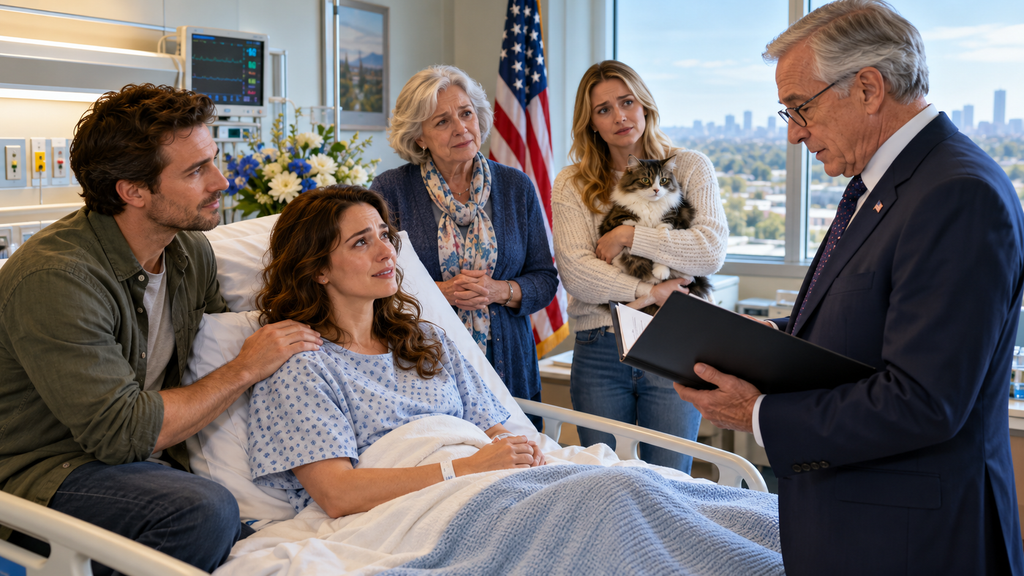
The door handle turned. I had barely managed to push the folded hospital timeline to the bottom of my purse before my husband stepped into the room.
Daniel carried two paper cups of coffee. One for himself. One for me. For twelve years, that small gesture would have meant something.
That night, it terrified me.
Because Daniel always became thoughtful when he was afraid.
“Here.”
He held the cup toward me.
“I figured you needed this.”
I stared at it.
Then at him.
His expression was soft.
Concerned.
Almost wounded.
The same expression he had worn when my mother accused him of controlling me three years earlier.
The same expression he had worn when our neighbor complained that he screamed too loudly during football games.
The same expression he had worn whenever someone came close to seeing something he did not want them to see.
“I don’t want coffee.”
He placed it on the table anyway.
Then he looked at the doctor.
“So?”
The doctor remained standing.
“We’re still waiting on additional information.”
Daniel frowned.
“What information?”
“Several things.”
“Like?”
The doctor did not answer immediately.
That silence changed Daniel.
Only slightly.
But I saw it.
His shoulders stiffened.
His thumb stopped rubbing the cardboard sleeve around his coffee.
Then he looked at me.
“What did they tell you?”
“Nothing.”
It was the first deliberate lie I had ever told my husband.
And something inside me shifted when I said it.
Not because lying felt good.
Because for the first time, I understood how much information I had given him over the years simply because I believed a wife was supposed to tell her husband everything.
Where I was.
Who called.
What my mother said.
What the pediatrician thought.
What daycare noticed.
What frightened me.
What I suspected.
Daniel had always known what I knew.
Tonight, he didn’t.
And he hated it.
He smiled.
Too quickly.
“Okay.”
Then he sat beside me.
Close.
His knee touched mine.
I moved my leg away.
He noticed.
Of course he noticed.
“Emily.”
“Not now.”
“I’m trying to be here for you.”
“Our daughter is in the hospital.”
“Our daughter is going to be fine.”
“You don’t know that.”
His face tightened.
“Neither do you.”
The child-protection specialist stepped forward.
“Mr. Carter, I need to ask you a few more questions about today.”
Daniel sighed.
“Again?”
“Yes.”
“I already explained everything.”
“We need to make sure we have the sequence correctly.”
His eyes moved toward me.
Then back to her.
“Fine.”
“What time did Lily wake up?”
“Around seven.”
“What did she eat?”
“Breakfast.”
“What specifically?”
He hesitated.
“Cereal.”
My stomach dropped.
Bananas.
Toast.
Half a spoonful of yogurt she had stolen from my bowl.
There had been no cereal.
I had been there.
The woman wrote something down.
“What happened after breakfast?”
“I cleaned up.”
“And Lily?”
“She played.”
“With what?”
“Her toys.”
“What toys?”
Daniel gave a humorless laugh.
“She’s two. She has a million toys. I don’t inventory them.”
The woman did not react.
“What time were you planning to take her to daycare?”
“Nine.”
“Did you?”
“No.”
“Why?”
“She seemed tired.”
“What time did she begin seeming tired?”
Daniel leaned back.
“I don’t know. Maybe ten.”
The room went very still.
I looked at him.
He did not look at me.
The doctor had asked the same question less than an hour earlier.
Daniel had said she was playing normally before falling at four.
Now she had been unusually tired by ten.
The woman continued.
“What did she do between ten and four?”
“Mostly slept.”
My fingers went numb.
Mostly slept.
The words seemed to float between us.
The doctor had told me Lily’s condition suggested the injury had occurred significantly earlier than Daniel claimed.
Now Daniel himself had accidentally moved the beginning of her symptoms backward six hours.
“Where did she sleep?” the woman asked.
“Couch.”
“For six hours?”
“She woke up.”
“When?”
“I don’t know.”
“Did she eat lunch?”
“I think so.”
“You think?”
“I gave her something.”
“What?”
“I don’t remember.”
“Did you change her diaper?”
Daniel looked at me.
Again.
Every difficult question made him look at me.
As though I were supposed to rescue him.
I didn’t.
“I’m sure I did.”
“What time?”
“I don’t remember.”
The woman wrote again.
Daniel’s voice sharpened.
“Is there a reason you’re interrogating me like this?”
“We’re establishing a timeline.”
“I gave you one.”
“Yes.”
The woman looked directly at him.
“You’ve given us several.”
Daniel stood.
“I need some air.”
The doctor stepped toward the door.
“Please remain on this floor.”
Daniel laughed.
“What, am I under arrest?”
“No one said that.”
“Then don’t treat me like a criminal.”
He looked at me.
“Emily. Come with me.”
“No.”
One word.
I watched it land.
Daniel blinked.
“What?”
“I’m staying here.”
“With these people?”
“With Lily.”
His jaw clenched.
Then disappeared behind another smile.
“Right.”
He picked up his coffee.
“Of course.”
He left.
The door closed.
I heard his footsteps moving quickly down the hall.
The woman waited five seconds.
Then ten.
Then she looked at me.
“Mrs. Carter, do you feel safe going home with your husband tonight?”
I opened my mouth.
Nothing came out.
Because the truthful answer should have been easy.
Daniel had never punched me.
Never thrown me against a wall.
Never threatened to kill me.
He paid the mortgage.
He remembered anniversaries.
He brought flowers home after arguments.
He could make our daughter laugh until she hiccupped.
There were photographs of him asleep with Lily on his chest.
Videos of him teaching her to say “spaghetti.”
A mug in our kitchen that said WORLD’S BEST DAD.
How could the answer be anything except yes?
Then I remembered Lily’s bruise behind her ear.
Her split lip.
The strange mornings.
The explanations I had accepted because each one had sounded possible by itself.
And I remembered something else.
Something I had not thought about in years.
The first time I became pregnant, before Lily, I miscarried at eleven weeks.
I cried in our bathroom until I couldn’t breathe.
Daniel held me.
He told me we would survive it together.
Two weeks later, during an argument about money, he said:
“You fall apart over everything.”
I had stared at him.
He apologized immediately.
He said grief had made him cruel.
I forgave him.
After Lily was born, whenever I worried about something, he called me anxious.
When I questioned him, I was controlling.
When I disagreed with him, I was exhausted.
When I remembered something differently, I was confused.
When I cried, I was unstable.
When I became angry, I was dramatic.
Somewhere along the way, Daniel had become the narrator of my emotions.
And I had let him.
“I don’t know,” I whispered.
The woman nodded.
“That’s enough for tonight.”
“What does that mean?”
“It means you don’t have to decide your entire future right now.”
I stared at the door.
“But I have to decide whether I believe my husband hurt my daughter.”
“No.”
Her voice was gentle.
“You have to let the evidence tell us what happened.”
That sentence saved me.
Because I wasn’t ready to believe the worst.
But I was finally ready to stop protecting myself from finding it.
Forty-three minutes later, a detective arrived.
Her name was Detective Lena Ortiz.
She wore plain clothes and carried no dramatic folder full of evidence.
She simply walked into the room, introduced herself, and asked whether she could speak with me privately.
Daniel had not returned.
I realized I hadn’t seen him in almost twenty minutes.
“Where’s my husband?”
“We’re locating him.”
Locating him.
Not calling him.
Not waiting for him.
Locating him.
My heart began pounding.
“Why is a detective here?”
Ortiz sat across from me.
“Because the hospital contacted law enforcement.”
“Does that mean they think—”
“It means your daughter is very young, her injuries require explanation, and there are inconsistencies in the history provided.”
“Injuries?”
I hated the plural.
She saw my face.
“I’m not going to interpret medical findings. The physicians will do that. I’m here to establish what happened today.”
I gripped my purse.
“What do you need?”
“Everything.”
So I gave it to her.
Seven twelve.
Dinosaur pajamas.
Banana slices.
Blue cup.
My goodbye kiss.
Daniel standing barefoot near the refrigerator.
His phone on the counter.
Lily yelling, “Mommy work?”
Me saying, “Mommy comes home after snack.”
I told Ortiz what Daniel had said during the phone call.
That Lily had fallen from a chair.
That she cried.
That she was sleepy afterward.
That he had told me not to leave work because she was probably fine.
I left anyway.
“What time was that call?”
“Four twenty-three.”
“Are you certain?”
“Yes.”
“Why?”
“Because I had a meeting at four thirty. My phone was beside my laptop.”
Ortiz wrote it down.
“How long did it take you to get home?”
“Maybe twenty minutes.”
“What did you see?”
I closed my eyes.
The apartment.
The chair.
The jelly.
Lily on the couch.
Daniel in the recliner.
Phone in his hand.
Television on.
I had walked through the door screaming Lily’s name.
Daniel had said:
“Would you stop?”
I could hear it now.
Not worried.
Annoyed.
I told Ortiz.
She asked what Lily was wearing.
“The dinosaur pajamas.”
Ortiz stopped writing.
“The same pajamas from breakfast?”
“Yes.”
“She was never dressed for daycare?”
I looked up.
“No.”
Something cold moved through me.
Daniel said he had planned to take her at nine.
But by nine, a toddler should have been dressed.
Her daycare bag should have been packed.
Her shoes should have been near the door.
I had seen none of it.
“What time does daycare expect her?”
“Between eight and nine.”
“Did they contact you when she didn’t arrive?”
“No.”
“Would they normally?”
“Sometimes.”
Ortiz looked at the child-protection specialist.
The woman left the room.
I suddenly understood.
“You’re calling daycare.”
“We’d like to speak with them.”
“It’s after six.”
“We have an emergency contact.”
I felt sick.
Detective Ortiz asked another question.
“Do you have cameras inside your home?”
“No.”
“Doorbell camera?”
“Our building has one downstairs.”
“Who controls it?”
“Property management.”
She wrote that down.
Then she asked:
“Any cameras inside neighboring units that might cover the hallway?”
“I don’t know.”
“Any smart devices?”
“Alexa.”
“Where?”
“Kitchen.”
“Anything else?”
I almost said no.
Then I remembered.
“The baby monitor.”
Ortiz looked up.
“What kind?”
“One with an app.”
“Does it record?”
“No. I mean—I don’t think so. We use it live.”
“Do you have access?”
“Yes.”
“May I see the app?”
I pulled out my phone.
My hands shook so badly I mistyped the passcode twice.
The app opened.
Camera offline.
My stomach tightened.
“It shouldn’t be offline.”
“When did you last use it?”
“Last night.”
“Does your husband have access?”
“Yes.”
Ortiz stared at the screen.
“Can he disable it remotely?”
“I think so.”
“Would the service retain activity logs?”
“I don’t know.”
“We’ll find out.”
Then the door opened.
The child-protection specialist returned.
Her expression had changed.
“Detective?”
Ortiz stepped into the hallway with her.
I could hear nothing.
Thirty seconds later, Ortiz returned.
She sat down.
“Emily, daycare called your husband at nine thirty-eight this morning.”
I stared at her.
“What?”
“They called because Lily had not arrived.”
“No.”
“The daycare director spoke to him.”
“What did he say?”
Ortiz paused.
“He said Lily had fallen back asleep after breakfast and he was keeping her home because she wasn’t acting like herself.”
Nine thirty-eight.
The room tilted.
“No.”
I heard myself saying it, but I wasn’t arguing with Ortiz.
I was arguing with time itself.
Nine thirty-eight.
Daniel had called me at four twenty-three.
Nearly seven hours.
He had known something was wrong nearly seven hours before he called me.
Maybe longer.
“What exactly did daycare say?”
“They documented the call because Lily had missed several days recently.”
My head snapped up.
“What?”
Ortiz’s expression sharpened.
“You weren’t aware?”
“No.”
“How many days?”
“She was absent three days last month and twice this month.”
“That’s impossible.”
“You dropped her off every day?”
“No. Daniel usually does because his schedule starts later.”
“Did he tell you she attended?”
“Yes.”
I could barely breathe.
Every evening I asked:
How was daycare?
Fine.
Did she eat?
Yeah.
Did she nap?
Barely.
Did she play with Mia?
Probably.
He had answered questions about days she had never been there.
Five entire days.
Five mornings when I kissed my daughter goodbye and believed her father was taking her somewhere safe.
“Why would he lie about daycare?”
Ortiz did not answer.
She didn’t need to.
I reached for my phone.
“What are you doing?”
“Checking something.”
My banking app.
Daniel and I had a shared account.
I searched the dates daycare had listed.
One date meant nothing.
Another showed a gas station.
Then I saw the third.
A charge at a sports bar at 11:47 a.m.
I turned the phone around.
Ortiz looked at it.
“Can you email yourself screenshots?”
“Yes.”
“Do that. Don’t alter anything.”
Another date.
Another charge.
A gaming store.
Then food delivery.
Not daycare.
Not a park.
Not a pediatrician.
Daniel had simply kept her home.
Why?
I searched our messages.
And there it was.
A text from that exact afternoon.
Me:
How’s my baby?
Daniel:
Great. Daycare sent a pic of her painting lol.
I stared at those words until they blurred.
He hadn’t even invented a vague answer.
He had created a photograph that never existed.
“Detective.”
“Yes?”
“I think my husband has been lying to me for longer than today.”
They found Daniel in the parking garage.
He had not gone for air.
He had been sitting in our car.
When Detective Ortiz asked him to come back upstairs, he refused.
When she asked why, he said he needed to call an attorney.
That was when something changed.
Not because innocent people don’t call lawyers.
They do.
They should, when circumstances are serious.
What changed was Daniel’s story.
He stopped explaining.
Stopped smiling.
Stopped asking about Lily.
He became careful.
He told the detective he would not answer further questions.
Then he asked if he could leave.
I wasn’t there for that conversation.
Ortiz told me later.
What I did see was Daniel standing at the far end of the hospital hallway with his coat over one arm.
He looked at me.
I looked at him.
There were maybe thirty feet between us.
It felt like twelve years.
He started walking toward me.
A nurse stepped between us.
“Emily.”
Daniel stopped.
“Can we talk?”
“No.”
His eyes widened.
“Seriously?”
“Where were you at nine thirty-eight this morning?”
His face changed.
Just for a second.
But that second told me more than every answer he had given all night.
“What?”
“Daycare called you.”
He glanced toward Ortiz.
Then back at me.
“They’re twisting things.”
“What happened to Lily?”
“I told you.”
“No. You told me she fell at four.”
“She did.”
“Then why did you tell daycare she wasn’t acting right before ten?”
“She was tired.”
“You said she was playing.”
“She was.”
“You said she ate lunch.”
“She did.”
“What did she eat?”
“Emily, stop.”
“What did she eat?”
“Stop doing this in a hospital hallway.”
“What did our daughter eat for lunch?”
His voice dropped.
“I don’t remember.”
“You were alone with her all day.”
“I said I don’t remember.”
I took one step closer.
“Did she eat lunch?”
He stared at me.
And I knew.
“No.”
The word came out of my mouth.
“You didn’t feed her lunch.”
“That isn’t what I said.”
“You don’t know because she didn’t eat.”
“Emily.”
“She was already hurt.”
“Keep your voice down.”
“She was already hurt before daycare called.”
People were looking now.
Nurses.
A security officer.
The woman from child protection.
Daniel saw them too.
And suddenly his face softened.
“Baby.”
I nearly recoiled.
“Don’t.”
“You’re scared.”
“Don’t call me that.”
“You’re not thinking clearly.”
There it was.
The sentence he had used for years.
You’re not thinking clearly.
Except this time, I was.
More clearly than I ever had.
“I’m thinking clearly enough to know you lied.”
“I panicked.”
“About what?”
He froze.
I saw him realize what he had said.
“What did you panic about, Daniel?”
He rubbed both hands over his face.
“The fall.”
“What fall?”
“The chair.”
“At four?”
“Yes.”
“Then what were you panicking about at nine thirty-eight?”
Silence.
I had him.
Not legally.
Not medically.
But for the first time in our marriage, I had followed one of his explanations all the way to the place where it collapsed.
Daniel looked at Ortiz.
“I’m leaving.”
Then he looked at me.
“Come home when you’re done.”
Home.
As though I would finish at the hospital, buckle Lily into her car seat, walk through our front door, and ask what he wanted for dinner.
“No.”
He stopped.
“What?”
“We’re not coming home with you.”
Something dark moved behind his eyes.
Not rage exactly.
Calculation.
“Where are you going?”
“I don’t know.”
“Emily.”
“I said I don’t know.”
“I’m her father.”
“And I’m her mother.”
“You don’t get to take my daughter away because some doctor scared you.”
“Then tell me what happened.”
“I already did.”
“Tell me the truth.”
“I DID.”
His voice echoed down the hallway.
Every head turned.
Daniel immediately lowered it again.
“I did.”
But the calm husband was gone now.
I had seen what lived beneath him.
Only for one second.
It was enough.
At 8:17 p.m., the doctor told me Lily would be admitted overnight.
At 8:41, Detective Ortiz told me Daniel had left the hospital.
At 8:52, my mother arrived.
I had not called her.
The child-protection specialist had asked whether there was anyone I trusted.
I gave her my mother’s number.
Mom came through the doors wearing slippers, a winter coat over her pajamas, and the expression of a woman prepared to fight God personally if necessary.
She saw me.
Then she ran.
I broke before she reached me.
Not when the doctor spoke.
Not when daycare confirmed the lie.
Not when Daniel walked away.
When my mother wrapped her arms around me, I became six years old.
“Mom.”
“I’m here.”
“I left her with him.”
“I’m here.”
“I left her.”
“Emily.”
“I left my baby with him.”
Mom pulled back and held my face.
“You went to work.”
“I should have known.”
“No.”
“There were bruises.”
“You asked.”
“I believed him.”
“You had explanations.”
“I believed him.”
Mom’s eyes filled.
“Because he was your husband.”
That made me cry harder.
Because that was exactly it.
Not because I was stupid.
Not because I didn’t love my daughter.
Because every suspicious thing had come wrapped in the voice of someone I trusted.
And trust had made ordinary explanations feel safer than terrible possibilities.
Mom held me until I could breathe again.
Then she asked one question.
“Where is he?”
“He left.”
Her face became stone.
“Good.”
“Mom.”
“No. Good.”
She looked toward Lily’s room.
“Because if I see him tonight, I’m going to forget every lesson I ever taught you about self-control.”
Despite everything, I laughed.
One broken sound.
Mom kissed my forehead.
“There you are.”
“What?”
“My daughter.”
I cried again.
At 10:06, my phone rang.
Daniel.
I let it ring.
Again.
Again.
Then a text.
We need to talk.
Another.
You are blowing this out of proportion.
Another.
They are manipulating you.
Another.
You know me.
That one hurt.
Because I did.
Or I thought I did.
Then:
If you keep cooperating with them, they can take Lily from BOTH of us.
My blood went cold.
I showed Ortiz.
She read the messages.
“Don’t delete anything.”
“What does he mean?”
“He may be trying to frighten you.”
“Can they?”
“I can’t promise outcomes. But cooperating with the medical team and protecting your daughter matters.”
My phone buzzed.
Daniel again.
Think carefully about what you’re doing to our family.
Then:
Call me before you destroy everything.
I stared at the screen.
For years, Daniel had been able to make me feel responsible for the consequences of his behavior.
If he yelled, I had pushed him.
If he lied, I had made honesty difficult.
If he disappeared for three hours, I had been too demanding.
Now our daughter was in a hospital bed.
And somehow, according to Daniel, I was destroying the family.
I typed three words.
Then deleted them.
Typed again.
Deleted again.
Finally I sent:
Do not contact me tonight.
His answer arrived instantly.
Wow.
That single word told me he still believed this was an argument.
He had no idea our marriage was already over.
I slept twenty-three minutes that night.
Maybe thirty.
Lily woke shortly after midnight.
Her eyes opened slowly.
“Mommy?”
I was beside her before she finished the word.
“I’m here.”
“Home?”
“Not tonight, sweetheart.”
Her lower lip trembled.
“Daddy?”
My entire body tightened.
“What about Daddy?”
“Daddy mad.”
I stopped breathing.
Mom, sitting by the window, lifted her head.
I forced my voice to remain soft.
“Daddy was mad?”
Lily nodded.
I wanted to ask everything.
What happened?
Did Daddy hurt you?
Did he push you?
Did he hit you?
Every question crowded my throat.
But the child-protection specialist had warned me.
Don’t lead her.
Don’t suggest answers.
Don’t interrogate.
If she says something spontaneously, listen.
So I did.
“What happened?”
Lily looked toward the blanket.
“Cup.”
“What about the cup?”
“Purple cup.”
Her voice became smaller.
“Daddy say no.”
I waited.
Then Lily whispered:
“I cry.”
My heart cracked.
“What happened after you cried?”
She touched the side of her head.
Then pulled her hand away.
“Boom.”
Mom covered her mouth.
I could hear her trying not to make a sound.
I pressed the call button.
A nurse entered.
I told her exactly what Lily had said.
No interpretation.
No additions.
Just the words.
Mom wrote them down too.
Purple cup.
Daddy say no.
I cry.
Boom.
The nurse notified the appropriate staff.
Then Lily asked for water.
I helped her drink.
She took three tiny sips.
Then she looked at me.
“Mommy work?”
The question destroyed me.
“Yes, sweetheart.”
“No work.”
I bent over her hand.
“Not tomorrow.”
“No work?”
“Not tomorrow.”
She smiled faintly.
Then closed her eyes.
I stayed beside her until morning.
At 6:14 a.m., Detective Ortiz returned.
She had not slept either.
I told her what Lily said.
She listened without interrupting.
Then she told me something.
The apartment building manager had preserved the hallway footage.
My pulse jumped.
“Can you see inside our apartment?”
“No.”
“Then what does it show?”
“People entering and leaving.”
“Okay.”
She hesitated.
“Your husband left the apartment at 8:16 yesterday morning.”
I stared at her.
“Without Lily?”
“Yes.”
“When did he come back?”
“9:07.”
Fifty-one minutes.
He had left my two-year-old daughter alone.
“What?”
“He appears alone on the footage.”
“No.”
“He returns alone.”
“No.”
“Emily.”
“He wouldn’t.”
The words came automatically.
Then I caught myself.
He wouldn’t.
How many times had I said that?
He wouldn’t lie.
He wouldn’t ignore an injury.
He wouldn’t leave her alone.
He wouldn’t hurt her.
Each wouldn’t was based on the man I thought I knew.
Not the evidence.
“Where did he go?”
“We’re still working on that.”
“Was Lily already hurt when he left?”
“We don’t know.”
Then Ortiz said:
“There’s more.”
Of course there was.
“He left again at 11:32.”
“For how long?”
“Twenty-seven minutes.”
My eyes closed.
“Again without her?”
“Yes.”
“And again at 2:48.”
I looked at her.
“Where?”
“Approximately twelve minutes.”
Three times.
Three times my husband had walked out of our apartment and left a toddler alone.
Possibly an injured toddler.
“He told me he never left.”
“I know.”
“What was he doing?”
“We’re establishing that.”
I thought of the convenience store two blocks away.
The sports bar.
The gaming store.
Then another memory surfaced.
“His cigarettes.”
Ortiz looked up.
“He quit smoking?”
“He told me he did.”
“When?”
“Before Lily was born.”
“Why does that matter?”
“Because sometimes his jacket smelled like cigarettes.”
I had teased him about it.
He blamed coworkers.
Secondhand smoke.
Standing outside with them during breaks.
Another small explanation.
Another piece.
“Could he have gone downstairs to smoke?”
“Possibly.”
Three times.
Leaving Lily alone.
I covered my face.
Then Ortiz said something unexpected.
“The first time he left may matter for another reason.”
“What?”
“The hallway camera records audio near the elevator.”
My hands dropped.
“Audio?”
“Limited. Poor quality.”
“What did it hear?”
“We’re having it reviewed.”
“Detective.”
She hesitated.
Then:
“Before your husband left at 8:16, there appears to be a loud sound from inside your apartment.”
My entire body went cold.
“What kind of sound?”
“We cannot determine that yet.”
“And Lily?”
“There may also be crying.”
I couldn’t speak.
Eight sixteen.
Not four.
Not noon.
Eight sixteen.
Less than an hour after I left for work.
I remembered kissing Lily at seven twelve.
I remembered her banana-covered fingers waving at me.
I remembered Daniel saying:
“Go. You’re going to be late.”
Forty-something minutes after I left, something happened.
And then Daniel walked away.
By noon, I had given police permission to enter the apartment with me to retrieve Lily’s necessities once they told me what I could and could not touch.
I did not go alone.
Mom came.
So did an officer.
Our apartment looked exactly as I had left it.
And completely different.
The overturned chair was gone.
Daniel had put it upright.
The kitchen had been cleaned.
Not tidied.
Cleaned.
The counters gleamed.
The grape jelly stain I remembered near the cabinet was gone.
The floor had been mopped.
I stared.
“Was it like this when you left yesterday?” the officer asked.
“No.”
“How different?”
“There was food on the counter. A plate. Lily’s cup.”
“What color?”
I froze.
Purple.
Her purple cup.
“Purple.”
The officer looked at me.
“Where is it now?”
We searched.
Cabinet.
Dishwasher.
Sink.
Toy room.
Nothing.
The purple cup was gone.
My stomach turned.
“Maybe Daniel took it.”
The officer wrote something down.
I walked toward the living room.
The couch blanket had been folded.
Daniel’s charging cable was gone.
His laptop was gone.
Some clothes were missing from our bedroom.
He had been home.
After leaving the hospital, he had come back here.
And cleaned.
My heart began pounding.
“His things.”
The officer followed me.
“He packed.”
“How much?”
“Enough for a few days.”
Then I saw the trash can.
Empty.
Daniel never emptied the trash.
Never.
I laughed once.
The officer looked at me.
“What?”
“He hates taking out the garbage.”
That wasn’t funny.
None of it was.
But my brain had reached the point where horror sometimes came out sounding like laughter.
The officer checked the cabinet beneath the sink.
Fresh garbage bag.
Nothing inside.
Mom stood in the doorway.
“Emily.”
I turned.
She was holding something.
Lily’s daycare backpack.
It was behind the coat rack.
Empty.
Except for one thing.
A folded daycare absence notice.
Dated three weeks earlier.
It had been signed.
Daniel Carter.
He had known.
He had hidden it.
I sat down on the floor.
Not because I wanted to.
Because my knees stopped working.
The next twist came from someone I barely knew.
Her name was Nora.
She lived across the hall.
Sixty-eight years old.
Retired teacher.
I had exchanged maybe fifty words with her in two years.
Hello.
Cute shoes.
She’s getting so big.
Package came for you.
That was it.
When police knocked on her door, Nora opened it wearing gardening gloves.
She looked at me.
Then looked at the officer.
And her face changed.
“Is the baby all right?”
The question hit me.
“You heard something?”
Nora slowly removed her gloves.
“Yesterday?”
“Yes.”
She looked ashamed.
“I wasn’t sure.”
“What did you hear?”
“A child crying.”
“When?”
“In the morning.”
“What time?”
“I don’t know exactly.”
“Please.”
She thought.
“I watch the news at eight. It was after that.”
Eight.
My heart hammered.
“What else?”
“A man shouted.”
My mouth went dry.
“What did he say?”
“I couldn’t make out everything.”
“Anything.”
Nora looked at me.
“I heard ‘stop.’”
She swallowed.
“Then something about a cup.”
Purple cup.
I gripped the doorframe.
“And then?”
“A bang.”
Mom reached for me.
Nora’s eyes filled.
“I should have knocked.”
“You didn’t know.”
“I should have.”
“What happened after the bang?”
“The crying stopped.”
I closed my eyes.
Nora continued.
“Then maybe ten minutes later, your husband left.”
“Did you see him?”
“Yes.”
“How did he seem?”
She thought about it.
“Angry.”
“Did he say anything?”
“No.”
“Was Lily with him?”
“No.”
The officer asked whether Nora would provide a statement.
“Yes.”
Immediately.
Then Nora looked at me.
“I’m sorry.”
I shook my head.
“No.”
Because I finally understood something.
The guilt was spreading outward.
Me.
Mom.
Nora.
Daycare.
Everyone was finding some moment they wished they had handled differently.
But only one adult had been inside that apartment with Lily.
Only one person knew what happened.
And he was trying to make everyone else carry pieces of his responsibility.
I was finished carrying mine.
Daniel called from an unknown number at 3:11 that afternoon.
I almost ignored it.
Ortiz had advised me not to engage unnecessarily.
But something made me answer.
“Hello?”
“Emily.”
His voice.
I closed my eyes.
“Where are you?”
“Doesn’t matter.”
“You went to the apartment.”
“You took Lily.”
“She’s in the hospital.”
“You know what I mean.”
I put the call on speaker and gestured to Mom.
She immediately started recording from her phone while I stayed on the line.
“What happened yesterday morning?”
Silence.
Then:
“I already told you.”
“The hallway camera has audio.”
Another silence.
Longer.
“You’re bluffing.”
There.
Not What audio?
Not What do you mean?
You’re bluffing.
My skin prickled.
“What happened?”
“Emily, listen to me. Toddlers fall.”
“At eight?”
Nothing.
“You said four.”
“I got confused.”
“You got confused by eight hours?”
“I was panicking.”
“You spent all day with her.”
“She seemed fine.”
“You told daycare she wasn’t.”
“Because she was tired.”
“Why did you leave her alone?”
He stopped breathing.
I could hear it.
“How do you know that?”
“Answer me.”
“I went downstairs.”
“You left a two-year-old alone.”
“For five minutes.”
“Fifty-one.”
“No.”
“Yes.”
“No, that’s wrong.”
“The camera shows when you left.”
“That camera timestamp is wrong.”
“Then the twenty-seven minutes at eleven thirty-two?”
Silence.
“And the twelve minutes at two forty-eight?”
“Jesus Christ, Emily.”
“What happened at eight?”
“She fell.”
Finally.
The words landed softly.
“She fell.”
I gripped the phone.
“From the chair?”
“Yes.”
“At eight?”
“Yes.”
I almost couldn’t believe it.
He had finally admitted the original timeline was false.
“Why did you tell me four?”
“Because I knew you’d react exactly like this.”
My mouth fell open.
“You lied because of how I would react?”
“You make everything catastrophic.”
“Our daughter is hospitalized.”
“I didn’t know it was serious.”
“She wasn’t acting normally.”
“She was tired.”
“You knew.”
“I DIDN’T KNOW.”
Mom flinched at the volume.
Then Daniel lowered his voice.
“I didn’t know.”
“What happened with the purple cup?”
Nothing.
“Daniel.”
“Nothing.”
“Lily mentioned it.”
His breath changed.
“She said something?”
I looked at Mom.
Mom looked at me.
He sounded frightened.
“What did she say?”
“I’m asking you.”
“She’s two. She says random stuff.”
“What happened with the cup?”
“Nothing.”
“Nora heard you.”
Another pause.
“Who?”
“Our neighbor.”
“That nosy old woman?”
“What happened?”
“She threw it.”
“Lily threw it?”
“Yes.”
“Why?”
“Because she’s a toddler.”
“And?”
“And what?”
“What did you do?”
“I told her no.”
“She cried.”
“Yes.”
“And then?”
“She climbed onto the chair.”
“No.”
“You weren’t there.”
“No, Daniel.”
“Exactly. You weren’t there.”
The words cut.
He knew they would.
But this time I let them cut without letting them control me.
“No,” I said. “I wasn’t. You were.”
Silence.
“So tell me what happened.”
“She climbed.”
“Then?”
“She slipped.”
“Then why did you leave?”
“I needed a cigarette.”
The confession was so casual I nearly dropped the phone.
“After she fell?”
“She was crying.”
“So you left her?”
“She was crying, Emily. Crying means she was conscious.”
I closed my eyes.
He had rationalized it.
Maybe in that moment.
Maybe all day.
Maybe every hour afterward.
“You left an injured toddler alone because she was crying.”
“I needed five minutes.”
“Fifty-one.”
“Stop saying that.”
“Fifty-one minutes.”
“I SAID STOP.”
Then silence.
Daniel breathed heavily.
When he spoke again, his voice was low.
“You want to know what happened?”
“Yes.”
“She wouldn’t stop screaming.”
Mom closed her eyes.
“She wanted you. Everything was Mommy, Mommy, Mommy. I gave her breakfast. Wrong. Gave her the cup. Wrong. Put on her show. Wrong. I told her to stop throwing things.”
“What happened?”
“She threw the cup.”
“And?”
“I grabbed her.”
The room disappeared.
“How?”
“Her arm.”
“And?”
“She twisted.”
“And?”
“I let go.”
“Daniel.”
“She fell.”
“From where?”
Silence.
“From where?”
“Near the chair.”
That wasn’t an answer.
“Did you push her?”
“No.”
“Did you throw her?”
“NO.”
“Then what happened?”
“She pulled away.”
“And hit what?”
Silence.
“Daniel.”
“The cabinet.”
Mom covered her mouth.
I couldn’t feel my hands.
“She hit the cabinet?”
“I didn’t mean for it to happen.”
There it was.
Not a confession to deliberately hurting her.
But the first truthful shape of the morning.
Not climbing.
Not coloring.
Not a four o’clock accident.
An argument over a cup.
Daniel grabbing her.
Lily pulling away.
A fall.
A cabinet.
And then—
“You left.”
“I panicked.”
“You left her.”
“I PANICKED.”
“For fifty-one minutes.”
“I walked.”
“You smoked.”
“I walked and smoked.”
“And when you came back?”
“She was asleep.”
“Unconscious?”
“Sleeping.”
“How do you know?”
“She woke up later.”
“When?”
“I don’t know.”
“Did you call anyone?”
“No.”
“Why?”
“Because I thought she’d be okay.”
“Daycare called.”
“Yes.”
“You told them she wasn’t acting normally.”
“I was worried.”
“But you didn’t call me.”
“I knew what you’d do.”
“What would I do?”
“This.”
I stared at the phone.
“This?”
“Turn everyone against me.”
“Our daughter needed a hospital.”
“I didn’t know that.”
“You knew enough to lie.”
He said nothing.
“You knew enough to clean the apartment.”
Silence.
“You knew enough to take the purple cup.”
The line went dead.
Detective Ortiz listened to the recording twice.
She did not celebrate.
Neither did I.
There was nothing to celebrate.
My marriage had just ended inside a recorded phone call.
My daughter’s father had admitted that the accident happened after he grabbed her.
He admitted leaving afterward.
He admitted lying about the time.
And somehow, even then, a tiny piece of me wanted him to call back and say there had been some terrible misunderstanding.
Because truth does not erase love instantly.
Sometimes truth forces you to mourn someone who is still alive.
I mourned Daniel that afternoon.
Not the man speaking on the phone.
The man I thought I married.
The father I thought Lily had.
The future I thought we were building.
All of it died at once.
Daniel was located that evening at his brother’s house.
He did not resist when police arrived.
His attorney later argued that what happened had been an accident followed by panic.
The investigation took months.
There were interviews.
Medical reviews.
Phone records.
Building footage.
Daycare records.
Nora’s statement.
My statement.
And the recording.
The missing purple cup was eventually found too.
Daniel had thrown it into a dumpster behind a gas station.
A security camera captured his car entering the lot after he left the hospital.
He had driven home.
Cleaned the apartment.
Removed the cup.
Taken out the trash.
Packed a bag.
And disposed of the one object Lily had mentioned when she woke.
That mattered.
Not because the cup itself proved everything.
Because innocent panic had slowly transformed into deliberate concealment.
The story he had told me at 4:23 p.m. had not been a confused memory.
It had been constructed.
But the final twist was not about Daniel.
It was about me.
Three weeks after Lily came home with my mother and me, I received an email from our daycare director.
She asked if we could meet.
I almost declined.
I was exhausted.
Every conversation seemed to produce another piece of my life I didn’t recognize.
But I went.
The director, Karen, closed her office door.
“I owe you an apology.”
“You don’t.”
“Yes.”
She folded her hands.
“There were things we noticed.”
My stomach tightened.
“What things?”
“Lily behaved differently after certain absences.”
“How?”
“Clingier.”
I stared at her.
“She sometimes became upset when Daniel picked her up.”
I stopped breathing.
“What?”
“Not every time.”
“Why didn’t you tell me?”
“We should have communicated more clearly.”
“Did she say anything?”
“Nothing specific.”
“Then what did you notice?”
Karen’s eyes filled.
“She would sometimes hide when she saw him through the window.”
I stood so quickly the chair scraped backward.
“No.”
“Emily—”
“No.”
“I’m sorry.”
“You saw her hide?”
“Yes.”
“And nobody called me?”
“We spoke with Daniel.”
I laughed.
Not because anything was funny.
“You spoke with Daniel.”
“Yes.”
“The person she was hiding from.”
Karen lowered her eyes.
“We interpreted it as separation anxiety and normal toddler behavior.”
I walked toward the window.
Outside, children were running around the playground.
Tiny coats.
Bright hats.
A little boy fell, got up, and continued running.
Normal.
That word had become unbearable.
Normal bruise.
Normal tantrum.
Normal tiredness.
Normal toddler behavior.
Sometimes normal explanations were correct.
Sometimes they were the hiding places adults used because the alternative was too frightening.
Karen handed me copies of incident notes.
One sentence stopped me.
Lily became distressed at pickup and repeatedly requested Mommy.
Dated four months earlier.
Four months.
I sat down.
And cried.
Karen cried too.
For several minutes, neither of us spoke.
Then she said:
“We changed our procedures.”
I looked up.
“What?”
“When a child shows repeated distress connected to pickup, we document patterns and notify all guardians unless doing so creates a safety concern. Staff are also receiving additional training.”
I nodded.
It did not fix what happened.
But it mattered.
Because sometimes accountability is not only punishment.
Sometimes it is making sure the next child is seen sooner.
Lily recovered.
That sentence looks simple written down.
It wasn’t.
Recovery was not a movie montage.
There was no morning when she woke up and everything was normal.
There were appointments.
Specialists.
Nightmares.
Days she refused purple cups.
Weeks when the sound of something dropping in the kitchen made her cry.
For almost two months, she screamed whenever I walked toward the front door wearing work clothes.
“Mommy stay!”
So I stayed when I could.
When I couldn’t, Mom came.
Then gradually, we built a new routine.
Not around fear.
Around predictability.
I told Lily when I was leaving.
I told her who would stay.
I told her when I would return.
And I kept every promise.
One morning, nearly six months later, I put on my shoes.
Lily looked at me.
“Mommy work?”
“Yes.”
She considered that.
Then asked:
“Grandma pancakes?”
Mom called from the kitchen.
“Grandma pancakes!”
Lily grinned.
I crouched.
“Mommy comes back after dinner.”
She wrapped her arms around my neck.
“Promise?”
“Promise.”
She released me.
Just like that.
No screaming.
No tears.
I made it to the car before I broke down.
But those were different tears.
Daniel sent letters.
I did not give them to Lily.
Not then.
Some were apologetic.
Some blamed stress.
Some blamed exhaustion.
Some blamed me.
One said:
If you hadn’t worked so much, none of this would have happened.
I stared at that sentence for a long time.
Then I placed the letter in the folder my attorney kept.
Because I finally understood something about Daniel.
Responsibility frightened him more than consequences.
If he could move even one inch of blame onto someone else, he would.
Me.
Lily.
Daycare.
The doctors.
The neighbor.
His childhood.
Stress.
Money.
Anything.
Everyone except the man who had been standing in that kitchen.
The court process was complicated and painful.
I won’t pretend otherwise.
There were no dramatic gasps from a jury every five minutes.
No attorney suddenly producing impossible evidence.
Real cases move slowly.
Documents.
Hearings.
Continuances.
Experts.
Statements.
Arguments about wording.
Arguments about timelines.
Arguments about what could be proved and what could not.
Daniel’s defense maintained that Lily’s initial injury resulted from an accidental fall during a struggle over the cup.
Prosecutors focused heavily on what happened afterward:
his failure to seek prompt medical care,
his repeated false statements about the timeline,
his leaving Lily unattended,
and the evidence suggesting he tried to conceal what had happened.
I attended when I could.
Sometimes I sat behind the prosecutor.
Sometimes I couldn’t make myself enter the building.
Mom never judged me.
Neither did Ortiz.
One morning, Daniel looked at me across the courtroom.
For one terrible second, I saw my husband again.
Not the defendant.
Daniel.
The man who danced badly at our wedding.
The man who held my hair when I was sick during pregnancy.
The man who cried when Lily was born.
His eyes filled.
Mine did too.
Then he mouthed:
I’m sorry.
I looked at him.
And for the first time, I didn’t need to know whether he meant it.
Forgiveness and access are not the same thing.
Love and trust are not the same thing.
An apology and accountability are not the same thing.
I turned away.
A year after the hospital, Lily turned four.
We held her birthday party in Mom’s backyard.
There were yellow balloons tied to the fence.
A dinosaur cake.
A sprinkler the children were not supposed to turn on.
They turned it on within eleven minutes.
Lily ran through the water wearing her party dress and pink rain boots.
I started to tell her to stop.
Then I didn’t.
She screamed with laughter.
Mom stood beside me holding two plates of cake.
“You’re smiling.”
“So are you.”
“I smile.”
“Not like that.”
Mom handed me a plate.
For a while we watched Lily play.
Then Mom asked:
“Do you ever think about that day?”
“Yes.”
“Every day?”
I considered it.
“No.”
That surprised me.
There had been a time when I thought I would live inside that hospital forever.
The beeping monitor.
The twisted blue sock.
Daniel’s face.
The doctor’s question.
Why does your husband say this happened at four?
For months, those words followed me everywhere.
But somewhere along the way, they stopped being the center of the story.
Lily became the center again.
Not what happened to her.
Her.
Her obsession with dinosaurs.
Her hatred of peas.
The way she called helicopters “sky trucks.”
The way she insisted every stuffed animal needed its own blanket.
Her laugh.
Her stubbornness.
Her life.
“I think about it,” I said. “But not every day anymore.”
Mom nodded.
“Good.”
I looked at Lily.
“Sometimes I still wonder how I missed it.”
Mom was quiet.
Then she said:
“You noticed more than you think.”
I looked at her.
“You just didn’t understand what you were noticing yet.”
That stayed with me.
Because memory had been cruel after the hospital.
It turned every ordinary moment into evidence.
Every bruise became a warning.
Every strange explanation became obvious.
Every time Lily cried became something I should have understood.
But hindsight is merciless.
It gives you the answer and then mocks you for not solving the puzzle earlier.
The truth was harder.
I had seen pieces.
I had asked questions.
I had accepted plausible answers from someone I trusted.
And when the pieces finally formed a pattern, I acted.
I carried my daughter into the ER barefoot.
I stayed.
I listened.
I stopped protecting the explanation and started protecting the child.
That mattered too.
Two years later, I saw Detective Ortiz again.
Not at court.
Not at the hospital.
At a grocery store.
I was reaching for pasta sauce when someone said:
“Emily?”
I turned.
She looked exactly the same.
I probably didn’t.
Lily was sitting inside the shopping cart wearing a plastic tiara.
Ortiz smiled.
“Is that Lily?”
Lily narrowed her eyes suspiciously.
“I’m Princess Lily.”
“My mistake.”
Ortiz bowed slightly.
“Princess Lily.”
Lily approved.
I laughed.
Ortiz looked at me.
“How are you?”
“Good.”
I realized I meant it.
Not perfect.
Not healed in some permanent, magical way.
Good.
“How are you?”
“Still working.”
“Still asking uncomfortable questions?”
“Occupational hazard.”
I smiled.
Then I remembered something.
“I never thanked you.”
“You don’t need to.”
“I do.”
Ortiz shook her head.
“You brought her in.”
“The doctor noticed the timeline.”
“And you listened.”
“You investigated.”
“Because the hospital called.”
I stared at her.
“So nobody saved her alone.”
“No.”
Ortiz looked toward Lily.
“That’s usually how it works.”
The doctor noticed something.
The nurse created space.
The protection specialist asked a question.
Daycare had records.
The building manager saved footage.
Nora remembered what she heard.
Ortiz followed the timeline.
Mom came running in slippers.
And I stopped accepting answers that didn’t make sense.
A chain.
Not one hero.
A chain of people choosing not to look away.
Lily is eight now.
She doesn’t remember much about that day.
At least not consciously.
I used to wonder whether I should be grateful for that.
Now I simply accept it.
She knows her father lives somewhere else.
She knows adults sometimes make choices that mean they cannot safely be part of a child’s everyday life.
As she grows older, I will tell her more.
Carefully.
Truthfully.
At a pace appropriate for her.
I will never make her carry my hatred.
And I will never make her responsible for forgiving him.
Those decisions belong to her someday.
Last week, she climbed onto a kitchen chair.
I nearly shouted.
The old fear still lives somewhere inside me.
Instead, I walked over.
“Need help?”
“I got it.”
She reached into the cabinet and pulled down a cup.
Purple.
I froze.
For years, we hadn’t owned one.
Not deliberately.
I just never bought purple cups.
Maybe some part of me believed colors could carry memories.
Lily filled it with water.
Then she noticed me staring.
“What?”
“Nothing.”
“You’re being weird.”
“Probably.”
She rolled her eyes.
Eight years old.
Already practicing for thirteen.
She drank her water.
Set the cup down.
Then ran upstairs because she had forgotten something important, which turned out to be a drawing of a dragon wearing sunglasses.
I stayed in the kitchen.
Looking at that purple cup.
Once, it had represented the worst morning of my life.
Now it was just a cup.
Plastic.
Purple.
Ordinary.
And somehow that felt like victory.
There is one thing I still keep.
The hospital timeline.
The folded sheet the doctor handed me before Daniel opened that door.
It is creased almost white along the folds.
7:12 a.m. — Mother last observes child behaving normally.
9:38 a.m. — Daycare contacts father.
4:23 p.m. — Father contacts mother.
4:46 p.m. — Mother arrives home.
5:11 p.m. — Child arrives at emergency department.
At first, I kept it because it was evidence.
Later, because it reminded me that I had not imagined anything.
Now I keep it for another reason.
It reminds me how quickly a life can divide into before and after.
Before that sheet of paper, I thought love meant believing someone.
Afterward, I learned something harder.
Sometimes love means asking the question again.
Sometimes protecting your family means refusing to protect the person who harmed it.
Sometimes the sentence that destroys the life you knew is also the sentence that opens the door to the life you need.
For me, it was a doctor’s question.
“Why does your husband say this happened at four when your daughter’s condition suggests it happened much earlier?”
At the time, I thought he was asking about hours.
Four o’clock.
Nine thirty-eight.
Eight sixteen.
Seven twelve.
But eventually I understood.
The real question was never about the clock.
It was about everything I had been trained not to question.
Daniel’s explanations.
Daniel’s calmness.
Daniel telling me I was dramatic.
Daniel deciding which version of reality entered our marriage.
For years, I had mistaken confidence for truth.
That night, a doctor asked one simple question.
And I finally stopped asking myself whether I was overreacting.
I started asking whether Daniel was lying.
That question changed everything.
A few months ago, Lily asked me something while we were driving home from school.
“Mom?”
“Yeah?”
“Were you scared when I was little?”
Children have a strange way of walking straight into rooms adults spend years avoiding.
I kept my eyes on the road.
“Sometimes.”
“Of me?”
“No.”
“For me?”
My throat tightened.
“Yes.”
She was quiet.
Then:
“Did you save me?”
I almost said yes.
Every mother wants to say yes.
Instead, I thought about the doctor.
The nurse.
Ortiz.
Mom.
Nora.
The daycare records.
The building camera.
And a little girl in dinosaur pajamas who survived a day when the adult responsible for her failed her.
“I helped,” I said.
Lily considered that.
“Grandma helped?”
“A lot.”
“The doctors?”
“Yes.”
“The police?”
“Yes.”
She nodded.
“That’s good.”
“Why?”
“Because saving somebody sounds hard for one person.”
I laughed.
Then cried.
Quietly enough that she didn’t notice.
Or maybe she did and politely ignored me.
At the next red light, she said:
“Mom?”
“Yes?”
“I’m hungry.”
And just like that, the past released us.
“What do you want?”
“Tacos.”
“You had tacos yesterday.”
“So?”
“You cannot live entirely on tacos.”
“You don’t know that.”
“I’m reasonably confident.”
“Can we test it?”
I laughed.
“Nice try.”
The light turned green.
We drove on.
For years, I thought the ending of our story would always belong to Daniel.
What he did.
What he hid.
What he admitted.
What consequences followed.
But I was wrong.
He is not the ending.
The hospital isn’t the ending.
The purple cup isn’t the ending.
The ending is a little girl running upstairs to show me a dragon.
The ending is my mother complaining that Lily cheats at cards while continuing to play with her every Friday.
The ending is me going to work without wondering what is happening behind my back.
The ending is a home where nobody has to study another person’s mood before speaking.
The ending is laughter from another room that doesn’t make me afraid.
The ending is ordinary.
Beautifully, stubbornly ordinary.
And perhaps that is the twist I never expected.
After everything Daniel tried to hide, after every lie he told, after all those hours he attempted to erase from the story—
he failed.
The truth survived.
Lily survived.
And eventually, so did I.
One morning, years after that terrible day, I stood in the kitchen making breakfast while Lily sat at the table complaining that I had sliced her banana incorrectly.
I stopped.
Looked at her.
Dinosaur pajamas.
Banana slices.
A cup beside her.
For one second, I was back at seven twelve on that morning.
Before everything.
My eyes filled.
Lily stared at me.
“Mom?”
“Yes?”
“You’re doing the crying thing.”
I laughed through my tears.
“Apparently.”
“Why?”
I walked over and kissed the top of her head.
She groaned.
“Mom.”
“Sorry.”
“You got my hair wet.”
“Terrible parenting.”
“Very.”
I returned to the counter.
Behind me, she pushed the banana slices around her plate.
Then she called:
“Mom?”
“What?”
“Can I have the blue cup instead?”
My hand stopped.
Then slowly, I smiled.
“Of course you can.”
I opened the cabinet.
Blue.
Green.
Yellow.
And right beside them—
purple.
I reached for the blue one.
Closed the cabinet.
And went on with our morning.
Because that was the final thing Daniel never understood.
He thought destroying the truth would protect his life.
He thought controlling the story meant controlling us.
He thought if he changed four o’clock to eight o’clock, an accident into a mystery, neglect into exhaustion, and my fear into “drama,” eventually everyone would accept his version.
For a while, I did.
Then a doctor noticed the hours didn’t add up.
And once I began looking at the missing hours, I found the missing days.
The hidden daycare absences.
The unanswered questions.
The neighbor who heard the argument.
The camera footage.
The phone call.
The purple cup.
And finally—
the husband I had been unable to see because I had spent twelve years looking at the man he told me he was.
That night in the hospital, I thought I was about to lose my family.
I didn’t understand yet.
I was carrying the most important part of my family in my arms.
Barefoot.
Terrified.
Her blue sock twisted around her ankle.
And for once, I didn’t listen when Daniel told me I was being dramatic.
I listened to myself.
I carried her through those emergency-room doors.
And that decision changed both our lives.
So whenever someone asks me when I finally knew my marriage was over, I don’t say it was when the detective arrived.
I don’t say it was when the hallway camera proved Daniel lied.
I don’t say it was when Lily whispered, “Daddy mad.”
I don’t even say it was when Daniel finally admitted what happened in the kitchen.
It was earlier.
Much earlier.
It was the moment the doctor looked at me and asked:
“Why does your husband say this happened at four when your daughter’s condition suggests it happened much earlier?”
Because before that question, I was still trying to make Daniel’s story make sense.
After it—
I started listening to the parts that didn’t.
And sometimes the part of a story that refuses to make sense is the part telling you the truth.
That was how my old life ended.
Not with screaming.
Not with revenge.
Not with some perfect dramatic confession.
With a question.
A timeline.
A frightened mother willing to hear an answer she desperately did not want.
And a little girl who eventually grew old enough to climb onto the kitchen chair again, reach into the cabinet, choose whatever color cup she wanted—
and know that nobody in her home would ever punish her for it.
That is our ending.
Not Daniel.
Not the hospital.
Not what happened at eight sixteen that morning.
This.
Lily laughing upstairs.
My mother’s pancakes burning in the kitchen because she refuses to use a timer.
My keys hanging beside the door.
Four colorful cups in the cabinet.
A house where nobody is afraid.
And tomorrow morning, when my daughter comes downstairs and asks for breakfast, I will probably slice her banana wrong.
She will complain.
I will tell her she is impossible.
She will tell me I love her anyway.
And she will be right.
I will pour her juice into whichever cup she chooses.
Then I will sit across from her.
And we will begin another ordinary day.
Together.
Safe.
Free.
And finally—
home.
💬THE END! THANK YOU FOR READING! ❤️🙏