
 Reading Time: 24 minutes
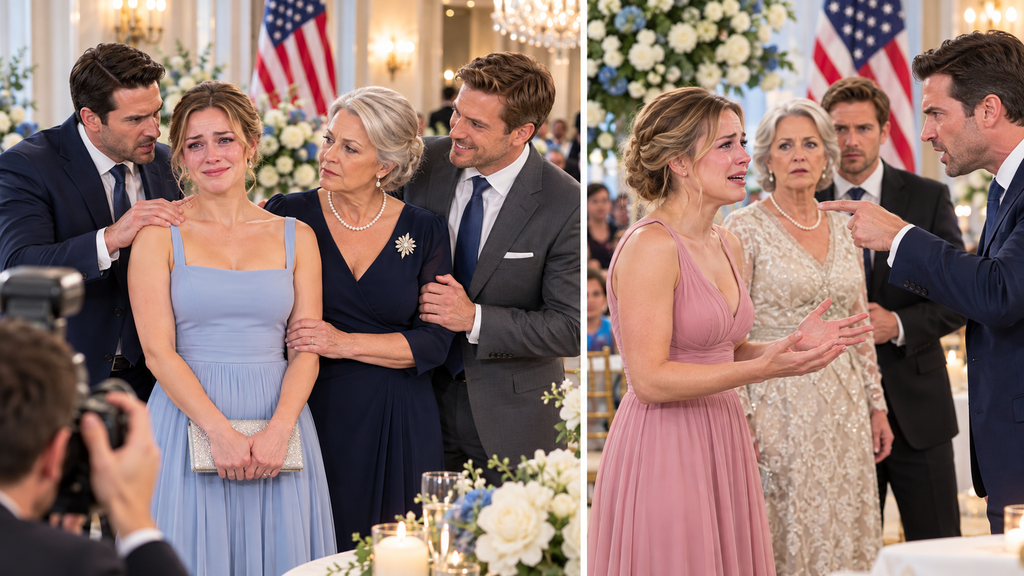
Not quiet. Silent. There is a difference. Quiet is what happens when people have nothing to say. Silence is what happens when everyone has something to say, but nobody wants to be the first person to say it.
Ryan stared at me. Mason stared at Mom. Mom stared at the letter in my hand. And the venue manager stared at the unpaid invoice sitting on the gift table between all of us.
Finally, Ryan spoke.
“What do you mean, a trust?”
His voice was different now.
The anger was gone.
So was the embarrassment.
Money had entered the conversation.
And suddenly, everyone was paying attention.
I folded Dad’s letter carefully.
Mom’s face had lost its color.
“Clara,” she said.
Just my name.
But I heard the warning inside it.
The same warning I had heard since childhood whenever I got too close to something she didn’t want discussed.
Clara, don’t ask.
Clara, leave it alone.
Clara, this isn’t the time.
Clara, you should be grateful.
Except I was thirty-eight years old now.
Dad was gone.
And I was tired of being grateful for scraps of belonging.
Ryan stepped closer.
“What trust?”
I looked at him.
“The Bennett Family Trust.”
His eyes narrowed.
“We don’t have a family trust.”
“Yes,” I said quietly. “We do.”
Mason laughed once.
It sounded forced.
“This is insane.”
“No,” I said. “What’s insane is that Dad created it fourteen years ago and neither of you knew.”
Mom’s fingers tightened around the back of her chair.
“Enough.”
The word cut through the room.
A few relatives looked away.
Others didn’t even pretend anymore.
They were listening.
Of course they were.
Family humiliation is the one event people never leave early.
Mom straightened her dress.
“We are not discussing private financial matters at my birthday celebration.”
The venue manager cleared his throat.
“I’m sorry, Mrs. Bennett, but unfortunately we do need to discuss one financial matter.”
He tapped the invoice.
“The outstanding balance.”
Mason looked at him.
“Can’t you give us until tomorrow?”
“No, sir.”
“It’s a birthday party.”
“Yes, sir.”
“We’ve already eaten.”
“Yes, sir.”
“Then what are you going to do?”
The manager remained remarkably calm.
“Dessert service has not begun. The premium bar has been suspended. The entertainment contract has an unpaid final portion. Additional services will stop unless payment is received.”
Mason looked at me.
“You planned this.”
I almost laughed.
“No.”
“You knew they would come asking for money.”
“I knew an invoice was due.”
“And you waited until now?”
“No. I was going to pay it.”
I paused.
“Then you reminded me I wasn’t family.”
Mom closed her eyes.
“Clara.”
“What?”
“Stop.”
That single word hurt more than I expected.
Because some stupid, childish part of me still wanted something else from her.
An apology.
A hand reaching for mine.
A simple sentence.
You are my daughter.
That was all.
Thirty-four years under her roof.
Thousands of dinners.
Christmas mornings.
School plays.
Graduations.
Dad’s funeral.
Hospital rooms.
Doctor appointments.
Family vacations.
Thirty-four years, and apparently the sentence was still too expensive.
Ryan grabbed the invoice.
His eyes widened.
“Forty thousand dollars?”
“Final balance,” I said.
“Final?”
“Yes.”
His head snapped toward me.
“How much did this entire party cost?”
Mom said quickly, “That is none of your concern.”
That told him everything.
He looked back at me.
“How much?”
I didn’t answer.
The venue manager did.
“The contracted event total is seventy-eight thousand six hundred dollars, excluding certain gratuities.”
Someone near the back actually gasped.
Ryan turned slowly toward Mom.
“Seventy-eight thousand dollars?”
Mom’s mouth tightened.
“It is my sixtieth birthday.”
Mason stared at her.
“You told me Clara got some kind of discount.”
“She did.”
“I did not.”
Mom glared at me.
I continued.
“The ballroom was twenty-two thousand. Catering was eighteen. Flowers were almost nine. Photographer, entertainment, dress, transportation, hotel rooms, cake, alcohol…”
I looked around the room.
“…and the little gold boxes of imported chocolates everyone has been putting in their purses.”
A cousin quietly removed her hand from the favor table.
Nobody laughed.
Ryan rubbed his forehead.
“And you paid for all of it?”
“Most of it.”
“Why?”
That question nearly broke me.
Why?
Because she was my mother.
Because when someone you love asks for help, you help.
Because even after decades of being reminded that I had entered the family through paperwork instead of childbirth, I still believed generosity might eventually purchase what affection had failed to provide.
Because I was stupid enough to think that if I made her sixtieth birthday perfect, she might look at me the way Dad used to.
Instead, I said only:
“She asked.”
Ryan looked at Mom.
Mom looked away.
That was when a voice came from behind us.
“Clara?”
I turned.
A man in a charcoal suit stood near the ballroom entrance.
Late sixties.
Silver hair.
Leather briefcase.
I recognized him immediately.
“Mr. Alden?”
Mom’s expression changed.
Not confusion.
Fear.
Daniel Alden had been Dad’s attorney for nearly twenty-five years.
He was also the man who had handed me the letter that morning.
I had assumed he was simply attending because Dad and he had been friends.
Apparently Mom had assumed he wasn’t coming.
“Daniel,” she said stiffly. “This is a private family matter.”
Mr. Alden looked around the ballroom.
“So I gathered.”
Ryan stepped forward.
“Do you know about this trust?”
Mr. Alden’s eyes moved to me.
“That depends on whether Clara wishes me to discuss it.”
Every face turned toward me.
For once, nobody was telling me to stand in a corner.
I nodded.
“Tell them.”
Mom whispered, “Clara, don’t.”
I looked at her.
“Why?”
She said nothing.
Mr. Alden set his briefcase on an empty table.
“The Bennett Family Trust was established by your father fourteen years ago.”
Ryan interrupted.
“Why didn’t we know?”
“Because you were not trustees.”
“Who was?”
Mr. Alden looked at me.
“Clara.”
Mason actually laughed.
“You’re kidding.”
“No.”
“But she’s—”
He stopped.
The unfinished word hung in the air.
Adopted.
Mr. Alden’s face hardened.
“She is Robert Bennett’s legal daughter.”
Mom spoke sharply.
“We all know the legal situation.”
Mr. Alden looked at her.
“Robert was never particularly interested in the distinction.”
I swallowed.
That sounded exactly like Dad.
Ryan pointed toward the letter.
“What does it mean about forfeiting what he left through her trust?”
Mr. Alden took a breath.
And suddenly I knew.
There was more.
Much more.
“I think,” he said, “that conversation should happen privately.”
“No,” Mom said immediately.
Ryan looked at her.
“Why not?”
“Because this is my birthday.”
Mason scoffed.
“Mom, forget the birthday.”
Her head snapped toward him.
That may have been the first time in his life he had ever spoken to her that way.
He held up both hands.
“There’s apparently some secret trust Dad created fourteen years ago. I want to know what’s in it.”
Of course he did.
Not why Dad created it.
Not why Mom had hidden it.
Not why my name was attached.
What’s in it?
Mr. Alden looked at me again.
I nodded.
“Say it.”
He opened his briefcase.
Mom walked toward him.
“Daniel.”
He ignored her.
He removed a thick folder.
Ryan moved closer.
Mason did too.
Mr. Alden opened it.
“Your father’s estate structure was unusual.”
“How unusual?” Ryan asked.
“Robert began restructuring his assets shortly after Clara’s twenty-fourth birthday.”
I frowned.
“My birthday?”
“Yes.”
“Why?”
Mr. Alden looked at me for a long moment.
“Because that was the year he discovered what your mother had done.”
My mother stopped breathing.
I felt the room tilt.
“What she did?”
Mom stepped forward.
“Daniel, you have no right.”
“I have every right. Robert instructed me in writing.”
“To do what?”
“To tell Clara the truth if you ever publicly denied her place in this family.”
Nobody moved.
I stared at Mom.
She stared at the floor.
My voice came out smaller than I wanted.
“What truth?”
Mr. Alden reached into the folder.
He removed another envelope.
Older.
Yellowed slightly at the edges.
My name was written across the front.
Not in Dad’s handwriting.
In my birth mother’s.
I knew because I still had two birthday cards she had written before she died.
My knees nearly gave out.
“Where did you get that?”
Mom turned away.
Mr. Alden held the envelope carefully.
“Your father found it fourteen years ago.”
“Found it where?”
He looked at Mom.
“In a locked box in your mother’s closet.”
I couldn’t understand.
“Why would Mom have a letter from my birth mother?”
Nobody answered.
I looked at her.
“Mom?”
Her jaw tightened.
“Not here.”
“No.”
“Clara.”
“No.”
I stepped closer.
“You don’t get to choose the room anymore.”
Her eyes flashed.
“You are being cruel.”
That almost took my breath away.
“Cruel?”
“You are deliberately humiliating me.”
I stared at her.
“You put me in a corner because I wasn’t blood.”
“That was a photograph.”
“No. It wasn’t.”
My voice cracked.
“It was thirty-four years.”
She looked away.
Mr. Alden extended the envelope.
“This belongs to you.”
My fingers shook when I took it.
The seal had already been opened.
“Dad read it?”
“Yes.”
“Did you?”
“No.”
I looked at Mom.
“Did you?”
Her silence answered.
I opened it.
Inside were three pages.
The first line nearly stopped my heart.
My darling Clara,
If you are reading this, then I did not get enough time.
I covered my mouth.
The ballroom disappeared.
The people disappeared.
The invoice.
The flowers.
The chandelier.
Everything.
For one impossible second, I was four years old again.
I remembered almost nothing about my birth mother.
A perfume.
A yellow kitchen.
Someone singing while washing dishes.
Hands brushing my hair.
A red umbrella.
Fragments.
That was all death had left me.
I kept reading.
My sister Eleanor has promised me that if anything happens to us, she will raise you beside her own boys and never let you feel that you came second.
I stopped.
Eleanor.
My mother.
My aunt.
My adoptive mother.
The woman standing six feet away from me.
She had promised.
The letter blurred.
I wiped my eyes.
Ryan was reading over my shoulder now.
I should have pushed him away.
I didn’t.
For once, I wanted witnesses.
I continued.
There is also something you must know when you are old enough. Your father and I have made arrangements for you. The insurance money, the savings account, and my share of Grandmother’s property are to be used for your education and your future. Eleanor has agreed to safeguard everything until you are grown.
My hands stopped shaking.
Everything inside me stopped.
I looked at Mom.
“What money?”
She closed her eyes.
Ryan whispered, “Jesus.”
Mason stepped closer.
“What money?”
Mr. Alden answered.
“Approximately two hundred and eighty thousand dollars at the time.”
I stared at him.
“At the time?”
“Yes.”
My mouth was dry.
“What happened to it?”
Mr. Alden didn’t answer.
He didn’t have to.
I looked at Mom.
“No.”
She finally looked at me.
“Clara, you were a child.”
“No.”
“You don’t understand what things were like.”
“What happened to the money?”
“We had three children.”
“You had two children.”
Her face changed.
I felt sick the moment the words left my mouth.
Because I had just done to myself what she had done to me.
But she answered anyway.
“Yes.”
One word.
Yes.
Not three.
Two.
Ryan stepped backward.
“Mom…”
She looked at him desperately.
“Your father’s business was failing.”
Ryan’s face went pale.
“What?”
“The recession nearly destroyed us. We had the mortgage. Your school. Mason needed surgery. Your father had employees depending on him.”
I whispered, “So you used my parents’ money?”
“We used family money.”
I laughed.
I actually laughed.
The sound was ugly.
“Family money.”
Mom flinched.
“Yes.”
“The money was family when you needed it.”
“Clara—”
“But I wasn’t family for the photograph.”
She started crying then.
Real tears.
Maybe.
I no longer trusted myself to know.
“I was going to replace it.”
“When?”
She wiped her cheek.
“When things improved.”
“When?”
“I don’t know.”
“I’m thirty-eight.”
“I know.”
“Dad found out when I was twenty-four.”
“Yes.”
“So for twenty years after you took it, you said nothing.”
“I was ashamed.”
“No.”
I folded the letter.
“You were comfortable.”
She stared at me.
There are sentences that end arguments.
Not because they are clever.
Because they are true.
That was one of them.
Ryan turned to Mr. Alden.
“Did Dad know all of this?”
“Yes.”
“And he stayed with her?”
Mom stiffened.
Mr. Alden chose his words carefully.
“Your father loved your mother.”
That hurt in a different way.
“But,” he continued, “he also spent the remaining years of his life correcting what he believed had been done to Clara.”
My chest tightened.
“How?”
Mr. Alden opened the folder again.
“The trust.”
Mason stepped forward.
“How much is in it?”
I looked at him.
He had the decency to look embarrassed.
Mr. Alden didn’t answer immediately.
Then he said:
“As of Robert’s death, approximately 3.8 million dollars in assets.”
The room exploded.
“What?”
Ryan’s voice rose above everyone else.
Mom sat down.
Mason stared at Mr. Alden like he had spoken another language.
I couldn’t move.
“Three point eight million?”
Mr. Alden nodded.
“That includes investment accounts, commercial property interests, insurance proceeds, and a portion of Robert’s ownership interests sold before his death.”
I shook my head.
“Dad didn’t have that kind of money.”
“He did by the end.”
“But the house…”
“Was deliberately kept modest.”
“The old Buick?”
“He liked the Buick.”
For the first time all evening, I almost smiled.
That was Dad.
A millionaire driving a twelve-year-old Buick because, as he always said, “The engine still starts, doesn’t it?”
Ryan stared at the papers.
“So Clara gets 3.8 million dollars?”
Mr. Alden’s expression remained neutral.
“Not exactly.”
Mom looked up.
And there it was.
Hope.
Tiny.
Immediate.
Ugly.
Mason saw it too.
“What do you mean, not exactly?”
Mr. Alden closed the folder.
“The trust is administered by Clara.”
Ryan frowned.
“For who?”
“For the family.”
Nobody spoke.
Mr. Alden continued.
“Robert did not want his wealth simply divided into checks. He created conditions.”
“What conditions?” Mason asked.
“Education funds for grandchildren. Medical assistance. Housing emergencies. Certain charitable gifts. Support for Eleanor under specific circumstances.”
Mom looked relieved.
“And distributions to Ryan and Mason,” Mr. Alden continued, “subject to Clara’s approval.”
Mason stared at me.
“My approval?”
I asked.
“Yes.”
Ryan’s face darkened.
“That’s ridiculous.”
Mr. Alden looked at him.
“Your father disagreed.”
“So she controls our inheritance?”
“No.”
“Then what do you call it?”
“I call it a discretionary family trust.”
Ryan pointed at me.
“Why her?”
Mr. Alden was silent.
Then he opened Dad’s letter again.
“Robert answered that.”
He read:
Because Clara is the only one of my children who learned that family is something you do, not something you inherit.
Nobody moved.
My eyes filled.
Dad.
I could hear him.
Not literally.
But close enough.
Ryan’s face changed.
For once, he didn’t argue.
Mason stared at the carpet.
Mom looked older than she had an hour earlier.
Mr. Alden continued.
Robert had also included a conduct clause.
That was the clause Mom had contested for two years.
It did not mean one cruel comment magically erased everyone’s inheritance.
Dad had been smarter than that.
It meant that if any beneficiary deliberately denied my legal status as his daughter in an effort to exclude me from family property, inheritance, or decision-making, their discretionary benefits could be suspended pending trustee review.
My review.
Suddenly the photograph mattered in a way none of them had anticipated.
Mason sank into a chair.
“You have got to be kidding me.”
“No,” Mr. Alden said.
Ryan turned to Mom.
“You knew?”
She said nothing.
“You knew?”
“Yes.”
The word was barely audible.
“And you still told Clara to get out of the picture?”
Mom looked at him.
“I didn’t think…”
Ryan laughed bitterly.
“No. Apparently you didn’t.”
For perhaps the first time in my life, one of my brothers was defending me.
Unfortunately, I knew exactly why.
Three point eight million reasons had just entered the room.
That realization hurt almost as much as everything else.
Ryan came toward me.
“Clara.”
I held up one hand.
He stopped.
“Don’t.”
“I was going to say I’m sorry.”
“Were you?”
“Yes.”
“Would you be sorry if the trust contained three hundred dollars?”
His mouth opened.
Nothing came out.
I nodded.
“That’s what I thought.”
Mason stood.
“This is different.”
I looked at him.
“How?”
“We didn’t know.”
“You knew I was your sister.”
“That’s not what I mean.”
“I know exactly what you mean.”
He rubbed both hands over his face.
“We grew up hearing things.”
“From who?”
He looked at Mom.
There it was.
Another door opening.
I turned toward her.
“What did you tell them?”
“Nothing.”
Ryan spoke.
“Yes, you did.”
Mom stared at him.
He swallowed.
“When we were kids, you told us Clara had somewhere else to go if she ever became difficult.”
My stomach turned.
Mom whispered, “You were children.”
Ryan continued.
“You said Dad only insisted on adopting her because he felt guilty.”
My eyes went to Mr. Alden.
His expression told me that was a lie too.
Mason looked sick.
“You told us her real parents left money and that Dad used it all taking care of her.”
I actually had to grab the back of a chair.
Everything inverted.
All my life, I had been made to feel indebted.
Lucky.
Chosen.
Expensive.
A burden that had been generously carried.
But my birth parents had left money.
Enough money to help save the very family that later treated me like charity.
Mom had not rescued me financially.
I had unknowingly rescued them.
The irony was almost unbearable.
I looked at her.
“Why?”
She began shaking her head.
“Why did you make me feel like I owed you?”
“You don’t understand.”
“Then explain.”
“I was afraid.”
“Of a four-year-old?”
“Of losing everything!”
Her voice echoed through the ballroom.
Everyone froze.
Mom stood.
Her composure was gone now.
The elegant woman in pearls had disappeared.
In her place was someone exhausted and furious and frightened.
“Your mother was always the favorite,” she said.
The words came out fast.
“My whole life. Your grandmother adored her. Everyone adored Lydia. Lydia was prettier. Lydia was softer. Lydia married better. Lydia had money. Lydia had you.”
I stared at her.
“And then she died.”
Mom’s voice cracked.
“Yes.”
“And you got me.”
She looked at me.
“For one terrible moment, after the funeral, I thought maybe people would finally see me.”
I could barely breathe.
“But instead everyone said, ‘Poor Lydia’s little girl. Take care of Lydia’s little girl. Protect Lydia’s little girl.’ Even in death, everything was about her.”
Ryan whispered, “Mom…”
She ignored him.
“I took you in. I changed diapers when you were sick. I stayed awake through nightmares. I drove you to school. I made lunches. I bought clothes. I did everything.”
“And you resented me.”
She started crying harder.
“I tried not to.”
There it was.
The closest thing to truth I had ever received from her.
Not I never resented you.
I tried not to.
I nodded slowly.
“Thank you.”
She blinked.
“For what?”
“For finally telling the truth.”
The venue manager quietly approached.
I had almost forgotten he was there.
“Ms. Bennett?”
I turned.
He glanced at the invoice.
Right.
Forty thousand dollars.
The entire evening had detonated, but business remained business.
“Would you like us to terminate the event?”
I looked around.
Half the guests were pretending they had not heard the most private conversation of our lives.
The cake remained untouched.
Champagne bubbles climbed through abandoned glasses.
The photographer stood near the wall, camera hanging uselessly from his hands.
And behind Mom’s chair was the carefully arranged backdrop.
Bennett Family.
Written in gold.
I almost laughed again.
Instead, I reached for the invoice.
Ryan stepped forward.
“Clara, wait.”
I looked at him.
“I’ll pay part.”
Mason looked at him like he was insane.
Ryan ignored him.
“I can put ten thousand on my card.”
I knew Ryan.
Ten thousand dollars would hurt.
Not destroy him.
But hurt.
Mason sighed.
“I can do five.”
Mom stared at them.
“You don’t have to do that.”
Ryan turned toward her.
“Yes, we do.”
Then he looked at me.
“You shouldn’t have paid for everything in the first place.”
It wasn’t an apology.
But it was the first honest thing he had said to me all evening.
I looked at Mason.
He avoided my eyes.
“Five thousand,” he repeated.
I turned to the venue manager.
“Charge them.”
Mom’s mouth fell open.
“But that’s only fifteen.”
“Yes.”
“What about the rest?”
I picked up my clutch.
“Family will figure it out.”
“Clara.”
I started walking.
She followed me.
“Clara!”
I stopped near the ballroom doors.
She came up behind me.
“What happens to me?”
I turned.
It was perhaps the saddest question she could have asked.
Not what happens to us.
Not can we repair this.
Not will you forgive me.
What happens to me?
I looked at the woman who had raised me.
And for the first time, I saw her without the title.
Not Mom.
Eleanor.
A complicated, wounded, selfish woman who had done some good things and some terrible things.
A woman who had fed me soup when I had the flu.
A woman who had sewn my Halloween costume at two in the morning.
A woman who had held me after my first breakup.
A woman who had stolen my inheritance.
A woman who had resented a dead sister so much she punished the sister’s child for surviving.
Both could be true.
That was the hardest part.
“What happens to you,” I said quietly, “depends on what you do next.”
She stared at me.
“You control the trust.”
“Yes.”
“So you can cut me off.”
“Yes.”
Her face crumpled.
I hated that part of me felt satisfaction.
I hated even more that another part wanted to comfort her.
Instead, I said:
“But I’m not going to.”
She blinked.
Behind us, Ryan looked up.
Mason stopped moving.
I continued.
“Dad provided for you. I will honor that.”
Mom’s lips trembled.
“Thank you.”
“Don’t thank me yet.”
She froze.
“I’m honoring Dad’s wishes. I’m not buying your love anymore.”
Her face changed.
“No more parties.”
She swallowed.
“No more surprise vacations.”
Silence.
“No more roof repairs you somehow forget to mention to Ryan and Mason.”
Ryan looked at her.
“What roof repairs?”
I almost smiled.
“Exactly.”
Mom looked embarrassed.
I continued.
“Your medical needs will be covered. Your reasonable living expenses will be covered according to Dad’s instructions. Nothing more unless the trust terms justify it.”
Her voice was tiny.
“And you?”
“What about me?”
“Are you leaving?”
I looked toward the ballroom.
For thirty-four years, I had been trying to earn a place in that picture.
Suddenly I understood something.
I did not want one anymore.
“Yes.”
I walked out.
Nobody stopped me.
At least not immediately.
I made it through the hotel lobby.
Past the fountain.
Past the valet desk.
Through the revolving doors.
The night air hit my face.
And then I heard footsteps.
“Clara!”
Ryan.
I kept walking.
“Clara, wait.”
I stopped beside the curb.
He came toward me without his jacket.
For once, he looked less like my successful older brother and more like the boy who used to hide crackers under my pillow when thunderstorms scared me.
“I’m sorry.”
I looked at him.
He was crying.
Ryan almost never cried.
Not even at Dad’s funeral.
“I mean it.”
“Which part?”
“All of it.”
I said nothing.
He wiped his face angrily.
“I knew Mom treated you differently.”
“Yes.”
“I told myself it wasn’t my problem.”
“Yes.”
“I laughed sometimes.”
“Yes.”
He closed his eyes.
“I know.”
The anger inside me shifted.
Not disappeared.
Shifted.
He looked back toward the hotel.
“I don’t deserve anything from that trust.”
That surprised me.
“Ryan—”
“No. Listen.”
He took a breath.
“If Dad left Clara in charge because he trusted you, then he was right.”
He gave a broken little laugh.
“I’m forty-two years old and apparently it took the possibility of losing money to make me realize what an ass I’ve been.”
I looked at him.
“At least you realized it.”
“Is there any chance…”
He stopped.
“Any chance what?”
“That someday I can be your brother again?”
The question hurt.
Because despite everything, I remembered him teaching me how to throw a baseball.
I remembered him threatening a boy who bullied me in seventh grade.
I remembered him carrying me inside when I fell asleep in the car.
People are rarely only the worst thing they have done.
That does not mean the worst thing disappears.
It means forgiveness becomes more complicated.
“I don’t know.”
He nodded.
“Fair.”
“But you can start by paying your ten thousand.”
He laughed.
A real laugh.
Small.
Wet with tears.
“Yeah.”
I opened the car door.
“Ryan?”
“Yeah?”
“Don’t apologize because of the trust.”
His face became serious.
“I won’t.”
“Prove it.”
“How?”
“Tomorrow.”
He frowned.
“What happens tomorrow?”
“Nothing.”
I got into the car.
“That’s the point.”
The next morning, my phone had forty-seven missed calls.
I ignored forty-six.
The forty-seventh was Mr. Alden.
I answered.
“Please tell me nobody died.”
“Not physically.”
I smiled despite myself.
“What happened?”
“Your mother attempted to pay the venue with a trust-linked card.”
I closed my eyes.
“Of course she did.”
“It was declined.”
“Good.”
“There is something else.”
My smile disappeared.
“What?”
“Your mother wants a meeting.”
“No.”
“She says she has something that belonged to Lydia.”
I sat up.
“What?”
“She wouldn’t tell me.”
“When?”
“Ten o’clock.”
I looked at the clock.
9:22.
Thirty-eight minutes later, I walked into Mr. Alden’s office.
Mom was already there.
No pearls.
No makeup.
No expensive dress.
Just a beige sweater and black pants.
She looked strangely ordinary.
On the table in front of her sat a wooden box.
I recognized it.
The locked box from her closet.
She pushed it toward me.
“This is yours.”
I didn’t touch it.
“What’s inside?”
“Your mother.”
My breath caught.
“Not literally,” she said quickly.
I almost laughed.
She almost did too.
For one second, something old and familiar passed between us.
Then it was gone.
I opened the box.
Photographs.
Dozens.
My birth mother holding me as a baby.
My birth father asleep with me on his chest.
Birthday cards.
Hospital bracelets.
A tiny pink sock.
Letters.
So many letters.
I looked at Mom.
“You had these?”
“Yes.”
“All these years?”
“Yes.”
“Why didn’t you give them to me?”
Her eyes filled.
“Because every time you asked about Lydia, I heard people comparing us again.”
I closed my eyes.
“You punished me because you were jealous of a dead woman.”
“Yes.”
No excuse.
No defense.
Just yes.
Strangely, that honesty hurt less.
She reached into her purse.
“There’s one more thing.”
She placed a bank statement on the table.
I looked at it.
An account.
$412,684.
I stared at her.
“What is this?”
“Money I saved.”
“For what?”
“For you.”
I looked at Mr. Alden.
He seemed surprised too.
Mom folded her hands.
“After Robert discovered what I had done, he wanted me to repay everything immediately. I couldn’t. So I started putting money away.”
“For fourteen years?”
She nodded.
“Why didn’t Dad know?”
“He knew some of it. Not all.”
“Why not just put it in the trust?”
“Because I wanted one thing to come from me.”
I stared at the number.
“You think this fixes it?”
“No.”
Her answer came immediately.
That mattered.
“I don’t think anything fixes it.”
She looked at the wooden box.
“I kept telling myself I would give you those things someday.”
“When?”
“I don’t know.”
“When I was fifty?”
She looked down.
“Maybe.”
“When you died?”
Her silence answered.
I pushed the statement back toward her.
“I don’t want the money.”
She looked shocked.
“Clara.”
“I want the box.”
“Take both.”
“No.”
“It belongs to you.”
“Then use it.”
“For what?”
I thought about it.
Then I knew.
“Scholarships.”
She frowned.
“For adopted children.”
Her eyes filled.
“Clara…”
“Kids aging out of foster care. Kids who get told they should be grateful just because somebody gave them a room.”
She covered her mouth.
“Put my birth mother’s name on it.”
Tears rolled down her cheeks.
“The Lydia Bennett Foundation?”
I shook my head.
“Lydia Harper.”
Her real name.
Her own name.
Mom nodded.
“All right.”
“And yours.”
She looked at me.
“What?”
“Put both names on it.”
She stared.
“Why?”
“Because the truth should be there too.”
She started crying harder.
I didn’t hug her.
Not that day.
Some endings lie.
They tell you one conversation heals thirty years.
It doesn’t.
Mom and I did not walk out holding hands.
Ryan did not become the perfect brother.
Mason did not suddenly develop emotional intelligence.
Nobody transformed overnight.
But things changed.
Slowly.
Painfully.
Honestly.
Ryan started calling me every Sunday.
The first few conversations lasted five minutes.
Then ten.
Then an hour.
He never asked about the trust.
Not once.
Six months later, his daughter graduated high school.
I almost didn’t attend.
Then an invitation arrived.
On the envelope:
Aunt Clara.
Inside was a handwritten note from my niece.
Please come. Dad says family pictures aren’t family pictures without you.
I cried for twenty minutes.
Mason took longer.
Nearly a year.
Then one afternoon he appeared outside my office holding two coffees.
“I was an ass,” he said.
I stared at him.
“That’s your opening?”
“I practiced a speech in the car, but it sounded fake.”
“It probably was.”
“Probably.”
He handed me the coffee.
“I’m sorry.”
I let him stand there.
He deserved the discomfort.
Then I took the cup.
We sat on a bench outside.
He told me something I had never known.
When we were children, Mom punished him whenever he defended me.
Not violently.
Quietly.
Cancelled outings.
Silent treatment.
Comparisons.
“You’re choosing her over your real family.”
Eventually he stopped defending me.
Then he started copying Mom.
“That doesn’t excuse it,” he said.
“No.”
“I know.”
“But it explains some of it.”
He nodded.
That was enough for one day.
The foundation launched eighteen months after Mom’s birthday.
She insisted on attending.
I almost said no.
Then I remembered what I had told her.
What happens next depends on what you do next.
So I let her come.
The Lydia Harper–Eleanor Bennett Family Scholarship Fund began with $412,684.
I added money from my own account.
Ryan contributed.
Then Mason.
The trust matched part of it under Dad’s charitable provision.
By the end of the first year, we had enough to fund college, vocational training, or housing support for seventeen young adults who had experienced foster care or adoption disruption.
At the first scholarship dinner, I stood behind a podium.
Mom sat in the front row.
Ryan beside her.
Mason beside him.
And on an easel near the stage was a photograph of Dad.
That ridiculous old Buick was visible behind him.
I had chosen the picture deliberately.
I told the audience about Lydia.
I told them about Dad.
I did not tell them every ugly detail.
Some truths are meant to educate.
Others are simply meant to stop being hidden.
After the ceremony, the photographer gathered the scholarship recipients.
“Family too?” he asked.
I froze.
It was such a simple question.
Family too?
Mom looked at me.
She did not move toward the group.
Instead, she waited.
That mattered.
Ryan waited.
Mason waited.
Nobody assumed.
Nobody ordered.
Nobody told me where to stand.
I looked at Mom.
She looked nervous.
Almost frightened.
I held out my hand.
“Come on.”
She stared at it.
Then she took it.
We stood together.
Not because everything had been forgiven.
Not because blood suddenly stopped mattering.
Not because adoption magically became simple.
We stood together because, for once, everyone in that photograph understood that belonging was not something one person got to grant another.
The photographer raised his camera.
Then Mom whispered:
“Clara?”
I looked at her.
Her hand trembled inside mine.
“I should have said it that night.”
“Said what?”
She looked directly at me.
“You are my daughter.”
My throat tightened.
She continued.
“You were always my daughter. I was just too damaged to treat you like one.”
I could not speak.
She squeezed my hand.
“And I am sorry.”
No excuse.
No but.
No explanation.
Just sorry.
I nodded.
It wasn’t forgiveness.
Not completely.
But it was a door.
“Thank you.”
The photographer smiled.
“Everybody ready?”
Ryan put an arm around my shoulder.
Mason leaned in from the other side.
Mom stood beside me.
The flash went off.
And for the first time in my life, I did not wonder whether I belonged in the photograph.
Three years passed.
The foundation grew.
So did we.
Mom sold the large house.
Her choice.
She moved into a smaller condo ten minutes from me.
We had dinner twice a month.
Sometimes it was comfortable.
Sometimes it wasn’t.
Healing is strange that way.
One Thanksgiving she referred to Ryan and Mason as “my boys.”
The room went silent.
She caught herself.
Then she looked at me.
“And my girl.”
It was awkward.
Late.
Imperfect.
I smiled anyway.
Ryan eventually repaid the ten thousand dollars from the birthday party.
Mason repaid his five.
Not to me.
To the foundation.
The venue had ultimately reduced the remaining charges after several services were canceled.
Mom sold one of her expensive bracelets to cover most of what remained.
When she told me, I said nothing.
But later that night, I cried.
Not because I wanted her jewelry.
Because for the first time, she had paid the price of her own choices instead of handing me the bill.
Dad’s trust remains active.
I still administer it.
Ryan has received help from it exactly once, when his daughter needed surgery not fully covered by insurance.
Mason has never requested anything.
Mom receives what Dad provided.
And me?
People always ask what I bought.
A house?
A sports car?
A yacht?
Nothing dramatic.
I kept working.
I bought myself one thing.
A frame.
Walnut.
Handmade.
Expensive for a picture frame.
Inside it is the photograph from the scholarship dinner.
Mom.
Ryan.
Mason.
Me.
Dad’s photograph behind us.
All of us smiling.
Sometimes visitors see it and say:
“What a beautiful family.”
I always answer the same way.
“It took us a while.”
Years after that terrible birthday party, Mr. Alden retired.
On his final day, he called me into his office.
“I have one last item for you.”
I smiled.
“If this is another secret account, I’m leaving.”
He laughed.
“No account.”
He handed me a small envelope.
Dad’s handwriting.
My heart stopped.
“When did he write this?”
“A few weeks before he died.”
“Why am I getting it now?”
“His instructions.”
I opened it.
There were only a few paragraphs.
Clara,
If Daniel is giving you this, then enough time has passed for you to understand why I made the decisions I did.
Money cannot create a family.
It can only reveal one.
Watch what people do when they think something valuable might be taken away.
Then watch what they do when nobody is watching.
The second part tells you who they really are.
I stopped reading.
Tears blurred the page.
I continued.
I made you trustee not because you are better than your brothers, but because you understand the cost of being excluded.
My hope is that this makes you more compassionate, not more bitter.
Do not let my money become another weapon in this family.
Use it to protect people.
Use it to educate children.
Use it when somebody is sick.
Use it when somebody is frightened.
And occasionally, use a little of it to have some fun, because you have always been far too responsible.
I laughed through my tears.
Then came the final lines.
And Clara—
You never owed us for raising you.
Not one dollar.
Not one thank-you.
Not one perfect birthday party.
You were a child.
We were the adults.
You did not have to earn your place.
You never did.
Love,
Dad
I pressed the letter against my chest.
For most of my life, I thought the deepest wound my mother gave me was making me feel different.
It wasn’t.
The deepest wound was convincing me that love was a debt.
That belonging had invoices.
That if I paid enough, helped enough, forgave enough, showed up enough, smiled enough, stayed quiet enough, eventually somebody would stamp PAID across my heart and call me family.
Dad understood before I did.
Family isn’t blood.
But family isn’t paperwork either.
It isn’t DNA.
It isn’t adoption certificates.
It isn’t wills.
It isn’t trusts.
It isn’t whose eyes you inherited or whose name appears on your birth certificate.
Family is behavior.
It is the person who comes when the hospital calls.
The person who remembers.
The person who makes room.
The person who tells the truth even when the truth costs something.
And sometimes family is the person who finally changes.
Not perfectly.
Not quickly.
But sincerely.
Mom died twelve years after her sixtieth birthday.
I was holding her hand.
Ryan was on the other side of the bed.
Mason stood near the window.
She had been ill for months.
Near the end, she drifted in and out.
That final afternoon, she opened her eyes and looked at me.
“Lydia?”
My heart squeezed.
“No, Mom.”
She blinked.
Then recognition returned.
“Clara.”
“Yes.”
She smiled faintly.
“My girl.”
I lowered my head.
“Yes.”
Her fingers moved weakly around mine.
“I wasted so much time.”
I couldn’t answer.
“I loved you,” she whispered.
“I know.”
It was true.
That was the strange thing.
She had loved me.
Badly sometimes.
Selfishly sometimes.
Through the filter of jealousy and guilt and resentment.
But love had been there.
Buried beneath all the damage.
“I wish I had done it better.”
“So do I.”
She gave the smallest laugh.
“You always were honest.”
“Dad taught me.”
“Yes.”
She closed her eyes.
“He loved you so much.”
“I know.”
A tear slipped down her cheek.
“So did I.”
I squeezed her hand.
“I know that now.”
She died just before sunset.
There was no dramatic final confession.
No hidden fortune.
No last-minute twist.
Just a woman reaching the end of her life beside three children she had loved differently and hurt differently.
After the funeral, the photographer from the foundation sent me an old digital archive.
Inside was that first scholarship photograph.
I had seen it a thousand times.
But this version was wider than the crop I had framed.
And at the edge, almost outside the shot, was Mom looking at me instead of the camera.
Everyone else was smiling forward.
She was smiling at me.
I printed that version.
It sits beside Dad’s letter now.
Sometimes I think about her sixtieth birthday.
The white roses.
The champagne.
The gold cake.
The forty-thousand-dollar invoice.
The ridiculous bloodline photograph that started everything.
People sometimes hear the story and tell me I won.
I never liked that word.
Nobody wins a family war.
You just hope something honest survives it.
But I did learn one thing.
When Mom told me to stand in the corner because she wanted only blood relatives in the picture, I thought she was deciding whether I belonged.
She wasn’t.
She was only revealing what she believed.
And when I canceled that payment, I wasn’t buying revenge.
I was finally refusing to buy acceptance.
There is a difference.
A very expensive difference.
Forty thousand dollars, apparently.
But worth every penny I didn’t pay.
Because Dad was right.
I never had to earn my place.
I never had to finance it.
I never had to beg for it.
And I certainly never had to stand in the corner while people who called themselves family decided whether I was worthy of being seen.
The last photograph Mom and I ever took together hangs in my hallway now.
There is no ballroom.
No champagne tower.
No matching outfits.
No bloodline arrangement.
It was taken at the foundation picnic.
Mom is wearing sunglasses.
Ryan is holding a paper plate.
Mason is laughing with his mouth full.
I’m standing in the middle.
And behind us are dozens of young people whose families began in every imaginable way.
Birth.
Adoption.
Foster care.
Marriage.
Friendship.
Choice.
Survival.
On the back of the photograph, Mom wrote something.
I did not discover it until after she died.
Six words.
I read them whenever the old hurt returns.
Clara was never outside the family.
Then underneath, in smaller handwriting:
I was simply too blind to see it.
For years, I thought I needed those words when I was four.
Then twelve.
Then twenty.
Then thirty-eight.
Maybe I did.
But eventually I understood something better.
I didn’t need anyone else’s permission to belong to my own life.
So if you ask me what happened to the forty thousand dollars the blood relatives were supposed to pay that night, I can tell you.
Ryan paid ten thousand.
Mason paid five.
Mom eventually covered most of the remaining amount after the canceled services were deducted.
And I paid exactly zero.
Not because I couldn’t afford it.
Because some bills should be returned to the people who created them.
And if you ask what happened to the photograph they took after sending me to the corner?
I have no idea.
I never asked for a copy.
I already have the family picture I wanted.
The one taken years later.
The one where nobody was ordered into position.
The one where nobody checked bloodlines.
The one where everyone standing beside me had learned the same lesson, some more painfully than others:
Blood can make you related.
Law can make you legally family.
But neither can force someone to love well.
That part is a choice.
And for the first time in my life, I chose too.
I chose not to stand in the corner.
I chose not to pay for a seat at somebody else’s table.
I chose not to confuse being needed with being loved.
I chose boundaries without revenge.
Truth without cruelty.
Forgiveness without pretending nothing happened.
And, eventually, I chose to let the people who truly changed walk back into my life.
Not because we shared blood.
Not because Dad left millions of dollars.
Not because Mom finally apologized.
But because this time, when the camera came out—
they made room for me before I ever had to ask.
💬THE END! THANK YOU FOR READING! ❤️🙏