
 Reading Time: 38 minutes
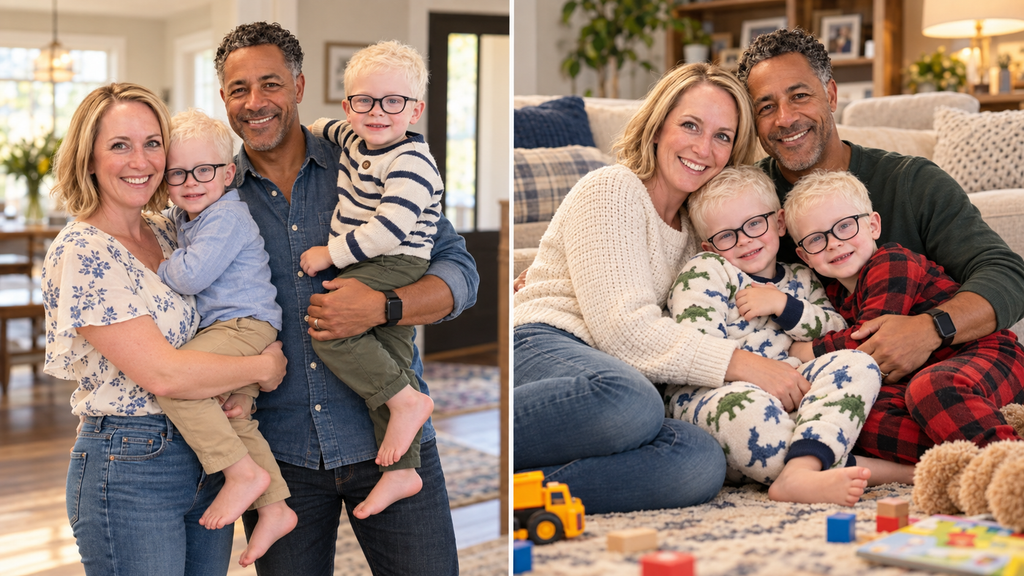
Joshua stared at me from behind his desk. His phone was still pressed against his ear. Neither of us spoke.
For one long, terrible second, I could hear the faint voice of whoever was on the other end asking if he was still there.
Joshua slowly lowered the phone.
“Who are you talking to?”
My voice sounded strangely calm.
He wiped his face with the heel of his hand.
“Rebecca.”
I knew the name.
Rebecca Lane.
His older cousin.
A family therapist who lived two states away and who, as far as I knew, Joshua spoke to maybe three times a year.
I looked at the phone.
Then at him.
“What did you mean?”
He swallowed.
“Claire—”
“No.”
I stepped into the office and closed the door behind me.
Not loudly.
That somehow made him look more frightened.
“Don’t say my name like that.”
“Like what?”
“Like you’re about to explain something terrible in a gentle voice and expect the gentleness to make it less terrible.”
His shoulders dropped.
I could still hear the boys’ white-noise machine through the wall.
A soft rushing sound.
Like distant rain.
Four-year-old Ethan and Eli were sleeping twenty feet away.
The children I had spent the last several months learning to love.
The children Joshua had begged me to adopt.
The children he had called our miracle.
I folded my arms because my hands were shaking.
“You said I believed you wanted us to have a family.”
He said nothing.
“You said that wasn’t why you adopted those boys.”
Still nothing.
“Joshua.”
He closed his eyes.
“Tell me the truth.”
“I wanted a family.”
“That isn’t what you just said.”
“I know.”
“Then explain it.”
He stood.
I immediately stepped backward.
That hurt him.
I saw it.
But I didn’t care.
Not then.
He stopped moving.
“I never wanted to hurt you.”
A laugh escaped me.
It wasn’t amusement.
It was disbelief.
“Whenever someone starts with that sentence, what comes next is usually exactly how they hurt you.”
He looked down.
And suddenly I understood something.
This wasn’t a secret from six months ago.
Whatever Joshua was hiding had roots.
Deep ones.
“How long?”
His head lifted.
“How long have you been lying to me?”
“Claire—”
“How long?”
His lips parted.
Then closed.
I watched the answer appear on his face before he spoke it.
“Almost nine years.”
The room tilted.
I grabbed the back of the chair beside me.
Nine years.
We had been married ten.
Nine years meant specialists.
Nine years meant injections.
Nine years meant surgeries.
Nine years meant pregnancy tests.
Nine years meant sitting on bathroom floors.
Nine years meant holding my breath every month.
Nine years meant Joshua wrapping his arms around me while I cried and telling me we would keep trying.
I stared at him.
“What did you do?”
His face crumpled.
“I didn’t do anything to you.”
“That wasn’t my question.”
He looked toward the window.
“Joshua.”
“I found out.”
“Found out what?”
He didn’t answer.
And suddenly I was afraid to hear it.
He walked toward the filing cabinet.
The bottom drawer was locked.
I had noticed that before.
He had told me it contained financial documents from work.
Joshua reached into his pocket.
Pulled out a small key.
Unlocked it.
Inside were hanging folders.
Tax documents.
Insurance policies.
Old contracts.
Then he removed a faded blue folder.
The edges were worn.
He had opened it many times.
He placed it on the desk between us.
“Read it.”
I didn’t move.
“What is it?”
“Something I should have shown you nine years ago.”
My stomach turned.
“Read it.”
I opened the folder.
The first page was from a reproductive endocrinology clinic.
Joshua’s name appeared at the top.
I recognized the clinic immediately.
It was the first fertility specialist we had visited.
I scanned the page.
Most of the medical terminology meant nothing to me.
Then I reached the conclusion.
And understood enough.
Severe male-factor infertility.
Extremely low probability of natural conception.
Additional testing recommended.
I looked up.
Joshua was crying silently.
I looked back down.
There were more pages.
Another test.
Another specialist.
A third opinion.
All before I had undergone my first invasive fertility procedure.
My fingers went numb.
“You knew.”
“Yes.”
The word barely existed.
I stared at him.
“You knew.”
“Yes.”
“And you let me believe it was me.”
“No.”
My head snapped up.
“Do not tell me no.”
“I never said it was you.”
“You didn’t have to!”
My voice cracked through the room.
Joshua flinched.
I immediately glanced toward the hallway.
The boys were still asleep.
I lowered my voice.
“You sat beside me while doctors searched for things wrong with my body.”
“I know.”
“You watched me inject hormones into my stomach.”
“I know.”
“You held ice against my skin when the bruising got bad.”
His face twisted.
“I know.”
“You watched me wake up from procedures.”
“I know.”
“You watched me apologize to you.”
That stopped him.
I could barely breathe.
“How many times did I tell you I was sorry?”
“Claire—”
“How many times?”
“I don’t know.”
“I do.”
Tears blurred my vision.
“Hundreds.”
I remembered every version.
I’m sorry my body can’t do this.
I’m sorry I’m failing you.
I’m sorry I can’t make you a father.
I’m sorry.
I’m sorry.
I’m sorry.
And every time, Joshua had kissed my forehead.
Every time, he had said:
“We’re in this together.”
But we hadn’t been.
Because one of us knew the truth.
“What did you tell the doctors?”
His silence answered me.
I stepped closer.
“What did you tell them?”
“That I didn’t want you to know.”
My stomach turned.
“And they agreed?”
“The first doctor didn’t. I changed clinics.”
I stared at him.
He continued quickly.
“The later specialists knew we were dealing with multiple factors. Your hormone levels were inconsistent, and there were legitimate concerns—”
“Stop.”
“I’m not saying—”
“Stop talking about my body.”
He went silent.
“You knew there was a serious problem on your side before I ever started treatment.”
“Yes.”
“And you hid it.”
“Yes.”
“Why?”
His mouth trembled.
“Because I was ashamed.”
I almost laughed again.
Not because it was funny.
Because the alternative was screaming.
“Ashamed.”
“I was thirty-six. My father had spent my entire childhood telling me what a man was supposed to be. Strong. Successful. A provider. A father. Someone who carried the family name.”
“And?”
“When the doctor told me, I felt…”
He struggled for the word.
“Broken.”
I stared at him.
“You felt broken.”
“Yes.”
“So you let me believe I was.”
His face went white.
“I didn’t understand what I was doing.”
“Yes, you did.”
“I convinced myself we would eventually succeed anyway.”
“No.”
“I thought the treatments—”
“No.”
“I thought if you got pregnant, none of it would matter anymore.”
I slammed the folder shut.
“And if I didn’t?”
He couldn’t answer.
“What then, Joshua?”
Silence.
“What was the plan? Watch me hate myself for another decade?”
“I never wanted you to hate yourself.”
“You watched me do it!”
My whisper was fiercer than a scream.
“You watched me stand in front of the bathroom mirror and call myself defective.”
His eyes closed.
“You watched me stop going to baby showers because I couldn’t survive another afternoon of smiling while everyone asked when it was our turn.”
“I know.”
“You watched me pack away the little yellow blanket your mother gave us.”
His shoulders shook.
“I know.”
“And you knew.”
“I was a coward.”
“Yes.”
That word landed between us.
He didn’t fight it.
For a moment, neither of us spoke.
Then something else occurred to me.
Something worse.
I looked toward the hallway.
Ethan and Eli.
“No.”
Joshua looked at me.
“What?”
“The adoption.”
My chest tightened.
“You suddenly became obsessed with adopting six months ago.”
He looked away.
“Why?”
“Claire—”
“You said you wanted to fix something.”
He didn’t answer.
“What happened six months ago?”
Nothing.
“Joshua.”
“I found something.”
“What?”
He looked at the desk.
“There’s another envelope.”
Of course there was.
I almost smiled.
Another envelope.
Another secret.
Another piece of my marriage stored neatly in a locked drawer.
He removed a white envelope.
This one had my name written across the front.
Not in Joshua’s handwriting.
I recognized the handwriting immediately.
Dr. Patel.
My gynecologist.
“What is this?”
Joshua stared at the floor.
“You requested your complete medical history last year.”
“Yes.”
I remembered.
I had changed doctors and requested old records.
“There were some records from the fertility clinic that didn’t transfer electronically.”
My heart started beating faster.
“They mailed them.”
I looked at the envelope.
“You opened my mail?”
“Yes.”
I actually had to grip the desk.
“You opened medical records addressed to me?”
“Yes.”
“What was in them?”
“A note from the original clinic.”
“What note?”
He hesitated.
“The physician who handled our first consultation had retired. Apparently, during a records audit, they discovered some documents hadn’t been included in the original patient portal.”
I stared at him.
“And?”
“One was my test.”
The room became very quiet.
“You stole it.”
“I panicked.”
“You stole it.”
“I knew if you saw it—”
“I would discover the truth.”
“Yes.”
“And six months later you suddenly wanted children.”
His silence told me everything.
I stepped backward.
“Oh my God.”
“Claire.”
“The adoption wasn’t about becoming a family.”
“It became that.”
“Became?”
“I loved them the moment I met them.”
“Then why am I doing everything alone?”
He had no answer.
“Why did you insist I quit my job?”
“I thought it would help the application.”
“Did it?”
“Yes, but—”
“Was that the only reason?”
He looked sick.
“No.”
There it was.
The third knife.
I whispered:
“Tell me.”
“I was terrified you would receive another copy.”
I stopped breathing.
He continued.
“If you were working, you were going back into the city. You’d be around people from the old insurance network. You were already talking about going through your medical history because of the migraines. I thought…”
His voice disappeared.
“You thought what?”
“That if we had the boys, you’d stop looking backward.”
I stared at him.
He whispered:
“You’d have something else to focus on.”
Something else.
Two little human beings.
Two frightened four-year-olds who had already lost more than most adults could survive.
My anger changed shape.
Until that moment, I had been angry for myself.
Now I was furious for them.
“You used children to hide a lie.”
“No.”
“Yes.”
“No, Claire, please.”
“You found two vulnerable little boys and turned them into a distraction.”
“I love them.”
“Then why aren’t you raising them?”
That silenced him.
I pointed toward the hallway.
“Eli still cries if the bathroom door closes completely because his previous foster home used time-outs in locked rooms.”
Joshua lowered his eyes.
“Ethan hides crackers under his pillow because he still thinks food might disappear.”
“I know.”
“No, you don’t.”
“I do.”
“When did you last check under his pillow?”
Nothing.
“When did you last sit on the floor outside the bathroom while Eli washed his hair because water scares him?”
Nothing.
“When did you last get up at three in the morning?”
He looked away.
“When did you last take them to therapy?”
Silence.
“You wanted the picture.”
“That isn’t fair.”
“No. What wasn’t fair was convincing me to resign from a career I loved so I could become the full-time caretaker for two traumatized children while you locked yourself in here and drowned in guilt.”
“I was trying to figure out how to tell you.”
“For how long?”
He said nothing.
“Exactly.”
Then a small voice came from the doorway.
“Mommy?”
Every ounce of anger left my body.
I turned.
Eli stood in the hallway.
His brown hair was flattened on one side.
His stuffed dinosaur hung from his hand.
His eyes moved between us.
“Why are you mad?”
I immediately crouched.
“Oh, sweetheart.”
He hesitated.
Children who have known instability learn to read rooms before they learn to read books.
That realization broke my heart.
I held out my arms.
He ran into them.
I picked him up.
His legs wrapped around my waist.
“Did I do bad?”
“No.”
I kissed his temple.
“No, baby. Never.”
“Ethan sleeping.”
“I know.”
He looked over my shoulder at Joshua.
“Daddy crying.”
I closed my eyes.
“Yes.”
“Why?”
Joshua made a sound behind me.
I didn’t look at him.
“Grown-up stuff,” I said softly. “Nothing you need to worry about.”
Eli rested his cheek against my shoulder.
“Are we still family?”
The question destroyed me.
Joshua covered his mouth.
I held Eli tighter.
“You and Ethan are my family.”
He lifted his head.
“And Daddy?”
I couldn’t answer that.
Not yet.
So I kissed his forehead.
“Right now, your job is to finish your nap.”
“I’m not sleepy.”
“You’re falling asleep while arguing with me.”
“No.”
His eyes were already closing.
Despite everything, I almost smiled.
I carried him back to the bedroom.
Ethan was sprawled diagonally across his little bed, one foot sticking out from under his blanket.
I tucked Eli beside him.
He grabbed my wrist.
“Mommy?”
“Yes?”
“Don’t go away.”
My throat closed.
“I’m right here.”
“Promise?”
There are promises adults make casually.
Children like Eli do not hear them casually.
I brushed his hair back.
“I promise you I’m going to make sure you’re safe.”
He considered that.
Apparently it was enough.
His eyes closed.
I sat beside the bed until his breathing slowed.
Then I walked downstairs.
Joshua was standing in the kitchen.
He had poured two glasses of water.
He pushed one toward me.
I didn’t touch it.
“I want everything.”
He looked confused.
“Everything what?”
“The truth.”
“You have it.”
“No.”
I shook my head.
“I’ve been married to you too long. I know when you’re still holding something back.”
He looked at me.
“What else?”
“Claire—”
“What else?”
He rubbed both hands over his face.
“The boys.”
My blood went cold again.
“What about them?”
“I didn’t find their profile randomly.”
I knew it.
Somewhere inside me, I had known.
“You said you did.”
“I lied.”
“Who are they?”
Joshua sat down.
I remained standing.
“Do you remember Daniel Mercer?”
The name was vaguely familiar.
“No.”
“He worked with me about seven years ago.”
“Okay.”
“He died last year.”
I waited.
Joshua stared at his hands.
“He was my half brother.”
I said nothing.
“My father had an affair when I was nineteen.”
I slowly pulled out a chair.
Joshua continued.
“My mother knew. Everybody knew eventually. Dad paid support privately. Daniel’s mother moved away. Dad made me promise never to tell anyone because he was afraid Mom would leave him.”
“You were nineteen.”
“Yes.”
“So you’ve been keeping your father’s secret for twenty-six years.”
“Yes.”
“And Daniel?”
“I met him when he was eighteen.”
“You had a relationship with him?”
“Eventually.”
“And you never told me.”
“No.”
I laughed softly.
The sound frightened even me.
“How many secret lives does one man get to have?”
“Claire…”
“The twins are Daniel’s children.”
Joshua nodded.
I closed my eyes.
That explained why he had found them.
Why he had stared at their profile for hours.
Why he had said:
Those are our boys.
Not maybe.
Not what do you think?
Those are our boys.
“What happened to their mother?”
“Overdose.”
I looked toward the ceiling.
The boys were upstairs.
Sleeping.
Joshua continued quietly.
“Daniel died in a motorcycle accident eleven months before that. Their mother struggled afterward. Child services got involved. The boys went into temporary care twice. After she died, there wasn’t anyone suitable.”
“Except you.”
He nodded.
“Did the agency know?”
“Yes.”
“You told them you were related?”
“Yes.”
“Why wasn’t I told?”
“They believed you knew.”
I stared at him.
He swallowed.
“I told them you knew.”
My chair scraped backward.
“You lied to the adoption agency about me?”
“I said we’d discussed the family connection.”
“We hadn’t.”
“I know.”
“Was that legal?”
“I don’t know.”
“You don’t know?”
“The attorney handled—”
“Which attorney?”
“Martin.”
Of course.
Martin Shaw.
Joshua’s college roommate.
The man who had handled our wills.
Our house closing.
The adoption paperwork.
I stood.
“Call him.”
“What?”
“Call Martin.”
“Now?”
“Yes.”
“Claire, it’s almost—”
“Call him.”
Joshua stared at me.
Then reached for his phone.
He called.
Martin answered on the fourth ring.
“Josh?”
“Martin.”
Something in Joshua’s voice changed Martin’s immediately.
“What happened?”
“Claire knows.”
Silence.
Not confusion.
Not:
Knows what?
Silence.
My stomach sank.
I reached across the table.
“Speaker.”
Joshua activated it.
“Hello, Martin.”
Another pause.
“Claire.”
“You knew.”
“Claire, I think this conversation should happen—”
“You knew.”
“I knew portions.”
“How many portions does it take before a lie becomes fraud?”
“That’s not a useful way to frame—”
“Did you know Joshua concealed his fertility diagnosis from me?”
Silence.
“Martin?”
“Yes.”
Joshua whispered:
“Martin.”
But I held up my hand.
“Did you know he intercepted medical records addressed to me?”
“No.”
At least that answer came immediately.
“Did you know the twins were Joshua’s biological nephews?”
“Yes.”
“Did you know I didn’t?”
Another silence.
That one lasted too long.
“Yes.”
I shut my eyes.
“Did you knowingly allow documents to proceed under the impression that I understood the biological relationship?”
“Claire, the adoption was reviewed by—”
“That wasn’t my question.”
“Joshua told me he intended to tell you before finalization.”
I looked at my husband.
His face had gone gray.
“Did he?”
Martin asked.
“No.”
“Jesus.”
Joshua stood.
“Martin, don’t.”
“No, Josh. You told me—”
I leaned closer to the phone.
“What did he tell you?”
“Claire…”
“Martin.”
He exhaled.
“He said you knew Daniel existed but didn’t want his history included in the household discussions because of the circumstances surrounding his father.”
“That was a lie.”
“I understand that now.”
“You didn’t verify it with me?”
“I should have.”
“Yes.”
“You’re right.”
Joshua began pacing.
“Can we stop turning this into some kind of courtroom?”
I looked at him.
“No.”
He froze.
“Because for the first time in our marriage, I want a record.”
That sentence changed something.
Joshua sat down.
Martin spoke carefully.
“Claire, I strongly suggest you obtain independent counsel.”
Joshua looked up sharply.
“What?”
Martin continued.
“Not because I’m taking sides. Because I represented both of you on estate matters, and I assisted with parts of the adoption process. Given what you’ve just told me, there is an obvious conflict.”
Joshua stared at the phone.
“You’re telling my wife to hire a lawyer?”
“I’m telling Claire to get independent advice.”
“I thought you were my friend.”
“I am.”
“Some friend.”
Martin’s voice hardened.
“And some husband.”
Silence.
Joshua’s face changed.
Martin continued.
“You told me you were going to tell her.”
“I was.”
“When?”
“I don’t know.”
“Before or after the boys graduated?”
“Go to hell.”
“Josh, you put me in the middle of this because you were afraid.”
“You don’t understand.”
“I understood enough to tell you repeatedly that hiding the truth would make everything worse.”
I stared at Joshua.
“Repeatedly?”
Martin went silent.
Joshua closed his eyes.
“How many times?”
I asked.
“Claire—”
“How many times did Martin tell you to tell me?”
Joshua didn’t answer.
Martin did.
“Five that I remember.”
I stood.
“Thank you, Martin.”
“Claire, if you need—”
“I’ll contact someone else.”
“That would be best.”
I ended the call.
Joshua stared at me.
Then he said something extraordinary.
“You’re really going to get lawyers involved?”
For several seconds I couldn’t believe him.
Then I started laughing.
Not loudly.
Not happily.
But I couldn’t stop.
Joshua looked offended.
“What?”
“You lied to me for nine years.”
“I know.”
“You hid medical records.”
“I know.”
“You lied about the identity of our children.”
“I know.”
“You misrepresented what I knew during an adoption.”
“I know.”
“You manipulated me into quitting my job.”
“I didn’t manipulate—”
“You admitted ten minutes ago that you wanted to keep me from looking into my medical history.”
“That wasn’t the only reason.”
“Wonderful.”
I spread my hands.
“My husband manipulated me for several reasons.”
“Claire, please.”
“And now you’re shocked that I might speak to a lawyer?”
His anger disappeared.
“I’m scared.”
For the first time that afternoon, I believed him completely.
“So am I.”
He looked at me.
“What happens now?”
“I don’t know.”
“Are you leaving?”
I didn’t answer.
His eyes filled.
“Claire.”
“I don’t know.”
“Please don’t take the boys.”
That sentence decided it.
Not because he asked me not to leave.
Because he asked me not to take them.
He knew.
Somewhere inside him, Joshua knew I was the person they depended on.
I looked toward the staircase.
Then back at him.
“I’m taking them to my sister’s tonight.”
He shot to his feet.
“No.”
“Yes.”
“You can’t just take them.”
“I am their mother.”
“And I’m their father.”
“Then start acting like one.”
His face hardened.
“They’re biologically my family.”
I stared at him.
The instant the words left his mouth, he regretted them.
But words are strange things.
You can apologize for them.
You cannot make another person unhear them.
“Biologically.”
“I didn’t mean—”
“Say it again.”
“Claire.”
“Say it again.”
“I was upset.”
“You meant it.”
“No.”
“You did.”
“I meant that they’re my nephews and I’m afraid of losing them.”
“They are my sons.”
“I know.”
“No, Joshua. I don’t think you do.”
I stepped closer.
“You begged me to become their mother.”
“I know.”
“You asked me to give up my job.”
“Yes.”
“You left me to handle the nightmares and the tantrums and the food anxiety and the appointments and the speech therapy and every terrified question about whether we were going to send them away.”
His face crumpled.
“And now that I’m angry with you, suddenly biology matters?”
“It doesn’t.”
“Then never use that word against me again.”
“I won’t.”
“Ever.”
“I swear.”
“I don’t believe your promises anymore.”
That hurt him.
Good.
I hated myself for thinking that.
But I did.
I went upstairs.
I packed three bags.
One for me.
One for Ethan.
One for Eli.
The boys woke while I was folding pajamas.
Ethan sat up.
“Where going?”
“Aunt Melissa’s.”
His eyes widened.
“She has dog?”
“Yes.”
“Big dog?”
“Very big.”
That was enough for him.
He jumped out of bed.
Eli wasn’t convinced.
“Daddy coming?”
I stopped folding.
“No, sweetheart.”
“Why?”
“Daddy and Mommy need some grown-up time apart.”
His face changed instantly.
“Because bad?”
“No.”
He hugged his dinosaur.
“Are you sending us?”
The question broke something open inside me.
I dropped the shirt in my hands.
“No.”
I knelt in front of him.
“Look at me.”
He wouldn’t.
I gently touched his chin.
“Eli.”
Finally, those enormous brown eyes met mine.
“You are not being sent anywhere.”
“Promise?”
“Yes.”
“Both?”
I looked at Ethan.
He had stopped smiling.
“Yes. Both.”
“Together?”
“Always.”
Ethan whispered:
“Because brothers stay.”
I swallowed.
“Yes.”
Then Eli asked:
“And Mommy stays?”
I pulled them both against me.
“Yes.”
They smelled like shampoo and sleep.
“Mommy stays.”
Joshua was waiting by the front door.
He had been crying again.
When Ethan saw him, he ran over.
“Daddy! Aunt Melissa has big dog!”
Joshua crouched.
“I know.”
“We sleep there.”
Joshua looked at me.
“Just tonight?”
I said nothing.
Ethan wrapped his arms around Joshua’s neck.
Joshua held him tightly.
Then Eli joined them.
For one moment, I saw what our family could have been.
Maybe what it still technically was.
Four people in a hallway.
Two little boys caught between truths they were too young to understand.
I wanted desperately to hate Joshua.
It would have been easier.
But ten years does not disappear because one terrible afternoon exposes what was underneath it.
I still knew how he took his coffee.
Still knew the scar beneath his chin came from falling off his bicycle when he was eight.
Still knew he couldn’t sleep if the closet door was open.
Still knew he sang terribly but enthusiastically in the shower.
Still remembered our wedding.
Still remembered dancing barefoot in our first apartment because we couldn’t afford furniture yet.
Love does not always vanish when trust dies.
Sometimes love remains standing in the ruins.
And that is worse.
Joshua kissed both boys.
Then he stood.
“Can I talk to you outside?”
I nodded.
We stepped onto the porch.
He closed the door behind us.
“Please don’t make any permanent decisions tonight.”
“I won’t.”
“Can I call them?”
“Yes.”
“Can I see them tomorrow?”
“I don’t know.”
His eyes filled again.
“Claire.”
“I need advice.”
“I would never hurt them.”
“I know.”
That was true.
He wasn’t dangerous.
He wasn’t violent.
He was something much more complicated.
He was a man who had convinced himself that fear justified deception.
And once someone learns to justify one lie, the next one becomes easier.
“I need space.”
He nodded.
I turned away.
“Claire?”
I stopped.
“I do love you.”
I looked back.
“I know.”
That seemed to hurt him more than if I’d said I didn’t believe him.
Because love wasn’t the issue.
Trust was.
I drove away with the boys in the back seat.
At the first traffic light, Ethan asked:
“Mommy?”
“Yes?”
“Can we have pancakes at Aunt Melissa’s?”
I started crying.
Not because of the question.
Because life can collapse while children are still thinking about pancakes.
“Yes.”
“Chocolate ones?”
“Yes.”
“With faces?”
“If Aunt Melissa has whipped cream.”
He considered that.
“Call her.”
So I did.
My sister answered immediately.
“Hey.”
“Melissa.”
One word.
That was all it took.
Her voice changed.
“What happened?”
“Can we stay with you?”
“Yes.”
“You don’t even know why.”
“I don’t need to.”
I covered my mouth.
“Claire?”
“I’m here.”
“Are the boys with you?”
“Yes.”
“Are they safe?”
“Yes.”
“Are you safe?”
“Yes.”
“Then come.”
Twenty minutes later, she called again.
“I’m buying whipped cream.”
I laughed through my tears.
That was my sister.
No interrogation.
No lecture.
Just whipped cream.
We arrived after six.
Her enormous golden retriever, Moose, nearly knocked Ethan over with enthusiasm.
For the first time all day, both boys laughed.
I stood in Melissa’s kitchen and watched them feed Moose tiny pieces of pancake under the table.
Melissa stood beside me.
She didn’t ask what happened until they were asleep.
Then we sat on her back porch.
I told her everything.
The fertility tests.
The medical records.
The adoption.
Daniel.
The twins.
Martin.
When I finished, Melissa didn’t speak for nearly a minute.
Then she said:
“I’m going to ask you something.”
“What?”
“Do you want me to tell you what I think you should do?”
I stared into the darkness.
“No.”
“Good.”
I looked at her.
“Why good?”
“Because nobody gets to decide this for you.”
She reached over and squeezed my hand.
“Not Joshua. Not me. Not Mom. Not a lawyer. You.”
I started crying again.
“I don’t even know what I want.”
“You don’t have to tonight.”
“I gave up my job.”
“You can get another one.”
“I’m forty-one.”
“So?”
“I haven’t worked in months.”
“You ran an operations division with eighty employees.”
“Seventy-six.”
“Whatever.”
Despite myself, I smiled.
“You think six months of applesauce and preschool pickup erased your brain?”
“No.”
“Good.”
Then she said:
“But before you decide anything about your marriage, protect yourself financially.”
I looked at her.
“That sounds suspiciously like advice.”
“It is.”
The next morning, I called an attorney.
Her name was Caroline Reeves.
She was fifty-eight, direct, and entirely unimpressed by emotional theatrics.
I liked her immediately.
I brought copies of everything I had photographed from Joshua’s office before leaving.
She read silently for nearly twenty minutes.
Then she removed her glasses.
“The first thing I want you to understand is that the children are legally yours.”
I exhaled.
I hadn’t realized how badly I needed to hear that.
“Joshua being biologically related doesn’t make you less their mother.”
“Okay.”
“Second, don’t let anyone frighten you with the adoption irregularities until we know exactly what happened. The children were legally placed. You participated in the process in good faith. Any misrepresentation by your husband or others needs to be examined separately.”
I nodded.
“Third, we need financial records.”
“Why?”
“Because people who hide one category of information sometimes hide others.”
That sentence stayed with me.
I went home while Joshua was at work.
Melissa came with me.
I copied bank statements.
Tax returns.
Investment records.
Insurance policies.
Then I found something strange.
A monthly transfer.
$2,400.
Same date every month.
For almost seven years.
Recipient:
D. MERCER FAMILY TRUST.
I stared at it.
Daniel.
Joshua had been sending money to his half brother.
I kept looking.
After Daniel died, the payments continued.
But the recipient changed.
MERCER CHILD BENEFIT TRUST.
The twins.
There was more.
A life insurance policy.
Joshua was trustee.
Beneficiaries:
Ethan Mercer.
Eli Mercer.
Policyholder:
Daniel Mercer.
My pulse quickened.
I called Caroline.
“Don’t touch anything,” she said.
“I’m not.”
“Photograph every page.”
I did.
Then I found a letter.
Not hidden particularly well.
Inside a tax folder.
It was from Daniel.
Dated fourteen months before his death.
Josh,
If something happens to me, I need you to look after the boys.
Mara loves them, but she’s struggling again.
I know you’ve kept me separate from your life because of your dad and everything that happened.
I stopped reading.
My vision blurred.
There was more.
I forced myself onward.
You don’t owe me anything.
You’ve already done more than anyone knows.
But you’re their uncle.
You’re the only family I trust.
Please don’t let them disappear into the system.
And please stop being ashamed that I’m your brother.
None of this was our fault.
Daniel.
I sat on the floor.
For the first time since leaving Joshua, my anger made room for something else.
Grief.
Not forgiveness.
Not yet.
But grief.
Joshua had loved his brother secretly.
Then lost him secretly.
He had been sending him money for years.
He had watched Daniel struggle.
He had watched the twins enter foster care.
And he had carried the promise alone.
That didn’t excuse what he’d done.
But suddenly his desperation made more sense.
He had not chosen Ethan and Eli simply to distract me.
He had chosen them because Daniel had asked him to protect them.
And instead of trusting his wife with that truth, he had constructed another lie.
I heard the front door open.
Melissa stood.
“That’s him.”
Joshua stepped inside.
He stopped when he saw us.
Then he saw the papers spread across the floor.
His face changed.
“You found Daniel’s letter.”
“Yes.”
Melissa looked between us.
“I’ll be outside.”
She left.
Joshua slowly sat across from me.
“Why didn’t you tell me?”
“I don’t know.”
“Yes, you do.”
He looked at the letter.
“My father.”
“What about him?”
“He taught me that secrets kept families together.”
I stared at him.
Joshua gave a bitter laugh.
“Ridiculous, isn’t it?”
“Yes.”
“He hid Daniel from everyone. Then when I found out, he made me responsible for protecting Mom from the truth.”
“You were nineteen.”
“I know.”
“He turned you into the keeper of his shame.”
Joshua nodded.
“And you learned from him.”
That landed hard.
“Yes.”
“When you got your diagnosis, you hid it.”
“Yes.”
“When Daniel contacted you, you hid him.”
“Yes.”
“When he died, you hid your grief.”
“Yes.”
“When his children needed a home, you hid who they were.”
“Yes.”
“And every time you told yourself you were protecting somebody.”
Joshua looked at me.
“Yes.”
“But really you were protecting yourself from the consequences of telling the truth.”
He closed his eyes.
“Yes.”
That was the first moment I believed we were actually having an honest conversation.
Not because he apologized.
Because he stopped defending himself.
I picked up Daniel’s letter.
“Did you love him?”
“Very much.”
“Why didn’t you introduce us?”
“Because then I would have had to explain.”
“So?”
“So you would’ve known my father wasn’t who everyone thought he was.”
I stared at him.
“Joshua, I didn’t marry your father.”
“I know.”
“Apparently you did.”
His head snapped up.
I regretted the cruelty immediately.
But not entirely.
He nodded.
“Maybe I did.”
I looked at the trust documents.
“You supported Daniel for seven years.”
“He hated taking money.”
“But you kept sending it.”
“Yes.”
“Why?”
“He was my brother.”
“You could be loyal to him financially but not publicly.”
Joshua looked ashamed.
“Yes.”
“What happened after he died?”
“Mara fell apart.”
“And the boys?”
“They were removed temporarily.”
“Why didn’t you tell me then?”
“I almost did.”
“But?”
“You were having a terrible month.”
“What does that mean?”
He looked at me.
“The anniversary.”
I knew immediately.
The date of our last failed embryo transfer.
Every year, without admitting it, I became quieter around that date.
Joshua noticed.
Of course he did.
“I thought bringing up children would destroy you.”
“So you waited.”
“Yes.”
“Then Mara died.”
He nodded.
“And suddenly you had to act.”
“Yes.”
“So you decided to adopt them without telling me who they were.”
“I convinced myself the biology didn’t matter.”
“But it mattered to you.”
“Yes.”
“Enough that you fought for those specific children.”
“Yes.”
“Yet you denied me the right to understand why.”
His eyes filled.
“Yes.”
I sat back.
That one word contained the whole marriage.
Yes.
Yes, he loved me.
Yes, he deceived me.
Yes, he loved the boys.
Yes, he used the adoption to cover another secret.
Yes, he wanted to honor his brother.
Yes, he manipulated me.
Human beings are inconvenient that way.
We want villains to be entirely evil.
It makes leaving easier.
Joshua wasn’t.
He was loving.
Generous.
Frightened.
Dishonest.
Protective.
Manipulative.
Devoted.
Cowardly.
All at once.
“What happens now?” he asked.
“I don’t know.”
He nodded.
“I started therapy.”
I looked at him.
“When?”
“Yesterday.”
“That was fast.”
“Rebecca gave me a number.”
I almost laughed.
“Rebecca.”
“Yes.”
“The person you were talking to when I overheard you.”
“Yes.”
“What exactly did she know?”
“Everything.”
I stared at him.
“She knew about your diagnosis?”
“Yes.”
“Daniel?”
“Yes.”
“The boys?”
“Yes.”
“And she never told me.”
“She begged me to.”
I stood.
“I don’t care.”
“I know.”
“No, you don’t.”
I paced toward the window.
“You surrounded me with people who knew pieces of my own life that I didn’t.”
“I know.”
“Do you understand how humiliating that is?”
“Yes.”
“Do you?”
He looked at me.
“No.”
That surprised me.
He continued.
“I probably can’t understand it.”
For once, he wasn’t pretending.
“I can only understand that I did it.”
I folded my arms.
“And?”
“And I’m sorry isn’t enough.”
“No.”
“It may never be enough.”
“No.”
“I still need to say it.”
I looked at him.
He stood.
Not approaching me.
Just standing.
“I am sorry.”
His voice shook.
“I am sorry I let my shame become your burden.”
I said nothing.
“I am sorry I watched you blame yourself when I knew information you deserved to have.”
My eyes filled.
“I am sorry I made decisions about your body by withholding information.”
A tear slipped down my cheek.
“I am sorry I opened your mail.”
Another tear.
“I am sorry I pushed you out of a career you loved because I was afraid the truth would catch me.”
I looked away.
“I am sorry I brought Ethan and Eli into our home without giving you the truth about who they were.”
His voice cracked.
“And I’m sorry I turned loving them into part of my attempt to escape what I’d done.”
I wiped my face.
He whispered:
“They deserved better.”
“Yes.”
“So did you.”
For a long moment, neither of us spoke.
Then I asked the question I had been avoiding.
“Do you regret adopting them?”
His answer came instantly.
“No.”
No hesitation.
No calculation.
“No. Never.”
I believed him.
“Do you?”
he asked.
“No.”
His shoulders collapsed with relief.
“Whatever happens to us,” I said, “they are not a mistake.”
“No.”
“They never hear that.”
“Never.”
“They never grow up believing our marriage problems happened because of them.”
“Agreed.”
“They never become leverage.”
“Agreed.”
“They never become messengers.”
“Yes.”
“And you never tell them I’m less their mother because you’re biologically related.”
His face twisted.
“I will regret saying that for the rest of my life.”
“You should.”
“I do.”
I picked up my bag.
“I’m still leaving.”
His face fell.
“For how long?”
“I don’t know.”
“Can we do counseling?”
“Not yet.”
He nodded.
“I need my own therapist first.”
“Okay.”
“And I want to return to work.”
“Okay.”
“You don’t get an opinion about that.”
“I know.”
“I want complete financial transparency.”
“You’ll have it.”
“I want every account.”
“Yes.”
“Every password.”
“Yes.”
“Every document.”
“Yes.”
“Every secret.”
His face changed.
“There aren’t any others.”
I stared at him.
He corrected himself.
“I don’t believe there are any others.”
That was better.
Much better.
Because a man who had lied for years had finally learned that certainty was something he had forfeited.
I left.
For the next three months, Joshua lived alone in our house.
The boys stayed with me at Melissa’s for two weeks before I rented a townhouse nearby.
Joshua saw them three evenings a week and every Saturday.
At first, the visits were awkward.
Not for the boys.
For us.
We communicated through a shared parenting app even though we were still married.
Pickup at 5:00.
Eli needs his inhaler.
Ethan refused lunch but ate a banana.
Therapy Thursday at 3:30.
Ordinary sentences.
Safe sentences.
Sentences that couldn’t lie.
Then something unexpected happened.
Joshua became a father.
Not the idea of one.
Not the man in adoption photographs.
A father.
He learned how Ethan liked his sandwiches cut.
He learned Eli would only fall asleep if the closet light was on.
He attended trauma-informed parenting classes without being asked.
He took them to therapy.
He stopped working late.
He turned his home office into a playroom.
The locked filing cabinet disappeared.
One Saturday, he sent me a photograph.
Ethan was asleep across his chest.
Eli was asleep beside him.
All three were covered in blue paint.
Under the photo, Joshua wrote:
We attempted crafts.
I stared at it for a long time.
Then I laughed.
Healing is annoying that way.
It sometimes arrives when you are still committed to being furious.
I returned to work in month four.
Not to my old company.
A competitor hired me as director of operations.
My first morning, I stood in front of the mirror wearing a navy blazer while Ethan sat on the bathroom floor.
“You look bossy,” he said.
I laughed.
“Thank you.”
“Is bossy good?”
“Today it is.”
Eli appeared holding my shoes.
“You forgot feet.”
“I was getting there.”
He placed the shoes in front of me.
I cried in the car after dropping them at preschool.
Not from sadness.
From recognition.
I had missed myself.
That realization mattered.
Joshua had not taken my career from me permanently.
But I had allowed his fear to rearrange my life.
I wouldn’t do that again.
At six months, I finally agreed to marriage counseling.
Not reconciliation.
Counseling.
There was a difference.
Our therapist, Dr. Hammond, established that during the first session.
“Claire isn’t promising to stay,” she told Joshua.
“I understand.”
“Do you?”
“Yes.”
“And Joshua isn’t entitled to forgiveness because he’s doing the work now.”
“I understand.”
She looked at me.
“Claire, you’re also not required to know today whether the marriage can be repaired.”
That was the first time in months I felt permission to exist between leaving and staying.
So that is where I lived.
In between.
Joshua answered every question.
Some answers hurt.
He admitted that during our fertility treatments, he sometimes felt relieved when doctors focused on my hormone levels because it allowed him to remain invisible.
That confession nearly ended everything.
I walked out of the session.
He didn’t follow me.
Later, he texted:
I wanted to chase you, but Dr. Hammond said respecting your boundary mattered more than easing my panic.
I didn’t respond.
But I saved the message.
Because it was the first time Joshua had chosen my need over his fear.
A year passed.
The boys turned five.
We held their birthday party at a park.
There were balloons.
Cupcakes.
A magician who was terrible enough that the children thought he was brilliant.
Joshua and I stood on opposite sides of the picnic table while everyone sang.
Ethan blew out one candle.
Eli blew out the other.
Then Ethan shouted:
“Mommy! Daddy! Come!”
We both leaned into the picture.
Melissa took it.
Later that night, she showed me.
I stared at the four people on the screen.
We looked like a family.
But photographs are dangerous.
They capture shapes.
Not truths.
Melissa watched me.
“What?”
“I used to think this was what I wanted.”
“What?”
I pointed at the photograph.
“A family that looked whole.”
“And now?”
I looked across the park.
Joshua was helping Eli zip his jacket.
“Now I want one that is honest.”
Two weeks later, I made my decision.
I asked Joshua to meet me at the house.
Our house.
The one I hadn’t lived in for more than a year.
He arrived early.
Of course he did.
He looked nervous.
“Coffee?”
“No.”
He sat across from me.
I placed an envelope on the table.
His face drained.
“What is that?”
“Open it.”
His hands shook.
He pulled out the papers.
Then stared at them.
They weren’t divorce papers.
They were a postnuptial agreement.
A draft.
Separate financial protections.
Guaranteed individual assets.
Full disclosure requirements.
Terms regarding the house.
Provisions protecting both boys.
Joshua read silently.
Then looked at me.
“What does this mean?”
“It means I’m willing to try.”
His mouth opened.
I held up my hand.
“Try.”
He nodded quickly.
“Okay.”
“I’m not coming back because I believe everything is fixed.”
“I know.”
“I’m not coming back because the boys want us together.”
“I know.”
“I’m not coming back because ten years means I owe you another ten.”
“I understand.”
“I’m considering coming back because for the last year, you’ve finally been telling me the truth even when the truth makes you look terrible.”
He started crying.
“Don’t.”
He wiped his face.
“Sorry.”
“You’re allowed to cry.”
He laughed.
“Okay.”
I slid the papers closer.
“But there are conditions.”
“Anything.”
“No.”
I shook my head.
“Don’t say anything.”
He stopped.
“That was part of our problem.”
“What?”
“You making huge promises because you’re terrified I’ll leave.”
He absorbed that.
“Okay.”
“Read the conditions. Talk to your lawyer. Decide whether you can actually live with them.”
He nodded.
“And if you can’t, we divorce.”
His face tightened.
“But we raise the boys together.”
“Yes.”
He looked down at the papers.
Then back at me.
“Do you still love me?”
I had expected the question.
“Yes.”
His eyes closed.
“But love is no longer enough for me.”
“I understand.”
“I need truth.”
“Yes.”
“Even ugly truth.”
“Yes.”
“Especially ugly truth.”
He nodded.
“I can do that.”
“Don’t promise.”
He caught himself.
Then smiled sadly.
“I’ll work at doing that.”
That was the right answer.
Three weeks later, I moved home.
Not everything returned to normal.
Thank God.
Normal had been built on lies.
We built something else.
Slowly.
Painfully.
Honestly.
There were setbacks.
Once, Joshua forgot to tell me about a call from his mother regarding money she’d borrowed.
It was insignificant.
Two hundred dollars.
But when I discovered it, I panicked.
Not because of the money.
Because secrecy had become a fire alarm in my nervous system.
We spent two hours talking about it.
The old Joshua would have said:
I didn’t tell you because I didn’t want you to worry.
The new Joshua said:
“I didn’t tell you because I was embarrassed that she asked me again, and my first instinct was still to hide what embarrassed me.”
That difference mattered.
Another time, I found an unopened envelope from the fertility clinic.
My hands began shaking so badly I couldn’t tear it open.
Joshua found me sitting at the kitchen table.
He didn’t touch the envelope.
He didn’t open it.
He didn’t tell me what to do.
He sat across from me.
“What do you need?”
I looked at him.
“I need you not to know before I do.”
His eyes filled.
“I don’t.”
“Promise?”
He stopped himself.
Then said:
“I haven’t opened it.”
I nodded.
I opened it myself.
It was nothing important.
A notice about old records being digitized.
I cried anyway.
Joshua sat with me.
That was all.
Two years after the afternoon outside his office, Ethan and Eli started first grade.
On the first morning, Ethan wore a backpack almost as large as his body.
Eli refused to let go of my hand.
Joshua crouched beside him.
“You know what Mommy and I are doing after we drop you off?”
Eli sniffled.
“What?”
“Being incredibly boring.”
I looked at Joshua.
“Speak for yourself.”
He smiled.
“We’re going to work.”
“That sounds boring,” Ethan announced.
“Exactly.”
Eli considered this.
Then finally released my hand.
“Pick us up?”
“At three.”
“Both?”
“Both.”
“Promise?”
I smiled.
“Promise.”
They ran toward the school doors.
Joshua stood beside me.
We watched them disappear.
After a moment, he said:
“Claire?”
“Hmm?”
“Thank you.”
“For what?”
He looked toward the school.
“For not making them pay for what I did.”
I stared at him.
“That was never an option.”
“I know.”
We walked toward the car.
Then he stopped.
“There’s something I’ve been meaning to tell you.”
My body reacted before my mind did.
My chest tightened.
He saw it immediately.
And his face fell.
Even after two years, those words could still do that to me.
He reached into his pocket.
“Nothing bad.”
I exhaled slowly.
“What?”
He handed me a folded sheet of paper.
I opened it.
It was a letter from an attorney.
Daniel’s mother had died.
I looked up.
“I didn’t know she was still alive.”
“Neither did I until last month.”
I stared at him.
“Last month?”
He nodded.
“You’ve known for a month?”
My stomach tightened.
Then Joshua said:
“Yes.”
I felt anger rise.
But he continued.
“And I told Dr. Hammond the same day because I was scared to tell you.”
I stared at him.
“I wanted to hide it.”
He swallowed.
“I wanted to wait until I understood everything. Then I realized that was exactly how all of this started.”
I looked at the letter again.
“So?”
“So I’m telling you before I understand everything.”
That stopped me.
He pointed to the second page.
“She left something to the boys.”
“How much?”
“I don’t know yet.”
“You don’t?”
“No.”
“Why?”
“Because the attorney said there are documents that need to be reviewed.”
“And you haven’t reviewed them?”
He shook his head.
“I wanted us to do it together.”
For some reason, that made me cry.
Not dramatically.
Just quietly.
Joshua looked alarmed.
“Did I do something wrong?”
“No.”
“Then why are you crying?”
“Because you told me.”
His expression changed.
Such a small thing.
The truth.
Given freely.
Before being discovered.
Before being cornered.
Before being forced.
I realized then how much our definition of intimacy had changed.
It wasn’t knowing everything about another person.
It was trusting that when something mattered, they would bring it into the light themselves.
I folded the letter.
“Let’s call tonight.”
“Together?”
“Yes.”
He nodded.
“Together.”
That evening, after dinner, we called the attorney.
The inheritance wasn’t enormous.
About eighty thousand dollars for each boy.
Enough to matter.
Not enough to transform their lives.
There was also a box.
“What box?” I asked.
The attorney hesitated.
“Personal effects belonging to their father.”
Joshua went still.
Daniel.
Three weeks later, the box arrived.
We waited until the boys were asleep.
Joshua sat on the living-room floor.
I sat beside him.
He opened it.
Inside were photographs.
Birthday cards.
A watch.
Several notebooks.
A hospital bracelet from Ethan’s birth.
Another from Eli’s.
A tiny pair of baby socks.
Joshua covered his mouth.
Then he found a flash drive.
There was a label.
FOR THE BOYS.
We debated whether to open it.
Eventually, we did.
There were videos.
Daniel holding two newborn babies.
Daniel changing diapers.
Daniel asleep on a sofa with one infant on his chest and another beside him.
Daniel laughing.
Daniel singing.
Daniel alive.
Joshua cried so hard that night he couldn’t speak.
I held him.
Not because everything was forgiven.
Forgiveness isn’t one decision.
It’s a thousand small ones.
And some things aren’t forgiven so much as accepted as scars.
But I held him because he had lost his brother.
The next morning, we showed the boys one video.
We didn’t explain everything.
They were still too young.
We simply said:
“This is your first daddy.”
Ethan stared at the screen.
Eli crawled into my lap.
Daniel appeared holding both babies.
His hair was messy.
He looked exhausted.
Happy.
Terrified.
Human.
He looked directly into the camera.
“Okay, boys. Your mom says I have to stop filming because apparently babies need sleep.”
Someone laughed behind the camera.
Daniel grinned.
“I love you two.”
Eli looked at me.
“He loves us?”
“Yes.”
“Still?”
My throat tightened.
“Yes, sweetheart.”
Ethan pointed at the screen.
“Daddy looks like Daddy.”
Joshua froze.
He was right.
Around the eyes.
The resemblance was unmistakable.
Joshua wiped his face.
“Yeah.”
Ethan climbed onto his lap.
“Because family?”
Joshua looked at me.
Then back at Ethan.
“Yes.”
“Because family.”
There was no secrecy in the room.
No shame.
No locked drawers.
No hidden test results.
Just truth.
Age-appropriate truth.
But truth.
Years later, when the boys were old enough, we told them everything that belonged to them.
Not everything that belonged to our marriage.
Children do not need to carry their parents’ sins.
But they deserved their own history.
They learned about Daniel.
About Mara.
About Joshua.
About their biological connection.
They learned that Joshua had promised their father he would protect them.
Ethan asked:
“Did Mom know that when she adopted us?”
The room became very quiet.
Joshua looked at me.
I let him answer.
“No.”
Ethan frowned.
“Why?”
Joshua took a breath.
“Because I lied to her.”
Eli looked shocked.
“You lied?”
“Yes.”
“Big lie?”
Joshua glanced at me.
“The biggest.”
“Why?”
“Because I was scared.”
Ethan considered this.
Then said:
“That’s dumb.”
I covered my mouth to keep from laughing.
Joshua nodded solemnly.
“It was extremely dumb.”
“Did Mom get mad?”
I laughed then.
“Oh, yes.”
“How mad?”
Joshua said:
“Imagine a volcano.”
“Joshua.”
“What? It’s accurate.”
The boys laughed.
Then Eli became serious.
“But she stayed.”
Joshua looked at me.
“Yes.”
I corrected him.
“I left first.”
Both boys stared at me.
“You LEFT?”
“For a while.”
“Why?”
“Because sometimes loving someone doesn’t mean accepting what they did.”
They listened.
“And sometimes,” I continued, “people need space to decide whether trust can be rebuilt.”
Ethan looked at Joshua.
“So you had to fix it?”
Joshua shook his head.
“No.”
The boys looked confused.
“I couldn’t fix what I did.”
He glanced at me.
“I had to change what I did next.”
I will always remember that sentence.
Because that was what finally separated Joshua from the man he’d been.
Not apologies.
Not tears.
Not grand gestures.
Accountability.
He understood that remorse wasn’t a time machine.
It couldn’t erase the injections.
The surgeries.
The years I blamed myself.
The intercepted records.
The manipulation.
The lies surrounding the adoption.
Nothing could.
But people are not only what they did yesterday.
They are also what they choose tomorrow.
And tomorrow.
And tomorrow.
Our marriage survived.
I don’t say that proudly as though staying made me stronger than leaving would have.
It didn’t.
Leaving would have been valid.
Staying was valid.
The important thing was that, for the first time, the decision was mine.
Not Joshua’s.
Not fear’s.
Not infertility’s.
Mine.
And I chose slowly.
With boundaries.
With legal protection.
With therapy.
With my own income.
With my own identity restored.
With no locked drawers.
Most importantly, I stopped measuring my worth by whether my body could produce a child.
For years, I had thought motherhood was something biology had denied me.
Then two frightened four-year-old boys walked into my house carrying tiny backpacks and more fear than any child should have known.
Ethan had stood in the doorway that first afternoon and refused to take off his shoes.
Eli had hidden behind him.
I had crouched down and said:
“You can take all the time you need.”
It took Ethan forty minutes to remove those shoes.
It took Eli three days to voluntarily hug me.
Three weeks to call me Mom.
Months to stop asking whether he was being sent somewhere else.
Years later, I finally understood something.
They hadn’t completed me.
That was another dangerous idea.
Children should never be responsible for making adults whole.
They weren’t medicine for my grief.
They weren’t replacements for the babies I never had.
They weren’t proof that Joshua and I were a “real family.”
They were simply Ethan and Eli.
Two boys.
Two people.
Two lives we had been trusted to protect.
And becoming their mother did not erase the woman I had been before them.
It expanded her.
Joshua once believed that giving me children would heal the wound created by infertility.
He was wrong.
The boys didn’t heal it.
I did.
With time.
With truth.
With therapy.
With anger.
With grief.
And eventually, with forgiveness.
Not just forgiveness of Joshua.
Forgiveness of myself.
For believing my body had failed.
For staying silent when treatments became unbearable.
For letting other people’s definitions of womanhood crawl inside my head.
For thinking a “real family” required a certain biological formula.
One summer evening, years after everything happened, I sat on our back porch watching Ethan and Eli chase each other through the yard.
They were nine.
Joshua was grilling hamburgers.
Badly.
Smoke poured from the grill.
I called:
“Those are burning.”
“They’re caramelizing.”
“Meat doesn’t caramelize like that.”
“Have faith.”
“I had faith once. Look where that got me.”
He stared at me.
I stared back.
Then he started laughing.
So did I.
That was another milestone.
The day we could acknowledge the past without it swallowing the present.
Ethan ran onto the porch.
“Mom!”
“What?”
“Eli cheated!”
“I did not!”
“You moved the base!”
“The tree is the base!”
“You said the chair!”
“No, I didn’t!”
I raised both hands.
“I am not the Supreme Court of backyard baseball.”
Joshua called from the grill:
“I’ll judge.”
I pointed at him.
“You’re the reason this family needed lawyers in the first place.”
The boys burst out laughing.
Joshua placed a hand over his heart.
“That was brutal.”
“Accurate.”
“Also accurate.”
Then Eli ran over and wrapped his arms around my waist.
At nine, he was beginning to get embarrassed about affection.
So I knew these moments were becoming precious.
I kissed his hair.
He didn’t pull away.
“Mom?”
“Yes?”
“Are we a real family?”
I froze.
I hadn’t heard those words in years.
Joshua heard them too.
He looked over.
“Why are you asking?”
I said.
Eli shrugged.
“Ben at school said adopted families aren’t real-real because you’re not actually related.”
Ethan appeared behind him.
“I told him that’s stupid.”
Joshua turned off the grill.
He walked over.
The four of us stood on the porch.
For a second, I remembered Joshua six years earlier.
The house is too quiet.
Our life isn’t complete.
Don’t you want us to finally be a real family?
Those words had once convinced me.
Now I understood how wrong they were.
I crouched in front of Eli.
“Do you know what makes a family real?”
He shrugged.
“DNA?”
“No.”
“Same last name?”
“No.”
“Living together?”
“Roommates live together.”
He laughed.
Joshua crouched beside me.
I continued.
“A family is real when people choose responsibility for one another.”
Ethan frowned.
“That sounds like something from your work.”
“It probably is.”
Joshua smiled.
I tried again.
“Family means when you’re sick, somebody brings you water.”
Eli nodded.
“When you’re scared, somebody stays.”
Another nod.
“When you make a mistake, somebody helps you fix it.”
I glanced at Joshua.
He met my eyes.
“And when somebody hurts you,” I said, “being family doesn’t mean pretending it didn’t happen.”
Joshua nodded slowly.
“It means telling the truth about it.”
Ethan looked between us.
“Even big lies?”
“Especially big lies,” Joshua said.
Eli thought about that.
Then he asked:
“So Ben is wrong?”
“Yes.”
Joshua and I answered together.
The boys laughed.
Then Ethan shouted:
“BURGERS!”
Smoke was rising behind Joshua.
He jumped up.
“Oh, come on!”
The boys raced toward the grill.
I remained crouched for a moment.
Laughing.
Watching them.
My husband.
My sons.
My strange, complicated, scarred, imperfect family.
Real.
Not because Joshua had declared it real.
Not because an adoption decree had.
Not because we shared DNA.
Not because I stayed married.
Real because every person inside it had eventually learned the difference between love and possession.
Between protection and control.
Between privacy and secrecy.
Between apology and accountability.
That night, after the boys went to bed, Joshua and I sat outside.
The yard was quiet.
He reached for my hand.
Even years later, he sometimes waited.
He no longer assumed touch.
I turned my palm upward.
Our fingers intertwined.
“Do you ever think about leaving?” he asked.
I looked at him.
“That is a dangerous question.”
“I know.”
“Why are you asking?”
“Because I sometimes wonder if you’re still here because enough time passed that leaving became harder.”
I considered the question seriously.
“No.”
He waited.
“I think about the woman who packed those bags.”
His thumb moved gently across my hand.
“What about her?”
“I’m proud of her.”
Joshua nodded.
“So am I.”
“She had no idea whether she was coming back.”
“I know.”
“She thought her marriage might be over.”
“I know.”
“She was terrified.”
“I know.”
“But she left anyway.”
Joshua stared into the yard.
“She should have.”
I looked at him.
He meant it.
That mattered too.
“If I hadn’t left,” I said, “I don’t think we would be sitting here.”
“No.”
“You would have apologized.”
“Yes.”
“I would have cried.”
“Yes.”
“You would have promised never to lie again.”
“Yes.”
“And within six months, we’d probably be back in the same pattern.”
Joshua sighed.
“Probably.”
“Leaving forced me to understand that I could survive without you.”
He looked at me.
“That used to scare me.”
“And now?”
“Now I think that’s why I can trust that you’re choosing me.”
I squeezed his hand.
“Exactly.”
The porch light flickered.
Somewhere upstairs, one of the boys laughed in his sleep.
Joshua smiled.
“Do you remember what you asked me the day you caught me?”
“What?”
“You asked why I adopted those boys.”
I nodded.
“I gave you a dozen answers.”
“You did.”
“Guilt.”
“Yes.”
“Daniel.”
“Yes.”
“Trying to distract you.”
“Yes.”
“Trying to protect my secret.”
“Yes.”
He looked toward the upstairs windows.
“They were all true.”
“I know.”
“But none of them is why I’m their father now.”
I looked at him.
“Why are you?”
He smiled.
“Because tomorrow morning Ethan will refuse to wake up, Eli will lose one shoe even though shoes come in pairs, and one of them will accuse the other of breathing too loudly in the car.”
I laughed.
“And?”
“And I’ll still drive them to school.”
“That is a compelling definition of fatherhood.”
“I thought so.”
He squeezed my hand.
Then his expression became serious.
“Claire?”
“Yes?”
“If I could go back—”
“No.”
He stopped.
I shook my head.
“We don’t live there anymore.”
“I know.”
“You can’t go back.”
“No.”
“Neither can I.”
He nodded.
“So don’t tell me what you would have done.”
I rested my head against the chair.
“Show me what you do tomorrow.”
He smiled.
“I can do that.”
And he did.
The next morning, Ethan refused to wake up.
Eli lost one shoe.
They argued about breathing in the car.
I stood in the doorway holding my coffee while Joshua searched under the couch.
“Found it!”
He emerged triumphantly holding a sneaker.
Eli frowned.
“Wrong foot.”
Joshua stared at the shoe.
“There are wrong feet now?”
“Dad!”
I laughed so hard I nearly spilled my coffee.
Joshua looked at me.
And for one brief moment, I saw everything at once.
The office door.
The hidden folder.
The fertility report.
The letter.
The packed bags.
Melissa’s pancakes.
The lawyers.
The separate houses.
The therapy sessions.
The birthdays.
Daniel’s videos.
The tears.
The truth.
All of it had led here.
Not to perfection.
To something better.
A life I could see clearly.
Ethan ran past me.
“Mom! We’re late!”
“You’re the one who wouldn’t wake up.”
“Still late!”
Eli followed him.
Joshua grabbed his keys.
I picked up my bag.
Then I noticed something on the kitchen counter.
A cream-colored envelope.
My name was written across it.
For a fraction of a second, my body remembered.
Secrets.
Medical records.
Fear.
Joshua saw me looking.
“That came yesterday.”
“You didn’t open it?”
He smiled.
“No.”
I picked it up.
“You don’t know what’s inside?”
“No idea.”
I studied his face.
He wasn’t nervous.
Wasn’t pretending.
He simply didn’t know.
Because it wasn’t addressed to him.
Such an ordinary thing.
Such an enormous thing.
I opened it.
Inside was a letter from Ethan and Eli’s school.
I read the first sentence.
Then laughed.
“What?”
Joshua asked.
“The twins have been selected for the school kindness award.”
Ethan shouted from the hallway:
“What did we win?”
“Apparently kindness.”
Eli yelled:
“Is there money?”
Joshua burst out laughing.
“No!”
“Then why is it an award?”
I leaned against the counter.
Tears filled my eyes.
Happy ones this time.
Joshua looked at me.
“You okay?”
I nodded.
“Yes.”
And I was.
Not because everything that happened had become okay.
It hadn’t.
Some things remain wrong even after you survive them.
Some betrayals don’t become acceptable simply because the ending is peaceful.
Joshua should have told me the truth nine years earlier.
He should have told me about his diagnosis.
He should have told me about Daniel.
He should never have opened my medical records.
He should never have manipulated me into leaving my career.
He should never have allowed me to enter an adoption without understanding the children’s history.
Nothing about our later happiness changed those facts.
But the ending of a story does not rewrite its beginning.
It reveals what the people inside it chose to do after the truth arrived.
I had packed our bags that afternoon because I thought I was walking away from the destruction of my family.
I understand now that I was doing something very different.
I was refusing to let a family built on secrecy become the only family my sons ever knew.
I wasn’t abandoning my marriage.
I was drawing the first honest boundary inside it.
Whether Joshua crossed that boundary with respect was his decision.
Whether I ever opened the door again was mine.
He spent a year proving that remorse could become action.
I spent that year discovering that forgiveness did not require surrendering myself.
And the boys?
They did what children should be allowed to do.
They grew.
They played.
They fought over toys.
They lost shoes.
They demanded pancakes.
They learned that adults could make terrible mistakes without those mistakes becoming the children’s responsibility.
Most importantly, they learned that being adopted did not mean being temporary.
One evening, many years later, Eli asked me a question.
He was old enough by then to understand almost everything.
“Mom?”
“Yes?”
“When you heard Dad talking in his office that day…”
He hesitated.
“Were you going to leave us too?”
I stared at him.
He was nearly grown.
Yet in that moment, I saw the four-year-old holding a stuffed dinosaur.
Are you sending us?
Both?
Together?
I reached across the table and took his hand.
“No.”
“Not even for a second?”
“Not even for a second.”
His eyes filled.
“Why?”
I smiled.
“Because the moment I learned why your father had brought you into our lives had nothing to do with the reason I loved you.”
He looked down.
I squeezed his hand.
“His reasons belonged to him.”
“And yours?”
“My reason was you.”
He started crying.
Then laughing because he hated crying.
I laughed too.
From the next room, Ethan shouted:
“Why is everyone emotional without me?”
Eli rolled his eyes.
“Go away!”
Ethan appeared anyway.
Joshua followed behind him.
For a moment, all four of us stood there.
Older.
Changed.
Still imperfect.
Still real.
And I thought about that afternoon so many years earlier.
The cracked office door.
Joshua whispering:
“She actually believes I wanted us to have a family…”
At the time, I thought those words meant everything we’d built was fake.
They didn’t.
They meant the foundation had been dishonest.
There is a difference.
A foundation can be torn out.
Rebuilt.
Strengthened.
But only if everyone stops pretending the cracks aren’t there.
Joshua had wanted those boys because of guilt.
Because of grief.
Because of his promise to Daniel.
Because he was terrified I would discover what he’d hidden.
Because he thought giving me children might silence the questions he was too afraid to answer.
Those were his reasons.
They were flawed.
Some were selfish.
Some were loving.
Some were unforgivable at the time.
But they were not the boys’ reasons for existing in my life.
And they were never the reason I stayed their mother.
That choice was mine.
Just as leaving that afternoon had been mine.
Just as returning later had been mine.
That was the lesson I carried with me.
A real family isn’t created when everyone stays.
Sometimes staying is the wrong thing.
A real family isn’t created by blood.
Or marriage certificates.
Or adoption decrees.
Or photographs where everybody smiles at the same time.
It is created by truth.
By responsibility.
By people who understand that love does not give them permission to control someone else’s choices.
Joshua had to learn that.
So did I.
For years, I thought loving him meant trusting him automatically.
Then I thought loving myself meant leaving him permanently.
Eventually I understood neither was true.
Loving myself meant knowing I had a choice.
And making it with my eyes open.
That afternoon, when I overheard my husband say he hadn’t adopted those boys because he wanted a family, I packed our bags.
I thought I was ending something.
I wasn’t.
I was forcing the truth to begin.
And sometimes…
the truth doesn’t destroy a family.
Sometimes it is the first thing that finally makes one real.
💬THE END! THANK YOU FOR READING! ❤️🙏