
 Reading Time: 32 minutes
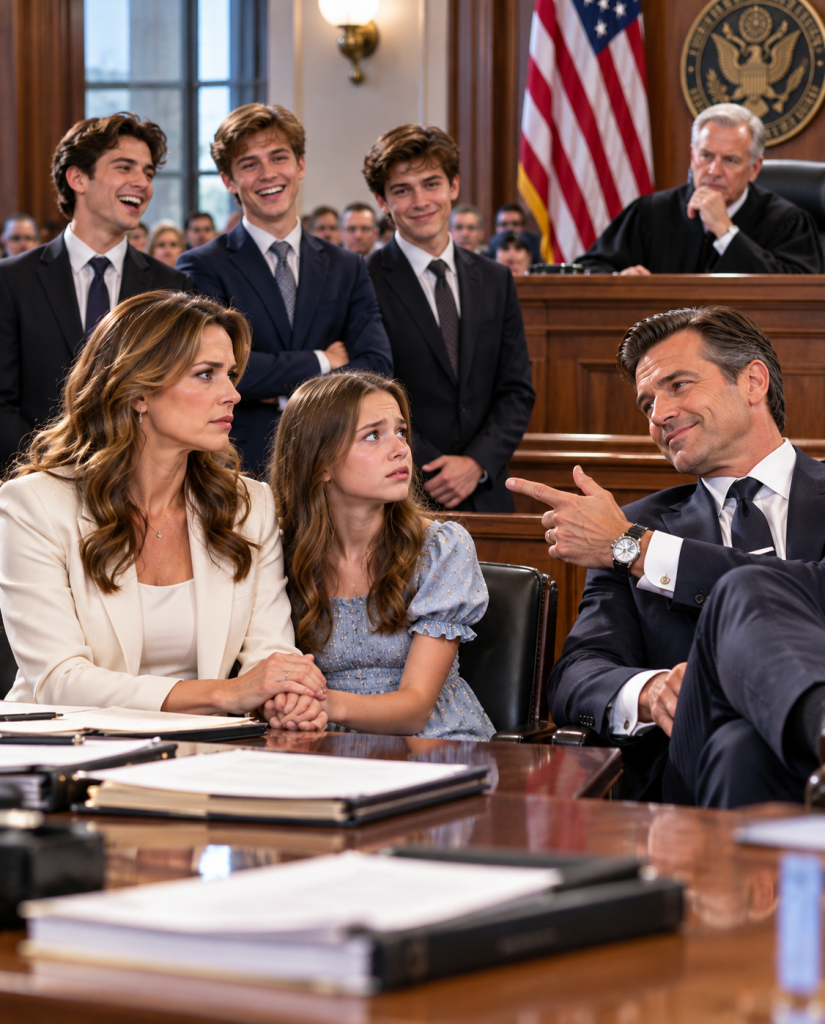
Judge Morrison’s words seemed to hang above us. “There may be,” he said calmly. “And if there is, Mr. Hale, your attorney will have an opportunity to explain it.”
Richard’s attorney slowly removed his glasses. Martin Keller was not the kind of lawyer who showed emotion easily. I had watched him through three hearings.
He never raised his voice.
Never looked surprised.
Never allowed Richard’s temper to pull him into unnecessary arguments.
But when Daniel Price placed the first folder on the table, Keller’s expression changed.
Not dramatically.
Just enough.
He looked at Richard.
Then he looked at the folder.
Then back at Richard.
And I knew.
Richard had not told his own attorney everything.
That realization gave me more satisfaction than I expected.
Judge Morrison turned toward Daniel.
“Mr. Price, you may proceed.”
Daniel stood.
He was fifty-three, soft-spoken, almost painfully methodical, and completely unimpressed by expensive suits.
He carried three binders to the witness stand.
Blue.
Green.
Black.
Richard watched every step.
Daniel was sworn in.
Then my attorney, Rebecca Sloan, approached him.
“Mr. Price, what is your occupation?”
“Forensic accountant.”
“And were you retained to review the finances of Hale Residential Group?”
“Yes.”
Richard shifted.
Rebecca continued.
“What did you discover?”
Daniel opened the blue binder.
“Approximately six months before Mrs. Hale filed for divorce, Hale Residential Group began making payments to three newly formed limited-liability companies.”
“How much?”
“Initially, relatively small amounts.”
“How small?”
“Twenty-five thousand. Forty thousand. Seventy-five thousand.”
Richard suddenly leaned toward Keller.
They whispered.
Daniel continued.
“The transfers became substantially larger after Mrs. Hale retained divorce counsel.”
Rebecca paused.
“How much larger?”
Daniel looked at the judge.
“In total, I identified transfers and attempted transfers of approximately $1.84 million.”
The courtroom erupted in whispers.
Judge Morrison struck his gavel once.
“Quiet.”
I didn’t look at Richard.
I looked at my sons.
Ethan’s face had changed.
Caleb was staring at the floor.
And Noah—
My youngest boy—
looked terrified.
That hurt.
It hurt more than Richard’s anger.
Because Noah was seventeen.
Old enough to understand right from wrong.
But still young enough that I remembered tying his shoes before kindergarten.
I remembered him crawling into our bed during thunderstorms.
I remembered the summer he broke his wrist and refused to let the emergency-room nurse touch him until I arrived.
Those memories did not disappear simply because he had betrayed me.
That was the terrible thing about being a mother.
Your heart did not keep legal records.
It remembered everything.
Rebecca held up a document.
“Mr. Price, what is Greenfield Development Holdings?”
“A limited-liability company formed eight months ago.”
“And its owner?”
Daniel looked toward Ethan.
“Ethan Hale.”
Ethan swallowed.
Rebecca picked up another document.
“North Star Equipment Leasing?”
“Owned by Caleb Hale.”
Caleb’s head snapped upward.
“And Columbus Property Strategies?”
Daniel hesitated.
“Created for the benefit of Noah Hale through a custodial structure controlled by Richard Hale.”
Richard finally stood.
“This is ridiculous.”
Keller grabbed his sleeve.
“Sit down.”
Richard ignored him.
“I built that company.”
Judge Morrison’s voice sharpened.
“Mr. Hale.”
“I worked thirty years for that money.”
“Sit down.”
Richard pointed toward me.
“She didn’t build anything.”
Something inside me went very still.
Twenty-two years.
Twenty-two years of making payroll when Richard was on job sites.
Twenty-two years of answering customer calls while toddlers climbed over my legs.
Twenty-two years of canceling dentist appointments because an inspector needed paperwork.
Twenty-two years of Christmas parties I organized.
Invoices I tracked.
Employees I helped hire.
Meals I reheated at midnight.
Loans I personally guaranteed.
And he stood there and said I had built nothing.
Rebecca glanced at me.
She knew that look.
“Let him,” I whispered.
She understood.
Richard continued digging.
“She stayed home with the children.”
I finally looked at him.
“Yes,” I said.
He stopped.
Judge Morrison turned toward me.
“Mrs. Hale, please allow counsel—”
“I’m sorry, Your Honor.”
But Richard was staring at me now.
So I finished quietly.
“I stayed home with our children while also keeping the books for the company you started from our garage.”
Richard’s jaw tightened.
“You answered phones.”
“I managed payroll.”
“You entered numbers.”
“I negotiated the first equipment lease because your credit was terrible.”
A few people behind us murmured.
Richard’s face darkened.
I continued.
“The first company truck was financed using the inheritance my grandmother left me.”
“Claire.”
“The first office deposit came from our joint savings.”
“Enough.”
“The first three employees called our home phone because there was no office phone.”
Richard slapped his palm against the table.
“I SAID ENOUGH.”
The courtroom froze.
Judge Morrison’s voice became ice.
“Mr. Hale, sit down immediately.”
Richard slowly sat.
And for the first time in twenty-two years, I watched my husband realize that raising his voice did not automatically make everyone obey him.
Rebecca turned back to Daniel.
“Mr. Price, did Mrs. Hale receive compensation for her work?”
“Not directly.”
“Was she listed as an owner?”
“Yes.”
Richard’s head moved sharply.
Rebecca smiled slightly.
“What percentage?”
Daniel answered.
“Forty-nine percent.”
That was when Ethan whispered:
“Oh, God.”
Richard turned toward him.
“Shut up.”
Judge Morrison heard him.
“So did I,” he said.
No one spoke.
Rebecca walked toward the evidence table.
“Mr. Price, were these transfers disclosed in the financial affidavit submitted by Mr. Hale?”
“No.”
“Were the three companies disclosed?”
“No.”
“Were the accounts associated with those companies disclosed?”
“No.”
“Did you find anything else?”
Daniel looked at me.
That was the question I had been waiting for.
Richard noticed.
His eyes narrowed.
“What else?” Judge Morrison asked.
Daniel reached for the black binder.
And suddenly Richard stopped looking angry.
He looked afraid.
Daniel opened it.
“There were additional transfers.”
Keller closed his eyes.
Rebecca asked, “Where?”
“To an account associated with a company called Silver Ridge Consulting.”
Richard stared straight ahead.
“How much?”
“Four hundred eighty-six thousand dollars.”
The courtroom became silent again.
Rebecca asked the obvious question.
“Who owns Silver Ridge Consulting?”
Daniel looked down at his records.
“A woman named Vanessa Cole.”
I had never met Vanessa Cole.
But I knew exactly who she was.
Richard’s face confirmed it.
Rebecca turned toward me.
I nodded.
Continue.
“Who is Vanessa Cole?” Rebecca asked.
Daniel answered carefully.
“I cannot testify regarding the nature of her personal relationship with Mr. Hale. I can only testify regarding the financial records.”
“Then tell us what those records show.”
“Mr. Hale transferred funds to Silver Ridge Consulting beginning approximately fourteen months ago.”
Fourteen months.
I closed my eyes.
Lily squeezed my hand.
Fourteen months earlier, Richard had told me he needed to travel more because the company had won contracts near Cincinnati.
Fourteen months earlier, I had packed his suitcase.
Fourteen months earlier, I had bought him new shirts because he said he needed to look professional in meetings.
Fourteen months earlier, he kissed my forehead and told me not to wait up.
I opened my eyes.
Richard was watching me.
And there was something almost pleading in his expression.
Not regret.
Fear.
Fear of what I knew.
Rebecca asked, “Were the payments legitimate business expenses?”
“I found no invoices supporting them.”
“Any contracts?”
“No.”
“Any documented services?”
“No.”
“What was the money used for?”
Keller stood.
“Objection. Foundation.”
“Sustained,” Judge Morrison said.
Rebecca nodded.
She had expected that.
“Mr. Price, did you trace any subsequent expenditures?”
“Yes.”
“Where?”
Daniel read from the ledger.
“Mortgage payments on a condominium in Cincinnati. Vehicle payments. Furniture purchases. Travel. Jewelry. Restaurant expenses.”
Richard looked at Keller.
Keller did not look back.
I finally understood why Richard had been so desperate to make the divorce about custody.
He wanted noise.
He wanted drama.
He wanted everyone arguing about which parent the boys preferred.
He wanted me humiliated.
He wanted me crying over children who had already been coached into choosing him.
Because while everyone watched the family collapse—
Richard had been emptying the safe.
Rebecca returned to our table.
“No further questions at this time.”
Judge Morrison looked toward Keller.
“Counsel?”
Keller stood slowly.
He walked toward Daniel.
“Mr. Price, you are being paid by Mrs. Hale’s legal team?”
“Yes.”
“So your investigation is not neutral.”
“My arithmetic is.”
Someone behind me coughed to hide a laugh.
Keller did not smile.
“You are not suggesting every transfer you reviewed was illegal.”
“No.”
“You are not an attorney.”
“No.”
“You cannot determine whether my client committed fraud.”
“No.”
“Good.”
Keller turned away.
Then Daniel added:
“But I can determine whether money existed when sworn financial statements said it did not.”
Keller stopped.
Judge Morrison looked down, possibly hiding a smile.
Keller returned to his table.
“Nothing further.”
Judge Morrison folded his hands.
Then he looked directly at Richard.
“Mr. Hale, until this court has a substantially clearer understanding of these transactions, the preservation order remains in effect.”
Richard whispered something under his breath.
Judge Morrison continued.
“No sale, transfer, encumbrance, withdrawal, reassignment, liquidation, or movement of marital business assets without court approval.”
Keller nodded.
“Yes, Your Honor.”
“And because the evidence presented today suggests assets may have been transferred to third parties, the order will extend to the identified accounts pending further review.”
Ethan stood.
“Wait.”
Every head turned.
His voice cracked.
“My account?”
Judge Morrison looked at him.
“You are Ethan Hale?”
“Yes.”
“Then I suggest you obtain independent legal advice.”
Ethan looked at Richard.
“Dad?”
Richard didn’t answer.
Ethan stepped closer.
“You said the company was mine.”
Richard hissed, “Sit down.”
“You said you were giving me my share early.”
“Ethan.”
“You said Mom knew.”
That sentence went through me like glass.
Ethan looked at me.
For the first time all morning, he wasn’t smirking.
“Mom?”
I said nothing.
He knew the answer.
Caleb stood next.
“Dad, you told us she agreed.”
Richard turned.
“Both of you sit down.”
Caleb’s voice rose.
“You told me those transfers were because Mom wanted everything divided before the divorce.”
“I said sit down.”
Judge Morrison struck the gavel.
“Everyone will sit down.”
They did.
But the damage was done.
Richard had lied to them.
That did not erase what they had done.
It did not erase the jokes.
It did not erase the way they had treated Lily.
It did not erase Ethan signing documents without reading them because his father promised him money.
It did not erase Caleb opening accounts.
And it certainly did not erase Noah telling his fourteen-year-old sister:
Dad’s making sure Mom gets nothing.
But betrayal had layers.
And we had just uncovered another one.
Judge Morrison ordered a recess.
The second we entered the hallway, Ethan came toward me.
“Mom.”
Rebecca stepped between us.
“Not now.”
“I need to talk to her.”
“No.”
“I’m her son.”
Rebecca’s expression didn’t change.
“And you may be a witness.”
Ethan looked stunned.
“A witness?”
“Or something more,” Rebecca said. “Which is why you should get your own attorney before having conversations about these transactions.”
Richard stormed out behind us.
“Don’t listen to her.”
Ethan turned.
“You told me she knew.”
Richard lowered his voice.
“We’ll discuss this privately.”
“No. You told me Mom agreed.”
“I was protecting this family.”
Caleb laughed once.
There was no humor in it.
“From Mom?”
Richard glared at him.
“From losing everything.”
“You said she was taking everything.”
“She was trying to.”
I finally spoke.
“No, Richard.”
He looked at me.
“I was trying to find everything.”
His face hardened.
For a moment, I saw the man I had married.
Not the charming contractor.
Not the country-club businessman.
Not the father who bought expensive birthday presents.
The man underneath.
The man who believed ownership and love were the same thing.
“You think you won?” he asked quietly.
“No.”
“Then why are you smiling?”
I hadn’t realized I was.
I looked at Lily.
She was still holding my hand.
“Because I’m finally not afraid of you.”
Richard stared at me.
That sentence hurt him more than any accusation could have.
Because fear had been one of the currencies of our marriage.
And I had stopped paying.
Three days later, Ethan hired an attorney.
Two days after that, Caleb hired one too.
Richard was furious.
Noah was still a minor, so his situation became more complicated.
The court appointed a guardian ad litem regarding certain financial issues, and Richard was temporarily prohibited from acting on Noah’s behalf in matters involving the disputed company.
That was when everything started unraveling.
Not dramatically.
Not all at once.
One thread at a time.
Daniel found another account.
Then another.
A storage facility.
A brokerage account.
Two pieces of undeveloped land held through a shell company.
A boat Richard had supposedly sold three years earlier.
He hadn’t sold it.
He had transferred ownership.
Then Daniel discovered that Silver Ridge Consulting had paid the annual slip fees.
Vanessa Cole became impossible to ignore.
I searched her name only once.
Forty-one.
Interior designer.
Cincinnati.
Divorced.
One daughter.
There were photographs of her standing beside Richard at charity events I had never attended.
In one picture, his hand rested on the small of her back.
The photograph had been posted eleven months earlier.
I stared at it for perhaps thirty seconds.
Then I closed the laptop.
Lily was sitting across from me at the kitchen table doing algebra.
“Was that her?” she asked.
I looked up.
She had inherited my inability to pretend not to notice things.
“Yes.”
“Is she pretty?”
I almost laughed.
“Very.”
Lily thought about that.
Then she shrugged.
“So are you.”
My throat tightened.
“Thank you.”
She returned to her homework.
After a minute she said:
“Dad’s stupid.”
“Lily.”
“He is.”
“You’re allowed to be angry. But he’s still your father.”
She put down her pencil.
“Why do you keep defending him?”
“I’m not.”
“You always say that.”
“Because there’s a difference between defending someone and refusing to let hatred turn you into them.”
She stared at me.
I wondered if she understood.
Maybe not.
She was fourteen.
Then she said:
“Can I still hate him today?”
I smiled.
“Today is fine.”
She smiled too.
It was the first time either of us had laughed in days.
Richard called that night.
I almost didn’t answer.
But Lily was upstairs, and Rebecca had told me to keep communications civil and preferably documented.
“Hello?”
“You turned my sons against me.”
I leaned against the kitchen counter.
“Our sons.”
“Don’t do that.”
“Do what?”
“Pretend you care now.”
That one landed.
Richard knew where to cut.
“You stood in court and said you didn’t want them.”
“I said I wasn’t participating in your game.”
“You said none.”
“Yes.”
“They heard you.”
“So did everyone else when you told their mother to pick one like they were furniture.”
Silence.
Then:
“You embarrassed me.”
I actually closed my eyes.
That was Richard.
Not: You hurt me.
Not: Our children are falling apart.
Not: How did we become this?
You embarrassed me.
“Goodnight, Richard.”
“Wait.”
I stopped.
His voice changed.
Softer.
The voice he had used when we were twenty-six and broke and eating spaghetti from chipped bowls.
“Claire.”
I hated that voice.
Because some part of me remembered loving it.
“Please.”
I said nothing.
“We can fix this.”
“No.”
“We can stop the attorneys.”
“No.”
“We can sell the company.”
“No.”
“We can divide everything ourselves.”
“No.”
His breathing changed.
“You don’t understand what this investigation is going to do.”
“To whom?”
“To all of us.”
There it was.
Not him.
Us.
The family.
The company.
The employees.
The boys.
Anyone he could place between himself and consequences.
“Then you should have thought about all of us before you hid the money.”
“I was protecting what I built.”
“What we built.”
“You want half of my life.”
“No, Richard.”
I looked around the kitchen.
The kitchen where I had raised four children.
The kitchen where I had signed company checks.
The kitchen where I had cried silently the night I discovered the first suspicious transfer.
“I want my half of our life.”
He hung up.
The next twist came from the person I least expected.
Noah.
It was raining when he showed up.
Almost midnight.
Lily and I had moved temporarily into a townhouse my sister owned near Worthington because Richard had begun appearing at the marital house without warning.
I heard knocking.
Three quick knocks.
Then two more.
I checked the door camera.
Noah stood outside.
Soaked.
No coat.
I opened the door.
“What happened?”
“Can I come in?”
“Of course.”
He stepped inside.
For a second we simply stared at each other.
My youngest son had grown nearly six inches in the past year.
He was taller than me.
Broad shoulders.
Richard’s dark hair.
My eyes.
But standing there drenched and trembling, he looked seven years old.
“Did your father hurt you?”
“No.”
“Did you drive?”
He nodded.
“Have you been drinking?”
“No.”
“Drugs?”
“No, Mom.”
“Okay.”
He started crying.
Not quietly.
Not elegantly.
His whole face broke.
I pulled him against me before I could think.
And he held on.
“Mom, I’m sorry.”
I closed my eyes.
“I’m sorry.”
His shoulders shook.
“I’m so sorry.”
I wanted to say it was okay.
Every instinct in me wanted to.
But it wasn’t okay.
So I held him.
And I said:
“I know.”
Eventually we sat at the kitchen table.
Lily came downstairs.
When she saw Noah, she stopped.
Her face changed immediately.
“What’s he doing here?”
“Lily—”
“No.”
Noah wiped his face.
“I need to tell Mom something.”
Lily crossed her arms.
“You can tell Dad.”
“Please.”
“You laughed at her.”
“I know.”
“You laughed at me too.”
“I know.”
“You called us parasites.”
My head turned.
“What?”
Noah looked down.
Lily’s eyes filled.
“At Dad’s house. He said Mom was trying to steal everything and Noah said we were parasites.”
“I didn’t mean—”
“You said it.”
“I know.”
Lily turned toward me.
“That’s why I stopped answering him.”
I had wondered.
I looked at Noah.
“Did you say that?”
He nodded.
“Yes.”
“Why?”
His answer came out barely above a whisper.
“Because Dad liked it when we were mad at you.”
That sentence chilled me.
“What do you mean?”
Noah stared at his hands.
“He’d tell us stuff.”
“What stuff?”
“That you cheated.”
I nearly laughed from disbelief.
“That you were trying to bankrupt the company. That you had another guy. That you were going to take the house and make him pay for everything.”
“Did you believe him?”
“At first.”
“And later?”
Noah started crying again.
“Later I didn’t know.”
Lily remained standing.
She did not soften.
I respected her for that.
Noah reached into his sweatshirt pocket.
He placed a flash drive on the table.
“What is that?”
He looked at me.
“Dad’s backups.”
I didn’t touch it.
“What backups?”
“His laptop.”
My heartbeat changed.
“Why do you have them?”
“Because he told me to delete them.”
The room became silent.
Noah continued.
“Yesterday he gave me an external drive and told me to erase a folder. He said lawyers were trying to twist things and he needed old company files cleaned up.”
My mouth went dry.
“Did you?”
“No.”
“Why?”
“Because I opened it first.”
Lily moved closer.
“What was in it?”
Noah looked at her.
Then at me.
“Emails.”
“What kind?”
“Emails about the companies.”
My fingers went cold.
“Anything else?”
He nodded.
“Messages about you.”
I reached for my phone.
“Mom?”
“I’m calling Rebecca.”
“Wait.”
I stopped.
Noah’s face had gone pale.
“There’s more.”
Of course there was.
There was always more.
“What?”
He swallowed.
“Dad knew about the forensic accountant before court.”
I stared at him.
“How?”
“I don’t know. But there are emails.”
“To whom?”
“Someone named Brent.”
Brent.
I knew only one Brent connected to our case.
Brent Lawson.
An assistant controller at Hale Residential Group.
He had worked for us for nine years.
Daniel had interviewed him twice.
“What do the emails say?”
Noah pushed the flash drive toward me.
“That Brent was supposed to move money before Daniel found it.”
Lily whispered:
“Oh my God.”
I immediately called Rebecca.
She answered on the fourth ring.
“Claire?”
“I have something.”
“At midnight?”
“Yes.”
“What?”
I looked at Noah.
“A flash drive Richard allegedly instructed Noah to erase.”
Silence.
Then Rebecca’s voice changed.
“Do not plug it into anything.”
“I haven’t.”
“Do not copy it.”
“Okay.”
“Do not open it.”
“Noah already did.”
“Where is Noah?”
“Here.”
“Is he safe?”
“Yes.”
“Is Richard aware he’s there?”
“I don’t know.”
“Claire, listen carefully. Put the drive somewhere secure. I’m calling our digital-forensics consultant. I also want Noah to write down exactly what happened while it’s fresh, but do not coach him and do not ask him to interpret anything he saw.”
“Okay.”
“And Claire?”
“Yes?”
“Do not call Richard.”
“I wasn’t going to.”
“Good.”
I hung up.
Noah looked terrified.
“Am I in trouble?”
I looked at my seventeen-year-old son.
“I don’t know.”
His face crumpled.
“But telling the truth now matters.”
He nodded.
Lily turned away.
Noah looked at her.
“Lil.”
She stopped.
“I really am sorry.”
She didn’t answer immediately.
Then:
“I believe you’re sorry.”
Hope flashed across his face.
But Lily continued.
“That doesn’t mean I forgive you yet.”
Noah lowered his head.
“Okay.”
She went upstairs.
And I realized my fourteen-year-old daughter understood something that had taken me forty-six years to learn.
Forgiveness and access were not the same thing.
The flash drive changed everything.
Not overnight.
Real life is slower than stories.
There were attorneys.
Forensic imaging.
Authentication.
Hearings.
Objections.
Subpoenas.
Arguments about privilege.
Arguments about ownership.
Arguments about who created which files and when.
But eventually, enough material was authenticated to deepen the investigation.
The emails showed Richard discussing asset transfers.
They showed concern about discovery.
They showed frantic efforts to characterize personal expenditures as business expenses.
And they showed something else.
Vanessa had not been merely receiving Richard’s money.
She had been helping him move it.
Her consulting company had purchased two properties.
One was sold.
The proceeds went somewhere else.
Daniel followed them.
Then followed them again.
And eventually found a trust.
Not for Vanessa.
Not for Richard.
For Vanessa’s daughter.
When Rebecca told me, I simply stared at her.
“How much?”
“Approximately three hundred thousand appears to have passed through transactions connected to the trust. Daniel is still tracing it.”
I laughed.
I couldn’t help myself.
Rebecca watched me carefully.
“You okay?”
“No.”
“That’s fair.”
“I spent twenty-two years worrying whether we could afford braces.”
She waited.
“I clipped coupons when Ethan was little.”
“I know.”
“I wore the same winter coat for eleven years.”
“Claire.”
“He bought another woman’s child a trust.”
My voice broke.
That was the moment I finally cried.
Not when I found Vanessa’s photograph.
Not when Richard told me to choose a son.
Not when Ethan laughed.
Not when I discovered the companies.
A trust.
That did it.
Because Richard had complained when Lily needed orthodontic work.
He had complained about college tuition.
He had complained about groceries.
He had complained about every family vacation.
He had made generosity toward his own family feel like a burden.
And all the while—
he had been building another life.
Rebecca moved the tissue box toward me.
I cried until my face hurt.
Then I stopped.
“What happens now?”
She gave me the answer I needed.
“We keep going.”
So we did.
Ethan came to see me in November.
He called first.
That mattered.
“Can I come over?”
“What for?”
“To talk.”
“About the case?”
“No.”
“Then yes.”
He arrived carrying nothing.
No flowers.
No apology gift.
No attempt to purchase forgiveness.
That mattered too.
We sat in the living room.
He looked exhausted.
At twenty-one, Ethan had always believed adulthood meant being the loudest man at the table.
Now he looked like a young man discovering that adulthood was mostly consequences.
“I withdrew from Ohio State for the semester.”
I hadn’t known.
“Why?”
“I can’t concentrate.”
“I’m sorry.”
He looked surprised.
“You are?”
“Of course.”
“After everything?”
“You’re my son.”
He looked down.
“That makes it worse.”
I waited.
He rubbed his palms together.
“My lawyer says I probably won’t be held responsible for everything because Dad directed most of it and there’s documentation that I didn’t control the accounts the way I thought I did.”
I remained silent.
“But I signed things.”
“Yes.”
“I didn’t read them.”
“I know.”
“He told me it was estate planning.”
“I know.”
“He said you were trying to destroy him.”
“I know.”
His eyes filled.
“And I wanted to believe him.”
That was the first honest thing he had said.
“Why?”
He looked at me.
“Because he made it sound like if we chose you, we were weak.”
There it was.
Richard’s real inheritance.
Not money.
Contempt.
Ethan continued.
“He always said you were emotional.”
I almost smiled.
“Yes.”
“He said you didn’t understand business.”
“I did.”
“I know that now.”
“That must be inconvenient.”
A tiny laugh escaped him.
Then disappeared.
“I treated you horribly.”
“Yes.”
“I treated Lily horribly.”
“Yes.”
“I let Dad turn everything into teams.”
“Yes.”
He looked frustrated.
“Can you say something besides yes?”
“What would you like me to say?”
“I don’t know.”
“Then maybe you need to finish.”
He stared at me.
So I waited.
Finally:
“When you said none…”
His voice cracked.
“I thought you didn’t love us.”
My heart broke.
But I did not rush to rescue him from that feeling.
“I have loved you since before you had a name.”
He covered his mouth.
“But love does not require me to volunteer for humiliation.”
He cried quietly.
“You chose your father, Ethan.”
“I know.”
“You were twenty-one. Not twelve.”
“I know.”
“You watched him insult me.”
“I know.”
“You laughed.”
“I know.”
“You knew he was hiding assets.”
“I knew some things.”
“And you said nothing.”
He nodded.
“I’m sorry.”
I believed him.
That did not magically repair us.
But I believed him.
“I accept that you’re sorry.”
His eyes lifted.
“But?”
“But rebuilding trust is different.”
He nodded.
“I understand.”
“Do you?”
“I’m trying to.”
That was enough for that day.
When he left, he hugged me.
I hugged him back.
Then I closed the door and cried.
Because boundaries do not make love painless.
Sometimes they make the pain clearer.
Caleb took longer.
He was nineteen and angrier than Ethan.
He blamed Richard.
Then me.
Then Daniel.
Then the attorneys.
Then the court.
Then Ethan.
Then himself.
He moved out of Richard’s house in December.
He did not move in with me.
I didn’t offer.
Instead, he rented a room with two friends near campus.
That was probably the best thing for him.
He needed to learn how much toothpaste cost.
He needed utility bills.
He needed laundry.
He needed to understand that adulthood was not an expensive SUV purchased by your father.
For Christmas, I sent him a card.
Nothing dramatic.
Merry Christmas. I love you. Mom.
He texted that night.
Thank you.
Three days later:
I’m sorry too.
I stared at those words for a long time.
Then typed:
I know. We’ll talk when you’re ready.
He came over in January.
And we talked for four hours.
Some of it was ugly.
He accused me of staying too long.
I accused him of treating me like an enemy.
He said Richard had manipulated him.
I told him manipulation explained behavior but did not erase responsibility.
He shouted.
I shouted back.
Then we both cried.
It was not a beautiful reconciliation.
It was better.
It was honest.
Noah moved in with me permanently before Christmas.
Richard objected.
Naturally.
But after Noah’s disclosure about the drive, the relationship between them deteriorated badly.
The guardian ad litem interviewed everyone.
Lily spoke privately.
So did Noah.
I never asked either child what they said.
Eventually the temporary custody arrangement placed both minors primarily with me, with structured parenting time for Richard.
Richard called it theft.
I called it Tuesday.
Because by then I had learned something important.
Not every accusation deserved a response.
Then came Vanessa.
She appeared at my door in February.
I knew who she was immediately.
She looked different from her photographs.
Smaller.
Tired.
Afraid.
“Claire?”
“Yes.”
“I’m Vanessa.”
“I know.”
She flinched.
“Can we talk?”
“No.”
She looked surprised.
“I understand.”
I started closing the door.
“Richard lied to me too.”
I stopped.
Not because I pitied her.
Because I was curious.
“What did he tell you?”
“That you were separated.”
I laughed once.
“He said you were only staying married until Lily finished middle school.”
“We renewed our vows two years ago.”
Her face changed.
Apparently she had not known that.
“He told me the company was his.”
“It wasn’t.”
“I know that now.”
“What do you want?”
She looked down the street.
“I have documents.”
Of course she did.
Everyone had documents.
“Give them to your lawyer.”
“I don’t have one.”
“Get one.”
“I’m scared.”
I almost said, So was I.
Instead I waited.
She continued.
“He asked me to sign things.”
My expression must have changed.
“What things?”
“Transfers. Property documents. He told me they were tax planning.”
“Vanessa, you need an attorney.”
“I know.”
“And you should not be discussing this with me.”
“I know.”
“Then why are you here?”
Her eyes filled.
“Because he told me you were crazy.”
I said nothing.
“He told me you were vindictive and controlling. He said you tracked his spending. He said you were trying to ruin him.”
“And you believed him.”
“Yes.”
“Why?”
She looked ashamed.
“Because I loved him.”
That answer should have made me angry.
Instead it made me tired.
I had believed Richard because I loved him too.
Different lies.
Same mechanism.
Vanessa wiped her eyes.
“I’m sorry.”
“You slept with my husband.”
“Yes.”
“You helped him hide money.”
“I didn’t know it was yours.”
“But you knew he was married.”
She looked down.
“Yes.”
“Then your apology is something I’m not ready to carry for you.”
She nodded.
I closed the door.
The next morning, Vanessa retained counsel.
Two weeks later, her attorney contacted Rebecca.
And that was when Richard’s position became much worse.
Because Vanessa had saved messages.
All of them.
Richard telling her how to label transfers.
Richard instructing her what to say if questioned.
Richard promising that once the divorce was final, he would “have everything clean.”
Richard referring to the three LLCs.
Richard boasting that the boys were “on his side.”
And one message I read twice.
Then a third time.
Claire will be too busy fighting for the kids to notice where the money went.
That sentence ended something inside me.
Not love.
Love had ended slowly.
Hope.
That was what ended.
The last tiny irrational hope that somewhere beneath all the manipulation, Richard had simply panicked.
That maybe he had made terrible decisions.
That maybe fear had turned him into someone I no longer recognized.
No.
It had been deliberate.
He had used our children as camouflage.
He had turned sons against their mother because he thought maternal grief would distract me while he stole from the marriage.
And suddenly the courtroom challenge made perfect sense.
Pick one of our three sons.
He had expected me to beg.
He had expected tears.
He had expected chaos.
Instead I had said:
None.
And that single word had ruined his plan.
Settlement negotiations began in March.
Richard did not want trial.
Neither did I.
But we wanted very different things.
His first proposal was insulting.
His second was less insulting.
His third was almost rational.
By the fifth, Keller had clearly taken control.
Rebecca slid the papers toward me.
“Read it.”
I did.
The marital house would be sold unless one party bought out the other.
I did not want it.
Too many ghosts.
My share of Hale Residential Group would be valued independently.
Certain disputed transfers would be restored or credited in the property division.
Retirement accounts would be divided.
Debts allocated.
Custody provisions.
Support.
Legal fees.
Dozens of pages translating twenty-two years into numbers.
I reached the company section.
“Richard keeps it?”
“If you agree.”
“And buys me out?”
“Yes.”
“How?”
“Combination of liquid assets and structured payments secured against his remaining ownership interest.”
I stared at the page.
That company had been our fifth child.
I had watched it grow from a pickup truck and a folding desk.
Part of me wanted it.
Not because I wanted to run a construction company.
Because I wanted Richard to know he could not take it from me.
Rebecca seemed to read my mind.
“Don’t negotiate for symbolism.”
I looked at her.
“Negotiate for the life you want after this.”
That sentence stayed with me.
“What do I actually want?”
“That’s not a legal question.”
So I went home.
I sat at my kitchen table.
Lily was upstairs.
Noah was at a friend’s house.
And for the first time, I asked myself a question I had not asked in twenty-two years.
What did Claire want?
Not Mrs. Hale.
Not Mom.
Not Richard’s wife.
Not company bookkeeper.
Claire.
The answer surprised me.
I wanted quiet.
I wanted a smaller house.
I wanted mornings where nobody slammed doors.
I wanted to travel.
I wanted to finish the degree I had abandoned when Ethan was born.
I wanted Lily to stop listening for her father’s car in the driveway.
I wanted Noah to learn that being a man did not mean dominating the room.
I wanted Ethan and Caleb to become adults without Richard’s money insulating them from every mistake.
I wanted a garden.
I wanted a dog.
I wanted to sleep diagonally across a bed.
I wanted to laugh loudly.
I wanted to never again explain why I had spent twenty dollars.
And most of all—
I wanted to stop winning battles against Richard.
Because as long as my life was organized around defeating him, he still occupied the center of it.
The next morning, I called Rebecca.
“Tell him I’ll sell my interest.”
“Under the right terms?”
“Yes.”
“Good.”
“But I want one thing.”
She sighed.
“That sentence is never good.”
I smiled.
“I want the college accounts protected.”
“For Lily and Noah?”
“For all four.”
Rebecca was silent.
“Even Ethan and Caleb?”
“Yes.”
“Claire, they’re adults.”
“I know.”
“And after what happened—”
“They’re still my children.”
She sighed again.
“Anything else?”
“Yes.”
“The boys cannot control the funds directly.”
Now Rebecca laughed.
“That I can work with.”
The settlement was nearly complete when Richard destroyed it.
One week before we were scheduled to sign, Daniel found another transfer.
Two hundred twenty thousand dollars.
Made after the preservation order.
Richard had moved it through an equipment vendor.
Keller withdrew from representing him three days later.
Officially, the filing cited irreconcilable differences regarding representation.
Unofficially, Rebecca said:
“I think Keller got tired of being lied to.”
Richard hired another attorney.
The settlement collapsed.
And the case moved toward trial.
The final hearing took place eleven months after Richard told me to pick a son.
Same courthouse.
Same hallway.
Different family.
Ethan sat behind me this time.
Caleb beside him.
Noah sat near the guardian ad litem.
Lily sat with my sister outside until she was needed.
Richard entered alone.
No sons behind him.
No smirks.
No expensive performance.
He looked older.
So did I.
But I liked my older face.
It belonged to me.
The proceedings lasted three days.
There was no single explosive moment.
Truth rarely arrives like lightning.
It accumulates.
Bank statement by bank statement.
Email by email.
Signature by signature.
Richard testified.
He said he had been protecting business assets from uncertainty.
Rebecca asked why protection required nondisclosure.
He said he had followed advice.
Rebecca asked whose advice.
His answer became vague.
She asked about Vanessa.
He admitted the relationship.
She asked when it began.
He gave a date.
Vanessa’s messages showed it had begun months earlier.
She asked about the transfer after the preservation order.
He blamed accounting confusion.
Daniel testified that the transaction required several deliberate steps.
Richard blamed an employee.
The employee testified the instruction came from Richard.
By the afternoon of the second day, even Richard seemed exhausted by his own explanations.
Then Rebecca asked:
“Mr. Hale, do you remember asking Mrs. Hale to choose one of your sons?”
Richard stared at her.
“Yes.”
“Why?”
“It was taken out of context.”
“What was the context?”
“We were discussing custody.”
“Ethan was twenty-one.”
Richard paused.
“Yes.”
“Caleb was nineteen.”
“Yes.”
“Neither was subject to a custody order.”
“No.”
“So why did you tell Mrs. Hale to pick one?”
Richard looked toward me.
“Because she always accused me of turning the boys against her.”
“That does not answer my question.”
“I was angry.”
“So it was not a serious custody proposal.”
“No.”
“Then it was intended to hurt her?”
His attorney stood.
“Objection.”
Judge Morrison looked at Rebecca.
“Rephrase.”
Rebecca nodded.
“Mr. Hale, what did you expect Mrs. Hale to do after you told her to choose one son?”
“I don’t know.”
“You laughed.”
“I don’t remember.”
“Your sons laughed.”
“I can’t speak for them.”
“You then asked whether she was giving them up when she declined your proposal.”
Richard’s jaw tightened.
“Yes.”
“And at the same time, three companies associated with those sons held disputed marital assets.”
Silence.
Rebecca stepped closer.
“Isn’t it true, Mr. Hale, that you expected Mrs. Hale to focus on the emotional conflict involving your sons while those financial arrangements remained undisclosed?”
“No.”
“No?”
“No.”
Rebecca picked up a printed message.
My stomach tightened.
I knew which one.
“Did you send Vanessa Cole a message stating, ‘Claire will be too busy fighting for the kids to notice where the money went’?”
Richard stared at the paper.
His attorney objected.
The judge ruled.
Arguments followed.
Then the message was admitted for the limited purpose permitted by the court.
Rebecca repeated the question.
Richard looked at me.
For the first time in nearly a year, there was nowhere else for him to look.
“Yes.”
One word.
Yes.
Rebecca returned to her table.
“No further questions.”
That was it.
No screaming.
No confession.
No dramatic collapse.
Just yes.
Sometimes one honest word arrives after a thousand lies.
Judge Morrison issued his final ruling weeks later.
I did not get everything I asked for.
Richard did not lose everything.
Real courts are not revenge machines.
The financial division accounted for the marital estate, the business valuation, identified transfers, and the court’s findings regarding the parties’ conduct.
Certain assets were credited against Richard’s share.
My interest in Hale Residential Group was bought out under terms approved by the court.
Some accounts remained subject to separate proceedings and tax review.
Lily remained primarily with me.
Noah, who had turned eighteen by then, was no longer subject to custody orders and chose where he lived.
He chose my house.
Richard received defined parenting time with Lily, subject to the arrangements the court considered appropriate.
The college funds were protected.
That mattered to me.
Richard hated it.
That mattered less.
When Judge Morrison finished, he closed the file in front of him.
Then he looked at both of us.
“Mr. and Mrs. Hale, the court can divide property. It can issue orders. It can establish legal responsibilities. It cannot repair your family.”
Nobody moved.
“That work belongs to the people sitting in this room.”
He looked toward the children.
Then back at us.
“I strongly suggest you remember that.”
And with that—
twenty-two years of marriage became legally over.
Outside the courthouse, reporters were not waiting.
There were no cameras.
No cheering crowd.
Just a gray Ohio afternoon.
People walked to parking garages.
Attorneys carried boxes.
Someone argued about a parking ticket.
Life continued.
Rebecca hugged me.
“You’re divorced.”
I laughed.
“That sounds terrible.”
“You’re free.”
“That sounds better.”
She walked away.
Lily came running toward me.
“Mom!”
I hugged her.
Noah joined us.
Then Ethan.
Then Caleb.
For a moment, all four of my children stood around me.
Richard came through the courthouse doors.
Everyone became quiet.
He looked at them.
Then at me.
His eyes stopped on Ethan.
“You coming?”
Ethan looked confused.
“Where?”
“Home.”
Ethan shook his head.
“I have my apartment.”
Richard looked at Caleb.
“What about you?”
Caleb shoved his hands into his coat pockets.
“I’m meeting friends.”
Then Richard looked at Noah.
Noah said nothing.
Finally Lily.
“Sweetheart?”
Lily stepped closer to me.
Richard’s face changed.
And for the first time, I saw what he had feared all along.
It wasn’t losing the money.
It wasn’t losing the company.
It wasn’t even losing me.
It was losing control of the story.
He had spent a year telling our children that they had to choose.
And now none of them did.
Ethan loved me and still sometimes saw Richard.
Caleb was angry with both of us in different ways.
Noah wanted distance from his father but had not closed the door forever.
Lily was still furious.
They were not pieces on a board.
They were people.
Richard looked at me.
“You happy now?”
A year earlier, I would have defended myself.
I would have explained.
I would have told him I never wanted this.
Instead I said:
“I hope someday you are.”
He laughed bitterly.
“Always pretending to be better than everyone.”
“No.”
I shook my head.
“I’m just done trying to be understood by you.”
Then I turned away.
And my children came with me.
Not because I ordered them to.
Because they chose to.
Six months later, I bought a house.
Not large.
Three bedrooms.
White siding.
A little porch.
The backyard was ridiculous.
Mostly weeds.
A dying maple tree.
A fence that leaned toward the neighbor’s yard.
I loved it immediately.
Lily hated the kitchen.
“The cabinets look ancient.”
“They’re twelve years old.”
“Exactly.”
Noah inspected the garage.
Ethan offered to help repair the fence.
Caleb said he knew someone who could get discounted flooring.
I told him I would pay market price.
He rolled his eyes.
Some things never changed.
We painted the living room ourselves.
Poorly.
There was paint on the ceiling.
Paint on the floor.
Paint on Noah.
At one point Lily drew a smiley face on Ethan’s back with a roller.
He chased her through the house.
She screamed.
Caleb laughed so hard he fell against the wall and left a blue handprint.
I should have been furious.
Instead I stood in the middle of the room and watched them.
My children.
All four.
Imperfect.
Complicated.
Still healing.
Together.
I walked into the bathroom and cried.
Not because I was sad.
Because for years I had confused perfection with happiness.
Richard had wanted the perfect house.
Perfect company.
Perfect children.
Perfect photographs.
Perfect wife.
But this—
Paint on the floor.
A crooked fence.
Four children arguing about pizza toppings.
This was happiness.
Messy.
Loud.
Uncontrolled.
Real.
I enrolled at Ohio State the following fall.
One class.
Then two.
The first morning I walked onto campus, I nearly turned around.
Everyone looked twelve.
I texted Ethan.
I am the oldest person here.
He replied immediately.
Impossible. Professors exist.
I laughed so loudly a student looked at me.
I completed the degree I had started twenty-five years earlier.
Business administration.
At graduation, all four children came.
Lily screamed when my name was called.
Noah whistled.
Caleb shouted:
“THAT’S MY MOM!”
Ethan cried.
He denied it afterward.
But I saw him.
After the ceremony, we took photographs.
Then someone behind us said:
“Claire.”
Richard.
He stood several feet away.
Alone.
My heart did not race.
That surprised me.
For so many years, Richard entering a room had changed the temperature of my body.
Not anymore.
“Congratulations,” he said.
“Thank you.”
He looked at the children.
“I didn’t know everyone would be here.”
Lily stiffened.
But I touched her arm.
Richard noticed.
“I won’t stay.”
He looked at me again.
“You look good.”
“So do you.”
It was mostly true.
He looked older.
But calmer.
Hale Residential Group still existed, though smaller than before.
Richard had sold several assets to satisfy obligations created by the divorce and related financial issues.
He was no longer with Vanessa.
I knew that only because Caleb mentioned it once.
I never asked why.
Richard looked toward my diploma.
“You finally finished.”
“Yes.”
“You always talked about it.”
“I did.”
Silence.
Then he said:
“I’m sorry.”
I looked at him.
There were hundreds of things that sentence could have meant.
Maybe thousands.
“For what?”
He gave a sad little smile.
“Everything would take too long.”
“That’s probably true.”
“I was angry.”
“I know.”
“I thought if I controlled the money, I controlled what happened.”
“I know.”
“And I thought if the boys were with me…”
His voice faded.
I waited.
He looked at Ethan, Caleb, and Noah.
“They’d prove I was right.”
“About what?”
“That you were the problem.”
There it was.
Not perfect accountability.
But something.
“And was I?”
He looked at me.
“No.”
I nodded.
“Thank you for saying that.”
“Do you forgive me?”
My children were watching.
I could feel it.
For years I had imagined this moment.
In some versions, I told him no.
In others, I delivered a speech so devastating he walked away broken.
But standing there in my graduation gown, none of that mattered.
“I don’t know what forgiveness means between us anymore.”
He looked disappointed.
So I continued.
“I don’t wake up angry at you.”
He listened.
“I don’t want revenge.”
His eyes filled.
“I don’t want you miserable.”
“Then maybe—”
“But I also don’t want you back.”
He stopped.
“And I don’t need what happened to become acceptable just because enough time passed.”
He nodded slowly.
“That’s fair.”
“Yes.”
It was.
He looked toward Lily.
She looked away.
Richard did not force her.
That was new.
Then he looked at me once more.
“Congratulations, Claire.”
“Thank you, Richard.”
And he walked away.
I watched him go.
Then Ethan stepped beside me.
“You okay?”
I smiled.
“Yes.”
And I meant it.
Two years after the divorce, Lily graduated high school.
Richard attended.
So did I.
We sat in different sections.
There was no scene.
No argument.
No competition.
When Lily crossed the stage, we both stood.
She looked toward me first.
Then toward him.
And she smiled.
Not the same smile.
But a smile.
Healing did not mean returning to what existed before.
Sometimes healing meant building something entirely different from the ruins.
Ethan eventually returned to school.
He studied finance.
The irony was not lost on anyone.
After graduation, he refused a job Richard offered him.
Instead he joined a midsized firm in Cleveland.
He told me:
“I need to know whether I can succeed without Dad.”
I told him:
“You do.”
He said:
“I need to know it.”
That was wiser.
Caleb changed majors twice.
Then dropped out for a year.
Then returned.
He eventually became a physical therapist.
He was the first of my sons to go to counseling.
Then Noah followed.
Then Ethan.
Richard never did, as far as I know.
But that was his decision.
Noah studied architecture.
He and Richard slowly began speaking again.
At first I was afraid.
Then I caught myself.
Noah was an adult.
His relationship with his father belonged to him.
I did not need Richard to be rejected for me to feel validated.
That realization freed me more than the divorce decree ever had.
And Lily?
Lily became terrifying.
In the best possible way.
She joined debate.
Then student government.
Then decided she wanted to study law.
When she received her college acceptance letter, she ran through the house screaming.
I screamed too.
Noah came running downstairs thinking someone was injured.
She shoved the letter into his face.
He picked her up.
She kicked him.
They knocked over a lamp.
We celebrated with pizza.
Five years after that courtroom hearing, I found the old proposed custody agreement while cleaning a filing cabinet.
I almost threw it away without opening it.
Then a yellow sticky note caught my eye.
Richard’s handwriting.
Pick one.
I sat on the floor.
For several minutes, I stared at those two words.
They had once felt enormous.
Cruel.
Humiliating.
Powerful.
Now they looked pathetic.
Pick one.
I thought about Ethan calling me every Sunday.
Caleb sending photographs from hiking trips.
Noah designing buildings.
Lily arguing constitutional law at my dinner table.
I thought about all four children squeezed around my small dining table every Thanksgiving.
I thought about arguments.
Apologies.
Counseling.
Boundaries.
Missed calls.
Returned calls.
Birthdays.
Graduations.
Slow repair.
I thought about the courtroom.
Richard smiling.
The boys laughing.
Lily’s hand in mine.
And my answer.
None.
At the time, everyone thought I meant:
I choose none of my sons.
But that was never what I meant.
I meant:
I choose none of your conditions.
None of your manipulation.
None of your cruelty.
None of your false choices.
None of your belief that love must be proven through obedience.
None of your attempt to turn our children into property.
None of your game.
I took the custody proposal outside.
There was a fire pit in my backyard.
The same backyard where my grandchildren now played.
Yes.
Grandchildren.
Ethan married first.
A woman named Sophie who did not tolerate nonsense.
I adored her immediately.
Their son called me Nana Claire.
The first time he did, I cried.
Caleb teased me for a month.
Then Caleb became a father too.
And something extraordinary happened.
I watched my sons become gentler men than the one who raised them.
Not perfect men.
Gentler men.
Men who changed diapers.
Men who apologized.
Men who said, “I was wrong.”
Men who asked their wives what they thought.
Men who held crying children instead of telling them to toughen up.
That was the victory I had never known to ask for.
I placed Richard’s old proposal in the fire pit.
Lily was visiting that weekend.
She came outside holding two glasses of lemonade.
“What are you burning?”
“Old paperwork.”
She handed me a glass.
Then she saw the page.
Her eyebrows rose.
“Is that…”
“Yes.”
She sat beside me.
“You kept it?”
“Apparently.”
She watched the paper curl.
The flame reached Richard’s handwriting.
Pick one.
The words blackened.
Then disappeared.
Lily leaned her head against my shoulder.
“Do you ever wish you had answered differently?”
I looked at her.
“No.”
“Really?”
“Really.”
She smiled.
“I was so proud of you.”
“You were fourteen.”
“I was still proud.”
I put my arm around her.
“You know what I remember most?”
“What?”
“Your hand.”
She looked confused.
“In court?”
“Yes.”
“You were squeezing it really hard.”
“I know.”
“My fingers hurt.”
I laughed.
“Sorry.”
She laughed too.
Then she became serious.
“I thought you picked me.”
My smile faded.
“Sweetheart.”
“I know now that wasn’t what you meant. But back then…”
She looked toward the fire.
“I thought you chose me instead of them.”
I took her hand.
“No.”
She looked at me.
“I chose myself.”
Her eyes filled.
“And because I finally chose myself, I could become the mother all four of you needed.”
Lily squeezed my hand.
“That sounds annoyingly healthy.”
“I’ve had therapy.”
“Clearly.”
We laughed.
The last piece of paper collapsed into ash.
That night, after Lily went to bed, I sat alone on the porch.
The neighborhood was quiet.
A dog barked somewhere down the street.
Wind moved through the maple tree I had planted after cutting down the dying one.
My phone buzzed.
A family group message.
Ethan had sent a picture of his son covered in spaghetti sauce.
Caleb replied:
Looks exactly like you after prom.
Ethan:
I hate you.
Noah:
I have photographic evidence.
Lily, apparently awake upstairs:
POST IT.
Ethan:
MOM CONTROL YOUR CHILDREN.
I smiled.
Then typed:
They made their choices years ago.
Three dots appeared.
Then Caleb:
LOL.
Noah:
Too soon.
Lily:
NEVER TOO SOON.
Ethan:
I deserved that.
I stared at his message.
I deserved that.
There was a time Ethan would never have written those words.
I replied:
I love all four of you.
One by one, hearts appeared.
I put the phone down.
And I thought about the woman I had been in that courtroom.
She had been terrified.
I know she didn’t look terrified.
But she was.
She had spent months gathering documents in secret.
Months wondering whether she was imagining things.
Months hearing that she was selfish.
Months watching her sons pull away.
Months wondering whether filing for divorce had destroyed her family.
She did not know whether the forensic accountant would find enough.
She did not know whether the judge would believe her.
She did not know whether her sons would ever speak to her again.
She knew only one thing.
She could not keep living inside Richard’s version of reality.
So when he leaned back in that courtroom and told her to choose one of her three sons—
he thought he was offering her a choice.
He wasn’t.
He was offering her another cage.
And she finally recognized it.
That was why she reached for her daughter’s hand.
That was why she looked at the man she had loved for twenty-two years.
That was why she said the word that changed everything.
None.
Not because she stopped loving her sons.
Not because she wanted revenge.
Not because money mattered more than family.
But because sometimes the bravest answer to an impossible choice is refusing the choice itself.
Richard lost money.
He lost control.
He lost the version of our family where everyone orbited around him.
But I did not win because Richard lost.
That took me years to understand.
I won when I stopped needing him to lose.
I won when Ethan apologized without asking me to erase what he had done.
I won when Caleb learned that being manipulated did not excuse cruelty.
I won when Noah chose honesty even though telling the truth frightened him.
I won when Lily learned she could love people without surrendering herself to them.
And Richard?
He remained their father.
Complicated.
Flawed.
Sometimes present.
Sometimes distant.
Human.
I no longer needed him to be a monster.
Because I no longer needed to prove that I had been the hero.
We were simply people who had hurt one another.
Some more than others.
Some deliberately.
Some because we were afraid.
And after enough years, most of us finally learned something.
Love without respect becomes possession.
Money without honesty becomes leverage.
Parenthood without humility becomes control.
And forgiveness without boundaries becomes permission.
The porch light flickered.
I stood and walked toward the door.
Before going inside, I looked once at the backyard.
At the new maple tree.
At the fire pit.
At the chairs waiting for Thanksgiving.
At the home I had chosen.
My home.
Not Richard’s.
Not the company’s.
Not the court’s.
Mine.
And somewhere beneath the ashes in that fire pit were the last remains of a piece of paper that had once asked a mother to choose between her children.
I had given Richard my answer years earlier.
I would give the same answer again.
None.
Because my children were never prizes to be divided.
They were never weapons.
They were never evidence of who had won the divorce.
They were people.
And eventually, each of them found their own way back to me.
Not because I demanded it.
Not because a judge ordered it.
Not because Richard lost.
But because when the door was finally open—
I stopped standing in it begging them to come home.
I simply left the light on.
And lived.
And healed.
And waited.
And one by one—
they walked through it.
💬THE END! THANK YOU FOR READING! ❤️🙏