
 Reading Time: 48 minutes
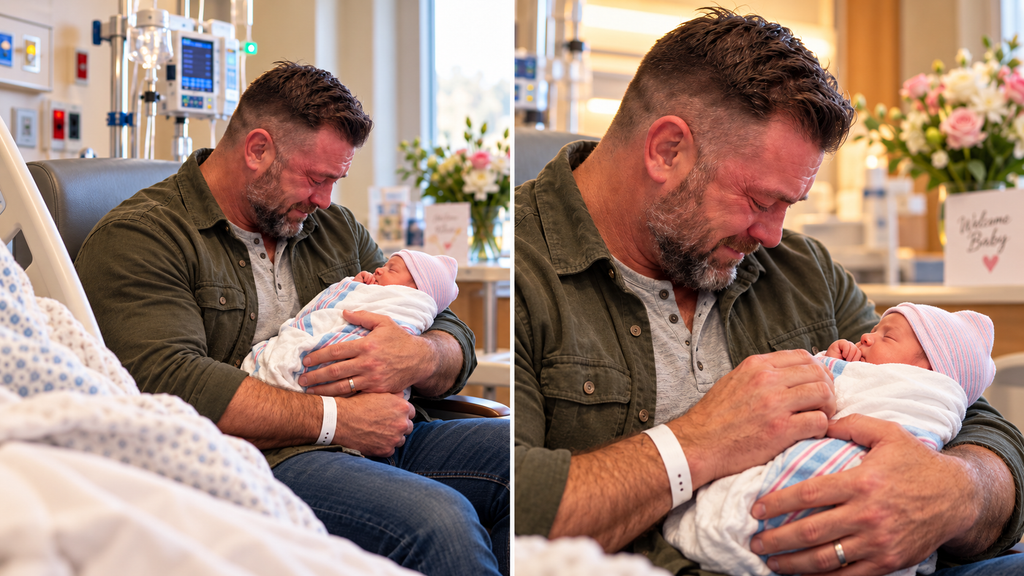
THE BABY MY HUSBAND BEGGED ME TO LOVEA heartbreaking family story about a mother’s sacrifice, a husband’s secret, and the little girl who changed everything.
I remembered Clara. Of course I remembered Clara. She was Marcus’s niece. His older sister Rebecca’s only daughter.
The last time I’d seen her, she was seventeen, standing barefoot in our kitchen with a bruise beneath her left eye and a backpack hanging from one shoulder.
She had asked to stay with us.
And I had told her no.
That was six years ago.
Six years of telling myself I’d made the responsible decision.
Six years of not knowing that one sentence could destroy a person’s life.
Now my husband was standing in a hospital corridor, crying, and asking whether I remembered her.
“Marcus,” I whispered. “Where is Clara?”
He closed his eyes.
That was when I knew.
Something terrible had happened.
“She’s here,” he said.
I grabbed his arm.
“Is she hurt?”
He nodded.
“How badly?”
He looked toward the maternity room.
“She had a baby this morning.”
For a moment, relief rushed through me.
A baby.
Clara had a baby.
That explained the bassinet. The hospital. Maybe even Marcus’s tears.
But it didn’t explain why his hands were shaking.
“Okay,” I said carefully. “Where is she? I want to see her.”
Marcus finally looked at me.
And I will never forget the expression on his face.
“Anna,” he whispered, “Clara isn’t going home.”
The corridor seemed to tilt beneath my feet.
“What does that mean?”
He opened his mouth.
Closed it.
Then he said five words that split my life into before and after.
“She died an hour ago.”
I stared at him.
Somewhere behind us, a newborn began crying.
A nurse pushed a medication cart past the elevators.
A telephone rang at the reception desk.
The world continued doing ordinary things.
And I couldn’t understand how.
“No,” I said.
Marcus reached for me.
I stepped backward.
“No. She’s twenty-three.”
“I know.”
“She was seventeen the last time—”
My voice broke.
The last time.
Those words stayed between us.
Because the last time I saw Clara, she had been standing in my kitchen asking for help.
And I had sent her away.
“Anna,” Marcus said, “there’s something else.”
I shook my head.
I couldn’t take anything else.
Not yet.
But he continued.
“Before she died, she asked me to promise her something.”
I looked through the glass at the little bassinet.
A tiny pink blanket was folded over its edge.
“She asked me to find you.”
My throat tightened.
“Me?”
He nodded.
“She said you were the only person she wanted her daughter to know.”
I couldn’t speak.
Marcus reached into his coat pocket and took out a folded piece of paper.
It was wrinkled and damp around the edges.
“She wrote this before they took her into surgery.”
He held it toward me.
I didn’t take it.
“Marcus, why would she want me?”
His face crumpled.
“Because she forgave you a long time ago.”
That was when I finally sat down.
Not because he had asked me to.
Because my knees stopped holding me.
THE LETTER
Marcus sat beside me.
For a long time, neither of us spoke.
Then he placed the folded paper in my hands.
My fingers were trembling so badly that I tore one corner while opening it.
The handwriting was uneven.
Some words slanted downward.
There were places where the ink had blurred.
At the top, Clara had written:
For Aunt Anna.
I pressed my hand against my mouth.
And began reading.
Dear Aunt Anna,
If you’re reading this, something went wrong.
I’m sorry. I know that’s a terrible way to begin a letter.
I don’t know how much Uncle Marcus has told you, but I had a little girl.
I named her Lily.
I know you probably don’t remember this, but when I was thirteen, you told me that if you ever had a daughter, you wanted to call her Lily.
You were washing dishes when you said it.
You thought nobody was listening.
But I was.
I stopped reading.
Lily.
The name I’d chosen when I was nineteen.
The name I’d written in the back of a college notebook.
The name Marcus and I had whispered into the darkness during our first pregnancy.
And our second.
And our third.
I looked at him.
“Did you tell her?”
He shook his head.
“She remembered.”
I looked down again.
I didn’t name her Lily to hurt you.
I named her Lily because I wanted her to have something beautiful before she even opened her eyes.
And because when I was little, your house was the only place I ever felt completely safe.
My vision blurred.
I know what happened when I was seventeen.
I know I came at the wrong time.
I know you had three little boys and you were recovering from being sick.
I was angry for a long time.
But Uncle Marcus told me later that you didn’t know everything.
I believe him.
I pressed the paper against my chest.
“Marcus?”
He didn’t answer.
“What didn’t I know?”
He stared at the floor.
“Finish the letter.”
I wanted to scream at him.
Instead, I kept reading.
I’m scared.
The doctors are trying to help me, and I’m trying very hard to be brave.
But if I don’t get to hold my daughter again, please tell her I wanted her.
Tell her I talked to her every night.
Tell her I sang terribly and she kicked whenever I tried to sing louder.
Tell her I wasn’t a bad person.
That sentence destroyed me.
Please, Aunt Anna.
Don’t let her grow up thinking I left because I didn’t love her.
And if there’s room in your house, and if there’s room in your heart, please let her stay.
I know I’m asking too much.
But I remember the way you loved your boys.
I remember how you kissed their foreheads when they were sleeping.
I remember wishing someone had loved me that way.
I want that for her.
Love,
Clara.
At the bottom, in smaller handwriting, she had added:
P.S. Please don’t throw away the little yellow blanket. I made it myself. One corner is crooked.
I folded the letter.
Then unfolded it.
Then read the last sentence again.
The little yellow blanket.
I could picture Clara at seventeen, sitting at our kitchen table, watching me fold baby clothes.
She had once asked me to teach her to crochet.
I told her I would when things got less busy.
Things never got less busy.
I covered my face.
And cried.
Not the quiet kind.
Not the beautiful kind people describe in stories.
I cried so hard that a nurse came out of a nearby room and asked whether I needed medical attention.
Marcus held me.
And I hated him for being the person holding me.
Because he knew things I didn’t.
Because Clara had trusted him.
Because he’d kept something from me for six years.
When I finally managed to speak, I asked the question that had been burning inside me.
“Why didn’t she come back?”
Marcus went completely still.
Then he said, “Because somebody made sure she couldn’t.”
SIX YEARS EARLIER
To understand what happened next, you need to understand Rebecca.
Marcus’s older sister had always been the kind of woman who could make cruelty sound like concern.
She could insult you while smiling.
She could tell a lie so calmly that you’d apologize for doubting her.
When I married Marcus, Rebecca hugged me at the wedding and whispered, “I hope you know what you’re getting into.”
I thought she was joking.
She wasn’t.
Rebecca had Clara when she was nineteen.
Her husband, Daniel, disappeared before Clara’s second birthday.
For years, Rebecca told everyone he had abandoned them.
She said he was selfish.
Unreliable.
Dangerous.
Clara grew up believing her father didn’t want her.
But Rebecca had a habit of changing stories whenever the truth became inconvenient.
By the time Clara was sixteen, their house had become a place nobody wanted to visit.
Rebecca’s boyfriend, Paul, moved in.
He was loud, controlling, and always seemed to have an explanation for why Clara looked frightened.
She was dramatic.
She was rebellious.
She lied for attention.
Those were his favorite words.
I remember one Thanksgiving when Clara dropped a serving spoon.
Paul slammed his hand against the table.
The sound made her flinch so violently that she knocked over her glass.
Rebecca laughed.
“See what I mean? Always making a scene.”
Marcus didn’t laugh.
Neither did I.
That night, I asked him whether something was wrong in that house.
He said he would talk to his sister.
A week later, Rebecca called and accused us of interfering.
She told Marcus that Clara was manipulating him.
She said Clara had been stealing money.
She said Clara had threatened to run away.
And she warned us not to encourage her.
I believed more of it than I should have.
I was exhausted.
Our youngest had been born after a pregnancy that nearly killed me.
I had spent weeks recovering.
Our oldest was struggling at school.
Our middle son had asthma attacks that kept us awake at night.
And Marcus was working overtime.
I wanted peace.
So when Clara arrived at our house one rainy Thursday evening, carrying a backpack and begging to stay, I saw another crisis.
Not a frightened child.
A crisis.
She stood in the doorway, rain dripping from her hair.
“Aunt Anna, can I sleep here tonight?”
I asked whether her mother knew where she was.
She shook her head.
“Did you two have another fight?”
She didn’t answer.
I noticed the bruise beneath her eye.
“Clara, what happened to your face?”
“I fell.”
It was the kind of answer people give when they desperately want you to ask again.
I didn’t.
Instead, I said, “Sweetheart, you can’t just run away every time things get difficult.”
Her expression changed.
It was small.
Almost invisible.
But I remember it now.
The way hope disappeared from her face.
“Please,” she whispered. “Just tonight.”
I looked behind me.
The baby was crying.
The kitchen was a disaster.
One of the boys was shouting from upstairs.
I was so tired that my bones hurt.
“Clara, call your mother. We’ll help you sort this out.”
She stared at me.
Then she nodded.
“Okay.”
One word.
No argument.
No tears.
She turned and walked into the rain.
I watched her go.
And closed the door.
Twenty minutes later, Marcus came home.
When I told him what had happened, he grabbed his keys.
“Which direction did she go?”
I told him.
He left without taking off his coat.
He searched for nearly three hours.
When he returned, he said he hadn’t found her.
That was what I believed for six years.
But sitting in the hospital corridor, with Clara’s letter in my lap, I learned that my husband had lied.
He had found her.
That very night.
THE SECRET MARCUS KEPT
“Where?” I asked.
Marcus rubbed both hands over his face.
“At the bus station.”
I stared at him.
“You found her?”
“Yes.”
“And you didn’t tell me?”
“Anna—”
“Six years, Marcus.”
His eyes filled.
“I know.”
“What happened?”
He leaned forward, elbows resting on his knees.
“When I found her, she was sitting behind the vending machines. She was soaked. She didn’t have enough money for a ticket.”
I could barely breathe.
“She told me Paul had been hurting her.”
My stomach turned.
“How?”
Marcus’s jaw tightened.
“He’d been hitting her. Threatening her. Locking her outside when Rebecca wasn’t home.”
I looked away.
The memory of that bruise came rushing back.
“Why didn’t you bring her home?”
“I wanted to.”
“Then why didn’t you?”
“Because she begged me not to.”
I shook my head.
“That doesn’t make sense.”
“She thought you hated her.”
Those words struck harder than anything else.
Marcus continued.
“She said you looked relieved when she left.”
I covered my mouth.
“That’s not true.”
“I know.”
But the terrible thing was, part of it was true.
I had been relieved.
Relieved that the crying baby could be fed.
Relieved that the boys could be put to bed.
Relieved that I wouldn’t have to make another difficult decision that night.
I hadn’t wanted Clara to suffer.
But I had wanted her problem to go away.
And sometimes, I learned, those two things look exactly the same to the person standing outside your door.
“What did you do?” I whispered.
“I took her to a motel. Then I called a lawyer and a youth advocate I knew through work. We started trying to get her somewhere safe.”
“Why didn’t you tell me?”
Marcus swallowed.
“Because I thought I could fix it before you had to carry one more thing.”
I stared at him.
He continued.
“Then Rebecca found out. She threatened to accuse me of kidnapping Clara. Paul threatened to come after us.”
“And?”
“Clara was terrified they’d hurt the boys.”
My heart stopped.
“She asked me to keep her location secret. Even from you.”
I looked down at the letter.
You didn’t know everything.
Marcus wiped his eyes.
“I helped her get into a transitional housing program. She finished school. Got a job. Eventually moved into a small apartment.”
“All these years?”
He nodded.
“You were seeing her?”
“Not often. But yes.”
“And you never told me?”
“No.”
I stood up.
I needed distance from him.
From the truth.
From the unbearable knowledge that a girl I had sent into the rain had spent six years building a life without me.
“Did she ever ask about us?”
Marcus looked at me.
“Every Christmas.”
I turned away.
“She always asked how the boys were doing. Whether you were healthy. Whether you still made those terrible cinnamon rolls.”
A laugh escaped me.
It sounded like a sob.
“My cinnamon rolls aren’t terrible.”
Marcus smiled through his tears.
“That’s what I told her.”
Then his smile vanished.
“Anna, there’s more.”
I closed my eyes.
Of course there was.
There was always more.
“Clara didn’t call me because she was having a baby.”
I turned.
“She called because she was afraid someone was going to take her.”
THE MAN WHO CAME TO THE HOSPITAL
Before Marcus could explain, a nurse approached us.
She was in her fifties, with silver-framed glasses and tired, kind eyes.
“Mr. and Mrs. Bennett?”
We stood.
“I’m Nurse Patel,” she said. “I was with Clara this morning.”
My throat tightened.
“Was she alone?”
The nurse’s expression softened.
“No. Your husband was with her.”
I looked at Marcus.
He nodded.
“I got there as soon as she called.”
Nurse Patel hesitated.
“There’s something you should know before you meet the baby.”
I felt my stomach drop.
“Is she sick?”
“No. She’s doing well. She’s small, but she’s healthy.”
“Then what?”
The nurse looked toward the elevators.
“A man came here earlier asking for Clara.”
Marcus’s face changed instantly.
“What man?”
“He said he was the baby’s father.”
Silence.
Then Marcus said, “Did you let him see her?”
“No. Clara had specifically requested that he not be given access.”
“Did he leave?”
“Security escorted him out.”
I watched my husband’s hands curl into fists.
“Who is he?” I asked.
Marcus didn’t answer.
Nurse Patel looked uncomfortable.
“I think it’s better if your husband explains.”
She touched my arm gently.
“When you’re ready, I can take you to see Lily.”
Then she walked away.
I turned to Marcus.
“Tell me.”
He looked exhausted.
“His name is Ethan.”
“Clara’s boyfriend?”
“Her ex-boyfriend.”
“Why was he trying to get in?”
“Because he thinks the baby belongs to him.”
I stared.
“Doesn’t she?”
“She might. We don’t know for certain.”
I blinked.
“What?”
Marcus took a deep breath.
“Clara was engaged to Ethan for almost a year. She broke it off when she discovered he had been lying to her.”
“About what?”
“Money. Other women. A lot of things.”
He looked toward the nursery.
“Then she found out she was pregnant.”
“And he wanted the baby?”
“Not at first.”
Something cold moved through me.
“What do you mean?”
“He told her to get rid of the pregnancy. When she refused, he disappeared.”
I gripped the back of a chair.
“Then why is he here?”
“Because two weeks ago, he found out Clara had named someone else as her preferred guardian if anything happened to her.”
I stared at him.
“Who?”
Marcus didn’t speak.
He didn’t have to.
“Us?”
He nodded.
I felt the air leave my lungs.
“She chose us?”
“She chose you, Anna.”
I looked at the bassinet through the glass.
A baby I hadn’t held.
A girl whose mother had just died.
A child who had already become the center of a fight she couldn’t possibly understand.
“What does Ethan want?”
Marcus’s voice dropped.
“Control.”
And then he told me something that made my blood run cold.
Ethan had recently learned that Clara had inherited money.
A lot of money.
From her father.
The father she’d spent her childhood believing had abandoned her.
THE FATHER WHO NEVER LEFT
Daniel wasn’t the man Rebecca had described.
That was the next truth.
And perhaps the cruelest.
Clara’s father had spent years trying to find her.
When Rebecca left him, she’d moved repeatedly, changed phone numbers, and told Clara he wanted nothing to do with her.
But Daniel had sent birthday cards.
Christmas presents.
Letters.
Money.
Rebecca had intercepted nearly all of it.
When Clara turned twenty-one, Daniel finally located her through a legal investigator.
By then, he was seriously ill.
He had advanced cancer.
They met in a coffee shop.
Marcus had driven Clara there.
She’d been so nervous she nearly refused to get out of the car.
But Daniel was waiting by the window, holding a photograph of her as a toddler.
He stood when she entered.
And the first thing he said was:
“I never stopped looking for you.”
Clara didn’t believe him.
Not immediately.
She asked why he hadn’t come sooner.
Why he hadn’t fought harder.
Why he’d let her grow up thinking she was unwanted.
Daniel showed her the court records.
The returned letters.
The money transfers.
The years of failed attempts to establish contact.
It didn’t erase his mistakes.
It didn’t give her back her childhood.
But it gave her something she’d never had.
The truth.
For eight months, they tried to make up for twenty years.
They went fishing.
They watched terrible movies.
He taught her to change a tire.
She taught him how to use the camera on his phone.
And when the cancer spread, Clara sat beside his hospital bed and read to him.
He died holding her hand.
He left her a small house, his savings, and a life insurance benefit.
It wasn’t enough to make her rich.
But it was enough to give her security.
Enough to raise a child without depending on Ethan.
And enough, apparently, to attract people who had never cared about her before.
“Rebecca knows?” I asked.
Marcus nodded.
“She found out after Daniel died.”
“Did she apologize?”
He gave a humorless laugh.
“She asked Clara for money.”
Of course she did.
I looked down at my hands.
“Where is Rebecca now?”
Marcus hesitated.
“She was here this morning.”
I looked up sharply.
“Here?”
“Clara refused to see her.”
“And?”
“Rebecca started shouting. Security made her leave.”
I felt anger rise through the grief.
“Does she know Clara died?”
“Yes.”
“Did she cry?”
Marcus looked at me.
And the answer was written on his face.
“She asked about the house.”
For several seconds, I couldn’t move.
Then I said something I had never said about another human being.
“I don’t want that woman anywhere near this child.”
Marcus nodded.
“Neither do I.”
But we were about to discover that Rebecca had already made plans.
And those plans involved Lily.
THE FIRST TIME I HELD HER
Nurse Patel returned twenty minutes later.
“Would you like to meet her?”
I looked at Marcus.
He nodded.
We followed the nurse into a small room.
The curtains were pale blue.
There was a rocking chair beside the window.
A knitted yellow blanket lay folded across the foot of the bassinet.
And inside it was the smallest person I had ever seen.
Lily.
Her face was pink and slightly swollen.
Her dark hair stuck up in soft little tufts.
One fist rested against her cheek.
She made a tiny sound in her sleep.
Not a cry.
More like a complaint.
Something in my chest opened.
I stepped closer.
“Hello, sweetheart.”
My voice broke.
“Hello, Lily.”
Nurse Patel lifted her carefully.
“Would you like to hold her?”
I nodded.
The nurse placed her in my arms.
And suddenly I was back in three different hospital rooms.
Holding Noah.
Holding Caleb.
Holding Oliver.
Remembering that impossible first moment when a whole new person becomes real.
But this was different.
This child had lost her mother before she’d even learned her mother’s face.
I looked down at her.
She opened her eyes.
Dark blue.
Unfocused.
Searching.
And then her tiny fingers curled around mine.
I began to cry again.
“I’m sorry,” I whispered.
Marcus stood beside me.
I wasn’t sure whether I was speaking to Lily or Clara.
Maybe both.
“I’m so sorry.”
Nurse Patel quietly stepped outside.
Marcus pulled the rocking chair closer.
I sat with Lily against my chest.
For a long time, I simply watched her breathe.
Then I noticed the blanket.
Yellow yarn.
Uneven stitches.
One corner visibly crooked.
I touched it.
“Clara made this?”
Marcus nodded.
“She worked on it for months.”
I swallowed.
“Did she get to hold her?”
His eyes filled.
“Yes.”
I looked up.
“She did?”
“For almost forty minutes.”
I closed my eyes.
“Tell me.”
Marcus sat on the edge of the bed.
“She kept counting Lily’s fingers. Over and over. Like she couldn’t believe there were ten.”
I smiled through my tears.
“She kissed her feet.”
My breath caught.
“And she told her she was beautiful.”
Marcus’s voice trembled.
“Then she started having trouble breathing.”
I held Lily closer.
“They took the baby so they could help Clara. She grabbed my sleeve before they wheeled her away.”
He stopped.
“What did she say?”
He looked at the little girl in my arms.
“She said, ‘Uncle Marcus, don’t let her think I gave her away.’”
I bent my head over Lily.
“And then?”
Marcus wiped his cheeks.
“I told her she wasn’t giving Lily away. I told her we would make sure Lily knew exactly how much her mother loved her.”
I looked at him.
“Did she believe you?”
He nodded.
“She smiled.”
I closed my eyes.
For the first time since arriving at the hospital, I felt something other than grief.
A promise.
Not spoken.
Not yet.
But forming.
I looked at my husband.
“Marcus.”
“Yes?”
“Bring me the paperwork.”
He stared.
“Anna—”
“Whatever we need to do to keep her safe. Bring it.”
His face crumpled.
“Are you sure?”
I looked down at Lily.
She was asleep again.
One hand pressed against my heart.
“No,” I whispered.
“I’m terrified.”
Then I kissed her forehead.
“But I’m not walking away from another frightened girl who needs me.”
THE QUESTION IN THE HALLWAY
That was when Marcus finally told me what he’d been trying to ask since I arrived.
He crouched beside my chair.
Took my free hand.
And whispered:
“Anna, would you be willing to become Lily’s mother, even if loving her means we have to fight everyone who thinks she belongs to them?”
I looked at him.
There it was.
The question.
Not simply whether I wanted a daughter.
Not whether I could change diapers again.
Not whether we had room for another crib.
He was asking whether I could love a child whose story began in grief.
Whether I could accept a daughter who would someday ask questions I couldn’t answer without crying.
Whether I could face Rebecca.
Ethan.
The courts.
Our own boys.
The possibility that we might love Lily with everything we had and still lose her.
I looked down at the tiny sleeping face.
And I thought about the box in our garage.
The swaddles.
The sleepers.
The hat the size of an orange.
Four years of Marcus saying, “Next month.”
Suddenly I understood something.
That box had never been about refusing to let go of a dream.
It had been about hope.
Not necessarily hope for another pregnancy.
Hope that someday, somewhere, there might be a child who needed what we still had to give.
I looked at my husband.
“Yes.”
His shoulders shook.
I squeezed his hand.
“But Marcus?”
He looked up.
“No more secrets.”
He nodded.
“Never again.”
I wanted to believe him.
I did believe he meant it.
But promises are easy to make in hospital rooms.
Keeping them is harder.
And before the sun went down, we were going to find out just how hard.
THE WOMAN IN THE RED COAT
At 4:17 that afternoon, Rebecca arrived.
I remember the exact time because the clock above the door was the first thing I looked at when I heard her voice.
“Where is my granddaughter?”
Her granddaughter.
I nearly laughed.
Clara had spent years trying to get away from Rebecca.
Now Rebecca was standing at the nurses’ station demanding access to her child.
She wore a bright red coat.
Her hair was perfectly styled.
And she was carrying a designer handbag.
There were no tears on her face.
Only anger.
Marcus stepped into the hallway.
“Rebecca, you need to leave.”
She turned.
“Don’t you dare tell me what to do.”
Her gaze moved past him.
She saw me holding Lily.
Her expression changed.
“There she is.”
She walked toward us.
I stood.
“Stop.”
Rebecca blinked.
“Excuse me?”
“Don’t come any closer.”
Her eyes narrowed.
“Anna, this has nothing to do with you.”
I felt Lily stir against my chest.
I lowered my voice.
“Clara asked me to care for her.”
Rebecca scoffed.
“Clara was confused. She was under medication. She didn’t know what she was saying.”
“She wrote a letter.”
Rebecca’s face tightened.
“What letter?”
I didn’t answer.
She looked at Marcus.
“You’ve been planning this, haven’t you?”
Marcus stepped between us.
“Rebecca, leave.”
She laughed.
“You think you can just steal my granddaughter?”
“Nobody is stealing anyone,” I said. “The hospital and the proper authorities will determine what happens next.”
Rebecca’s expression turned ugly.
“I’m her grandmother. I have rights.”
“Then speak to the appropriate people.”
She pointed at Lily.
“That baby is my family.”
I looked at her.
“So was Clara.”
The hallway went silent.
Rebecca’s mouth opened.
Then closed.
For one beautiful second, I thought the words had reached her.
But then she said:
“Clara made her choices.”
I felt something inside me go cold.
“She was seventeen when she asked for help.”
Rebecca rolled her eyes.
“Oh, don’t start.”
“She was your daughter.”
“And she spent six years making me look like a monster.”
Marcus took a step forward.
“Rebecca.”
But I couldn’t stop.
“Did you know she was afraid of Paul?”
Rebecca’s face changed.
“That girl lied about everything.”
“Did you know he hit her?”
“Enough.”
“Did you know she slept at a bus station because she was afraid to go home?”
“Shut up, Anna.”
I stared at her.
And suddenly I understood why Clara had been so quiet.
Why she had apologized for needing help.
Why she’d written I wasn’t a bad person in her final letter.
She had spent her childhood being told that her pain was an inconvenience.
Rebecca looked at the baby again.
“Give her to me.”
“No.”
Her voice rose.
“I said give me my granddaughter.”
Nurse Patel appeared behind her.
“Ma’am, you need to lower your voice.”
Rebecca turned sharply.
“This is a family matter.”
“And you’re disturbing patients.”
Rebecca looked around.
People were watching.
She straightened her coat.
Smoothed her hair.
And smiled.
It was astonishing how quickly she could become pleasant.
“I’m sorry,” she said sweetly. “It’s been a difficult day. My daughter just died.”
Then she looked at me.
Her smile vanished.
“This isn’t over.”
She walked toward the elevators.
But before stepping inside, she turned back.
“Oh, Anna?”
I didn’t answer.
Rebecca smiled.
“Ask your husband what Clara really put in her will.”
The elevator doors closed.
And the expression on Marcus’s face told me that once again, there was something I didn’t know.
THE SECOND LETTER
I turned to Marcus.
“What did she mean?”
He rubbed his forehead.
“Anna, not here.”
“No.”
Lily was asleep against me.
I kept my voice low.
“We agreed. No more secrets.”
He looked at the floor.
Then he nodded.
“Clara made a will after she found out she was pregnant.”
“Okay.”
“She named Lily as the beneficiary of most of what she owned, with arrangements for someone to manage the assets while Lily is a child.”
“And?”
“She named me as the person she wanted to handle that responsibility.”
I waited.
“And you didn’t tell me?”
“She asked me not to until everything was finalized.”
I took a breath.
“Is that all?”
Marcus hesitated.
I felt my heart sink.
“Marcus.”
He reached into his pocket.
This time he pulled out an envelope.
It was cream-colored.
My name was written across the front.
Anna Bennett.
“Clara gave this to me three weeks ago.”
I stared.
“Three weeks?”
“She said I should give it to you if she couldn’t.”
I shifted Lily carefully into the bassinet.
Then I took the envelope.
Inside were two photographs.
The first showed Clara standing in front of a little white house.
She was pregnant.
Smiling.
One hand rested on her stomach.
The second photograph showed a nursery.
Pale green walls.
A white crib.
A wooden rocking chair.
And above the crib, painted in delicate gold letters, was a name.
LILY.
Beneath the photographs was a note.
Dear Aunt Anna,
I know you don’t know about the house.
Dad left it to me.
It’s small, but it has a garden, and the kitchen gets sunlight in the morning.
I painted the nursery myself.
I wanted to invite you over.
I practiced what I would say about a hundred times.
But every time I picked up the phone, I remembered standing on your porch in the rain.
I know you didn’t mean to hurt me.
But I was scared you’d tell me I wasn’t ready to be a mother.
And I couldn’t bear hearing that from you.
I stopped.
My eyes burned.
Uncle Marcus says you would be proud of me.
I hope he’s right.
I finished school.
I have a job I like.
I learned how to pay my bills on time, mostly.
I even learned to make cinnamon rolls.
Mine are better than yours.
I laughed.
Then cried.
I don’t know what kind of mother I’ll be.
Sometimes I’m terrified I’ll become like Rebecca.
Sometimes I wake up from dreams where I hear Paul shouting.
But then Lily kicks, and I remember that I get to choose what kind of home she grows up in.
I want her to grow up in a house where nobody is afraid of the sound of a key turning in the door.
I want her to know that mistakes don’t make her unlovable.
I want her to come home when she’s frightened.
And I want someone to open the door.
The final paragraph was shorter.
If anything happens to me, please don’t let Rebecca sell the house before Lily gets to see it.
It was the first place that ever belonged to me.
I wanted it to be the first place that belonged to her, too.
I folded the letter.
My hands were shaking.
Marcus watched me.
“Anna?”
I looked at him.
“We’re going to keep that house.”
He nodded.
“Whatever happens, we’re going to protect it for Lily.”
But the house wasn’t the only thing Rebecca wanted.
And the next morning, we discovered just how far she was willing to go.
THE FIRST THREAT
At 8:06 the next morning, my phone rang.
I was sitting in our kitchen.
I hadn’t slept.
The boys were still at my mother’s house.
Marcus was making coffee.
The hospital had arranged for Lily to remain in its care while the appropriate child welfare and legal procedures began.
We had already spoken with a social worker.
We understood that Clara’s wishes mattered, but that a letter alone didn’t make us Lily’s legal parents.
There would be evaluations.
Documents.
Questions.
Possibly a court hearing.
And if Ethan established paternity and sought custody, the situation could become complicated.
I knew all that.
I was prepared for complicated.
I wasn’t prepared for the voice on the phone.
“Mrs. Bennett?”
“Yes?”
“My name is Ethan Cole.”
I stood.
Marcus looked up.
“How did you get this number?”
He ignored the question.
“I think we need to talk about my daughter.”
I gripped the counter.
“If you’re Lily’s father, you should speak to the hospital social worker and your attorney.”
He laughed softly.
“Marcus told you what Clara said about me, didn’t he?”
I said nothing.
“Look, Clara and I had problems. Couples fight. That doesn’t mean she gets to cut me out.”
“Clara is dead.”
The words came out sharper than I intended.
There was silence.
Then he said, “I know.”
But he didn’t sound sad.
He sounded impatient.
“I want to see the baby.”
“Then follow the proper process.”
“Rebecca says you two are trying to take her.”
I looked at Marcus.
Of course.
Rebecca and Ethan.
Together.
“Nobody is taking Lily,” I said.
“Then why won’t you let me see her?”
“Because that decision isn’t mine to make.”
His voice hardened.
“You know, Clara told me a lot about your family.”
I felt a chill.
“Did she?”
“She said you threw her out when she was seventeen.”
My throat tightened.
“She said you didn’t want her around.”
I closed my eyes.
“That was a mistake I regret.”
Ethan chuckled.
“Funny. Because now you want her kid.”
Marcus came toward me.
I held up a hand.
“Mr. Cole, if you want to discuss Lily, do it through the legal channels.”
“Fine.”
His voice changed.
“But tell Marcus something for me.”
“What?”
“Tell him Rebecca found the documents.”
The line went dead.
I lowered the phone.
Marcus was watching me.
“What documents?” I asked.
He looked confused.
“I don’t know.”
For once, I believed him.
But I also knew Rebecca.
And if she’d found something she thought she could use, she would.
THE BOYS FIND OUT
That afternoon, we brought our sons home.
Noah was nine.
Caleb was seven.
Oliver was four.
They came through the front door like a small hurricane.
Shoes flew.
Backpacks landed on the floor.
Oliver immediately asked for a snack.
For a few precious seconds, everything felt normal.
Then Noah noticed my face.
“Mom, were you crying?”
I sat down at the kitchen table.
Marcus stood beside me.
“Guys,” I said, “we need to tell you something important.”
Caleb climbed onto his chair.
“Are we moving?”
“No.”
“Is Dad getting fired?”
Marcus shook his head.
“No, buddy.”
Oliver raised his hand.
“Can I have cereal?”
Despite everything, I laughed.
“In a minute, sweetheart.”
I took a breath.
“Do you remember Cousin Clara?”
Noah nodded.
“The girl in the picture at Grandma’s house?”
“Yes.”
“Did something happen?”
I looked at Marcus.
He took my hand.
“Clara died yesterday.”
Noah’s face changed.
Caleb looked confused.
Oliver asked, “Like Grandpa’s dog?”
I swallowed.
“Yes, sweetheart. She died, and we won’t be able to see her again.”
Oliver considered that.
Then he asked, “Is she in heaven?”
I pulled him into my lap.
“I hope so.”
Noah stared at the table.
“Was she sick?”
“She had serious complications after having a baby.”
Caleb’s eyes widened.
“A baby?”
I nodded.
“A little girl.”
Oliver perked up.
“Can we see her?”
I looked at Marcus.
“Maybe.”
Noah frowned.
“Who’s taking care of her?”
That was the question.
The one that had been circling in my mind since the hospital.
I reached for his hand.
“Clara wanted us to help take care of Lily.”
Caleb sat up.
“Who’s Lily?”
“The baby.”
He blinked.
“Like a sister?”
I felt tears rise.
“Maybe, sweetheart.”
Noah looked from me to Marcus.
“But she already has a mom.”
My heart broke.
“She does,” I whispered. “And she always will.”
He thought about that.
Then asked, “Can someone have two moms?”
I looked at my husband.
“Sometimes, yes.”
Noah nodded slowly.
Then he said something I will carry with me forever.
“Okay. But we should make sure she knows about the first one.”
I couldn’t speak.
Marcus knelt beside him.
“That’s exactly what we’re going to do.”
Oliver slid off my lap.
“Can she sleep in my room?”
Caleb shouted, “No! Babies cry!”
Oliver crossed his arms.
“I don’t care.”
Noah looked serious.
“We have to be quiet when she’s sleeping.”
Caleb frowned.
“You aren’t quiet when anyone’s sleeping.”
“That’s different.”
“How?”
“Because I’m nine.”
They began arguing.
And for the first time in twenty-four hours, I laughed until I cried.
THE BOX IN THE GARAGE
That evening, Marcus found me standing in the garage.
The box was still there.
On the shelf above his tools.
Dusty.
Untouched.
I pulled it down.
The cardboard had softened at the corners.
Inside were the tiny swaddles.
Two sleepers.
And the little hat.
I held it in my hands.
Four years.
For four years, I’d wanted to give these things away.
I’d thought Marcus was clinging to a dream that could never come true.
He stood in the doorway.
“I should have told you about Clara,” he said.
I didn’t look up.
“Yes.”
“I thought I was protecting you.”
“I know.”
“But I wasn’t.”
I nodded.
He came closer.
“I was afraid.”
I looked at him.
“Of what?”
He swallowed.
“That if you knew how much she needed us, you’d blame yourself for what happened.”
I held the little hat against my chest.
“I do blame myself.”
“Anna—”
“I should have opened the door.”
He shook his head.
“You didn’t know.”
“I knew she was frightened.”
He was silent.
“I saw her face, Marcus. I saw that bruise. I heard her asking to stay.”
My voice cracked.
“And I sent her away because I was tired.”
Marcus stepped closer.
“You were recovering from almost dying.”
“That doesn’t change what she needed.”
“No,” he said softly. “It doesn’t.”
That answer surprised me.
He didn’t try to excuse me.
Didn’t tell me I was perfect.
Didn’t say everything happened for a reason.
He simply stood beside me.
And let the truth exist.
After a while, I looked at him.
“Why did you keep this box?”
He stared at the baby clothes.
“I don’t know.”
“Marcus.”
He gave a small, sad smile.
“Maybe because giving it away felt like admitting our family was finished growing.”
I looked at him.
“Our family was already complete.”
“I know.”
“But maybe complete doesn’t always mean finished.”
He nodded.
I placed the little hat back in the box.
Then picked up a yellow sleeper.
“Clara liked yellow.”
Marcus smiled.
“She did.”
I pressed it against my cheek.
“Do you think Lily will fit into this?”
He looked at the tiny garment.
“Probably.”
I smiled.
“Then wash it.”
He laughed through his tears.
“Yes, ma’am.”
For one evening, we allowed ourselves to hope.
And then the letter arrived.
THE DOCUMENTS
Three days after Clara died, a courier delivered an envelope.
Inside was a copy of a petition.
Rebecca was seeking guardianship of Lily.
Ethan had filed paperwork to establish paternity and pursue parental rights.
Both were represented by the same law firm.
I read the documents twice.
Then a third time.
My hands went numb.
Rebecca claimed that Marcus had manipulated Clara.
That Clara had been emotionally unstable.
That her expressed wishes about Lily were unreliable.
And that Marcus and I were attempting to gain control of Clara’s property.
I looked at my husband.
“She’s saying we want Lily for the money.”
Marcus took the papers.
His face hardened.
“Of course she is.”
I sat down.
“How can she do this?”
He looked at me.
“Because she knows we’re afraid.”
I stared at him.
“Well, she’s right.”
Marcus sat beside me.
“So am I.”
I looked toward the living room.
The boys were building a fort out of couch cushions.
They had already started calling the spare room “Lily’s room.”
Oliver had drawn a picture of five stick figures and a tiny pink circle.
He’d taped it to the refrigerator.
Underneath, in crooked letters, he’d written:
MY BABY SISTR.
I felt sick.
“What if we lose her?”
Marcus didn’t answer immediately.
Then he said, “We have to be careful not to promise the boys something we can’t guarantee.”
I knew he was right.
But it hurt.
I picked up my phone and called the attorney the hospital social worker had recommended.
Her name was Margaret Ellis.
She specialized in family law.
When I explained the situation, she listened without interrupting.
Then she said, “Mrs. Bennett, I need you to understand something.”
I gripped the phone.
“Okay.”
“Clara’s wishes are important. So is the child’s safety. But we cannot assume the outcome. If Mr. Cole is established as Lily’s father, his legal position may be significant.”
I closed my eyes.
“So what do we do?”
“We gather the facts. We preserve the evidence. We cooperate fully with the agencies involved. And we make sure Lily’s interests remain the center of every decision.”
I nodded.
“Can Rebecca just take her?”
“Not simply because she’s her grandmother. But she can ask the court to consider her.”
I swallowed.
“And the money?”
“That is a separate issue. We need to review the estate documents carefully.”
I looked at Clara’s letter on the table.
“What about what Clara wanted?”
Margaret’s voice softened.
“We will make sure her voice is heard.”
For the first time since the hospital, I felt that we had someone on our side who understood the difference between love and legal authority.
But Margaret had one more question.
“Mrs. Bennett, did Clara leave any evidence explaining why she didn’t want Rebecca or Ethan caring for her daughter?”
I looked at Marcus.
He shook his head.
“Only letters,” I said.
Margaret paused.
“Then we need to find out whether there’s more.”
There was.
And it was hidden in Clara’s house.
THE LITTLE WHITE HOUSE
We visited Clara’s house the following Saturday.
Margaret had advised us to coordinate access with the estate representative and preserve anything potentially relevant rather than removing or altering it.
The house stood on a quiet street lined with maple trees.
White siding.
Blue shutters.
A small porch.
There were flowerpots beside the steps.
Most of the flowers had wilted.
I stood at the gate for a long time.
Marcus touched my shoulder.
“Ready?”
I shook my head.
Then nodded.
Inside, the house smelled faintly of lavender and coffee.
A pair of sneakers sat beside the door.
A cardigan hung over a chair.
There was a half-finished crossword puzzle on the kitchen table.
A mug stood beside it.
World’s Okayest Adult.
I laughed.
Then covered my mouth.
Clara had been here.
Living.
Laughing.
Making coffee.
Planning tomorrow.
And then tomorrow hadn’t come.
I walked slowly through the rooms.
The living room had a secondhand couch with a yellow throw blanket.
There were books stacked on the windowsill.
A framed photograph of Daniel sat on the mantel.
Beside it was a photograph of Marcus.
And beside that—
I stopped.
It was a photograph of our family.
Me.
Marcus.
The three boys.
Taken at Oliver’s second birthday party.
I stared.
“How did she get this?”
Marcus came beside me.
“I sent it.”
I touched the frame.
Clara had kept us in her home.
Even after everything.
I turned away before I started crying again.
Then we entered the nursery.
Pale green walls.
White crib.
Gold letters.
LILY.
Everything was exactly as it had appeared in the photograph.
Except now there was a little mobile hanging above the crib.
Tiny paper stars.
And on the rocking chair lay a notebook.
Its cover was pink.
Across the front, Clara had written:
Things I Want Lily to Know.
I picked it up.
Marcus stood quietly beside me.
The first page read:
Your mother loved chocolate milk.
The second:
Your grandfather Daniel could never remember the words to songs, so he made them up.
The third:
You have three cousins who are going to be very loud. I’m sorry in advance.
I laughed.
Then turned the page.
Your Uncle Marcus saved my life when I was seventeen.
My hands began to shake.
He doesn’t like when I say that.
He says I saved myself.
But he was the first person who believed me.
I sat in the rocking chair.
And kept reading.
Page after page.
Little stories.
Memories.
Recipes.
Advice.
Clara had written about her first apartment.
Her first job.
Her first Christmas tree.
Her father.
Her fears.
And her dreams for Lily.
Then, halfway through the notebook, I found an entry dated six weeks before the birth.
Today Ethan came to the house.
My heart began pounding.
He said he wants to be part of Lily’s life.
I told him we need to talk through lawyers because I don’t trust him.
He got angry.
He said the house should be sold.
He said babies don’t need property.
He said I was selfish for keeping money away from him.
I looked up.
“Marcus.”
He came closer.
I showed him.
His face went pale.
I turned the page.
Rebecca called afterward.
She said Ethan deserves a chance.
She said I should stop acting like a victim.
Then she said something strange.
She said, “You’ll regret shutting us out when you need someone.”
I felt cold.
Below that, Clara had written:
I don’t know if they’re working together.
But I’m scared.
I closed the notebook.
Marcus looked at me.
“We need to give this to Margaret.”
I nodded.
Then I noticed something tucked into the back cover.
A small envelope.
On it were three words.
For Aunt Anna.
Inside was a key.
And a note.
If I can’t tell you myself, ask Mrs. Whitmore about the blue suitcase.
I stared at the words.
“Who’s Mrs. Whitmore?”
Marcus frowned.
“Her neighbor, I think.”
We looked at each other.
Then walked next door.
THE BLUE SUITCASE
Mrs. Whitmore was eighty-one.
She had white hair pinned neatly behind her ears and wore a cardigan covered in embroidered flowers.
When she opened the door and saw Marcus, her eyes filled.
“Oh, sweetheart.”
She pulled him into a hug.
Then looked at me.
“You must be Anna.”
I nodded.
She took my hands.
“Clara talked about you.”
My throat tightened.
“Did she?”
“All the time.”
Mrs. Whitmore invited us inside.
Her house smelled of fresh bread.
There were photographs of grandchildren covering the walls.
She led us to the living room.
“I wondered when you’d come.”
I showed her the note.
Her expression changed.
“She left you the key.”
“Yes.”
Mrs. Whitmore nodded slowly.
“Then I suppose she knew.”
“Knew what?” I asked.
The older woman stood.
“Wait here.”
She disappeared into a back room.
When she returned, she was pulling a small blue suitcase.
It was scratched.
Old.
The kind a child might use for an overnight trip.
She set it between us.
“Clara brought this to me two months ago.”
I stared at it.
“Why?”
“She said if anything happened to her, I should give it to you.”
Marcus looked stunned.
“Why didn’t she tell me?”
Mrs. Whitmore smiled sadly.
“Because she said you already worried enough.”
I knelt beside the suitcase.
The little key fit the lock.
Inside were folders.
Photographs.
Printed emails.
Copies of text messages.
And a small digital recorder.
On top was a letter.
If you’re opening this, I need you to know I wasn’t imagining things.
My stomach twisted.
Marcus crouched beside me.
We read together.
Clara explained that Ethan had been pressuring her to sign financial documents.
He wanted access to her accounts.
He wanted to be added to the house title.
When she refused, he threatened to challenge her fitness as a mother.
Rebecca had supported him.
They had told Clara that she was unstable.
That she had imagined the abuse from her childhood.
That nobody would believe her.
Clara had begun keeping records.
Not because she wanted revenge.
Because she was afraid.
The folders contained dates.
Messages.
Witness names.
Notes from meetings with a counselor.
And a record of an incident where Ethan had damaged her front door during an argument.
I felt sick.
“She was preparing for this,” I whispered.
Mrs. Whitmore sat across from us.
“She was preparing to protect her baby.”
Marcus picked up the recorder.
“What’s on this?”
Mrs. Whitmore’s expression darkened.
“I don’t know. Clara told me not to listen.”
We looked at each other.
Then Marcus pressed play.
A faint hiss filled the room.
Clara’s voice came first.
Calm.
Careful.
“Ethan, I told you I’m not signing anything.”
A man’s voice answered.
“You’re being ridiculous.”
“I’m not giving you access to my father’s money.”
“Your father is dead, Clara.”
I flinched.
Then Rebecca’s voice.
“Sweetheart, don’t be difficult.”
I felt my stomach drop.
Clara spoke again.
“Mom, why are you here?”
Rebecca sighed.
“Because somebody needs to talk sense into you.”
Ethan said, “If you don’t cooperate, we’ll go to court.”
Clara’s voice shook.
“Over what?”
“The baby.”
There was silence.
Then Ethan said something I will never forget.
“You think a judge is going to trust a girl with your history?”
The recording ended shortly afterward.
I sat frozen.
Marcus’s face was white.
Mrs. Whitmore looked at us.
“She was frightened of them.”
I nodded.
The evidence didn’t automatically decide anything.
Margaret would have to review it, determine what could properly be used, and decide what mattered to Lily’s case.
But it meant Clara hadn’t been imagining the pressure.
She had known.
She had documented it.
And even while preparing to give birth, she had been trying to make sure her daughter would be safe.
I closed the suitcase.
And made another promise.
“Clara,” I whispered, “we’re going to make sure they hear you.”
THE HEARING
The next several weeks were the longest of my life.
There were interviews.
Home visits.
Background checks.
Meetings with lawyers.
Conversations with social workers.
We prepared a room for Lily without knowing whether she would ever sleep in it.
The boys helped paint one wall pale yellow.
Oliver insisted on putting a stuffed dinosaur in the crib.
Caleb wanted to buy a toy race car.
Noah quietly placed a photograph of Clara on the dresser.
When I asked why, he said:
“So Lily can see her mom when she wakes up.”
I hugged him so tightly he complained that I was crushing his ribs.
Meanwhile, Ethan’s paternity testing moved forward.
Rebecca continued to insist that Clara had been manipulated.
Our attorney submitted the letters, the notebook, and the relevant records for review.
Mrs. Whitmore agreed to speak about what she had witnessed.
Marcus told the truth about helping Clara leave home.
And I told the truth about the night she came to our door.
That was the hardest part.
Not because I was afraid of looking bad.
Because I did look bad.
I had failed her.
And no amount of grief could erase it.
When Margaret prepared me for the hearing, she said, “You don’t have to pretend you made every decision correctly.”
I looked at her.
“Good. Because I didn’t.”
She nodded.
“What matters is that you answer honestly and demonstrate what you can provide for Lily now.”
I thought about that for a long time.
I couldn’t change the past.
But I could stop hiding from it.
At the hearing, Rebecca sat across the room wearing a dark suit.
Ethan sat beside her.
He barely looked at the photographs of Lily.
He spent most of his time whispering to his attorney.
When I was asked about Clara, I told the court what had happened.
I told them about the rain.
The backpack.
The bruise.
The door.
I told them I had been exhausted and frightened and overwhelmed.
Then I said:
“None of those things changes the fact that Clara needed help and I didn’t give it.”
My voice broke.
“I can’t ask her forgiveness now. But I can tell her daughter the truth.”
The room was quiet.
I continued.
“I don’t believe loving Lily means replacing Clara. I don’t want to replace her. I want Lily to grow up knowing that her mother fought for her, planned for her, and loved her.”
I looked toward the judge.
“And I want her to have a home where she never has to wonder whether someone will open the door.”
When I finished, Marcus squeezed my hand.
I couldn’t tell whether it had helped.
But at least I’d told the truth.
Then Rebecca testified.
And everything changed.
REBECCA’S LIE
Rebecca cried beautifully.
That is the only way I can describe it.
Her voice trembled at the right moments.
She dabbed her eyes with a tissue.
She spoke about losing her daughter.
About wanting to preserve her memory.
About how cruel it was to be separated from her only grandchild.
For a moment, if I hadn’t known her, I might have believed her.
Then Margaret asked about the last time Rebecca had spoken to Clara.
Rebecca said, “We were trying to reconcile.”
Margaret asked whether they had discussed money.
Rebecca hesitated.
“Not really.”
Margaret showed her a message.
Rebecca looked at it.
Her expression tightened.
Margaret asked her to read it.
Rebecca’s voice became thin.
It was a message she’d sent Clara six weeks before the birth.
If you don’t cooperate with Ethan, don’t expect me to help you when the baby comes.
Margaret waited.
“Did you send that?”
Rebecca nodded.
“I was upset.”
“Did you also tell Clara that Ethan should be added to the deed of her house?”
Rebecca looked toward her attorney.
“That was a misunderstanding.”
Margaret showed her another message.
Then another.
Rebecca began shifting in her chair.
The judge asked her to answer the questions directly.
And for the first time, Rebecca’s perfect composure cracked.
She looked at Marcus.
“This is your fault.”
The courtroom went still.
Rebecca’s voice rose.
“You always thought you were better than me.”
Marcus said nothing.
“You took my daughter away.”
The judge interrupted.
Rebecca ignored the warning.
“You filled her head with lies about me!”
I stared at her.
And suddenly I saw it.
Not grief.
Not love.
Rage.
Rage that Clara had escaped.
Rage that she had built a life.
Rage that she had left behind something Rebecca couldn’t control.
The judge called for a recess.
Rebecca stormed out.
Ethan followed her.
And in the hallway, they began arguing.
Loudly.
We heard Rebecca say:
“You told me this would be easy.”
Ethan snapped back:
“Keep your voice down.”
Then Rebecca said:
“You promised we’d get the house.”
I stopped walking.
Marcus stopped beside me.
Margaret looked toward the sound.
Ethan noticed us.
His face changed.
Rebecca turned.
For a moment, nobody spoke.
Then Margaret quietly said, “Please don’t engage with them.”
We didn’t.
But those words stayed with me.
You promised we’d get the house.
And suddenly I understood.
This had never been about Lily.
At least not for Rebecca.
She wanted what Clara had built.
The home.
The money.
The proof that her daughter had succeeded without her.
And she was willing to use a newborn baby to get it.
THE TEST RESULT
Two weeks later, Margaret called.
I was folding laundry.
One of Oliver’s socks was stuck inside a pillowcase.
I remember that ridiculous detail because it was the last ordinary thing I did before the phone rang.
“Anna,” Margaret said, “we have the paternity result.”
I sat down.
Marcus was at work.
The boys were at school.
The house was silent.
“Okay.”
She paused.
“Ethan is not Lily’s biological father.”
I closed my eyes.
For a moment, I couldn’t speak.
“Are you sure?”
“The accredited testing process has excluded him.”
I covered my mouth.
I had expected relief.
And I did feel relief.
But underneath it was another question.
“Then who is her father?”
Margaret’s voice softened.
“We don’t know yet.”
I stared at the laundry basket.
Clara had been so careful.
So frightened.
So determined to protect her daughter.
Why hadn’t she told Marcus?
Why hadn’t she written his name?
Margaret continued.
“Ethan’s claim based on biological paternity has changed significantly. But we still need to resolve Lily’s legal status and the remaining guardianship issues.”
I nodded.
“Okay.”
“Anna, there’s something else.”
My stomach tightened.
Of course there was.
“Clara’s attorney has located an additional document.”
“What document?”
“A sealed letter with instructions to release it after Lily’s birth.”
I closed my eyes.
“Who is it for?”
Margaret paused.
“For Lily’s father.”
THE MAN IN THE PHOTOGRAPH
We met Margaret at her office the next morning.
Marcus sat beside me.
Between us was a folder containing Clara’s letters.
Margaret opened a second folder.
Inside was a photograph.
Clara stood beside a young man in a park.
He had dark curly hair.
Kind eyes.
And one arm resting around her shoulders.
They were smiling.
Not posing.
Laughing at something outside the frame.
I stared.
“Who is he?”
Margaret looked at us.
“His name is Samuel Reyes.”
Marcus frowned.
“I’ve heard that name.”
I turned.
“From Clara?”
He nodded slowly.
“She mentioned a Sam. Said he was a friend from work.”
Margaret folded her hands.
“According to the information we’ve obtained, Samuel and Clara were in a relationship after she separated from Ethan.”
I looked at the photograph again.
“Does he know about Lily?”
Margaret hesitated.
“That is what we’re trying to establish.”
My heart sank.
“What happened to him?”
“He was deployed overseas with a humanitarian medical organization several months ago. Clara had difficulty reaching him after their relationship ended.”
I looked up.
“Ended?”
“She wrote that they separated because she believed he was leaving permanently.”
Marcus leaned forward.
“Did he abandon her?”
“We don’t have enough information to say that.”
Margaret slid a letter toward us.
It was addressed to Samuel.
I read the first line.
Sam, if you’re reading this, then I was right about one thing and wrong about another.
I swallowed.
I was right that life can change without warning.
I was wrong to think I had to face every frightening thing alone.
Clara explained that she had discovered the pregnancy after Samuel left.
She had tried to contact him.
Some messages had gone unanswered.
Others had been returned.
She didn’t know whether he had received them.
And she was afraid of repeating her mother’s mistakes.
I don’t want Lily to grow up believing her father didn’t want her if you never even knew she existed.
I pressed my hand against my mouth.
If she’s yours, I hope you’ll love her.
But please understand that I’ve made arrangements to protect her if anything happens to me.
Uncle Marcus and Aunt Anna are good people.
They aren’t perfect.
Neither am I.
But they know how to love children.
At the bottom, she wrote:
If you want to be part of Lily’s life, please come gently.
She’s going to have enough sadness without adults turning her into something to win.
I folded the letter.
Marcus stared at the photograph.
“She was trying to protect everyone.”
Margaret nodded.
“We’ve made contact with Samuel’s organization. We’re waiting to hear back.”
I felt the room shift.
For weeks, I had been preparing to fight Ethan and Rebecca.
I had imagined the moment Lily would come home.
I had allowed myself to picture her first smile.
Her first steps.
Her first day of school.
And now there was another person.
A possible father.
A man who might love her.
A man who might have every intention of raising her himself.
I looked at Margaret.
“If he’s her father and wants her, what happens to us?”
She answered carefully.
“We’ll need to understand the facts and follow the appropriate legal process. Lily’s welfare remains the priority.”
I nodded.
But inside, something was breaking.
Because I realized that loving Lily might mean giving her back.
Not to someone cruel.
Not to someone dangerous.
But to someone who had a right to know her.
Someone Clara had loved.
Someone who might have been waiting for a family of his own.
That night, I sat in Lily’s unfinished nursery.
I held the little yellow sleeper.
And cried.
Marcus found me there.
He sat on the floor beside my chair.
“Anna?”
I looked at him.
“What if we don’t get to keep her?”
He was silent for a long time.
Then he said, “Then we love her for as long as we’re allowed to.”
I shook my head.
“That isn’t enough.”
“I know.”
“What if she grows up somewhere else and never knows us?”
He took my hand.
“Then we make sure the people raising her have Clara’s letters. Her photographs. Her notebook.”
I stared at him.
“And if they don’t want us involved?”
His eyes filled.
“Then we have to do what’s best for Lily, even if it breaks our hearts.”
I leaned against him.
For the first time, I understood what Clara had been trying to tell us.
Love wasn’t possession.
Love wasn’t winning.
Love was choosing the child over your own fear.
Even when it hurt.
SAMUEL COMES HOME
Samuel arrived eleven days later.
He was twenty-seven.
Tall.
Thin.
With dark circles beneath his eyes.
He looked like a man who hadn’t slept since receiving the news.
We met him in Margaret’s office.
He stood when we entered.
“Mr. and Mrs. Bennett?”
Marcus shook his hand.
I couldn’t.
Not immediately.
Because all I could think was:
This man might take Lily away.
Samuel seemed to understand.
He stepped back.
“I’m sorry,” he said.
His voice broke.
“I’m so sorry about Clara.”
I looked at him.
“Did you love her?”
The question came out before I could stop it.
Samuel stared at me.
Then nodded.
“Yes.”
I swallowed.
“Then why did you leave?”
His face crumpled.
“I thought she wanted me to.”
He sat down heavily.
“Clara told me she wasn’t ready for another relationship. She said she needed time.”
I looked at Marcus.
He looked confused.
Samuel continued.
“I was offered a six-month assignment overseas. I asked her to come with me. She said no.”
He rubbed his eyes.
“I thought she was choosing to end things.”
“Did you know she was pregnant?”
“No.”
His answer was immediate.
Absolute.
“I swear to you, I didn’t know.”
He reached into his bag.
Pulled out a phone.
And showed us a series of messages.
Messages he’d sent Clara.
Asking whether she was okay.
Telling her he missed her.
Saying he hoped they could talk when he returned.
Most had never received a response.
Then he showed us an email.
It was dated two months before Lily’s birth.
Clara, I know you asked for space. I’ll respect that. But I need you to know I never stopped loving you.
I looked away.
Samuel’s voice trembled.
“When they told me she died, I thought there had been some mistake.”
He swallowed.
“Then they told me about the baby.”
He covered his face.
“I missed everything.”
Nobody spoke.
Then he looked at me.
“Is she okay?”
I nodded.
“She’s healthy.”
He began crying.
Not quietly.
Not politely.
He cried like a man whose entire future had been handed to him and shattered in the same breath.
I watched him.
And something inside me changed.
He wasn’t Ethan.
He wasn’t Rebecca.
He wasn’t here demanding property.
He was a frightened young man who had just learned that the woman he loved was dead and that she had left behind a daughter.
Possibly his daughter.
I reached across the table.
And took his hand.
“Samuel,” I whispered, “would you like to see a picture of Lily?”
He nodded.
I opened my phone.
The photograph showed Lily asleep in a pink blanket.
Her tiny mouth was open.
One fist rested beside her cheek.
Samuel stared.
Then smiled through his tears.
“She has Clara’s nose.”
I laughed.
“She does.”
He touched the screen with one finger.
“Hello, little girl.”
And just like that, I knew.
Whatever happened next, I couldn’t make this man my enemy.
Clara would never have wanted that.
A DIFFERENT KIND OF FAMILY
Samuel’s paternity was confirmed.
He was Lily’s biological father.
He had not known about the pregnancy.
And he wanted to be part of her life.
I wish I could tell you that I handled that news gracefully.
I didn’t.
I went home.
Locked myself in the bathroom.
And cried into a towel so the boys wouldn’t hear.
I had fallen in love with Lily.
Not the idea of her.
Not the dream of having a daughter.
Lily herself.
The way she made tiny squeaking sounds when she slept.
The way she frowned before sneezing.
The way her fingers curled around mine.
The way she seemed to relax whenever Marcus spoke.
I loved her.
And I was terrified that loving her would mean losing her.
But Samuel surprised us.
At our next meeting, he looked at Marcus and me and said:
“I don’t want to take Lily away from the people Clara trusted.”
I stared at him.
He continued.
“I want to be her father. I want to raise her. But I don’t know how to do this alone.”
His voice broke.
“I don’t even know how to hold a newborn properly.”
Marcus smiled faintly.
“Neither did I the first time.”
Samuel looked at him.
“Clara wrote about you.”
Marcus nodded.
“She wrote about you too.”
Samuel wiped his eyes.
“She said you were the first person who made her feel safe.”
Marcus looked down.
Samuel turned to me.
“And she said you taught her what a mother should be.”
I began crying.
“I don’t deserve that.”
Samuel shook his head.
“Maybe none of us deserve the way she loved us.”
We sat in silence.
Then he asked:
“Would you help me?”
I looked at him.
“With Lily?”
He nodded.
“With everything.”
I glanced at Marcus.
Then back at Samuel.
“Yes.”
It wasn’t the answer I’d imagined giving when I first held Lily.
But it was the right one.
We began working with the professionals involved to build a plan that would give Lily stability, preserve her connection to Clara’s family, and support Samuel as he learned to care for his daughter.
It wasn’t instant.
It wasn’t simple.
There were legal decisions and practical arrangements that couldn’t be solved by one emotional conversation.
But for the first time, everyone at the table wanted the same thing.
Lily’s happiness.
And that changed everything.
THE LAST THING REBECCA TRIED
Rebecca didn’t give up immediately.
When she learned that Ethan had been excluded as Lily’s biological father, she changed her approach.
She began contacting relatives.
Telling them Marcus had turned Clara against her.
Claiming Samuel was a stranger.
Insisting that she was the only person who could preserve Clara’s family history.
But by then, the people involved had heard Clara’s own words.
Her letters.
Her notebook.
Her recorded fears.
Her wishes.
And Rebecca’s claims were being examined against evidence rather than accepted at face value.
The guardianship proceedings eventually ended without Rebecca receiving custody.
Ethan’s claim to Lily did not succeed.
The estate matters were handled separately, with Clara’s assets protected for Lily according to the applicable legal arrangements.
Rebecca remained Clara’s mother.
Nothing could change that.
But being someone’s mother did not erase the harm she’d done.
Nor did it entitle her to control the next generation.
The last time I saw Rebecca was outside the courthouse.
She stood near the steps.
Her red coat was gone.
She looked older.
Smaller.
For a moment, I almost felt sorry for her.
Then she approached me.
“Anna.”
I stopped.
Marcus stood beside me.
Rebecca looked toward the parking lot, where Samuel was carefully fastening Lily into her car seat.
“She looks like Clara,” Rebecca whispered.
I nodded.
“She does.”
Her eyes filled.
For the first time, the tears seemed real.
“I miss my daughter.”
I looked at her.
I wanted to say something cruel.
Something that would hurt as much as the things she’d done.
But I was tired.
So tired of people using pain as an excuse to create more pain.
I said, “Then remember her honestly.”
Rebecca looked at me.
“Don’t turn her into a story where you were always right and she was always wrong.”
Her face crumpled.
I continued.
“Remember the little girl who needed you. Remember the woman she became without your help. And remember that she loved her daughter enough to fight for a different life.”
Rebecca began crying.
I didn’t hug her.
I didn’t forgive her on Clara’s behalf.
That wasn’t mine to do.
I simply walked away.
Some doors need to stay closed until people are willing to stop hurting whoever stands behind them.
THE FIRST NIGHT HOME
Lily came to our house on a Friday evening.
Not because Samuel had surrendered his place as her father.
Because he had asked us to help while he settled into the overwhelming reality of raising a newborn, and the arrangements had been made appropriately.
He was there with us.
So were the boys.
And my mother.
And enough food to feed a small army.
The moment Samuel carried Lily through the front door, Oliver shouted:
“THE BABY IS HERE!”
Lily immediately started crying.
Caleb covered his ears.
Noah rolled his eyes.
“Oliver, you’re too loud!”
Oliver whispered at full volume:
“THE BABY IS HERE!”
Samuel laughed.
It was the first time I’d heard him laugh without sadness underneath.
We settled Lily in the living room.
Noah brought her the stuffed dinosaur.
Caleb showed her a toy race car.
Oliver tried to give her a cracker.
We stopped him just in time.
“Babies can’t eat crackers yet,” I explained.
Oliver looked offended.
“Then what does she eat?”
“Milk.”
He stared at Lily.
“That’s boring.”
Everyone laughed.
Later, after the boys went to bed, Samuel sat in the rocking chair with Lily.
Marcus brought him a bottle.
I showed him how to support her head.
He listened with the concentration of a man learning to defuse a bomb.
“Like this?”
“Exactly.”
“Am I holding her too tight?”
“No.”
“Too loose?”
“You’re doing fine.”
Lily yawned.
Samuel stared at her.
Then whispered:
“I wish your mom could see you.”
The room went quiet.
He kissed her forehead.
“She would have loved you so much.”
I sat beside him.
“She did,” I said.
He looked at me.
“She loved her before she was born.”
Samuel nodded.
Tears slid down his face.
Then he asked something I hadn’t expected.
“Would you tell me about Clara when she was little?”
I smiled through my tears.
And began.
I told him about the thirteen-year-old girl who used to sit at my kitchen table and draw flowers in the margins of her homework.
About the way she hated mushrooms.
About how she once spent an entire afternoon trying to teach Noah, then a toddler, to say “hippopotamus.”
About the terrible cinnamon rolls.
About the yellow blanket.
And eventually, I told him about the rain.
The night I’d sent her away.
Samuel listened.
When I finished, I couldn’t look at him.
“I wish I could change it.”
He was quiet for a long time.
Then he said:
“Clara told me something once.”
I looked up.
“She said the hardest thing about growing up was realizing adults could love you and still fail you.”
My eyes filled.
Samuel continued.
“But she also said the beautiful thing about growing up was realizing people could change.”
I covered my mouth.
He smiled sadly.
“I think she’d want you to know that.”
I began crying.
And Samuel reached over, took my hand, and held it.
SIX MONTHS LATER
Six months after Clara died, our family looked nothing like the one I’d imagined.
Samuel had moved into Clara’s little white house.
He kept the nursery pale green.
He kept the gold letters above the crib.
He kept Daniel’s photograph on the mantel.
And every Sunday, he brought Lily to our house for dinner.
Sometimes he stayed.
Sometimes Lily stayed with us under the arrangements we’d made.
Sometimes we went to his house instead.
The boys adored her.
Noah became fiercely protective.
Caleb insisted he could make her laugh better than anyone.
Oliver called her “our baby.”
And Lily?
Lily became the center of a very loud, very imperfect, very loving family.
She learned to smile.
Then giggle.
Then grab anything within reach.
She developed a particular talent for pulling Marcus’s beard.
He pretended to complain.
He never moved away.
One Sunday afternoon, I found him sitting on the living room floor with Lily.
She was chewing on a soft toy.
He was telling her a story.
“Once upon a time,” he said, “there was a very brave girl named Clara.”
I stopped in the doorway.
Lily stared at him.
“She was kind. And stubborn. And she made terrible cinnamon rolls.”
I laughed softly.
Marcus looked up.
Then continued.
“She had a little girl who was even more stubborn.”
Lily squealed.
“And that little girl was loved by so many people that nobody could fit them all into one room.”
I sat beside him.
He handed Lily to me.
She grabbed my necklace.
I kissed her cheek.
“Your mom was very brave,” I whispered.
Lily smiled.
And for the first time, remembering Clara didn’t feel only like losing her.
It felt like keeping part of her alive.
THE FIRST BIRTHDAY
Lily’s first birthday arrived on a Tuesday.
Exactly one year after Clara died.
I had dreaded it for months.
How do you celebrate a child’s birth on the anniversary of her mother’s death?
How do you put candles on a cake when you know the person who should be there most is gone?
Samuel had an idea.
“We do both,” he said.
So we did.
In the morning, we visited Clara’s grave.
Marcus brought yellow flowers.
I brought the little crooked blanket.
Samuel carried Lily.
The boys stood quietly beside us.
Even Oliver seemed to understand that this was a moment for soft voices.
Samuel knelt beside the headstone.
“Hi, Clara.”
His voice broke.
“She’s one today.”
Lily reached toward the flowers.
He smiled through his tears.
“She has your smile.”
I placed my hand on the stone.
“She’s happy,” I whispered.
“And she’s safe.”
The wind moved gently through the trees.
I closed my eyes.
For one impossible second, I imagined Clara standing beside us.
Twenty-three.
Smiling.
Holding her daughter.
I imagined her saying:
Thank you.
Then I opened my eyes.
And remembered that grief doesn’t give us the answers we want.
It gives us love with nowhere obvious to go.
So we find somewhere to put it.
In a child.
In a memory.
In a promise kept.
That afternoon, we had a birthday party.
There were yellow balloons.
A cake shaped like a flower.
A ridiculous number of presents.
Oliver insisted on wearing a party hat for six straight hours.
Caleb spilled juice on the tablecloth.
Noah took approximately two hundred photographs.
And Lily smashed her little cake with both hands.
Samuel laughed until he cried.
Marcus cried without laughing.
And I stood in the kitchen doorway, watching them.
My family.
Not the one I’d planned.
Not the one I’d expected.
But the one life had placed in front of me.
Then Samuel approached.
He was holding a small wrapped box.
“Anna, this is for you.”
I frowned.
“It’s Lily’s birthday.”
“I know.”
He smiled.
“Clara wanted you to have this.”
My heart stopped.
“What?”
He held out the box.
“I found it in the back of her closet. It had your name on it.”
I stared.
“Why didn’t you tell me?”
“I wanted to give it to you today.”
My hands trembled as I unwrapped it.
Inside was a small wooden frame.
And a photograph.
It showed Clara at thirteen.
She was standing in our kitchen.
Holding newborn Noah.
I was beside her.
Laughing.
My hair was a mess.
My face was tired.
But I looked happy.
Clara was looking at me.
Not the camera.
Me.
On the back, in her handwriting, were the words:
The first person who showed me what a happy mother looked like.
I couldn’t breathe.
Beneath the photograph was another note.
For Aunt Anna.
If I ever become a mother, I hope my baby looks at me the way your boys look at you.
I pressed the frame against my chest.
And cried.
Samuel put his arm around me.
Marcus came over.
The boys gathered around us.
And Lily, sitting in her high chair, began banging a spoon against the tray.
Demanding attention.
Demanding life.
Demanding that we keep going.
So we did.
FOUR YEARS LATER
Lily is five now.
She has Clara’s dark hair.
Samuel’s stubborn chin.
And a laugh that fills every room she enters.
She loves dinosaurs.
Hates peas.
Asks approximately six hundred questions a day.
And has decided that when she grows up, she’s going to be a veterinarian, a firefighter, and a princess.
All at the same time.
Samuel is a wonderful father.
Not perfect.
Nobody is.
But present.
Patient.
Loving.
He never lets Lily wonder whether she matters.
He tells her about Clara.
Shows her photographs.
Reads her the pink notebook.
And every year on her birthday, he takes her to the cemetery in the morning and throws her a party in the afternoon.
We are still part of her everyday life.
She calls me Aunt Anna.
Sometimes Grandma Anna when she’s being silly.
And occasionally, when she’s sleepy, she calls me Mama Anna.
I never correct her harshly.
I simply remind her that she has a mother named Clara, a father named Samuel, and a whole family who loves her.
She knows.
Children understand more than we think.
Last week, Lily came to our house carrying a picture she’d drawn at school.
It showed a little girl standing between two women.
One woman had dark hair.
The other had brown hair.
Above them was a giant yellow sun.
“Who’s this?” I asked.
She pointed to the dark-haired woman.
“That’s Mommy Clara.”
My throat tightened.
Then she pointed to the other.
“That’s you.”
I smiled.
“And what’s the sun?”
Lily looked at me as if the answer were obvious.
“That’s love.”
I laughed softly.
“Why is it so big?”
She shrugged.
“Because it has to cover everybody.”
I pulled her into my arms.
And held her.
For a long time.
Then she whispered:
“Aunt Anna?”
“Yes, sweetheart?”
“Was my mommy scared when I was born?”
The question hit me like a wave.
I closed my eyes.
I could have lied.
I could have told her Clara was brave and happy and never afraid.
But I remembered what Samuel had said.
What Clara had written.
What I’d promised.
The truth.
Always the truth.
“Yes,” I whispered. “I think she was scared.”
Lily looked up.
“Why?”
“Because sometimes grown-ups are scared when something very important is happening.”
She considered that.
“Was she scared of me?”
I felt tears rise.
“Oh, no, sweetheart.”
I cupped her face.
“Never of you.”
Lily frowned.
“Then what?”
I swallowed.
“She was scared she might not get enough time with you.”
Lily was quiet.
Then she asked:
“Did she love me?”
I kissed her forehead.
“More than anything.”
She smiled.
“Good.”
Then she slid off my lap.
Picked up her crayons.
And went back to drawing.
Just like that.
Children don’t always need perfect answers.
Sometimes they just need the truth.
And someone who stays.
THE BOX
The box is still in our garage.
Not on the shelf above Marcus’s tools anymore.
It’s on a lower shelf now.
Clean.
Carefully labeled.
Inside are the two sleepers.
The tiny hat.
A few photographs.
Clara’s letters.
Copies of the pages from her notebook.
And the yellow blanket with the crooked corner.
Sometimes Lily asks to see it.
We sit together on the living room floor.
She touches the yarn.
Runs her fingers over the uneven stitches.
And asks me to tell her the story again.
“Did Mommy Clara really make this?”
“Yes.”
“All by herself?”
“Every stitch.”
“Was she good at it?”
I smile.
“She was learning.”
Lily studies the crooked corner.
Then grins.
“I like this part best.”
“Why?”
“Because it’s different.”
I laugh.
“Yes, sweetheart. It is.”
Last month, Lily asked whether she could keep the blanket in her room.
I looked at Samuel.
He nodded.
So we gave it to her.
She sleeps with it now.
Every night.
And sometimes, when I visit, I see her curled beneath it.
Safe.
Warm.
Loved.
And I think about the girl who stood on my porch in the rain.
The girl I failed.
The girl who somehow found enough forgiveness in her heart to trust me with the person she loved most.
I can’t change what happened that night.
I can’t open the door six years earlier.
I can’t bring Clara back.
But I can spend the rest of my life making sure her daughter never doubts that she was wanted.
Never doubts that her mother loved her.
Never doubts that her family will come when she calls.
And that is what I intend to do.
THE FINAL PROMISE
A few evenings ago, Marcus and I were sitting on the porch.
The boys were playing basketball in the driveway.
Samuel had come to pick up Lily after dinner.
She was running through the yard, laughing as Oliver chased her with a plastic dinosaur.
The sky was turning pink.
Marcus reached for my hand.
“Do you ever think about that day at the hospital?”
I looked at him.
“Every day.”
He nodded.
“Me too.”
We watched Lily stumble, fall into the grass, then jump back up laughing.
I smiled.
“Remember what you asked me in the hallway?”
Marcus looked at me.
“Of course.”
I squeezed his hand.
“I thought you were asking whether I wanted a daughter.”
He was quiet.
“But that wasn’t really the question.”
He looked at me.
“What was it?”
I watched Lily run toward Samuel.
He scooped her into his arms.
She wrapped both arms around his neck.
And kissed his cheek.
I felt tears rise.
“You were asking whether I could love someone enough to put her needs before my dreams.”
Marcus’s eyes filled.
I continued.
“I thought being Lily’s mother meant keeping her.”
I looked at Samuel and Lily.
“But Clara taught me something.”
Marcus waited.
“Sometimes loving a child means making sure she has everyone who can love her.”
He smiled.
And for a long time, we sat without speaking.
Then Lily broke away from Samuel and ran toward us.
“AUNT ANNA!”
I opened my arms.
She climbed into my lap.
“What is it, sweetheart?”
She held up a dandelion.
The stem was bent.
Half the seeds were gone.
It was the saddest little flower I’d ever seen.
“I picked this for you.”
I took it carefully.
“It’s beautiful.”
She leaned close.
Then whispered:
“Don’t be sad about Mommy Clara.”
My breath caught.
I looked at her.
She touched my cheek with her tiny hand.
“Daddy says people don’t stop being our family just because we can’t see them.”
Tears spilled down my face.
“Your daddy is right.”
Lily smiled.
Then she said something I will remember until the day I die.
“Mommy Clara gave me to the world, and the world gave me all of you.”
I pulled her close.
And held her as the sun disappeared behind the trees.
I had spent years mourning the daughter I thought I would never have.
But somewhere, a frightened young woman had been fighting to give her own daughter a life filled with love.
And when she couldn’t stay, she left behind something stronger than fear.
A family.
Not a perfect family.
Not a family without mistakes.
But a family willing to tell the truth.
To open the door.
To make room.
And to keep showing up.
That night, after Samuel took Lily home, I went into the garage.
I stood in front of the shelf.
And looked at the old cardboard box.
For four years, Marcus had refused to let me give it away.
I used to think he was holding on to a dream.
Now I understand.
Sometimes we keep things because our hearts aren’t ready to let go.
Sometimes we keep them because they remind us of who we once hoped to become.
And sometimes, without knowing it, we’re keeping them for someone who hasn’t arrived yet.
I touched the empty space where the yellow blanket used to be.
Then smiled.
The blanket was exactly where it belonged.
Wrapped around a little girl who was sleeping safely in the house her mother had loved.
And for the first time in years, I didn’t feel the need to ask Marcus when we could finally get rid of the box.
Because it wasn’t a box of things we no longer needed.
It was a box of memories.
Of grief.
Of forgiveness.
Of second chances.
And of a love that had found its way home.
💬THE END! THANK YOU FOR READING! ❤️🙏