
 Reading Time: 12 minutes
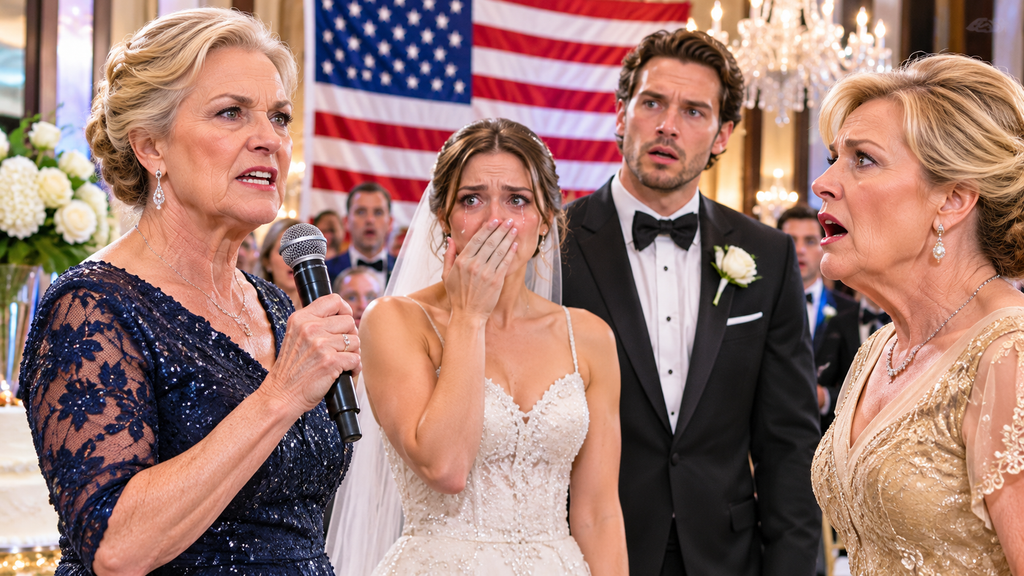
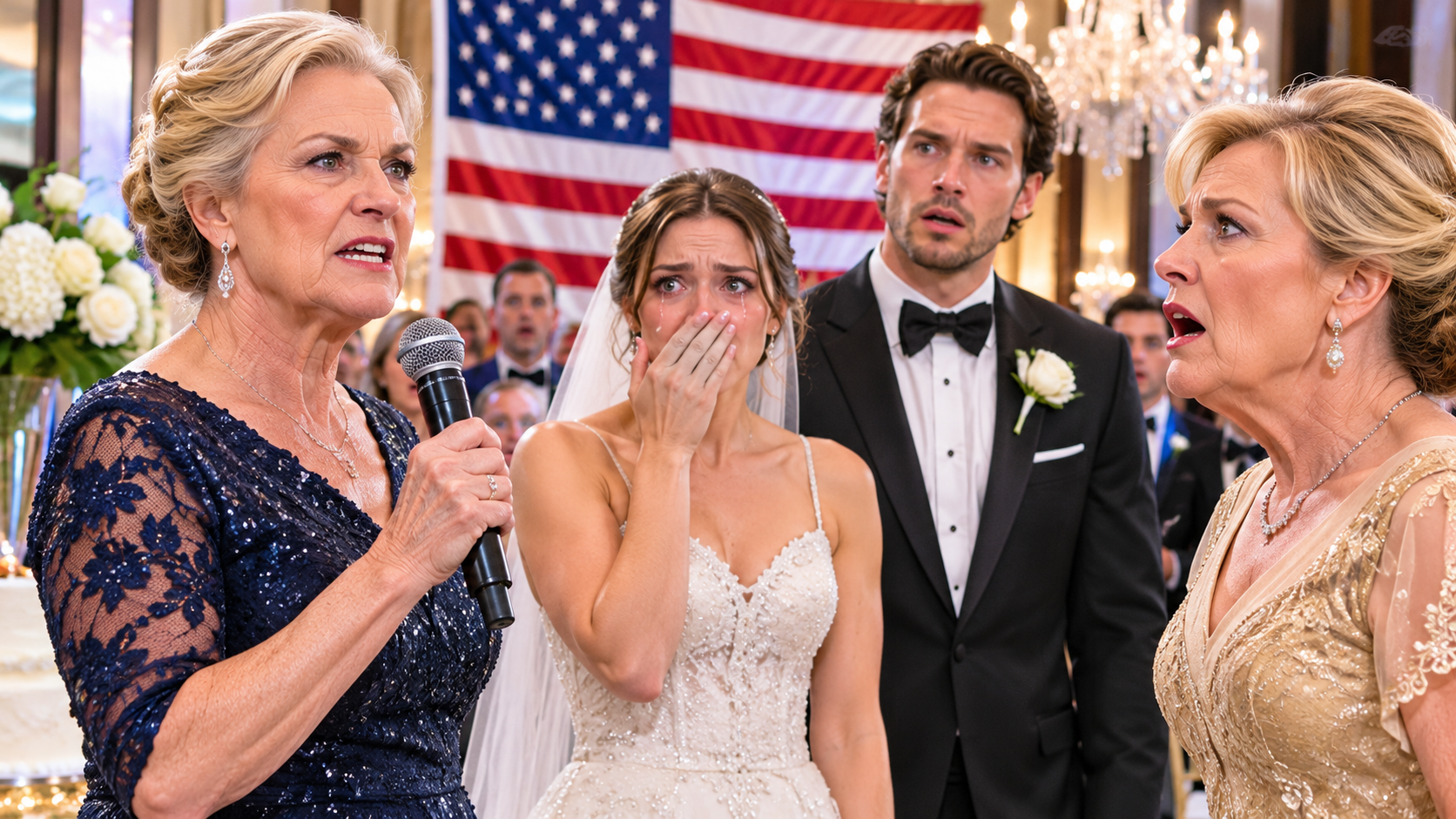
“YOU CAN’T SELL THAT CONDO!” MARK SHOUTED, FORGETTING THAT TWO HUNDRED WEDDING GUESTS WERE WATCHING. “MOM ALREADY SOLD HER HOUSE! SHE’S SUPPOSED TO MOVE INTO YOUR PLACE NEXT MONTH!”
The ballroom went completely silent.
My mother’s hand remained steady around the microphone.
Diane stood beside her, the champagne glass trembling between her fingers.
And my husband—the man I’d married less than three hours earlier—was staring at my mother as though she’d just stolen something from him.
Something he believed already belonged to his family.
I looked at Mark.
“Your mother sold her house?”
He opened his mouth.
Closed it.
Then glanced desperately toward Diane.
That was all the answer I needed.
My mother slowly lowered the microphone.
“Interesting,” she said.
Diane’s face turned scarlet.
“This is completely inappropriate. We’re supposed to be celebrating a marriage.”
Mom smiled.
“Then perhaps you shouldn’t have announced the confiscation of the bride’s home during the wedding toast.”
A nervous ripple of laughter moved through the ballroom.
But I wasn’t laughing.
I was looking at Mark.
“Tell me what’s going on.”
He reached for my hand.
“Sophie, honey, please. Let’s talk privately.”
I stepped backward.
“You knew she was planning to move into my condo?”
His expression hardened.
“We discussed it.”
“Who discussed it?”
He hesitated.
“Mom and I.”
I stared at him.
“And when were you planning to include me?”
He lowered his voice.
“Don’t embarrass me in front of everyone.”
Something inside me went cold.
He wasn’t embarrassed that he’d lied.
He was embarrassed that I’d discovered it.
My name is Sophie Bennett.
I’m thirty-two years old, and until that moment, I’d believed the most important decision I was making that day was choosing the man I wanted to spend the rest of my life with.
I had no idea I was marrying into a family that had already decided how to distribute my property.
Mark and I had been together for three years.
He worked in private wealth management.
He was intelligent, charming, and remarkably attentive during our relationship.
He knew my favorite flowers.
Remembered little details.
And always seemed genuinely proud of my career in investment banking.
Or so I thought.
I’d worked since college to build financial independence.
My parents had helped me purchase the Tribeca condo, but the majority of my financial success came from years of demanding work.
There were birthdays I’d missed.
Vacations I’d canceled.
And countless evenings when I fell asleep with my laptop still open.
The apartment wasn’t simply valuable real estate.
It represented choices I’d made long before Mark entered my life.
Without asking me.
Diane recovered first.
She turned toward the guests with a practiced smile.
“Everyone, please excuse this little misunderstanding. Families sometimes have private arrangements.”
My mother raised an eyebrow.
“An arrangement requires agreement, Diane.”
Diane’s smile tightened.
“Mark assured me everything was settled.”
I looked at him.
“Did you?”
He sighed.
“Sophie, it’s not as dramatic as you’re making it.”
I stared.
“Your mother just announced that she’s taking my home.”
“Temporarily.”
Diane nodded eagerly.
“Exactly. Only until we determine the best long-term living arrangement.”
I felt my stomach twist.
“Who is we?”
Neither answered.
Then Mark said something I will remember for the rest of my life.
“SOPHIE, WE’RE MARRIED NOW. YOU CAN’T KEEP THINKING ABOUT EVERYTHING AS YOURS.”
I looked down at my wedding ring.
The diamond caught the chandelier light.
Three hours earlier, I’d worn it with pride.
Now it felt strangely heavy.
I turned toward my mother.
“Mom, did you know about this?”
She looked at me with sadness.
“I suspected they wanted your property. I didn’t know they’d be foolish enough to announce it publicly.”
Diane scoffed.
“This is outrageous.”
My father stood.
He was usually a quiet man.
But when he spoke, his voice carried across the ballroom.
“Diane, my daughter didn’t work for ten years so your family could decide where she was allowed to live.”
Mark turned toward him.
“Mr. Bennett, with respect, this doesn’t concern you.”
Dad looked directly at him.
“You made it concern everyone when you let your mother announce it to two hundred guests.”
Then my father walked toward me.
“Sophie, sweetheart, you don’t have to decide anything tonight.”
That was when I began crying.
Not because of the condo.
Because my father was the first person who’d spoken to me as though I still had a choice.
The reception continued.
Barely.
The band resumed playing.
Guests whispered.
Diane disappeared into a side room with Mark.
My mother took me to a quiet lounge behind the ballroom.
She closed the door.
Then handed me a glass of water.
“Sit down, sweetheart.”
I stared at her.
“Mom, why did you make me transfer the condo?”
She sat beside me.
“Because I found something.”
My heart tightened.
“What?”
She hesitated.
“Six months ago, I overheard Diane talking to your aunt at a charity luncheon.”
I frowned.
“About what?”
“About Mark’s debts.”
I stared.
“What debts?”
Mom took a breath.
“According to what Diane said, Mark had lost a significant amount of money in a private investment.”
My mouth went dry.
“How much?”
“She mentioned nearly nine hundred thousand dollars.”
I shook my head.
“No. Mark told me his finances were fine.”
Mom looked at me.
“I hoped she’d been exaggerating. But then she started asking questions about your condo.”
I swallowed.
“What kind of questions?”
“Whether it had a mortgage. Whether you owned it outright. Whether you would add Mark to the deed after the wedding.”
My stomach dropped.
Mom continued.
“And when I asked why she needed to know, Diane said married couples shouldn’t keep separate property.”
I stared at my hands.
Then whispered:
“So you told me to transfer it.”
Mom nodded.
“I wanted you to have time to marry without anyone pressuring you into changing ownership.”
I looked up.
“But you said you’d sell it.”
She smiled faintly.
“I said that because Diane needed to understand she couldn’t make decisions about property she didn’t own.”
I hesitated.
“Are you actually selling?”
“No.”
Relief rushed through me.
Then Mom added:
“But Sophie, we need to talk about the trust agreement and your rights. We documented the transfer, and we’ll have independent counsel review everything before making another decision.”
I nodded slowly.
For the first time, I understood that transferring my condo had not been a simple solution.
It had protected me from one immediate demand.
But it also meant the property was legally in my mother’s name.
And that required trust, careful documentation, and a proper plan for its future.
An hour later, Mark found me.
He entered the lounge without knocking.
My mother was still sitting beside me.
He looked irritated.
“Sophie, we need to put this behind us.”
I stared.
“Put what behind us?”
“The scene.”
I stood.
“Your mother announced she was moving into my home.”
He sighed.
“She didn’t mean it like that.”
“Then what did she mean?”
He rubbed his forehead.
“Mom’s been under financial pressure. She sold her place because she thought we’d help her.”
I shook my head.
“You promised her my condo.”
He didn’t deny it.
Instead, he said:
“I thought once we were married, you’d understand.”
I felt something inside me break.
“Understand what?”
“That family helps family.”
I stared at him.
“Mark, your mother didn’t ask for help. She announced she was taking my home.”
He stepped closer.
“It’s a five-million-dollar condo, Sophie. You could easily afford another place.”
For a moment, I couldn’t speak.
Then I whispered:
“That’s how you see it?”
He frowned.
“What?”
“Something I worked for my entire adult life is disposable because you want to give it away.”
His face hardened.
“Don’t make me sound like a villain.”
I looked toward my mother.
Then back at him.
“I don’t have to.”
I took off my wedding ring.
Mark stared.
“Sophie?”
I placed it on the table.
His expression changed.
“What are you doing?”
I looked directly at him.
“I need time away from you.”
He laughed nervously.
“Come on. We just got married.”
“Yes.”
My voice trembled.
“And you’ve already shown me that you don’t respect my decisions.”
He stepped forward.
“We can fix this.”
I shook my head.
“Not tonight.”
Then I picked up my phone and called my wedding planner.
I asked her to arrange transportation to my parents’ home.
I wasn’t going on the honeymoon.
And I wasn’t going back to Tribeca with Mark.
The following morning, my phone had forty-three missed calls.
Mark.
Diane.
Mark again.
His sister.
Several relatives.
I ignored them.
Then I opened an email from Mark.
Soph, please don’t overreact. Mom got carried away. We can work this out.
I stared at the words.
Don’t overreact.
He hadn’t apologized for promising my property to someone else.
He hadn’t explained his finances.
And he hadn’t acknowledged that he’d kept me out of a decision affecting my home.
He simply wanted the embarrassment to disappear.
I closed the email.
Then called an attorney.
Not my mother’s attorney.
My own.
Her name was Rachel Morgan.
She specialized in matrimonial law and high-value property disputes.
We met two days later.
I told her everything.
The condo.
The transfer.
The wedding.
Diane’s announcement.
Mark’s reaction.
And the allegations about his debts.
Rachel listened carefully.
Then asked:
“Did Mark ever have an ownership interest in the condo?”
“No.”
“Did he contribute to its purchase?”
“No.”
“Did you sign any agreement giving him rights to occupy or control it?”
“Not that I’m aware of.”
She nodded.
“Good. We’ll review the documents. But we also need to examine the transfer to your mother.”
I swallowed.
“Is that a problem?”
“It could create issues depending on its structure, tax treatment, and timing. We need to understand exactly what was signed and whether it reflected your true intentions.”
I nodded.
Then she asked:
“Do you want to remain married?”
I stared at my hands.
“I don’t know.”
She smiled gently.
“Then don’t let anyone rush you into an answer.”
Within two weeks, Mark’s financial situation began to unravel.
Through proper legal disclosures and documents he eventually provided, we learned that he had invested heavily in a private real-estate venture.
The project failed.
His losses were substantial.
He had also taken out loans and extended credit beyond what he’d admitted to me.
The financial pressure was real.
But that wasn’t what ended my trust.
It was the concealment.
Mark had known about the debts before proposing.
He had never told me.
And his mother had been asking questions about my property long before the wedding.
I remembered how Diane insisted our honeymoon should be shorter.
How she complained about my “expensive independent lifestyle.”
How she repeatedly suggested that married couples should combine everything.
Suddenly, those comments sounded very different.
Diane called me one evening.
I answered because I wanted to hear what she would say.
“Sophie,” she began, “I think we need to clear the air.”
I sat beside the window.
“Go ahead.”
She sighed.
“I may have spoken too openly at the wedding.”
I waited.
“But your mother humiliated me.”
I almost laughed.
“Diane, you announced you were moving into my home.”
She sounded offended.
“Mark told me it was arranged.”
“Did he tell you I agreed?”
Silence.
Then she said:
“I assumed you’d support your husband.”
I took a breath.
“Supporting a spouse doesn’t mean surrendering property without a conversation.”
She scoffed.
“You’re making everything about money.”
I looked around my parents’ guest room.
“No, Diane.”
I paused.
“YOU MADE MY HOME YOUR RETIREMENT PLAN BEFORE YOU EVEN ASKED WHETHER I WANTED YOU LIVING THERE.”
Then I ended the call.
Mark and I met three weeks later.
At a neutral location.
With no family members present.
He looked exhausted.
His confident smile was gone.
“Sophie.”
“Hello, Mark.”
He sat across from me.
For several minutes, neither of us spoke.
Then he whispered:
“I messed up.”
I looked at him.
He continued.
“I thought Mom would be happy if she could move into Tribeca. And I thought you’d eventually agree.”
I stared.
“Why?”
He looked down.
“Because you’re generous.”
My throat tightened.
“Generous?”
He nodded.
“You’ve always helped people.”
I took a breath.
“Mark, generosity requires choice.”
He looked up.
I continued.
“You don’t get to make promises with someone else’s property and call them selfish when they refuse.”
His eyes filled.
“I know.”
Then he whispered:
“I’m sorry.”
For a moment, I wanted to forgive him.
I remembered our first date.
The way he held my hand when my grandfather died.
The little notes he used to leave beside my coffee cup.
The night he proposed.
I remembered believing that this man knew me better than anyone.
Then I thought about his words at our wedding.
We’re married now. You can’t keep thinking about everything as yours.
I looked at him.
“Mark, why didn’t you tell me about your debts?”
He stared at the table.
Then answered:
“Because I was afraid you’d leave.”
I swallowed.
“So you let me marry you without knowing.”
He nodded.
“And you promised my condo to your mother.”
Another nod.
I closed my eyes.
When I opened them, I knew.
“I can’t build a marriage on that.”
His face crumpled.
“Sophie, please.”
I shook my head.
“I’m sorry.”
And for the first time, I understood that loving someone didn’t mean I had to ignore what they’d shown me.
Rachel helped me navigate the legal process for ending the marriage.
Because we’d separated immediately after the wedding, we explored the remedies available under New York law based on the actual circumstances.
There were complicated discussions about finances.
Property.
Disclosure.
And the condo transfer.
My mother’s attorney also participated to ensure the property arrangements were reviewed independently.
Eventually, after proper documentation and legal advice, the condo was transferred back into my name.
It wasn’t accomplished through a dramatic loophole.
It required real legal work.
But by the time everything was complete, I finally had certainty about my home again.
Six months after the wedding, I returned to Tribeca.
Alone.
The doorman smiled when he saw me.
“Welcome home, Ms. Bennett.”
My throat tightened.
“Thank you, James.”
I rode the private elevator upstairs.
The doors opened onto my living room.
Floor-to-ceiling windows.
Warm wood floors.
The skyline stretching beyond the glass.
For years, I’d imagined coming home here with Mark.
Now I stood in the doorway carrying one suitcase.
And for a moment, the apartment felt terribly quiet.
I walked to the kitchen.
Set my keys on the counter.
Then looked around.
The sofa.
The books.
The framed photographs.
The little ceramic bowl I’d bought on a trip to Italy.
Everything was familiar.
But I was different.
The first few months were lonely.
I won’t pretend otherwise.
I worked too much.
Ordered takeout too often.
And avoided wedding photographs.
Friends asked whether I regretted ending the marriage so quickly.
Sometimes I wondered.
Not because I believed Mark’s behavior was acceptable.
But because walking away from a future I’d imagined for years was painful.
Then I remembered the moment Diane took the microphone.
Her smile.
Her confidence.
The way Mark had squeezed my waist and whispered not to make a scene.
He hadn’t been surprised.
He’d been afraid I’d object.
And that told me everything.
My mother came over one Sunday afternoon.
We sat beside the windows drinking tea.
She looked around.
“Are you happy to be home?”
I smiled.
“Yes.”
She nodded.
Then grew serious.
“Sophie, I owe you an apology.”
I frowned.
“For what?”
“For asking you to transfer the condo without explaining everything.”
I looked at her.
She continued.
“I thought I was protecting you. But I should’ve trusted you with the information and let you make the decision with proper advice.”
My eyes filled.
I reached for her hand.
“Mom, you were trying to help.”
She nodded.
“But protection shouldn’t mean taking away someone’s choices.”
I squeezed her fingers.
“Thank you.”
She smiled sadly.
Then whispered:
“Promise me something.”
“What?”
“Never let anyone convince you that love requires surrendering your judgment.”
I smiled.
“I promise.”
A year after the wedding, I received a message from Mark.
It was brief.
I hope you’re doing well. I’ve been working with a financial counselor and trying to rebuild. I know I hurt you. I’m sorry.
I read it twice.
Then replied:
I hope things improve for you. Take care.
That was all.
I didn’t need revenge.
I didn’t need him to suffer.
And I didn’t need to spend the rest of my life explaining why I had left.
The marriage was over.
But my future wasn’t.
I’m thirty-four now.
I still live in Tribeca.
I still work hard.
But I’ve learned to make room for things that matter outside my career.
I travel more.
Spend weekends with friends.
And take actual vacations without bringing my laptop.
I’ve also learned to be more direct about financial boundaries.
When someone asks about my property, I don’t feel guilty explaining that certain decisions are mine alone.
And when a relationship begins to involve major financial commitments, I believe honesty must come before promises.
Last Christmas, Mom came over for dinner.
Dad brought dessert.
We sat beside the windows watching the city lights.
At one point, Mom looked toward the living room and smiled.
“Remember when Diane announced she was moving in here?”
I laughed.
“How could I forget?”
Dad shook his head.
“I’ve never seen a wedding reception go silent so quickly.”
We all laughed.
Then Mom grew thoughtful.
“I still remember Mark’s face when I said the property belonged to me.”
I smiled faintly.
“So do I.”
Because that was the moment everything changed.
Not when Diane made her announcement.
Not when Mark told me to stay quiet.
But when my mother revealed that their plans had been built on an assumption that wasn’t true.
MY MOTHER-IN-LAW TOOK THE MICROPHONE AT MY WEDDING AND ANNOUNCED THAT MY FIVE-MILLION-DOLLAR TRIBECA CONDO WOULD BECOME HER RETIREMENT HOME.
MY HUSBAND STOOD BESIDE ME AND TOLD ME NOT TO MAKE A SCENE.
TWO HUNDRED PEOPLE WATCHED AS HIS MOTHER THANKED ME FOR A GIFT I HAD NEVER OFFERED.
Then my mother stood.
Walked to the center of the room.
And calmly explained that the condo was no longer in my name.
Diane went pale.
Mark stopped smiling.
And when he realized his mother couldn’t simply move in, he forgot himself and shouted:
“BUT MOM ALREADY SOLD HER HOUSE!”
That was when I understood.
They hadn’t been discussing whether I would agree.
They’d been discussing what they intended to do after I’d married into their family.
The hardest part wasn’t losing Mark.
It was realizing I’d fallen in love with someone who saw my generosity as permission.
Someone who believed marriage meant he could promise my home to another person.
Someone who concealed his own financial problems while making plans involving mine.
I had imagined a future with him.
Children.
Sunday breakfasts.
Holidays.
A lifetime of ordinary moments inside the condo I’d worked so hard to buy.
But a future built on secrecy isn’t security.
And a marriage that begins with one person making decisions for the other isn’t the partnership I’d wanted.
Today, when I step into the private elevator after work, I sometimes remember that wedding reception.
The white lilies.
The champagne.
The sound of two hundred people falling silent.
And my mother’s voice.
Actually, Diane, that property belongs entirely to me.
At the time, I thought those words had saved my condo.
Now I understand they did something more important.
They exposed the truth before I spent years pretending not to see it.
I still have the wedding photographs.
They’re stored in a box in my closet.
I don’t look at them often.
But I haven’t thrown them away.
Because they remind me that even painful experiences can teach us something about what we deserve.
I was ready to give Mark my love.
My loyalty.
My time.
And the future I’d imagined.
But I was never required to give up my voice.
Or my judgment.
Or my home.
THEY THOUGHT MARRIAGE WOULD GIVE THEM ACCESS TO EVERYTHING I HAD BUILT.
MY MOTHER MADE SURE THEY COULDN’T TAKE THE CONDO.
AND I MADE SURE THEY COULDN’T TAKE THE REST OF MY LIFE.
THE END.❤