
 Reading Time: 21 minutes
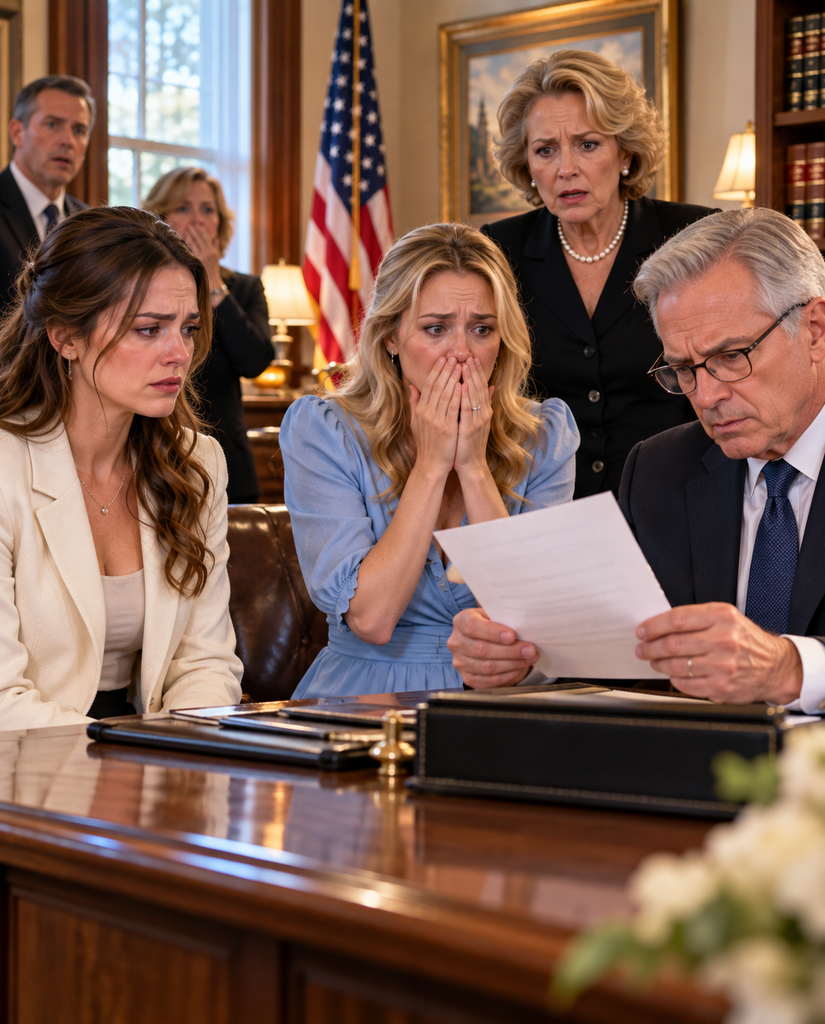
“Where is the original birth certificate?” Vivian’s fingers tightened around the armrest. “What are you talking about?” Mr. Bennett placed the DNA report on the polished table between us.
“I’m talking about Alyssa’s original birth certificate.” Alyssa gave a nervous laugh. It sounded too loud in the room. “Why would you need my birth certificate? You have the DNA results.”
Mr. Bennett looked at her.
“Yes.”
Something about the way he said that single word made her stop smiling.
I watched Vivian.
She wasn’t looking at the lawyer anymore.
She was staring at the envelope.
Her lips had gone almost colorless.
For thirty years, I had seen that woman control rooms with a glance.
She could make my father stop speaking.
She could make relatives change subjects.
She could make me question things I had seen with my own eyes.
But now…
For the first time…
Vivian looked trapped.
Mr. Bennett folded his hands.
“Mrs. Harper, I’m going to ask you again.”
His voice remained calm.
“Where is Alyssa’s original birth certificate?”
Vivian swallowed.
“I don’t know.”
“You don’t know?”
“It was thirty years ago.”
Alyssa turned toward her.
“Mom?”
Vivian didn’t answer.
Mr. Bennett reached for another folder.
It was old.
Not the clean white folder holding the DNA results.
This one was brown around the edges.
A handwritten label was attached to the front.
WILLIAM HARPER — PERSONAL.
My heart started beating harder.
I recognized my father’s handwriting.
The same handwriting from the letter I had found in his study.
Mr. Bennett opened the folder.
“Mr. Harper anticipated that this situation might occur.”
Vivian’s head snapped up.
“What situation?”
Mr. Bennett looked at her.
“This one.”
Nobody spoke.
He removed a document.
“Approximately eleven months before his death, William retained my firm to investigate discrepancies he had discovered in family records.”
Alyssa frowned.
“What discrepancies?”
Mr. Bennett looked down at the document.
“Medical records.”
Vivian stood.
“This is ridiculous.”
Her chair scraped sharply across the floor.
Everyone jumped.
She grabbed her handbag.
“I’m not sitting here while a lawyer insults me.”
“Sit down, Mom.”
The words came from Alyssa.
Not loudly.
But firmly.
Vivian froze.
I stared at my sister.
Alyssa’s eyes were no longer on me.
They were on her mother.
“Sit down.”
Vivian slowly turned.
“Alyssa, sweetheart—”
“Don’t call me sweetheart.”
The room changed.
I could feel it.
For most of my life, Alyssa and Vivian had been one unit.
Mother and daughter.
A team.
I had always been the outsider.
But now a thin crack had appeared between them.
And every word from Mr. Bennett was pushing it wider.
Vivian sat.
Mr. Bennett continued.
“William discovered the discrepancy after Alyssa was hospitalized three years ago.”
Alyssa blinked.
“My appendix?”
“Yes.”
“I don’t understand.”
“During that hospitalization, you needed to provide family medical history.”
Alyssa nodded slowly.
“You listed William as your biological father.”
“Because he was.”
Nobody corrected her.
Not yet.
Mr. Bennett continued.
“William was later contacted regarding a potential hereditary condition mentioned during your follow-up care. That led him to review his own medical records.”
Alyssa’s face changed.
“He discovered something didn’t make sense.”
Mr. Bennett paused.
“Specifically, his blood type.”
The silence felt enormous.
Vivian stared at the floor.
My grandmother shifted slightly in her chair.
And suddenly…
I remembered something.
A memory from childhood.
I was maybe eleven.
Alyssa had fallen from a bicycle and cut her knee badly.
Dad carried her into the kitchen.
Vivian had been panicking.
Someone mentioned blood.
My grandmother had said something about blood types.
Vivian snapped at her so viciously that everyone went quiet.
I had forgotten that moment.
Until now.
Mr. Bennett looked toward Vivian.
“William began asking questions.”
Vivian whispered,
“He had no right.”
Alyssa stared at her.
“What?”
Vivian closed her eyes.
It was only for a second.
But that second was enough.
Alyssa saw it.
We all did.
“Mom.”
Her voice cracked.
“What does he mean?”
Vivian opened her eyes.
“Nothing.”
“Stop saying nothing!”
Alyssa suddenly shouted.
I flinched.
So did several relatives.
I had never heard my sister yell at her mother.
Not once.
Alyssa pointed at the DNA report.
“Read it.”
Mr. Bennett hesitated.
“Read it!”
He picked up the paper.
Then he spoke the sentence that ended thirty years of lies.
“The laboratory determined with greater than 99.9 percent probability that Candace Harper was William Harper’s biological daughter.”
My breath disappeared.
I knew.
Some part of me had known the moment he looked away from me.
But hearing it…
Hearing those words…
Did something I wasn’t prepared for.
For thirty years, I had been told I didn’t belong.
Thirty years.
I had examined my face in mirrors.
Compared my nose to his.
My eyes.
My chin.
My hands.
When I was fourteen, I found an old photograph of my mother and spent an hour trying to decide whether I looked more like her because perhaps Dad wasn’t really mine.
At sixteen, I overheard Vivian tell an aunt,
“William has always been too sentimental to admit the obvious.”
The obvious.
That was what she called me.
A mistake everyone could supposedly see.
And now…
99.9 percent.
I was his daughter.
I had always been his daughter.
A sob rose into my throat.
I swallowed it.
Not because I was ashamed.
Because Mr. Bennett wasn’t finished.
Alyssa was staring at him.
“And me?”
Mr. Bennett lowered the paper.
She whispered,
“What does mine say?”
Vivian reached for her.
“Alyssa—”
My sister jerked away.
“Don’t touch me.”
Mr. Bennett looked at Alyssa.
“The laboratory excluded William Harper as your biological father.”
Nobody breathed.
Alyssa stared at him.
“No.”
The word was tiny.
Mr. Bennett said nothing.
“No.”
She shook her head.
“That’s impossible.”
Vivian began crying.
Not dramatically.
Not loudly.
Tears simply appeared and slid down her cheeks.
Alyssa looked at her.
And something inside my sister seemed to break.
“No.”
She stood.
“You said she was the one.”
She pointed at me.
“You said Candace wasn’t his.”
Vivian covered her mouth.
“You said it my whole life.”
“Alyssa—”
“You said Dad only kept her because he felt guilty!”
Vivian’s shoulders shook.
“I was trying to protect you.”
“FROM WHAT?”
The shout echoed through the office.
Alyssa’s face twisted.
“From what?”
Vivian couldn’t answer.
My grandmother finally spoke.
“The truth.”
Everyone turned toward her.
She was eighty-four.
Small.
Silver-haired.
She had barely said anything all morning.
But there was nothing weak about her voice.
“I told William to ask questions years ago.”
Vivian looked at her with pure hatred.
“You stay out of this.”
Grandma didn’t blink.
“I stayed out of it for thirty years.”
She looked at me.
“And that was thirty years too long.”
My eyes filled.
“Grandma…”
She shook her head.
“Let him finish.”
Mr. Bennett nodded.
“William ordered additional testing privately.”
Vivian whispered,
“No.”
Mr. Bennett reached into the old folder.
“He did not want to confront anyone until he was certain.”
Alyssa sat back down.
She looked exhausted now.
Not angry.
Not smug.
Just lost.
“Who is my father?”
Nobody answered.
She looked at Vivian.
“Mom.”
Vivian stared at her hands.
“Who is my father?”
“Alyssa, please.”
“WHO?”
Vivian finally looked up.
“Thomas Keller.”
Someone behind me gasped.
An aunt whispered,
“Oh my God.”
The name meant nothing to me at first.
Then Grandma said,
“William’s business partner.”
And suddenly I remembered.
Uncle Tom.
Not actually our uncle.
Just a man who had been around when we were little.
Tall.
Dark hair.
A loud laugh.
He used to bring Alyssa presents.
Always Alyssa.
Never me.
He disappeared from our lives when I was about nine.
Dad told us he had moved away.
Alyssa looked sick.
“Uncle Tom?”
Vivian began sobbing.
“It wasn’t like that.”
Alyssa laughed.
There was no humor in it.
“Oh, please tell me how it was.”
“We were going through a difficult period.”
“You cheated on Dad?”
“It happened once.”
Grandma snorted.
Vivian glared at her.
Grandma said,
“Don’t make yourself smaller now. It happened for nearly two years.”
Another silence.
Alyssa turned slowly toward her grandmother.
“You knew?”
“I suspected.”
“And Dad?”
Grandma looked at the folder.
“Eventually.”
Alyssa pressed both palms against her temples.
“This can’t be happening.”
And for one terrible second…
I felt satisfaction.
I wish I could say I didn’t.
But I did.
This was the sister who called me stray.
Who laughed when her friends asked whether Dad had adopted me.
Who once gave me a cheap DNA kit for Christmas as a joke.
Who helped Vivian remove my pictures from the family room.
Who had demanded this test because she wanted to humiliate me in front of everyone.
A part of me wanted to lean across that table and ask how it felt.
How did it feel to suddenly be the one whose identity was being questioned?
How did it feel to have a room full of relatives whispering?
How did it feel to discover that the story you had built your superiority around was a lie?
But then Alyssa looked at me.
And I saw something I recognized.
Fear.
Not fear of losing money.
Something deeper.
The fear that comes when you suddenly don’t know where you belong.
I had lived with that feeling since childhood.
I couldn’t celebrate seeing it in someone else.
Even her.
Mr. Bennett continued.
“There is more.”
Vivian looked up sharply.
“What more could there possibly be?”
Mr. Bennett pulled out my father’s handwritten letter.
“William left instructions that this be read if DNA testing was ever introduced during probate.”
My hands went cold.
“He expected this?”
Mr. Bennett looked at me.
“He hoped it would never happen.”
Then he unfolded the letter.
The paper shook slightly in his hands.
Not much.
Just enough that I realized even he had probably read it before and knew what was coming.
He began.
“My daughters,”
Alyssa’s eyes lifted.
My daughters.
Not daughter.
Daughters.
Mr. Bennett continued.
“If this letter is being read, then fear has done what fear always does in this family. It has turned love into a courtroom.”
My eyes blurred.
I could hear Dad’s voice.
Not as he sounded at the end.
As he sounded when I was six.
Reading bedtime stories.
Calling me Candy because I couldn’t pronounce Candace.
Carrying me upstairs when I fell asleep on the couch.
“Candace, I owe you an apology that no inheritance can repair.”
I looked down.
Tears landed on my hands.
“I knew you were my daughter.”
The room disappeared.
Everything around me blurred.
“I knew because your mother and I had testing done when you were an infant after a medical concern arose. There was never any doubt.”
I covered my mouth.
Never.
There had never been any doubt.
Not medically.
Not biologically.
Not scientifically.
Only emotionally.
And somehow that hurt more.
Because it meant Dad had known.
All those years Vivian made jokes.
All those dinners.
All those whispers.
All those times I went upstairs and cried.
He knew.
And he had stayed quiet.
Mr. Bennett continued.
“I told myself silence kept peace in the house. What it actually did was ask a child to pay the price for an adult’s cowardice.”
My shoulders began shaking.
There it was.
The thing I had needed him to say.
Not that Vivian was cruel.
Not that Alyssa was spoiled.
Not excuses.
Not explanations.
He had been a coward.
And he knew it.
“I should have defended you every time.”
I closed my eyes.
“I should have put your photograph back on the wall.”
My breath caught.
Nobody else understood that sentence.
But I did.
When I was thirteen, Vivian replaced a framed photograph of Dad and me at Lake Erie with a family portrait of herself, Dad, and Alyssa.
I found my picture in a drawer.
I asked Dad why.
He said,
“Don’t make a big deal out of it, Candy.”
I never forgot.
Mr. Bennett’s voice softened.
“I should have made a big deal out of it.”
I cried harder.
My grandmother reached across and took my hand.
“I should have told you that you looked like me when you frowned, like your mother when you smiled, and entirely like yourself when you laughed.”
I laughed through my tears.
That sounded like him.
Exactly like him.
“I watched your life from a distance because I convinced myself that leaving you alone was respecting your decision to leave.”
I thought of the study.
The newspaper clippings.
Photographs.
Printouts of articles I had written.
A photograph of me receiving an award at work.
Another of me standing outside my first apartment.
He had known.
He had watched.
“But distance was another form of cowardice.”
Mr. Bennett paused.
“I should have driven to Chicago.”
My chest hurt.
“I should have knocked on your door.”
I squeezed Grandma’s hand.
“I should have said I was sorry while I still had time to hear whether you forgave me.”
I whispered,
“I would have.”
Nobody responded.
I don’t know if anyone heard.
Maybe it was better if they didn’t.
Mr. Bennett continued.
“Now, Alyssa.”
My sister stiffened.
She wiped her face.
“If you are hearing this, then you have learned something I hoped to tell you myself.”
Alyssa stared at the letter.
“You are not my biological daughter.”
Vivian closed her eyes.
“But you are my daughter.”
Alyssa broke.
Not gracefully.
Not quietly.
She bent forward and covered her face.
A sob came from somewhere deep inside her.
I had never seen her cry like that.
Not even at Dad’s funeral.
Mr. Bennett waited.
Then continued.
“I changed your diapers.”
Alyssa sobbed harder.
“I taught you to ride a bicycle.”
Her shoulders shook.
“I sat beside your bed when you had pneumonia.”
Vivian looked away.
“I walked you into kindergarten when you were terrified and pretended I wasn’t crying when you told me I could leave.”
Alyssa whispered,
“Dad.”
“I was there when you graduated.”
She pressed a fist against her mouth.
“I was there when your first boyfriend broke your heart.”
Her mascara streaked down her cheeks.
“And I loved you every day.”
Mr. Bennett lowered the letter slightly.
“DNA can tell you who made you.”
Then he read the next line.
“It cannot tell you who loved you.”
No one moved.
Even Vivian had stopped crying.
“For that reason, the clause in my will concerning biological children is not there because I believe biology determines family.”
Mr. Bennett looked around the room.
“It is there because I suspected someone might eventually use biology as a weapon against Candace.”
My eyes moved to Alyssa.
She looked at me.
And this time there was no hatred.
Only shame.
“I needed the truth documented.”
Mr. Bennett continued.
“And I needed the person who demanded that truth to understand its cost.”
Alyssa whispered,
“Oh God.”
Vivian stood again.
“This is manipulation.”
Mr. Bennett looked at her.
“No, Mrs. Harper.”
He placed the letter down.
“This is your husband’s testament.”
“He was angry.”
“He was precise.”
“You don’t know what happened in our marriage.”
“No.”
Mr. Bennett’s expression didn’t change.
“But I know what he instructed me to do.”
Vivian stared at him.
“What does the will say?”
There it was.
After everything…
The money.
The house.
The estate.
Alyssa looked at her mother in disbelief.
“Seriously?”
Vivian ignored her.
“How much does Candace get?”
Mr. Bennett opened the will.
“William Harper’s estate, after taxes, debts, charitable bequests, and administrative expenses, is valued at approximately twelve-point-eight million dollars.”
The room erupted.
Whispers.
Gasps.
Someone behind me muttered,
“Twelve million?”
I stared at Mr. Bennett.
I knew Dad had done well.
I didn’t know he had done that well.
Vivian leaned forward.
“And?”
Mr. Bennett adjusted his glasses.
“The primary residence and its contents pass to Candace Harper.”
Vivian’s face emptied.
“What?”
I blinked.
“The house?”
“Yes.”
Vivian stood so fast the chair nearly fell.
“No.”
Mr. Bennett continued.
“The investment accounts and remaining liquid assets are divided according to separate instructions.”
Vivian pointed at me.
“She hasn’t lived there in eighteen years!”
Mr. Bennett looked at her calmly.
“Nevertheless, the property belongs to Ms. Harper upon completion of probate.”
“I am his wife!”
“You have the residence provided to you under the prenuptial and postnuptial agreements.”
Vivian stopped.
Alyssa looked at her.
“What residence?”
Vivian said nothing.
Mr. Bennett answered.
“The condominium in Naples.”
My eyebrows rose.
Grandma murmured,
“Well.”
Apparently Dad had planned more carefully than any of us knew.
Vivian’s face reddened.
“That house is my home.”
Mr. Bennett shook his head.
“It was William Harper’s separately held property, inherited from his parents. His will controls its disposition.”
Vivian turned toward me.
“You can’t do this.”
I almost laughed.
“I haven’t done anything.”
“You know what I mean.”
“No.”
I stood.
My knees were trembling.
But my voice wasn’t.
“Actually, Vivian, I don’t.”
She stared at me.
“Explain it.”
Her mouth opened.
Nothing came out.
I stepped closer.
“You spent thirty years telling everyone I wasn’t his daughter.”
She looked away.
“You spent thirty years making me feel like a guest in my father’s house.”
“Candace—”
“You put my photographs in drawers.”
She flinched.
“You excluded me from holidays.”
“That isn’t true.”
“It is.”
“You left!”
“I was seventeen!”
My voice cracked through the room.
Everyone went silent.
“I was seventeen years old.”
Vivian’s mouth closed.
“I didn’t leave because I hated Dad.”
My eyes burned.
“I left because you spent years teaching me that every room was happier when I wasn’t in it.”
Nobody moved.
I looked around.
At aunts.
Uncles.
Cousins.
People who had watched.
People who had laughed awkwardly.
People who had changed the subject.
People who told themselves it wasn’t their business.
“You all heard it.”
Several eyes dropped.
“You heard the jokes.”
Silence.
“You heard her call me the stray.”
Alyssa started crying again.
“You watched me get seated in the back row at my own father’s funeral.”
My aunt Marianne looked ashamed.
I continued.
“And not one of you said anything.”
Someone whispered,
“Candace, we didn’t know—”
“Yes, you did.”
The words came out softly.
That made them stronger.
“You knew enough.”
Silence.
I turned back to Vivian.
“So don’t tell me what I can’t do with a house where I was taught I didn’t belong.”
Vivian’s expression hardened.
“You always were dramatic.”
Thirty years ago, those words could destroy me.
At thirteen.
At sixteen.
At seventeen.
Not anymore.
I smiled.
“No.”
I looked straight into her eyes.
“I was hurt.”
That landed.
“You just benefited from everyone pretending those were the same thing.”
Vivian had no answer.
Mr. Bennett cleared his throat.
“There are additional provisions.”
I sat.
Vivian remained standing for several seconds before finally lowering herself back into the chair.
“The remaining estate is placed into two trusts.”
Alyssa looked up.
“Two?”
“Yes.”
“One for Candace Harper.”
He paused.
“And one for Alyssa Harper.”
Vivian blinked.
“But you said biological children.”
“The biological-child clause determines a specific controlling share and property distribution.”
Mr. Bennett turned toward Alyssa.
“William separately created a trust for you.”
Alyssa stared at him.
“He left me something?”
“Approximately two million dollars.”
She covered her mouth.
Vivian looked furious.
“After what he discovered?”
Mr. Bennett’s eyebrows lifted.
Alyssa slowly turned toward her mother.
“After what he discovered?”
Vivian realized too late what she had said.
Alyssa stood.
“You think I shouldn’t get anything?”
“I didn’t say that.”
“You just did.”
“I meant—”
“No.”
Alyssa stepped backward.
“All my life, you told me blood was what mattered.”
Vivian shook her head.
“That isn’t what I meant.”
“Yes, it is.”
Alyssa pointed at me.
“You taught me that she was less because you said she wasn’t his.”
Vivian began crying again.
“I was protecting you.”
Alyssa laughed bitterly.
“No.”
She wiped her face.
“You were protecting yourself.”
Vivian looked like she had been slapped.
And I realized something.
Alyssa had been cruel to me.
That remained true.
But cruelty had been handed to her like an inheritance long before Dad’s money ever entered the picture.
Vivian had given her a lie.
Then taught her to build her identity on top of it.
That didn’t erase what Alyssa did.
But it explained where the poison started.
Mr. Bennett handed Alyssa another envelope.
“Your father left this specifically for you.”
She stared at it.
“My father?”
Mr. Bennett nodded.
“William.”
Alyssa took it.
Her hands shook.
She opened the envelope.
Read silently.
Then started crying again.
After a moment, she handed the letter to me.
I hesitated.
“Are you sure?”
She nodded.
There were only four lines.
Alyssa,
If biology changes what you think I was to you, then I failed to teach you the most important thing.
You were my daughter because I chose to be your father every single day.
Please learn to choose your sister too.
Dad.
I read it twice.
Then gave it back.
Alyssa pressed it against her chest.
The meeting ended shortly afterward.
Nobody rushed to leave.
Nobody knew how.
The family that had walked into that room believing they understood exactly who belonged where had been rearranged in less than an hour.
Vivian left first.
She didn’t say goodbye.
Alyssa stayed.
I was gathering my things when she approached me.
For a moment, neither of us spoke.
Then she said,
“I’m sorry.”
I looked at her.
Two words.
So small.
Not enough.
But maybe a beginning.
“For what?”
She blinked.
I could see she hadn’t expected that.
“What?”
“You said you’re sorry.”
I closed my folder.
“For what?”
She looked down.
“For… everything.”
“That’s not an answer.”
Her eyes filled again.
I wasn’t trying to punish her.
But I had spent too many years accepting vague apologies that allowed people to avoid naming what they had done.
Alyssa swallowed.
“I’m sorry I called you a stray.”
I waited.
“I’m sorry I told people you weren’t Dad’s daughter.”
Her voice shook.
“I’m sorry I laughed when Mom excluded you.”
Tears rolled down her cheeks.
“I’m sorry about the Christmas DNA kit.”
I remembered that.
I had gone upstairs and thrown it into the garbage.
Dad had seen me crying.
He asked what happened.
I said nothing.
He let me say nothing.
Alyssa continued.
“I’m sorry I asked for the test.”
She laughed bitterly.
“I wanted to humiliate you.”
There it was.
Truth.
“I thought if the test proved you weren’t his daughter, everything would belong to me.”
I nodded.
“I know.”
“I didn’t know.”
“No.”
I looked at her.
“You didn’t.”
She wiped her cheeks.
“Do you hate me?”
I thought about it.
Really thought.
“No.”
She looked surprised.
“But I don’t trust you.”
Her face fell.
“That’s fair.”
“And I’m not going to pretend today fixed thirty years.”
“I know.”
“You hurt me.”
“I know.”
“And finding out that William wasn’t your biological father doesn’t erase that.”
She nodded.
“I know.”
I picked up my coat.
“But it doesn’t erase the fact that he was your father either.”
She looked at me.
That broke her again.
She covered her mouth.
I stepped forward.
For half a second, I considered walking past her.
Then I hugged her.
Not because everything was forgiven.
Not because we were suddenly sisters the way greeting cards describe sisters.
I hugged her because both of us had just lost our father twice.
Once to death.
Once to truth.
She held onto me.
“I miss him,” she whispered.
“So do I.”
And that surprised me.
Because until that moment…
I hadn’t allowed myself to say it.
I missed him.
I was angry with him.
I resented him.
I loved him.
I missed him.
All of those things could be true.
Three weeks later, I returned to the house alone.
Vivian had moved out.
Not willingly.
But legally.
Her belongings had been packed and sent to Florida.
I stood in the foyer holding Dad’s key.
The house felt enormous without people in it.
For years, I had dreamed about returning.
Sometimes I imagined screaming at Vivian.
Sometimes I imagined Dad opening the door and begging forgiveness.
Sometimes I imagined walking through the rooms and proving that I had survived without them.
None of those fantasies prepared me for the silence.
I walked into the family room.
The wall was almost empty.
Vivian had taken many of the photographs.
I climbed the stairs.
Third floor.
Dad’s study.
Rosa had left the key where she promised.
Inside, afternoon sunlight covered the desk.
His reading glasses were still beside a legal pad.
I sat in his chair.
For a long time, I did nothing.
Then I opened the bottom drawer.
The photograph was there.
Lake Erie.
Me at thirteen.
Dad behind me.
His hands on my shoulders.
Both of us squinting into the sun.
The photograph Vivian removed from the wall.
Dad had kept it.
I carried it downstairs.
Found a hammer.
Found a nail.
And hung it in the center of the family-room wall.
I stepped backward.
It was crooked.
Dad would have hated that.
He measured everything.
I laughed.
Then cried.
Then laughed again.
A car pulled into the driveway.
I looked through the window.
Alyssa.
She stood outside for almost a minute before knocking.
She had lived in that house for nearly thirty years.
But now she knocked.
That mattered to me.
I opened the door.
“Hi.”
“Hi.”
She held a cardboard box.
“What’s that?”
“Things Mom left.”
I raised an eyebrow.
“Intentionally?”
“Probably not.”
I laughed.
So did she.
It was the first time we had ever laughed together without someone else being the target.
She came inside.
Then stopped.
Her eyes went to the photograph.
For a long moment, she stared.
“I remember that picture.”
“So do I.”
“Mom took it down.”
“Yes.”
Alyssa set the box on the floor.
“I should have said something.”
“You were thirteen.”
“I still should have.”
I didn’t answer.
She opened the box.
Inside were dozens of photographs.
Some of me.
Some of Dad.
Some of my biological mother.
A few of Alyssa.
At the bottom was an old cassette tape.
Alyssa held it up.
“Do you have anything that plays these?”
Dad did.
Of course he did.
In his study sat a cassette player older than both of us.
We carried it upstairs.
The tape had one handwritten label.
CANDACE — AGE 5.
My hands shook as I pressed play.
Static.
Then Dad’s voice.
Young.
Happy.
“Okay, Candy, sing it again.”
A little girl started singing terribly.
Alyssa laughed.
I covered my face.
“Oh my God.”
On the tape, Dad laughed too.
Then my five-year-old voice said,
“Daddy, don’t laugh!”
“I’m not laughing.”
“You are!”
“I’m smiling.”
“Why?”
“Because you’re my girl.”
Everything inside me stopped.
Because you’re my girl.
The sentence echoed through the study.
Thirty years disappeared.
I wasn’t forty-seven.
I was five.
Sitting on Dad’s knee.
Safe.
Loved.
Before Vivian.
Before doubt.
Before I learned to measure my place at the table.
I started crying.
Alyssa reached over and took my hand.
Neither of us spoke.
We listened until the tape ended.
Months passed.
I didn’t keep the house.
Everyone assumed I would.
Vivian certainly did.
She sent three letters through attorneys demanding the opportunity to purchase it below market value.
I declined.
But I didn’t sell it for myself either.
I created something Dad should have created years ago.
The Harper House Foundation.
The property became transitional housing and educational support for young adults aging out of foster care and teenagers estranged from unstable homes.
People who had spent too much of their lives wondering where they belonged.
The irony wasn’t lost on me.
The house where I had felt unwanted became a place designed to tell people:
You belong somewhere.
The first residents moved in eleven months after Dad died.
I stood on the lawn watching volunteers carry furniture inside.
A new sign hung beside the driveway.
HARPER HOUSE
HOME IS NOT SOMETHING YOU HAVE TO EARN.
Grandma cried when she saw it.
Rosa cried harder.
Alyssa volunteered twice a week.
And Vivian?
Vivian never came.
She moved permanently to Florida.
For almost a year, I heard nothing from her.
Then one morning, an envelope arrived.
No return address.
I recognized the handwriting.
Candace,
I know you probably do not want to hear from me.
There are things I did that I cannot explain in a way that will make them acceptable.
I was jealous of your mother.
I was jealous of the place you had in William’s heart.
And when Alyssa was born, I was terrified he would discover the truth and leave us.
Making you seem illegitimate made me feel safer.
That sentence made me put the letter down.
I walked around my apartment.
Made coffee.
Came back.
Then continued.
I told myself you were strong.
I told myself children forget.
I told myself William’s silence meant I wasn’t doing as much damage as I feared.
I was wrong.
I do not expect forgiveness.
Vivian.
I read it twice.
Then put it away.
I didn’t forgive her that day.
Maybe forgiveness isn’t a door you open once.
Maybe it’s something quieter.
Maybe sometimes forgiveness simply means the person no longer controls the temperature of your life.
I stopped hating Vivian.
That was enough.
Alyssa and I rebuilt slowly.
Very slowly.
There were awkward lunches.
Long silences.
Arguments.
One spectacular fight over Thanksgiving potatoes that ended with both of us laughing because we realized we were arguing exactly like sisters.
She started therapy.
So did I.
One afternoon, almost two years after Dad died, Alyssa came to Chicago.
We were sitting on my balcony when she asked,
“Do you ever think about Thomas?”
Her biological father.
“Sometimes.”
“I found him.”
I looked at her.
“He lives in Arizona.”
“Are you going to contact him?”
She stared into her coffee.
“I don’t know.”
I nodded.
“You don’t have to decide today.”
She smiled.
“Dad would say that.”
“Dad would make a spreadsheet.”
She laughed.
“He absolutely would.”
Then her smile faded.
“Candace?”
“Yeah?”
“I spent my whole life thinking being Dad’s biological daughter made me better than you.”
I said nothing.
“And then I found out I wasn’t.”
She looked toward the city.
“For months, I thought that meant I had lost him.”
I waited.
“But I finally understand the letter.”
She looked at me.
“He chose me.”
“Yes.”
“And he should have chosen you more loudly.”
My eyes filled.
“Yes.”
She reached across the table.
“I wish I had too.”
I took her hand.
“We have time.”
That was the gift Dad didn’t get.
Time.
Time to apologize.
Time to change.
Time to say the thing you should have said twenty years earlier.
Alyssa and I still had some.
Three years after the will reading, Harper House helped its hundredth young person.
We held a small celebration in the backyard.
String lights hung between the trees.
Music drifted from the patio.
Kids who had arrived months earlier frightened and withdrawn were laughing near the garden.
Grandma sat beneath an umbrella ordering everyone around like she owned the foundation.
Alyssa stood beside me.
“You know what’s funny?”
“What?”
“You won.”
I frowned.
“Won what?”
“The inheritance.”
I looked at the house.
Then at her.
“No.”
She waited.
“I got the truth.”
The money mattered.
Of course it did.
Money built Harper House.
Money funded scholarships.
Money gave us opportunities.
But money wasn’t what I had spent thirty years wanting.
I wanted to know why Dad didn’t love me enough.
That had always been the question beneath every other question.
Why didn’t he choose me?
Why didn’t he defend me?
Why didn’t I look enough like him?
Why didn’t I belong?
The DNA test answered only the smallest part.
Yes.
William Harper was my biological father.
But his letter answered the harder question.
He had loved me.
Imperfectly.
Cowardly at times.
From too far away.
He had loved me.
And he had failed me.
Those truths could live beside each other.
I didn’t need to turn him into a saint to call him Dad.
I didn’t need to erase the hurt to remember the good.
I didn’t need Vivian’s approval.
I didn’t need relatives to decide whether I belonged.
And I didn’t need a laboratory percentage printed on expensive paper to make me someone’s daughter.
That evening, after everyone left, Alyssa and I sat on the back steps.
The same steps where we used to sit as children.
She bumped my shoulder.
“Remember when you pushed me off these?”
I stared at her.
“You pushed me first.”
“I was six.”
“You bit me.”
“You deserved it.”
I laughed.
“You were horrible.”
“So were you.”
“Not as horrible as you.”
“Fair.”
We sat quietly.
Fireflies blinked across the yard.
Somewhere inside Harper House, a washing machine hummed.
The building felt alive.
Not haunted.
Alive.
Alyssa looked at me.
“Do you think Dad would like what you did with the place?”
I thought about his study.
The photographs.
The clippings.
The letter.
The cassette.
The man who loved quietly when he should have loved loudly.
“I think he’d complain about the accounting.”
Alyssa laughed.
Then I smiled.
“And I think he’d be proud.”
We sat there until the porch lights came on.
Before leaving, I walked into the family room.
The Lake Erie photograph still hung on the wall.
But it wasn’t alone anymore.
Beside it was a photograph of Alyssa and Dad at her high school graduation.
Beside that was one of Grandma.
One of Rosa.
One of the first group of Harper House residents.
One of Alyssa and me standing beneath the foundation sign.
Nobody had been removed to make someone else belong.
There was room for all of us.
I touched the edge of Dad’s photograph.
For most of my life, I thought the worst thing that could happen was discovering he wasn’t my father.
I was wrong.
The worst thing had already happened.
I had allowed someone else’s lie to convince me that I needed permission to belong.
The DNA test didn’t give me a father.
It didn’t give Alyssa one either.
It simply exposed what had always been true.
Family wasn’t the envelope.
It wasn’t the will.
It wasn’t twelve million dollars.
It wasn’t a birth certificate.
And it certainly wasn’t the cruel little percentage Alyssa had once hoped would erase me.
Family was the man laughing on an old cassette tape.
It was my grandmother squeezing my hand when the truth finally came out.
It was Rosa keeping a key for eighteen years because Dad asked her to.
It was Alyssa knocking on the door of the house where she had grown up because she finally understood that belonging didn’t mean ownership.
And maybe most importantly…
Family was learning that another person did not have to be excluded for you to be included.
I spent thirty years believing there was only one place at my father’s table.
Vivian made sure Alyssa and I fought over it.
Dad’s greatest mistake was allowing us to believe her.
His final gift wasn’t the house.
It wasn’t the trust.
It wasn’t even the truth about the DNA.
It was forcing two daughters to finally look at each other without the lie standing between them.
Alyssa appeared in the doorway.
“You ready?”
I looked at Dad’s photograph one final time.
“Yeah.”
I switched off the light.
We walked outside together.
At the bottom of the porch steps, Alyssa slipped her arm through mine.
And for once…
I didn’t feel like the stray.
I didn’t feel like the unwanted daughter.
I didn’t feel like the woman seated in the back row.
I was Candace Harper.
William Harper’s daughter.
Alyssa’s sister.
My mother’s child.
My grandmother’s granddaughter.
And most importantly…
I was finally myself.
The laboratory had needed a DNA test to prove where I came from.
But after thirty years of being told I didn’t belong…
I had finally learned something no test could ever measure.
I never needed proof that I deserved a place in my own story.
I only needed to stop letting someone else write it for me.
💬THE END! THANK YOU FOR READING! ❤️🙏