

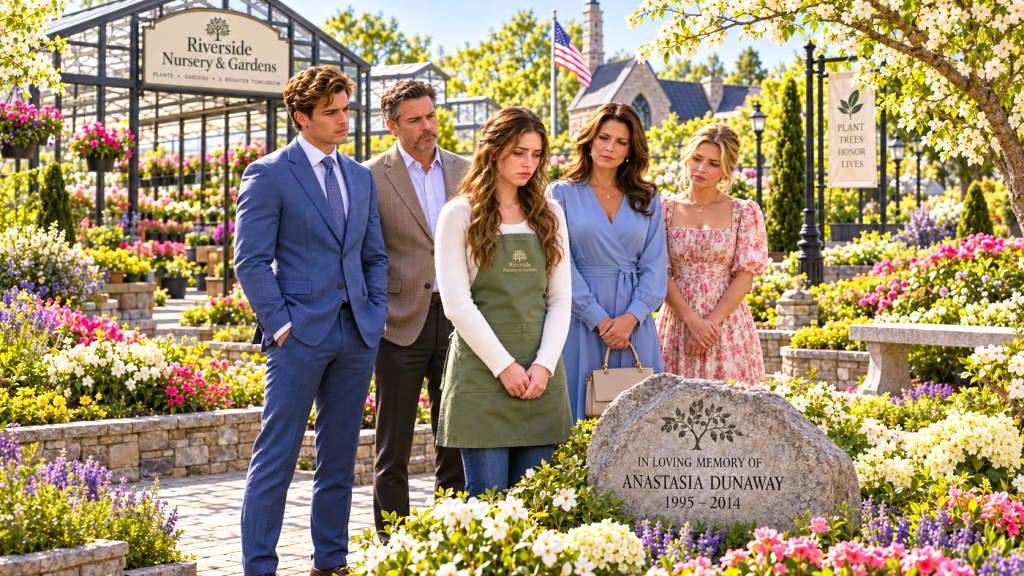
For eight years, my parents made me disappear every time my brother’s fiancée and her family came to visit. Not emotionally. Not figuratively. They literally expected me to pack a bag, leave through the back door, and stay somewhere else until the “important people” were gone.
The first time it happened, I was nineteen years old. My mother stood in my bedroom doorway with one hand wrapped around the brass doorknob and the other folded tightly across her chest.
“They’re respectable people, Anastasia,” she said. “Please don’t make things awkward for us.”
I was sitting cross-legged on my bed with a paperback open in my lap.
“What exactly would I do that would make things awkward?”
Mom sighed.
That sigh became familiar over the years.
It was the sound she made whenever she wanted me to believe I was the difficult person in the conversation.
“You know what I mean.”
“No, I don’t.”
Her eyes drifted toward the prescription bottle beside my lamp.
Then she looked away.
That was when I understood.
Eight months earlier, I had experienced the worst period of my life.
I had been eighteen, exhausted, frightened, and unable to explain why ordinary things suddenly felt impossible.
Sleeping became difficult.
Eating became something I had to remind myself to do.
Crowded rooms made my heart race.
Some mornings, getting out of bed felt like trying to lift a car with my bare hands.
For months, I hid how badly I was struggling because I already knew what my parents thought about mental illness.
Dad called depression “self-indulgence.”
Mom once described a cousin who took anxiety medication as “someone who enjoys being sick.”
So I smiled.
I went to school.
I came home.
I pretended.
Until one night, I couldn’t pretend anymore.
A guidance counselor helped me contact a doctor.
A few days later, after admitting that I was afraid of what might happen if I remained alone, I voluntarily spent a short period receiving psychiatric care.
I stayed less than two weeks.
Those days saved me.
I learned that what was happening to me had a name.
I learned that treatment existed.
I met people who were kind.
I met people who were scared.
I met people who looked completely ordinary and carried pain nobody around them could see.
When I returned home, my parents never asked what I had learned.
Dad only said, “We don’t need the neighbors knowing about this.”
Mom took my discharge paperwork from the kitchen counter and tucked it into a drawer.
“We’ll keep this within the family.”
At the time, I thought she meant privacy.
I didn’t realize she meant erasure.
My older brother, Matthew, had started dating Claire Whitmore shortly before my hospitalization.
Claire came from the sort of family my mother admired from a distance.
Her father, Richard Whitmore, owned commercial properties throughout the state.
Her mother, Patricia, served on charity committees and chaired fundraising galas.
Their family appeared in society pages.
They belonged to a country club.
They traveled internationally.
Claire herself wasn’t particularly flashy from what I could tell, but none of that mattered.
To Mom, the Whitmores represented social proof.
Matthew marrying into that family would mean something.
So when Claire’s parents were invited to our house for the first time, my existence became inconvenient.
“I told them you’re working in Atlanta,” Mom said.
I stared at her.
“I work at Green Haven Nursery fifteen minutes from here.”
“I know where you work.”
“Then why Atlanta?”
“Because it’s simple.”
I laughed once.
I genuinely thought she had made some bizarre joke.
She didn’t laugh.
“Pack enough for Friday and Saturday night.”
I closed my book.
“You’re serious.”
“Anastasia.”
“Where am I supposed to go?”
“Stay with a friend.”
“And if I can’t?”
“Get a motel.”
“With what money?”
Her face hardened.
“You have a job.”
I was nineteen and earning barely above minimum wage watering plants and unloading bags of soil.
Every dollar mattered.
Mom knew that.
She also knew I had only recently returned to work after treatment.
Dad passed my room several minutes later.
I expected him to say the whole thing had gone too far.
Instead, without even stopping, he said, “Just find somewhere else to stay for the weekend.”
That was it.
No discussion.
No apology.
No recognition that they were asking their daughter to evacuate her own bedroom so wealthy strangers would not learn she had once been sick.
So I packed.
My friend Jenna let me sleep on her couch.
On Sunday evening, I came home.
Mom was humming while she arranged leftovers in plastic containers.
“How was your weekend?” she asked.
I looked at her.
She behaved as though I had voluntarily gone on a little vacation.
“Fine.”
“The dinner went wonderfully.”
“Good.”
“Claire’s parents are lovely.”
I nodded.
Then Mom smiled at me.
“Thank you for understanding.”
That phrase stayed with me.
Thank you for understanding.
Understanding what?
That Matthew’s future mattered more than my dignity?
That my illness had transformed me into a family liability?
That love inside our house depended on whether guests were watching?
Still, I stayed.
At nineteen, I believed endurance was maturity.
I told myself this was temporary.
Claire and Matthew might break up.
My parents might realize how cruel the arrangement was.
Maybe one day Mom would apologize.
Instead, the visits became more frequent.
Easter.
Thanksgiving.
Christmas.
Birthdays.
Engagement celebrations.
Graduation weekends.
Whenever Claire’s parents visited, I disappeared.
Sometimes Mom gave me days of notice.
Sometimes hours.
The words eventually became unnecessary.
She would simply appear at my bedroom door and say, “They’re coming tomorrow.”
I would pull the blue duffel bag from my closet.
That bag became a symbol of humiliation.
Two jeans.
Three shirts.
Toiletries.
Medication.
Phone charger.
Book.
Wallet.
Keys.
Leave.
Return when permitted.
I slept at cheap roadside motels with bedspreads that smelled faintly of bleach.
I stayed with coworkers.
After Jenna moved out of state, I lost my easiest escape.
One winter, every affordable hotel in town was booked because of a youth basketball tournament.
I spent most of the night sitting in my car outside a twenty-four-hour diner.
Another weekend, I slept in a bus station because snow made driving dangerous.
Mom knew.
She never said I could come home.
What made it worse was that I was actually getting better.
I worked hard in therapy.
I found the right medication.
I built routines.
I learned how sleep affected my anxiety.
I learned to recognize the difference between a bad day and a crisis.
I stopped treating my mental health as a moral failure.
Green Haven Nursery became the place where I felt most like myself.
At first, I just watered seedlings.
Then I learned propagation.
Soil chemistry.
Pest management.
Pruning.
Tree care.
Customers began requesting me by name.
By twenty-four, I was helping supervise the greenhouse.
By twenty-six, I handled specialty orders and trained new employees.
Plants gave me something people in my family rarely did.
Honesty.
A thirsty plant wilted.
A diseased plant showed symptoms.
Damaged roots affected the leaves.
Nothing pretended everything was perfect while quietly rotting underneath.
At home, however, the lies kept growing.
Mom told me the Whitmores believed I was a successful corporate executive in Atlanta.
Sometimes she added details.
Apparently, fictional Anastasia traveled often.
Fictional Anastasia had a demanding career.
Fictional Anastasia rarely had time to come home.
I hated those stories, but I also found them strangely absurd.
My mother was embarrassed by the daughter who worked with plants, took medication, and lived quietly upstairs.
So she invented a glossy replacement.
I occasionally wondered what would happen if Claire ever met me.
Then, one Tuesday afternoon, she did.
I was rearranging newly arrived dogwoods when someone approached.
“Excuse me?”
I turned.
My hands stopped moving.
Claire Whitmore stood three feet away.
I knew her instantly.
There were framed photographs of her all over our house.
Claire at Matthew’s graduation.
Claire beside Mom at Thanksgiving.
Claire wearing a navy dress at a fundraiser.
Claire holding up her engagement ring.
I had spent years hiding from a woman who had never even seen my face.
Now she stood directly in front of me.
She smiled.
“I was told you’re the tree expert.”
For a second, I couldn’t speak.
Then professional instinct took over.
“What are you looking for?”
“A white dogwood.”
“We have several.”
She followed me down the row.
Her voice was gentle.
She asked intelligent questions.
Nothing about her seemed intimidating.
That surprised me.
For years, my mother had talked about Claire’s family as if they were members of royalty who might faint if forced to occupy the same room as someone with a psychiatric history.
Claire seemed normal.
Warm, even.
“It needs to do well in afternoon sun,” she explained.
“Good drainage?”
“Yes.”
“Clay soil?”
“Unfortunately.”
I showed her several options.
Eventually, she stopped beside a healthy flowering dogwood about seven feet tall.
“This one is beautiful.”
“It’s strong too.”
She touched a leaf carefully.
“It’s for a memorial.”
My stomach tightened.
“I’m sorry.”
“Thank you.”
She looked at the tree.
“My fiancé’s family lost someone very special.”
I thought of Grandpa.
He had died several years earlier.
Maybe the tree was for him.
“Will it be planted on family property?”
“At our church.”
I nodded.
“That should work.”
She read my name tag.
ANASTASIA.
Her expression shifted slightly.
“That’s a beautiful name.”
“Thank you.”
“My fiancé had someone in his family named Anastasia.”
Had.
I should have understood.
But when you have lived inside a lie long enough, your mind becomes skilled at avoiding the obvious.
I assumed Mom must have told Claire about some distant relative.
Claire continued.
“I never met her.”
I looked at her.
For one second, the entire truth was waiting between us.
All I had to say was, “I’m Matthew’s sister.”
I almost did.
Then another customer called from the checkout counter.
The moment broke.
I helped Claire purchase the tree.
I inspected the trunk.
I wrote detailed watering instructions.
I tied the care tag to one of the branches.
Claire thanked me.
“You really love this work.”
“I do.”
She smiled.
“That’s rare.”
Then she left.
I stood watching until her car disappeared.
That evening, I nearly confronted my mother.
I walked downstairs.
Mom was slicing vegetables at the kitchen counter.
“I saw Claire today.”
The words were ready.
I could feel them in my throat.
Then Mom turned.
“Can you grab the salad dressing?”
I stared at her.
Eight years of conditioning won.
I opened the refrigerator.
“Sure.”
I told myself it didn’t matter.
Months later, I learned exactly how much it mattered.
By then, Matthew and Claire had finally begun discussing wedding dates.
Claire had finished graduate school.
Matthew had been promoted.
Both families were gathering more often.
That meant I disappeared more often.
One Thursday evening, Mom entered my room.
“They’re coming tomorrow.”
I looked up.
“How many?”
“What?”
“How many people am I being displaced for this time?”
She frowned.
“Claire’s parents, her aunt, and her uncle.”
“Wonderful.”
“Please don’t start.”
“I didn’t start anything.”
“They’ll be gone Sunday.”
I stared at her.
I was twenty-seven years old.
Eight years had passed since the first time.
Suddenly, I saw the situation from outside myself.
A grown woman was being ordered from her home because her parents were terrified wealthy people might discover she had once needed psychiatric care.
It was insane.
Not my illness.
Their behavior.
Mom waited.
For one moment, I almost refused.
Then exhaustion won.
I grabbed the blue duffel bag.
Mom visibly relaxed.
That expression did something to me.
She wasn’t sad.
She wasn’t conflicted.
She was relieved.
Relieved that I was cooperating with my own disappearance.
“Thank you,” she said.
I didn’t answer.
While packing, I set my medication beside my phone.
Then anger distracted me.
I left without putting it into the bag.
I drove to a motel forty minutes away.
The room had beige walls, a noisy air conditioner, and one lamp that flickered.
I ate crackers for dinner.
Around eleven thirty, I reached for my medication.
Nothing.
I searched the bag twice.
Then remembered seeing the bottle on my nightstand.
For several minutes, I considered skipping it.
But I had worked too hard to treat my health responsibly.
So just after midnight, I drove back.
Several cars were parked outside.
I left mine down the street.
The back door opened quietly.
I entered.
The house smelled like roasted meat and wine.
Light spilled from beneath the dining-room doors.
I could hear distant laughter.
I moved toward the stairs.
Halfway up, I heard voices near my bedroom.
I stopped.
Claire’s mother, Patricia, stood outside my door.
My mother was beside her.
Mom held a tissue.
At first, I thought maybe they were discussing something unrelated.
Then Patricia said, “Would you like me to go inside with you?”
Mom shook her head slowly.
“I still can’t bring myself to.”
I froze.
Mom dabbed her eyes.
“I’ve kept everything exactly the way she left it.”
Patricia touched her arm.
“You’ve been so brave.”
Mom bowed her head.
The performance was extraordinary.
Her shoulders trembled.
Her voice cracked.
Patricia hugged her.
Then she whispered the sentence that destroyed everything I thought I understood.
“Anastasia is watching over all of you.”
My entire body went cold.
Anastasia.
My name.
I pressed one hand against the wall.
Maybe I had misheard.
Maybe they were discussing someone else.
But there was no one else.
Mom whispered, “I hope so.”
I couldn’t breathe normally.
Patricia continued.
“Claire talks about her often. She wishes she could have met her.”
Mom made a soft crying sound.
“So do I.”
So do I.
I nearly stepped into the hallway.
I nearly screamed.
Instead, I remained hidden.
Something instinctive told me I needed to understand the full truth before they knew I was there.
Eventually, they went downstairs.
I waited.
Then I walked to my bedroom.
The door was locked.
My room had never been locked when I was away before.
My hand shook as I used my key.
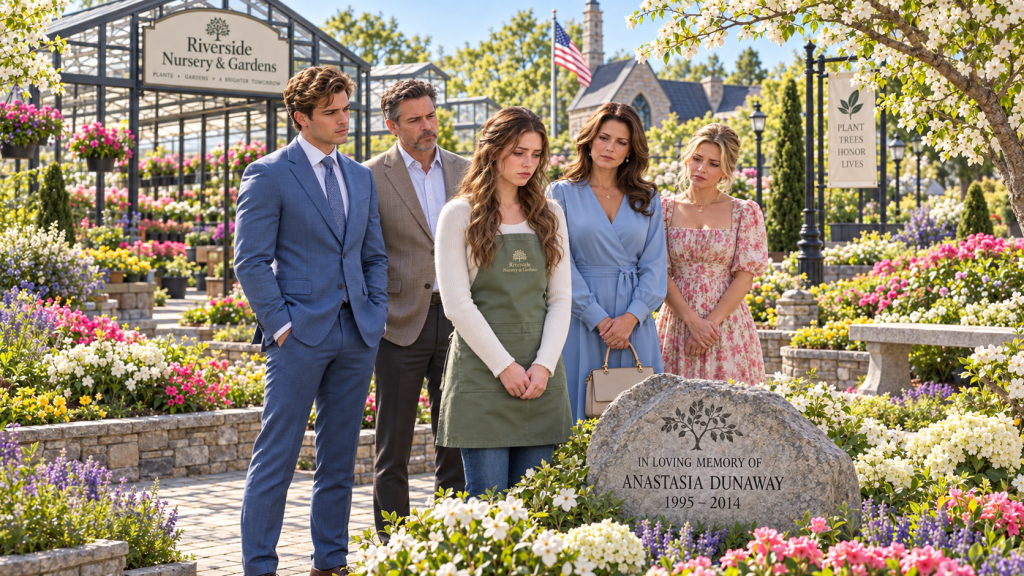
The door opened.
For several seconds, I simply stared.
Everything looked familiar.
Yet nothing looked lived in.
My laundry basket was gone.
My work shoes had disappeared.
The half-read novel I’d left beside the bed had been removed.
My charger was missing.
The sweater hanging from the chair was gone.
Even the glass of water from that morning had vanished.
In their place were childhood objects.
My stuffed rabbit sat against the pillows.
Old school trophies lined the shelf.
A framed picture of me at sixteen rested on the desk.
My mother had transformed the room.
It didn’t look like a bedroom temporarily vacated by a twenty-seven-year-old woman.
It looked preserved.
I walked slowly inside.
Then I saw the photograph.
A white dogwood.
My dogwood.
The exact tree Claire had purchased.
I recognized the shape of the lower branches.
The small scar on the trunk.
I had examined it with my own hands.
Beside the photograph sat a black granite plaque.
My feet felt heavy as I approached.
IN LOVING MEMORY OF
ANASTASIA DUNAWAY
1995–2014
I read it once.
Then again.
The year I had been hospitalized.
My parents had not told Claire’s family I was living in Atlanta.
They had told them I was dead.
My mind raced backward through eight years.
Every motel.
Every forced weekend away.
Every holiday.
Every time Mom said she was “protecting my privacy.”
Every time Dad refused to look at me.
Every time Matthew allowed it.