
The night Julian ended our marriage, he laid my fertility records across the kitchen table as though they were evidence in a criminal trial.
Then he smiled. “Chloe is pregnant.” I stared at him.
Outside, October rain tapped softly against the windows of the house we had shared for almost nine years. The kitchen smelled faintly of the chicken soup I had made earlier, believing my husband would come home tired and hungry.
Instead, he had come home to destroy my life. “What did you say?”
Julian adjusted the silver cuff links on the expensive navy suit I had bought him for our anniversary.
“Chloe is pregnant,” he repeated. “Twelve weeks.”
Chloe was his twenty-eight-year-old executive assistant.
I had met her.
She had eaten dinner at our table.
She had once hugged me at Julian’s company Christmas party and told me how lucky I was to have such a devoted husband.
My eyes dropped to the medical records spread across the table.
For six years, those papers had controlled my life.
Blood tests.
Hormone injections.
Ultrasounds.
Procedures.
Surgeries.
Appointments.
And losses I still couldn’t think about without feeling something collapse inside my chest.
Julian rested his hands on the back of a chair.
“So I guess now we know who the problem was.”
Those words hurt more than his confession.
For six years, I had blamed myself.
Julian’s mother, Patricia, had helped.
“A woman isn’t complete until she becomes a mother.”
She had said it during Thanksgiving dinner.
At Christmas, she asked whether I had considered that perhaps God was “trying to tell me something.”
Julian always pretended to defend me afterward.
“Don’t listen to her, Claire.”
He would hold my hand in fertility clinics.
He kissed my forehead after failed treatments.
He once sat beside me on the bathroom floor while I cried and promised:
“Whatever happens, we’re facing this together.”
Apparently, “together” had an expiration date.
“Are you leaving me?” I whispered.
Julian laughed softly.
“Don’t make this dramatic.”
“My husband just told me his assistant is pregnant.”
“Chloe can give me something you can’t.”
I looked at the man I had loved for almost a decade and realized I didn’t recognize him.
“Get out.”
His expression changed.
“This is my house too.”
“Then I’ll leave.”
That was my first mistake.
By sunrise, Julian had emptied almost everything from our joint checking account.
By noon, he had canceled the health insurance provided through his company.
The next afternoon, while I was at work, a locksmith changed the locks.
My clothes, photographs, jewelry, and personal documents were packed into boxes and left inside the garage.
The car disappeared too.
It was registered through Julian’s company.
His attorney emailed me that evening claiming I had “voluntarily abandoned the marital residence.”
I stood on the porch reading those words on my phone while rain soaked through my coat.
Julian opened the front door.
“Don’t make this harder than necessary.”
“You emptied our account.”
“You’ll manage.”
“You canceled my insurance.”
“We’re getting divorced.”
“You locked me out of my own home.”
He shrugged.
“You’ve always been good at being alone.”
Then he closed the door.
I stood there with two suitcases and a cardboard box containing nine years of my life.
Across the narrow country road, someone was watching.
Garrison Blackwood.
Everyone in Cedar Hollow knew Garrison.
Or at least we thought we did.
He lived alone in an old white farmhouse surrounded by maple trees and a weathered split-rail fence.
He drove an old Ford pickup.
He had a large aging dog named Duke.
He rarely attended community events.
People called him “Sheriff” because he had supposedly spent most of his career in law enforcement before retiring.
Garrison was sixty-two, tall and broad-shouldered, with silver beginning to spread through his dark hair.
He was quiet.
The kind of quiet arrogant people mistake for weakness.
He walked across the road.
“Claire?”
I wiped my face quickly.
“I’m fine.”
He looked at my suitcases.
Then at Julian’s house.
Then back at me.
“Do you have somewhere safe to stay tonight?”
“I’ll find a motel.”
“No.”
I almost laughed.
“No?”
“You can stay at my place.”
“I appreciate it, but I don’t need charity.”
“Good.”
His eyes met mine.
“Because I’m not offering charity.”
Twenty minutes later, I was sitting inside Garrison’s kitchen.
His farmhouse was nothing like I expected.
It wasn’t lonely or neglected.
It was warm.
Books covered one wall.
Old photographs stood on the mantel.
Duke slept beside the fireplace.
Garrison made coffee.
Then he placed three things on the kitchen table.
A spare house key.
A business card belonging to a divorce attorney.
And a sealed envelope.
I picked up the card.
“Rebecca Sloan?”
“Best family-law attorney I know.”
“I can’t afford the best.”
“You haven’t spoken to her yet.”
Then I touched the envelope.
A medical center in Boston was printed in the corner.
I looked at him.
“What is this?”
“A consultation.”
“With whom?”
“Dr. Nathaniel Reeves.”
I knew the name.
Anyone who had spent years in fertility clinics knew it.
Dr. Reeves was one of the country’s most respected reproductive endocrinologists.
“I couldn’t afford ten minutes with him.”
“It’s paid.”
My hand froze.
“Garrison, why are you doing this?”
He sat across from me.
For several seconds, he said nothing.
Then he looked toward an old photograph on the mantel.
A beautiful woman stood beside a younger Garrison.
“My wife, Eleanor.”
I nodded.
“She died twelve years ago.”
“I’m sorry.”
“We tried for children for fourteen years.”
I hadn’t known.
“Eleanor blamed herself,” he continued. “Doctors blamed her too. My mother blamed her. Her family blamed her. Everybody had an opinion about what was wrong with my wife.”
His jaw tightened.
“Then we found out the original diagnosis had been wrong.”
I understood suddenly why he had been watching me differently during the last several years.
“She wasn’t infertile?”
“No.”
He reached into a folder.
“Neither are you.”
He slid a photocopied medical report toward me.
Julian’s name was printed across the top.
Julian Mercer.
My eyes moved downward.
Then stopped.
Severe male-factor infertility.
Extremely low probability of natural conception.
I read it twice.
Then three times.
“This isn’t possible.”
“It is.”
“My doctors said—”
“Your doctors treated you based partly on information provided by your husband.”
I felt cold.
“Where did you get this?”
Garrison folded his hands.
“The clinic where you originally received treatment had an administrator named Paul Denton.”
I remembered him.
“Paul was investigated several years ago for falsifying records and accepting money to alter medical documentation.”
My stomach tightened.
“Julian paid him?”
“We believe so.”
“We?”
Garrison looked at me.
That single word suddenly seemed important.
“Who is we?”
He ignored the question.
Instead, he handed me another document.
It showed a payment from one of Julian’s consulting companies to a business associated with Denton.
The date was six years earlier.
Two weeks after Julian had undergone fertility testing.
I covered my mouth.
“He knew.”
“Yes.”
“He knew the entire time.”
“I believe he did.”
Images came back to me.
Julian holding my hand.
Julian comforting me after injections.
Julian telling his mother to be patient with me.
Julian watching while I underwent procedures that left me sick for days.
“Why?”
Garrison’s answer was quiet.
“That’s what we need to find out.”
I barely slept.
The next morning, Rebecca Sloan arrived at the farmhouse at seven-thirty.
She was fifty-something, sharply dressed, and carried two leather folders.
Within fifteen minutes, she had dismantled almost everything Julian’s attorney had done.
“He cannot simply empty marital accounts and declare them his,” she said.
“He already did.”
“And we’re going to make him explain that to a judge.”
“What about the house?”
“Marital property.”
“The car?”
“Potentially marital property.”
“My insurance?”
“We’ll address that too.”
For the first time in forty-eight hours, I felt like I could breathe.
Three days later, Garrison drove me to Boston.
Dr. Reeves reviewed years of medical records.
He ordered new tests.
I returned two weeks later.
He sat across from me with a calm expression.
“Claire, I want to be careful about promising outcomes.”
I nodded.
“But I see no evidence supporting the idea that you were solely responsible for your fertility difficulties.”
My eyes filled with tears.
“So I could have children?”
“You may have a reasonable path to pregnancy with appropriate treatment.”
I cried in the parking garage.
Not because I was suddenly guaranteed a baby.
I wasn’t.
I cried because six years of shame had been built around a lie.
Garrison waited beside the truck.
When I finally looked at him, he didn’t tell me everything would be fine.
He simply opened his arms.
I hugged him.
And for the first time since Julian left, I didn’t feel abandoned.
Over the next two months, Rebecca uncovered more.
Julian had transferred marital funds into business accounts.
He had hidden investment income.
He had attempted to remove my name from several assets.
Then came the discovery that changed everything.
Chloe’s pregnancy timeline didn’t make sense.
The dates conflicted with Julian’s travel schedule and his medical records.
Rebecca didn’t need to investigate Chloe’s private life.
The contradiction became relevant when Julian himself attempted to use Chloe’s pregnancy as evidence that I had caused our infertility.
Under questioning, his argument collapsed.
Then Chloe contacted me.
I almost didn’t answer.
“Claire?”
Her voice was shaking.
“What do you want?”
“I need to tell you something.”
“Then tell me.”
She started crying.
“Julian isn’t the father.”
I closed my eyes.
“Does he know?”
“He does now.”
The silence that followed felt almost unreal.
“Why did you tell him he was?”
“I didn’t. He assumed.”
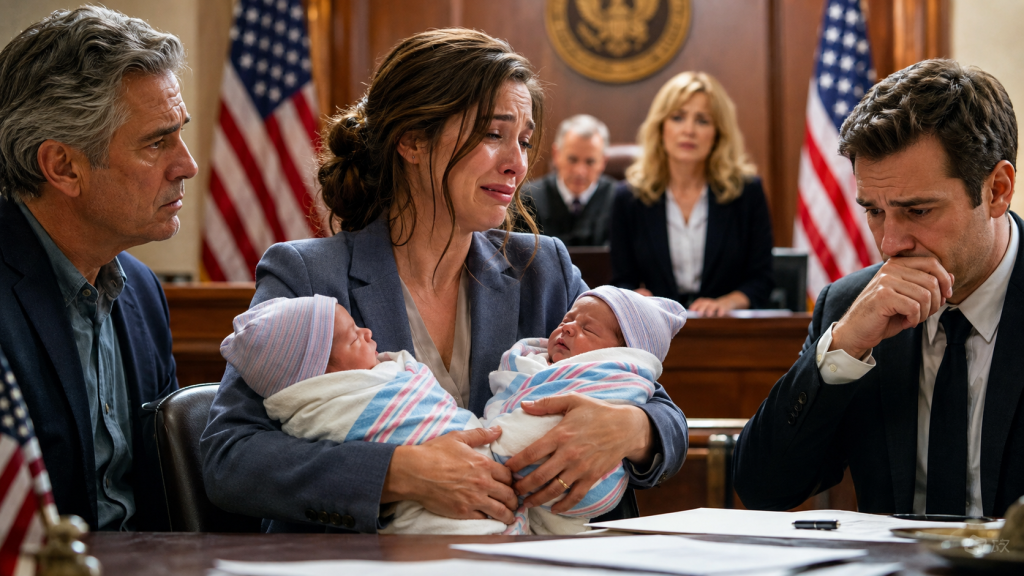
According to Chloe, when Julian discovered she was pregnant, he became obsessed with the idea that the baby proved his fertility.
He announced that he would leave me.
Chloe panicked.
She had been involved with someone else before she and Julian became romantically involved.
She had tried to explain.
Julian wouldn’t listen.
“He wanted the story to be true,” she whispered.
I almost felt sorry for him.
Almost.
By January, a judge had ordered temporary restoration of my access to marital funds.
Julian was furious.
He called me.
“You’re destroying my reputation.”
I laughed.
It surprised both of us.
“I haven’t told anyone anything.”
“You hired people to investigate me.”
“I hired an attorney.”
“And Blackwood.”
I went silent.
“How do you know about Garrison?”
Another pause.
Then Julian said something strange.
“Ask your neighbor what he really did before he retired.”
The call ended.
That evening, I confronted Garrison.
“You weren’t just a sheriff.”
He continued chopping vegetables.
“No.”
“Julian knows something.”
“He knows enough to be nervous.”
“Then tell me.”
Garrison put down the knife.
“I spent nine years as county sheriff.”
“And before that?”
“Federal service.”
“What kind?”
“Financial crimes. Public corruption. Organized fraud.”
I stared at him.
“You were a federal investigator?”
“For twenty-three years.”
The quiet retired sheriff across the road had spent decades tracing money, exposing fraud, and building cases against people who believed wealth made them untouchable.
“Why does Julian know you?”
Garrison looked toward the window.
“Because his father knew me.”
My stomach tightened.
“Julian’s father?”
“Victor Mercer was investigated fifteen years ago.”
I knew Julian’s father had died before our wedding.
Julian described him as a brilliant businessman.
“He ran several investment companies,” Garrison said. “Some legitimate. Some weren’t.”
“Was he convicted?”
“He died before the investigation concluded.”
“And Julian?”
“He was young enough that we never established how much he knew.”
I sat down.
“So you’ve been watching him?”
“No.”
Garrison looked directly at me.
“I’ve been watching you.”
That sounded strange until he explained.
“Eleanor knew your mother. Before she died, she asked me to stop treating the world like an investigation and start noticing when people needed help.”
His expression softened.
“When you and Julian moved across the road, I recognized the surname. But I had no evidence Julian was doing anything illegal, so I left it alone.”
“Until now.”
“Until I watched him lock his wife out in the rain.”
Six months after Julian left, I received news I had stopped allowing myself to dream about.
I was pregnant.
With twins.
The pregnancy followed months of careful treatment, counseling, and donor conception.
I sat in the examination room staring at two tiny shapes on the ultrasound screen.
“Two?” I whispered.
Dr. Reeves smiled.
“Two.”
I laughed and cried at the same time.
Garrison was waiting outside because I had asked him to come.
I handed him the ultrasound picture.
He stared at it.
Then removed his glasses.
For the first time since I had known him, Garrison Blackwood cried.
“Eleanor would’ve liked you,” he said.
“I think I would’ve liked her.”
“You would have.”
My pregnancy wasn’t easy.
Because of my age and medical history, I was treated by a team of specialists.
Garrison drove me to appointments whenever I needed him.
He repaired the loose railing outside the small cottage I rented.
He stocked my freezer when morning sickness made cooking impossible.
He never tried to become the hero of my story.
That was what made him important.
He simply showed up.
Julian saw me again when I was nearly seven months pregnant.
We were attending what became the final major hearing in our divorce.
I walked into the courthouse with Rebecca beside me.
Garrison followed several steps behind.
Julian was standing near his attorney.
His eyes dropped immediately to my stomach.
He went completely still.
“Claire?”
I continued walking.
He stepped toward me.
“You’re pregnant?”
Rebecca moved slightly between us.
Julian stared at me.
“How?”
I almost smiled.
“That isn’t your concern anymore.”
Then he noticed Garrison.
The color disappeared from his face.
“Blackwood.”
Garrison nodded.
“Julian.”
“You knew.”
“Knew what?”
“Who my father was.”
“Yes.”
Julian’s attorney looked confused.
“Mr. Mercer?”
Julian ignored him.
“You’ve been doing this because of my father.”
Garrison’s expression remained calm.
“No. Your father has been dead for years. You’re responsible for your own decisions.”
“You investigated him.”
“I investigated facts.”
People in the hallway had started looking toward us.
Julian lowered his voice.
“You’re just some retired county sheriff.”
Garrison smiled slightly.
“That’s what you told yourself.”
Rebecca later explained why Julian had reacted so strongly.
Garrison Blackwood’s name was still known among certain federal investigators, attorneys, and financial-crimes prosecutors.
He had testified in major corruption cases.
He had helped dismantle fraud networks worth hundreds of millions of dollars.
He had trained investigators.
He had spent his career following hidden money.
And Julian had just spent months moving money around while divorcing the woman who lived across the road from him.
The irony was almost perfect.
Julian didn’t go to prison.
This wasn’t a fairy tale where every cruel person ended in handcuffs.
What happened was more realistic.
And, in some ways, more satisfying.
He had to account for the marital funds.
Several transfers were reversed or included in the divorce settlement.
I received my fair share of our assets.
He paid part of my legal fees.
His attempt to portray me as a wife who had voluntarily abandoned the marriage failed.
And his relationship with Chloe ended.
Months later, Chloe sent me one final message.
She apologized.
I didn’t become her friend.
I didn’t need to.
But I forgave her enough to stop carrying her inside my head.
Julian was harder.
One evening, shortly before my babies were born, he appeared at my cottage.
Garrison happened to be repairing a fence nearby.
Julian stayed at the gate.
“You look happy,” he said.
“I am.”
He stared at my stomach.
“Twins.”
“Yes.”
“A boy and a girl?”
“Two girls.”
He looked down.
For a moment, I saw the man I had married instead of the man who had betrayed me.
“I’m sorry,” he said.
I didn’t answer.
“For everything.”
“You let me believe I was broken.”
“I was ashamed.”
“So you gave the shame to me.”
His eyes filled.
“I know.”
“No, Julian. I don’t think you do.”
I walked closer to the gate.
“For six years, every time a treatment failed, I apologized to you. Do you remember?”
He looked away.
“I apologized for disappointing you. I apologized to your mother. I apologized to myself. And every single time, you knew.”
“I was scared you’d leave.”
The cruelty of that sentence stunned me.
“So you lied because you were afraid I would do exactly what you eventually did to me.”
He had no answer.
I touched my stomach as one of the babies moved.
“I hope someday you understand what you destroyed.”
He looked at me.
“Our marriage?”
“No.”
I shook my head.
“The person I believed you were.”
Julian left.
I never saw him privately again.
My daughters arrived three weeks early on a cold November morning.
Emma weighed five pounds, eight ounces.
Grace weighed five pounds, three ounces.
Both were healthy.
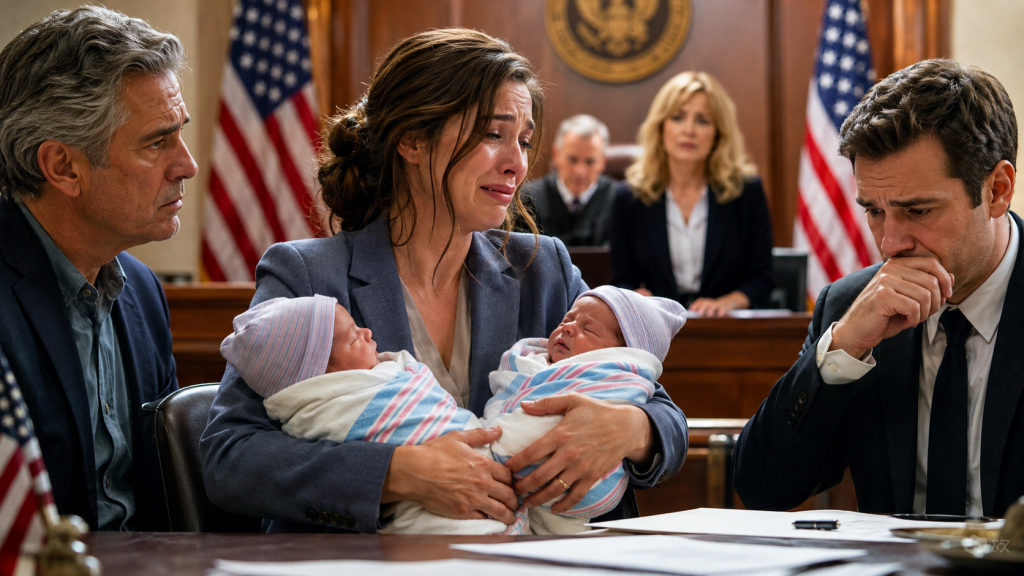
When the nurse placed them beside me, I thought about every clinic waiting room where I had sat believing motherhood was something my body had denied me.
I thought about Patricia’s comments.
Julian’s lies.
The medical records on our kitchen table.
And the night I stood outside my former home with two suitcases.
Then I looked at my daughters.
Nothing about the journey had happened the way I once imagined.
But they were here.
Garrison visited that afternoon.
He stood awkwardly near the hospital door holding two tiny stuffed bears.
“You can come closer,” I laughed.
“I’ve arrested armed bank robbers with less fear than I’m experiencing right now.”
I handed him Emma.
His enormous hands trembled.
Emma opened her eyes.
Garrison stared down at her.
“Well,” he whispered, “hello there.”
Grace began crying.
“You’re outnumbered, Sheriff.”
He smiled.
“Wouldn’t be the first time.”
Two years have passed.
My daughters call Garrison “Grandpa Garr.”
He complains about the name.
He secretly loves it.
Duke died peacefully the following spring at almost fifteen years old.
We buried him beneath the maple tree beside Garrison’s farmhouse.
I bought my own house eventually.
Not Julian’s house.
I didn’t want it.
Too many rooms contained memories I had outgrown.
Instead, I bought a smaller place.
Across the road from Garrison.
Some people in Cedar Hollow still think he’s just the lonely retired sheriff who keeps to himself.
I let them.
Garrison taught me that the strongest people rarely need to announce what they are capable of.
Julian taught me something too.
Cruelty doesn’t always arrive shouting.
Sometimes it holds your hand in a doctor’s waiting room.
Sometimes it kisses your forehead.
Sometimes it allows you to carry guilt that belongs to someone else because admitting the truth would require courage.
For years, I thought my greatest failure was that I couldn’t give Julian a child.
I understand now how wrong that was.
My greatest mistake was allowing another person’s fear and dishonesty to determine my worth.
The night Julian locked me out, he believed he had taken everything.
The money.
The house.
The insurance.
The marriage.
My future.
He even told me I was good at being alone.
But he misunderstood something.
Being alone and being powerless are not the same thing.
Sometimes the moment someone abandons you is the moment you finally discover who was quietly standing beside you all along.
And sometimes the ending you begged life not to give you becomes the beginning you never knew you needed.
Every Sunday evening, my daughters and I walk across the road to Garrison’s farmhouse.
He cooks too much food.
The girls leave toys everywhere.
There are fingerprints on windows that stayed spotless for years.
Photographs of Emma and Grace now cover the mantel beside Eleanor’s picture.
Garrison says the house is too noisy.
Then he buys the girls another box of toys.
Last Sunday, I found him sitting on the porch while Emma and Grace chased each other across the yard.
I sat beside him.
“You saved me,” I said.
He shook his head.
“No.”
“You did.”
“No, Claire. I opened a door.”
He looked toward my daughters.
“You walked through it.”
I smiled.
Across the road stood the place where my old life had ended.
Beside me sat the man everyone had mistaken for lonely.
And in the yard were two little girls laughing beneath the autumn trees.
For the first time, I understood something Eleanor must have understood too.
Family isn’t always the person who promises never to leave.
Sometimes family is the person who notices you’re standing in the rain and simply says:
“You don’t have to stand there alone.”
And sometimes that is enough to change everything.
THE END.THANK YOU FOR READING!