
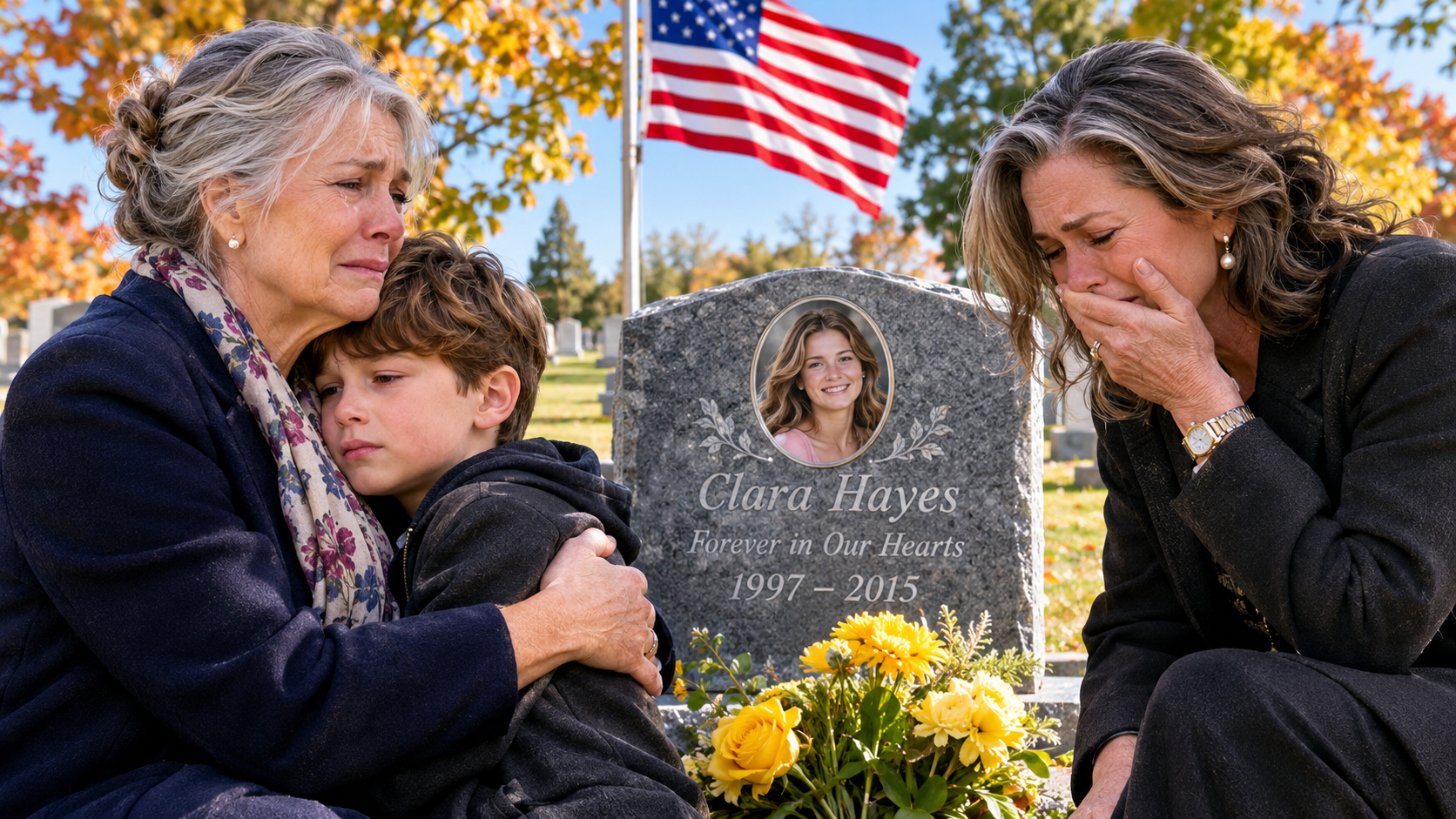
Eleanor looked at me.
“My son.”
This stranger had given me an answer in seconds.
“What’s his name?”
“Julian Sterling.”
“Where is he?”
Instead of answering, Eleanor reached into her handbag and pulled out an old sealed envelope.
My name was written across the front.
Martha.
I recognized Clara’s handwriting immediately.
My knees nearly weakened.
“You had this?”
Eleanor nodded.
“How long?”
Her silence answered me.
“You carried a letter from my daughter for 10 years?”
“I was afraid.”
I wanted to scream at her.
But Leo was almost beside us.
So I took the envelope.
“You’re coming home with us.”
At my house, I sent Leo upstairs.
Then I sat across from Eleanor at the kitchen table and opened the envelope.
Inside were several pages.
The first lines made my hands shake.
Mom,
If Eleanor is giving you this, then either I lost my nerve, or something happened before I could explain everything myself.
Leo’s father is Julian Sterling.
And before you decide he abandoned us, you need to know what really happened.
Clara explained that she had met Julian at the downtown Portland bookstore where she worked weekends.
He was 19.
They dated quietly for several months.
Julian came from a wealthy family.
His father, Richard Sterling, was a powerful real estate developer who controlled nearly every aspect of his son’s life.
He chose Julian’s university, career path, friends, and even the kind of woman he considered acceptable.
Clara was none of those things.
When she became pregnant, Julian told his parents.
He planned to leave home, find work, and help raise the baby.
Instead, everything collapsed.
After a vicious confrontation with Richard, Julian—who had struggled with depression for years—suffered a severe psychiatric crisis.
He survived but was admitted to a residential treatment facility in Oregon.
Richard hid everything from Clara.
He disconnected Julian’s phone and told her Julian had left the Pacific Northwest and wanted nothing more to do with her.
When Clara went to the Sterling home demanding answers, Richard offered her $25,000 to disappear.
She refused.
Then he warned her that if she continued interfering, he could make Julian’s treatment and future much more difficult.
Clara was terrified.
That was why she kept Julian’s name from me.
She knew that if I learned what Richard had done, I would confront him.
She also knew Julian was fragile.
So she convinced herself that silence was temporary.
Then Eleanor discovered the truth.
She found one of Clara’s ultrasound photographs hidden among Richard’s papers and realized her husband had been lying to both teenagers.
Eleanor secretly contacted Clara and gave her the address of Julian’s treatment center.
Clara and Julian began exchanging letters.
They managed two phone calls.
Clara planned to tell me everything once Julian was stable enough to handle whatever confrontation followed.
During one of Eleanor’s last secret meetings with Clara, several weeks before Clara’s final hospitalization, Clara handed her the sealed envelope addressed to me.
“If something happens before I tell Mom myself,” Clara had said, “promise me you’ll give her this.”
Eleanor promised.
Then Clara died.
I lowered the pages.
“What happened after that?”
Eleanor’s eyes filled.
“Richard told Julian Clara was dead.”
“And Leo?”
“He told him the baby died too.”
I stared at her.
“Did you know that was a lie?”
“Not at first.”
Several weeks after Clara’s funeral, Eleanor found an online death notice that mentioned Clara was survived by her newborn son, Leo.
That was how she learned he had lived.
“Then why didn’t you tell Julian immediately?”
“Richard controlled Julian’s treatment. He controlled our finances. He monitored where I went and who I spoke to. He told me that if I contacted you or interfered again, he would stop paying for Julian’s private care.”
“That explains why you were afraid.”
“I know.”
“It doesn’t excuse what you did.”
“No.”
“And the letter?”
She looked down.
“I kept it.”
“You could have mailed it anonymously.”
“Yes.”
“You could have called.”
“Yes.”
“You had 10 years.”
Her voice broke.
“I know.”
I stood.
“Stop saying that.”
She wiped her eyes.
“When Leo was almost a year old, Julian moved from residential care into a supervised outpatient program. For the first time, I could visit him without Richard controlling every conversation.”
That was when she told Julian the truth.
Clara had died.
But their son had survived.
Julian had spent almost a year grieving a child who was alive.
“What did he do?”
“He broke down again.”
For several years, Julian’s life remained unstable.
He moved between outpatient programs, shorter hospital stays, therapy, and periods when he could barely function.
Richard continued controlling his housing, finances, and treatment.
Eventually, however, Julian became stable enough to leave his father’s influence.