
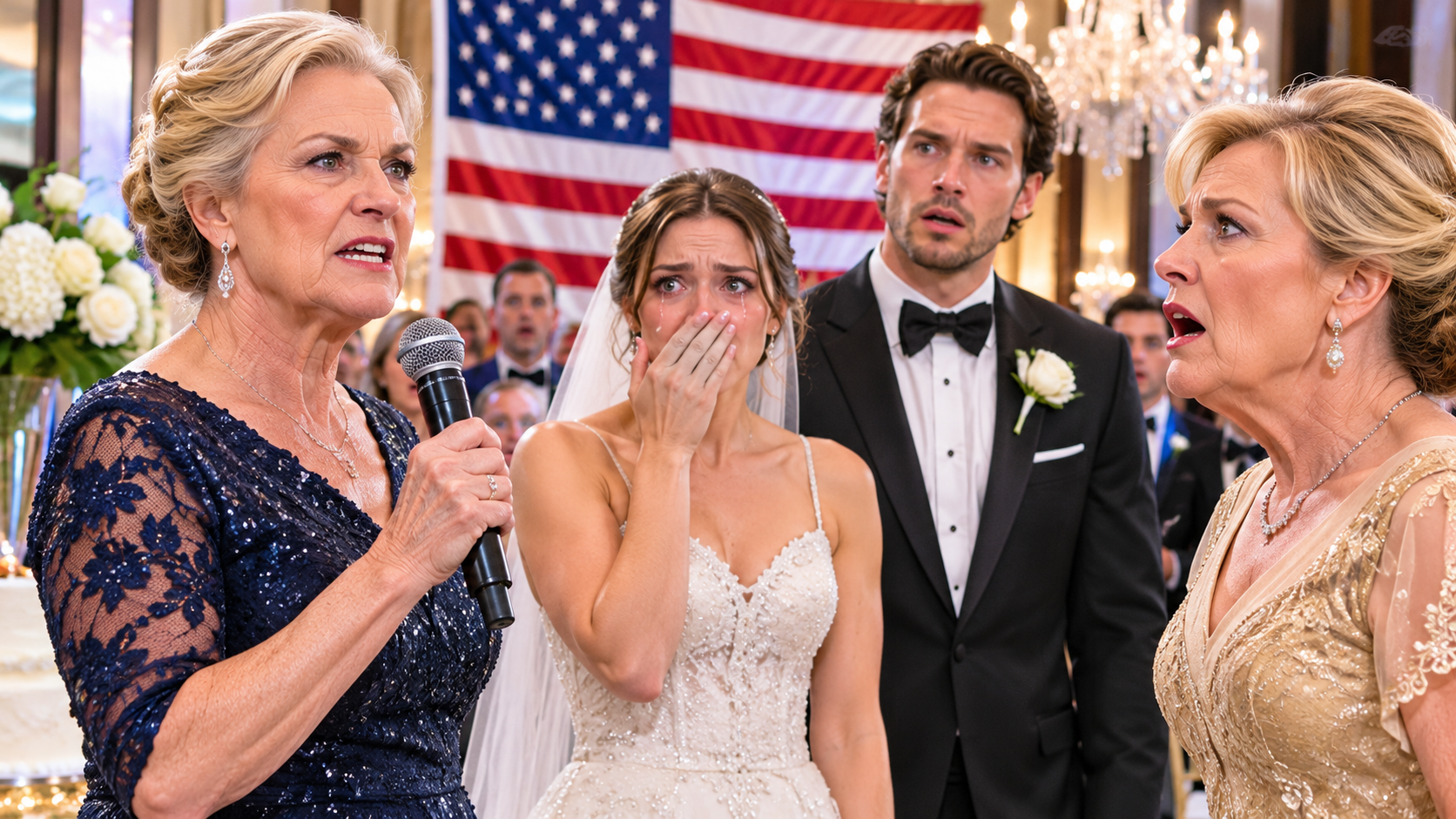
“Put what behind us?”
“The scene.”
I stood.
“Your mother announced she was moving into my home.”
He sighed.
“She didn’t mean it like that.”
“Then what did she mean?”
He rubbed his forehead.
“Mom’s been under financial pressure. She sold her place because she thought we’d help her.”
I shook my head.
“You promised her my condo.”
He didn’t deny it.
Instead, he said:
“I thought once we were married, you’d understand.”
I felt something inside me break.
“Understand what?”
“That family helps family.”
I stared at him.
“Mark, your mother didn’t ask for help. She announced she was taking my home.”
He stepped closer.
“It’s a five-million-dollar condo, Sophie. You could easily afford another place.”
For a moment, I couldn’t speak.
Then I whispered:
“That’s how you see it?”
He frowned.
“What?”
“Something I worked for my entire adult life is disposable because you want to give it away.”
His face hardened.
“Don’t make me sound like a villain.”
I looked toward my mother.
Then back at him.
“I don’t have to.”
I took off my wedding ring.
Mark stared.
“Sophie?”
I placed it on the table.
His expression changed.
“What are you doing?”
I looked directly at him.
“I need time away from you.”
He laughed nervously.
“Come on. We just got married.”
“Yes.”
My voice trembled.
“And you’ve already shown me that you don’t respect my decisions.”
He stepped forward.
“We can fix this.”
I shook my head.
“Not tonight.”
Then I picked up my phone and called my wedding planner.
I asked her to arrange transportation to my parents’ home.
I wasn’t going on the honeymoon.
And I wasn’t going back to Tribeca with Mark.
The following morning, my phone had forty-three missed calls.
Mark.
Diane.
Mark again.
His sister.
Several relatives.
I ignored them.
Then I opened an email from Mark.
Soph, please don’t overreact. Mom got carried away. We can work this out.
I stared at the words.
Don’t overreact.
He hadn’t apologized for promising my property to someone else.
He hadn’t explained his finances.
And he hadn’t acknowledged that he’d kept me out of a decision affecting my home.
He simply wanted the embarrassment to disappear.
I closed the email.
Then called an attorney.
Not my mother’s attorney.
My own.
Her name was Rachel Morgan.
She specialized in matrimonial law and high-value property disputes.
We met two days later.
I told her everything.
The condo.
The transfer.
The wedding.
Diane’s announcement.
Mark’s reaction.
And the allegations about his debts.
Rachel listened carefully.
Then asked:
“Did Mark ever have an ownership interest in the condo?”
“No.”
“Did he contribute to its purchase?”
“No.”
“Did you sign any agreement giving him rights to occupy or control it?”
“Not that I’m aware of.”
She nodded.
“Good. We’ll review the documents. But we also need to examine the transfer to your mother.”
I swallowed.
“Is that a problem?”
“It could create issues depending on its structure, tax treatment, and timing. We need to understand exactly what was signed and whether it reflected your true intentions.”
I nodded.
Then she asked:
“Do you want to remain married?”
I stared at my hands.
“I don’t know.”
She smiled gently.
“Then don’t let anyone rush you into an answer.”
Within two weeks, Mark’s financial situation began to unravel.
Through proper legal disclosures and documents he eventually provided, we learned that he had invested heavily in a private real-estate venture.
The project failed.
His losses were substantial.
He had also taken out loans and extended credit beyond what he’d admitted to me.
The financial pressure was real.
But that wasn’t what ended my trust.
It was the concealment.
Mark had known about the debts before proposing.
He had never told me.
And his mother had been asking questions about my property long before the wedding.
I remembered how Diane insisted our honeymoon should be shorter.
How she complained about my “expensive independent lifestyle.”
How she repeatedly suggested that married couples should combine everything.
Suddenly, those comments sounded very different.
Diane called me one evening.
I answered because I wanted to hear what she would say.
“Sophie,” she began, “I think we need to clear the air.”
I sat beside the window.
“Go ahead.”
She sighed.
“I may have spoken too openly at the wedding.”
I waited.
“But your mother humiliated me.”
I almost laughed.
“Diane, you announced you were moving into my home.”
She sounded offended.
“Mark told me it was arranged.”
“Did he tell you I agreed?”
Silence.
Then she said:
“I assumed you’d support your husband.”
I took a breath.
“Supporting a spouse doesn’t mean surrendering property without a conversation.”
She scoffed.
“You’re making everything about money.”
I looked around my parents’ guest room.
“No, Diane.”
I paused.
“YOU MADE MY HOME YOUR RETIREMENT PLAN BEFORE YOU EVEN ASKED WHETHER I WANTED YOU LIVING THERE.”
Then I ended the call.
Mark and I met three weeks later.
At a neutral location.
With no family members present.
He looked exhausted.
His confident smile was gone.
“Sophie.”
“Hello, Mark.”
He sat across from me.
For several minutes, neither of us spoke.
Then he whispered:
“I messed up.”
I looked at him.
He continued.
“I thought Mom would be happy if she could move into Tribeca. And I thought you’d eventually agree.”
I stared.
“Why?”
He looked down.
“Because you’re generous.”
My throat tightened.
“Generous?”
He nodded.
“You’ve always helped people.”
I took a breath.
“Mark, generosity requires choice.”
He looked up.
I continued.
“You don’t get to make promises with someone else’s property and call them selfish when they refuse.”
His eyes filled.
“I know.”
Then he whispered:
“I’m sorry.”
For a moment, I wanted to forgive him.
I remembered our first date.
The way he held my hand when my grandfather died.
The little notes he used to leave beside my coffee cup.
The night he proposed.
I remembered believing that this man knew me better than anyone.
Then I thought about his words at our wedding.
We’re married now. You can’t keep thinking about everything as yours.
I looked at him.
“Mark, why didn’t you tell me about your debts?”
He stared at the table.
Then answered:
“Because I was afraid you’d leave.”
I swallowed.
“So you let me marry you without knowing.”
He nodded.
“And you promised my condo to your mother.”
Another nod.
I closed my eyes.
When I opened them, I knew.
“I can’t build a marriage on that.”
His face crumpled.
“Sophie, please.”
I shook my head.
“I’m sorry.”
And for the first time, I understood that loving someone didn’t mean I had to ignore what they’d shown me.
Rachel helped me navigate the legal process for ending the marriage.
Because we’d separated immediately after the wedding, we explored the remedies available under New York law based on the actual circumstances.