
Daniel’s message remained on my screen. Mom, why are police outside? I did not answer. Rachel had already warned me not to. The emergency room suddenly felt very quiet despite the movement around me. Nurses passed the open doorway. Somewhere down the hall, a child was crying. A monitor beeped steadily behind a curtain. But all I could think about was my house.
My dining room. The broken glass still scattered across the floor. And the people sitting around my Easter table who had spent months acting as though the rooms in my home were simply waiting for them to claim. Rachel’s voice remained calm on the phone.
“Margaret, listen carefully. The officers are going to secure whatever evidence they can. Your cameras should have recorded the dining room entrance and part of the table, correct?”
“Yes.”
“And the kitchen?”
“Yes.”
“Good.”
I closed my eyes.
Three months earlier, installing cameras inside my own house had felt ridiculous.
Now it felt like the smartest decision I had made in years.
“Rachel,” I said quietly, “I never thought it would go this far.”
“I know.”
“I thought they would pressure me. I thought Vanessa might yell. I never thought she would actually throw something.”
Rachel paused.
“That is exactly why we document patterns before they escalate.”
Another notification appeared.
Daniel again.
Please call me.
Then another.
The police are asking Vanessa questions.
Then:
Mom, seriously. Answer me.
I turned my phone face down.
A nurse stepped into the room carrying discharge paperwork.
“The doctor wants you to take it easy tonight,” she said. “If you experience dizziness, worsening pain, confusion, nausea, or anything unusual, come straight back.”
“I will.”
She looked at the injury and gave me a sympathetic expression.
“Do you have somewhere safe to stay?”
That question stopped me.
My house was mine.
But for the first time in more than thirty years, I wasn’t sure whether I wanted to sleep there.
“My sister lives about twenty minutes away,” I said.
“Good.”
The nurse handed me the paperwork.
“Stay with her tonight.”
I nodded.
Rachel heard everything through the phone.
“That’s a good idea,” she said after the nurse left. “I also want you to wait until police confirm the house is clear before retrieving anything.”
Something about those words made the situation feel suddenly enormous.
The house is clear.
My house.
The place where Richard and I had raised Daniel.
The place where I had hosted every Christmas, Thanksgiving, Easter, birthday, graduation party, and Sunday dinner for decades.
Now I needed police permission to safely walk through my own front door.
I felt anger rising inside me.
Not dramatic anger.
Not the kind that makes you scream.
Something colder.
Something steadier.
For months, Daniel had told me I was making too much of everything.
When Vanessa rearranged my kitchen cabinets without asking, I was sensitive.
When Frank measured my garage and talked about installing workbenches, I misunderstood.
When Linda asked which upstairs bedroom got the best morning sunlight, she was only curious.
When Vanessa brought paint samples to my house and placed them against the guest-room walls, she was planning hypothetically.
When Daniel said, “Eventually this house will be mine anyway,” he was joking.
Every boundary had been dismissed as an overreaction.
Until Easter.
Until the glass.
Until the police.
My sister Carol arrived at the hospital forty minutes later.
She walked into the treatment room wearing slippers, jeans, and a cardigan she had clearly thrown on in a hurry.
Her eyes landed on my injury.
Then her face changed.
“What happened?”
“I told you on the phone.”
“You said Vanessa lost her temper. You did not say she did this.”
“I didn’t want you driving too fast.”
Carol stared at me.
“I am sixty-five years old, Margaret. I know how to drive.”
“Exactly why I didn’t want you proving otherwise.”
She almost laughed.
Almost.
Then she sat beside me and took my hand.
“What did Daniel do?”
That question hurt more than I expected.
“He told me I was overreacting.”
Carol’s expression hardened.
“He said that after she threw the glass?”
“Yes.”
She looked away for a moment.
“My nephew is an idiot.”
“He’s still my son.”
“Those two things can both be true.”
I smiled despite myself.
Carol had always been the direct one.
Growing up, she fought every battle immediately.
I avoided battles until absolutely necessary.
Richard used to tease that Carol carried matches while I carried a fire extinguisher.
Tonight, however, I was beginning to understand that sometimes refusing to extinguish the fire was the only way people learned not to start one.
My phone rang.
Officer Hernandez.
I answered.
“Mrs. Lawson?”
“Yes.”
“We’re at your residence.”
My grip tightened around the phone.
“Is everyone still there?”
“Your son and his wife are here. Mr. and Mrs. Mercer are also present.”
I swallowed.
“Okay.”
“We reviewed footage from the camera system with your permission. It clearly captures the incident.”
Carol leaned closer.
The officer continued.
“We’re going to need you to provide a formal statement. We can take one here tonight or arrange it tomorrow.”
“I can do it tonight.”
“All right.”
There was a short pause.
“Mrs. Lawson, your daughter-in-law is being detained.”
Even though I knew it was possible, hearing the words still shocked me.
Carol squeezed my hand.
Officer Hernandez continued.
“Your son is upset. He has repeatedly asked whether you intend to pursue charges. I explained that law enforcement and prosecutors determine the next steps based on evidence.”
I breathed slowly.
“Thank you.”
“One more thing.”
“Yes?”
“We found several suitcases in your upstairs hallway.”
My stomach dropped.
“What?”
“Four large suitcases and several boxes.”
I sat upright.
“Those weren’t there when dinner started.”
Carol’s eyes widened.
Officer Hernandez lowered his voice.
“Your son says Mr. and Mrs. Mercer brought some belongings because they planned to stay overnight.”
“They were not staying overnight.”
“Were they given permission to move belongings into your home?”
“No.”
“Did you authorize them to occupy any room?”
“No.”
There was another pause.
“All right. We’re documenting that.”
I stared at the wall.
Suddenly the entire Easter dinner looked different.
Frank and Linda arriving early.
Vanessa insisting they put their coats upstairs.
Daniel distracting me in the kitchen while Vanessa carried things in through the garage.
The dinner argument.
The pressure.
The glass.
Had they intended to move in that night whether I agreed or not?
“Officer,” I said carefully, “can you check my garage?”
“We already did.”
My heart sank.
“What’s in there?”
“Several storage bins, two toolboxes, folded shelving, and what appears to be a boxed workbench.”
Carol whispered something I couldn’t repeat.
I closed my eyes.
They had already started moving in.
The argument had not been about whether I would allow it.
They had expected me to surrender once everything was inside.
Rachel had warned me months earlier that entitlement sometimes escalates when people convince themselves resistance is temporary.
I had not fully understood what she meant.
Now I did.
“Please document everything,” I said.
“We will.”
After the call ended, Carol sat completely still.
“They were moving into your house while you were serving dinner?”
“Apparently.”
“And Daniel knew?”
“I don’t know.”
Carol gave me a look.
I knew what she meant.
Of course he knew.
But there was still a small part of me desperately searching for an explanation that allowed my son to remain innocent.
That part of me was about to disappear.
The formal police interview lasted nearly an hour.
I described the months of conversations.
The repeated requests.
The escalating assumptions.
The comments about inheritance.
The paint samples.
The garage measurements.
I gave them screenshots.
Emails.
Texts.
And then Officer Hernandez asked a question I had not expected.
“Has anyone ever pressured you to transfer ownership of the property?”
I hesitated.
“Yes.”
Carol turned sharply toward me.
“When?”
“About six weeks ago.”
“What happened?” the officer asked.
I took a slow breath.
“Daniel asked whether I had considered putting his name on the deed.”
Carol stared at me.
“You never told me that.”
“I didn’t think it mattered.”
“It matters.”
Officer Hernandez asked, “How did you respond?”
“I said no.”
“What did he say?”
I looked down.
“He said it would make things easier if something happened to me.”
The officer wrote something down.
“Anything else?”
“Vanessa said avoiding probate would be smart.”
“Did they give you paperwork?”
“No.”
That part was true.
What I did not mention until later was that the conversation had frightened me enough to call Rachel the next morning.
Rachel had been Richard’s estate attorney.
After his death, she became mine.
When I told her about Daniel asking to be added to the deed, she had gone silent for several seconds.
Then she said, “Margaret, I want to review everything.”
My will.
Beneficiary designations.
Property records.
Bank authorizations.
Emergency contacts.
Powers of attorney.
Everything.
That was when we discovered something strange.
An online inquiry had been made regarding a home equity line associated with my address.
It had not been completed.
No loan had been opened.
But someone had started asking questions.
Rachel insisted we freeze everything possible.
She also suggested security cameras.
And then she said something I did not fully understand at the time.
“If there is pressure around property, assume the pressure may continue.”
That had become our private phrase.
Phase one was documentation.
Phase two was legal separation.
Phase three, if necessary, would be estate restructuring.
When I texted her Phase one is complete, I wasn’t celebrating.
I was acknowledging that the situation had crossed the line we had hoped it never would.
At ten-thirty that night, Carol drove me back to my house with a police cruiser behind us.
Vanessa was gone.
Daniel stood on the front lawn.
Frank and Linda stood beside their car.
The moment I stepped out, Daniel rushed toward me.
“Mom.”
Officer Hernandez moved between us.
“Sir, give her space.”
Daniel stopped.
His face looked pale.
“Mom, please.”
I looked at him.
For the first time in his life, my son seemed like a stranger.
“Did you know they brought luggage?”
His mouth opened.
Then closed.
That was my answer.
“Mom, listen—”
“Did you know?”
“Yes, but—”
“How long were they planning to stay?”
“It wasn’t like that.”
“What was it like?”
Linda stepped forward.
“Margaret, we can explain.”
I turned toward her.
“No.”
She froze.
“I’ve heard explanations for three months.”
Frank crossed his arms.
His embarrassment had already transformed into irritation.
“We were told this had basically been settled.”
I looked at Daniel.
“By whom?”
Silence.
Frank looked at him too.
Daniel rubbed his forehead.
“Mom, I thought once you understood their situation—”
“You told them yes.”
“I told them we’d figure something out.”
“You told them they could move into my home.”
“No. I said—”
Frank interrupted.
“You said your mother would calm down once we were here.”
The entire yard went silent.
Daniel’s face drained.
Linda whispered, “Frank.”
“What?” he snapped. “This whole thing is ridiculous.”
I looked directly at my son.
“You told them I would calm down once they were here?”
“Mom, I was trying to solve the problem.”
“You created the problem.”
“They were going to be homeless.”
“They were not going to be homeless.”
“Their rent went up.”
“That is not homelessness.”
Frank shook his head.
“You have four bedrooms.”
“And every one of them belongs to me.”
He laughed.
Actually laughed.
“That’s exactly the attitude Vanessa was talking about.”
Officer Hernandez stepped closer.
“Sir.”
Frank stopped.
I looked at him.
“What attitude?”
He shifted.
Linda quietly said, “Margaret, everybody is upset.”
“No. I want to hear it.”
Frank shrugged.
“You’re sitting on a paid-off house by yourself while younger people struggle. Eventually Daniel gets the place anyway. Letting us stay a year or two hurts nobody.”
There it was.
Not temporary.
Not a few weeks.
A year or two.
Maybe longer.
Daniel looked furious with Frank now.
“Stop talking.”
But Frank had already exposed the truth.
I turned to Daniel.
“You knew that?”
“No.”
Frank laughed again.
“Come on.”
Daniel spun toward him.
“Would you shut up?”
I had heard enough.
“Officer,” I said, “I want their belongings removed tonight.”
Linda’s face fell.
“Margaret.”
“All of it.”
Frank took a step forward.
“Where exactly are we supposed to go?”
I met his eyes.
“That is not my responsibility.”
The officers supervised while Daniel, Frank, and Linda carried suitcases, boxes, tools, and storage bins from my house.
I stood in the doorway watching.
It took forty-three minutes.
Forty-three minutes to remove the life they had tried to install in my home without permission.
While Frank carried the boxed workbench out of the garage, I noticed something behind it.
A stack of wood samples.
Flooring.
He had brought flooring samples.
He had apparently been planning renovations.
At one point, Daniel stopped beside me.
“I’m sorry.”
I looked at him.
“For what?”
He blinked.
“Everything.”
“That isn’t an answer.”
“Mom.”
“What are you sorry for?”
He glanced toward the police.
Then toward Frank and Linda.
“I should have handled things differently.”
“That is not the same as being sorry.”
His shoulders dropped.
“What do you want me to say?”
“The truth.”
He looked exhausted.
“I thought if they moved in, you’d eventually accept it.”
I nodded.
There it was.
“Why?”
“Because you always do.”
Those four words hurt more than everything else.
Because you always do.
I thought about Daniel at sixteen, crashing Richard’s truck and knowing I would convince his father not to ground him all summer.
Daniel at twenty-two, borrowing money he didn’t repay.
Daniel at twenty-seven, moving home after a breakup and staying eleven months.
Daniel at thirty, asking me to cover part of his wedding because Vanessa’s dream venue was “once in a lifetime.”
Daniel at thirty-three, asking for help with a down payment.
Every time, I had helped.
Every time, I had told myself that was what mothers did.
And somewhere along the way, generosity had stopped looking like love to him.
It had started looking like obligation.
“You’re right,” I said.
He looked surprised.
“I usually do.”
“Mom—”
“And that is over.”
His expression changed.
“What does that mean?”
“It means exactly what it sounds like.”
I stepped inside.
The officer closed the door behind me.
Carol stayed the night.
At six the next morning, I woke to thirty-seven messages.
Most were from Daniel.
Some angry.
Some apologetic.
Some desperate.
Vanessa’s sister had also messaged me.
So had one of Daniel’s cousins.
Apparently the family version of the story was already spreading.
Vanessa had made a mistake.
I had called police on Easter.
I was trying to destroy her life.
Nobody mentioned the luggage.
Nobody mentioned the hidden boxes.
Nobody mentioned that she had thrown anything.
One message from Daniel read:
Do you understand what charges could do to Vanessa’s career?
I stared at that sentence for a long time.
Not:
Are you okay?
Not:
I’m sorry you were injured.
Not:
I can’t believe this happened.
His concern was Vanessa’s career.
I forwarded the message to Rachel.
She replied almost immediately.
Save it.
Then:
Meeting at ten?
I wrote:
Yes.
Rachel’s office was downtown in a restored brick building overlooking the river.
She placed a folder on the conference table when Carol and I arrived.
“Before we discuss the criminal matter,” she said, “we need to discuss the property issue.”
My stomach tightened.
“What did you find?”
Rachel opened the folder.
“The inquiry connected to your address wasn’t random.”
She slid several pages toward me.
“There were multiple attempts to obtain property information over the last two months.”
“By who?”
“We can’t confirm yet.”
Carol leaned forward.
“Could Daniel have done it?”
Rachel was careful.
“I am not accusing anyone without evidence.”
“What were they trying to do?” I asked.
“Mostly preliminary research. Estimated equity. Ownership records. Potential borrowing capacity.”
I felt sick.
My house was worth considerably more than when Richard and I bought it.
It sat on nearly an acre.
Developers had been buying nearby properties.
According to the most recent appraisal, it was worth around seven hundred thousand dollars.
I had never cared.
To me, it was simply home.
But now I understood that other people may have been viewing it differently.
Rachel tapped another document.
“We are going to change several things.”
“What?”
“First, your estate plan.”
Daniel had been the primary beneficiary.
Not because I favored him.
Because he was my only child.
But after Richard died, I had also created education accounts for Daniel’s two children.
My grandchildren, Sophie and Ethan.
They were fourteen and eleven.
I adored them.
Nothing happening between the adults would change that.
Rachel continued.
“Second, I recommend placing the house into a trust.”
“For who?”
“For you during your lifetime. After that, distribution follows your instructions.”
Carol looked at me.
I understood immediately.
Daniel would no longer assume the house automatically became his.
“What happens if I sell it?”
“You can.”
“If I move?”
“You can.”
“If I want the money used for Sophie and Ethan?”
“That can be arranged.”
I sat back.
For years, I had thought estate planning meant deciding who received things after death.
Now I realized it also meant protecting your choices while alive.
“Do it.”
Rachel nodded.
“Third, change the locks.”
“Already scheduled.”
“Fourth, no one gets keys.”
“Agreed.”
“Fifth, communicate with Daniel only in writing for now.”
That one hurt.
“He’s my son.”
“I know.”
“I don’t want to lose him.”
Rachel’s expression softened.
“Boundaries don’t automatically end relationships, Margaret. Sometimes they reveal what the relationship was built on.”
I looked down at my hands.
That sentence stayed with me.
Later that afternoon, Daniel came to Carol’s house.
He stood outside for fifteen minutes before I agreed to speak to him through the screen door.
“Mom.”
He looked terrible.
Unshaven.
Eyes swollen.
I hated seeing him that way.
Instinctively, I wanted to open the door.
Make coffee.
Tell him everything would be fine.
Instead I remembered:
Because you always do.
“What do you need?”
His face tightened.
“Vanessa spent the night in custody.”
I said nothing.
“She’s terrified.”
“I imagine so.”
“You don’t care?”
“I care very much.”
“Then help.”
“How?”
“Tell them you don’t want charges.”
“I’m not lying.”
“I didn’t say lie.”
“You want me to minimize what happened.”
“She lost control for one second.”
“One second can have consequences.”
He looked away.
“Her attorney says this could follow her.”
“Then she should discuss that with her attorney.”
Daniel stared at me.
“Who are you?”
The question almost made me laugh.
Instead I said, “Apparently someone you never expected to say no.”
His face changed.
“That’s not fair.”
“What isn’t?”
“You’re acting like Vanessa planned to hurt you.”
“I don’t know what Vanessa planned.”
“She didn’t.”
“But you planned to move her parents into my house.”
Silence.
“That was wrong,” he admitted.
“Yes.”
“I’m sorry.”
“Why?”
He looked confused.
I repeated the question.
“Why are you sorry?”
“Because it blew up.”
“No.”
His jaw tightened.
“Because you’re angry.”
“No.”
“Mom, what do you want?”
“I want you to understand why it was wrong.”
He exhaled sharply.
“Because it’s your house.”
“That is part of it.”
“What else?”
“Because I said no.”
He stared at me.
I continued.
“You believed my no wasn’t final. You believed if you pressured me long enough, embarrassed me enough, surrounded me with enough people, moved enough belongings inside, eventually I would surrender.”
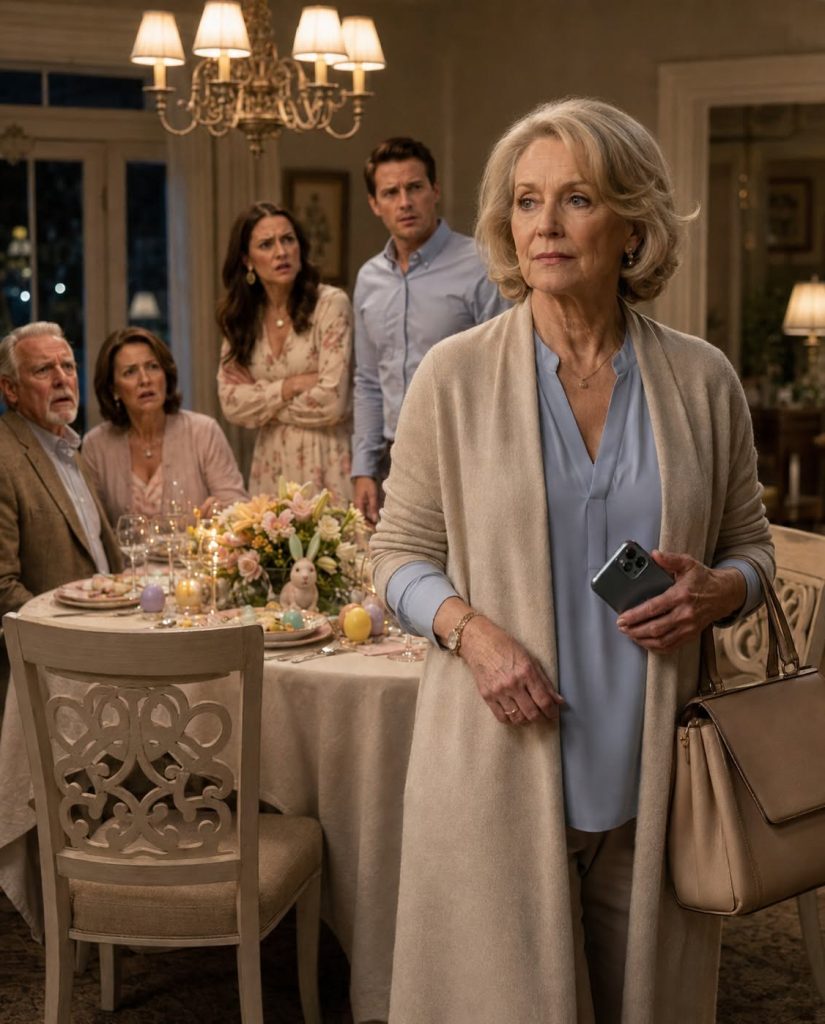
His eyes dropped.
“That isn’t respect.”
“I was trying to help family.”
“By sacrificing me.”
“That’s dramatic.”
There it was again.
I smiled sadly.
Daniel realized immediately.
“Mom, I didn’t mean—”
“Yes, you did.”
He stepped closer to the screen.
“What happens now?”
“I don’t know.”
“Are you cutting us off?”
“Financially?”
His face told me everything.
Apparently that possibility had not occurred to him until now.
I had been paying the tuition for Sophie and Ethan’s private school.
I also covered their summer camps.
Dental expenses not covered by insurance.
Music lessons.
I did those things for my grandchildren.
But Daniel had clearly begun budgeting around my generosity.
“The children will be protected,” I said.
“What does that mean?”
“It means arrangements involving them will go through accounts I control directly.”
His face hardened.
“So you don’t trust me.”
“Correct.”
He looked as though I had slapped him.
I hated saying it.
But it was true.
“I’m your son.”
“Yes.”
“That should mean something.”
“It does.”
“Apparently not.”
I gripped the doorframe.
“Being my son gave you my love. It did not give you my property.”
Daniel left without another word.
Three days later, Rachel called.
“We found something.”
I was standing in my kitchen while the locksmith replaced the final exterior lock.
“What?”
“The property inquiries appear connected to Frank.”
My hand tightened around the phone.
“How?”
“He had spoken to a mortgage broker.”
“For my house?”
“He represented the situation as though he anticipated becoming an occupant.”
I sat down.
Rachel continued.
“He seems to have been exploring whether renovation costs could eventually be financed against the property.”
I laughed once.
Not because it was funny.
Because sometimes reality becomes too absurd for any other reaction.
“He was planning to borrow against a house he didn’t own?”
“Not exactly. He couldn’t legally do that. But he seems to have assumed Daniel would eventually have authority or ownership.”
“Daniel knew?”
“We don’t know.”
That question haunted me.
I did not have to wait long for the answer.
That evening, Vanessa called from a number I didn’t recognize.
I almost ignored it.
Then I answered.
“Margaret.”
Her voice sounded smaller than I had ever heard it.
“Vanessa.”
“I need to explain.”
“My attorney advised me not to discuss the incident.”
“This isn’t about that.”
I waited.
“My father lied to us.”
I stared out the kitchen window.
“About what?”
“His finances.”
She began crying.
I remained silent.
“He and Mom aren’t just dealing with rent increases. Dad has debt. A lot of debt.”
“How much?”
“I don’t know exactly.”
“Did Daniel know?”
“No.”
“You’re certain?”
“I didn’t even know.”
I closed my eyes.
Vanessa continued.
“My dad kept saying if they could live with you for a while, they could recover. Then he started talking about improving the garage, adding value, helping maintain the property.”
“Adding value to property he didn’t own.”
“I know how it sounds.”
“It sounds exactly like what happened.”
She inhaled shakily.
“I shouldn’t have thrown the glass.”
“No.”
“I was angry.”
“I know.”
“I wasn’t trying to hurt you.”
“Intent does not erase consequences.”
Silence.
Then she whispered, “I know.”
For the first time since Easter, Vanessa sounded genuinely ashamed.
Not angry.
Not defensive.
Ashamed.
“I was horrible to you.”
I said nothing.
“You kept saying no, and I acted like you didn’t have the right.”
“Yes.”
“I’m sorry.”
I wanted to believe her.
Maybe part of me did.
But apologies after consequences are complicated things.
Sometimes people regret what they did.
Sometimes they regret what happened afterward.
Only time reveals the difference.
“I hope you mean that,” I said.
“I do.”
“Then prove it by changing, not by convincing me.”
She began crying harder.
Before hanging up, she said something I would remember.
“I think we all got used to you fixing things.”
I stared at the empty hallway after the call ended.
That was the truth.
Everyone had gotten used to Margaret fixing things.
Richard dies?
Margaret keeps the family together.
Daniel loses a job?
Margaret helps.
Daniel and Vanessa need wedding money?
Margaret helps.
Grandchildren need tuition?
Margaret helps.
Linda needs surgery and Vanessa needs childcare?
Margaret helps.
Frank’s car breaks?
Margaret loans them money.
Everybody got used to the safety net.
Then one day the safety net became something they believed they owned.
Two weeks after Easter, Daniel asked to meet.
We met at a coffee shop.
Public.
Neutral.
He looked different.
Tired, but calmer.
Vanessa was staying with her sister while they worked through everything.
Frank and Linda had moved into a small extended-stay hotel.
Apparently Frank had finally admitted the extent of his debt.
Daniel placed his coffee down.
“I owe you an apology.”
I waited.
This time, I didn’t help him find the words.
“I treated your boundaries like obstacles.”
I looked at him.
He continued.
“When you said no, I didn’t think you meant no forever. I thought I just needed to convince you.”
“Yes.”
“And I told Frank they could start bringing things.”
“Yes.”
“I knew you hadn’t agreed.”
“Yes.”
He swallowed.
“I was wrong.”
For the first time, the apology felt complete.
No explanation.
No excuse.
No demand for immediate forgiveness.
“I love you,” I said.
His eyes filled.
“I love you too.”
“But things have changed.”
He nodded.
“I know.”
“The house is going into a trust.”
He blinked.
“What?”
I watched his face carefully.
“The house is going into a trust.”
“For what?”
“For my protection.”
“Protection from me?”
“Protection for me.”
His expression tightened.
I continued before he could react.
“Sophie and Ethan will be protected through separate arrangements. You will not control those funds.”
He looked down.
“So I’m out of the will.”
“I did not say that.”
“Am I?”
“That is private.”
He laughed bitterly.
“Wow.”
And there it was.
The old instinct.
The assumption.
I stood.
“Daniel.”
He looked up.
“If your relationship with me depends on knowing what you inherit, we have a much bigger problem.”
His face went red.
“That’s not what I meant.”
“Then don’t ask.”
I picked up my purse.
He stopped me.
“Mom.”
I waited.
“I really am sorry.”
I studied him.
“I know.”
That did not mean everything was repaired.
But it was a beginning.
Vanessa eventually accepted responsibility in court.
I will not pretend the legal process was dramatic.
There were no courtroom speeches.
No gasps from spectators.
No television-style revelations.
Real consequences are usually quieter.
Lawyers talk.
Documents are filed.
Judges review facts.
People sit in hallways waiting for their names.
Vanessa received consequences that included probation, required counseling, restitution for medical expenses, and restrictions concerning contact with me unless I permitted it.
I did not ask for revenge.
I asked for accountability.
There is a difference.
For several months, Vanessa and I did not speak.
Daniel visited me alone.
At first, conversations were awkward.
Then slowly they became normal.
Not the old normal.
Something healthier.
He stopped asking for money.
The first time Sophie needed new braces, Daniel called and said, “We’ve handled it.”
I nearly cried.
Not because I wanted them struggling.
Because responsibility looked good on my son.
He took a second consulting job.
Vanessa returned to work after resolving the consequences with her employer.
They moved into a smaller home when their lease ended.
They stopped pretending appearances mattered more than stability.
Frank, meanwhile, discovered something important.
No one was coming to rescue him.
He sold several expensive tools.
Downsized his vehicle.
Worked out a debt repayment plan.
He and Linda moved into a modest two-bedroom apartment.
It was not luxurious.
But it was theirs.
Six months after Easter, Vanessa sent me a letter.
Not a text.
Not an email.
A handwritten letter.
I kept it unopened for two days.
Then I read it at my kitchen table.
She did not ask me to forgive her.
That mattered.
She wrote about counseling.
About anger.
About entitlement.
About growing up in a family where her father solved financial problems by moving them onto someone else.
She admitted she had absorbed the same habit.
She wrote:
I treated your generosity as evidence that you owed us more.
I stopped reading for several minutes after that sentence.
Then I continued.
She apologized for the glass.
For the pressure.
For the way she had spoken to me.
For the suitcases.
And most importantly, for teaching Sophie and Ethan through her behavior that someone’s boundaries could be ignored when inconvenient.
At the end she wrote:
I hope someday you can know me as someone who changed, not only as the person I was that night.
I folded the letter.
Then I cried.
Not because everything was fixed.
Because for the first time, I believed it might eventually be.
Christmas came quietly that year.
For the first time in twenty-eight years, I did not host.
Daniel invited me to their house.
I almost declined.
Then Sophie called.
“Grandma, Dad is cooking.”
“That sounds dangerous.”
She laughed.
“He says the turkey is under control.”
“That means it definitely isn’t.”
“Please come.”
So I did.
When Vanessa opened the door, we stood facing each other for several seconds.
She looked nervous.
“So,” she said, “the turkey may be dry.”
I smiled.
“Then Daniel is continuing a family tradition.”
She laughed.
The tension cracked.
Not disappeared.
Cracked.
That was enough.
Dinner was imperfect.
The potatoes were slightly cold.
Daniel forgot the cranberry sauce.
Ethan knocked over his water.
Sophie complained about school.
Normal things.
Beautifully normal things.
After dessert, Vanessa approached me.
“There’s something I want to ask.”
I stiffened automatically.
She noticed.
“It’s not about the house.”
We both laughed awkwardly.
“What is it?”
“Would you be comfortable if we invited you again next month?”
Such a simple question.
But it contained something missing for years.
Permission.
“Of course.”
She smiled.
“Okay.”
The following spring, almost exactly one year after Easter, I stood in my backyard watching daffodils bloom beside Richard’s old workshop.
The house looked different.
Not physically.
Emotionally.
For years, every room had carried someone else’s expectations.
Daniel’s future inheritance.
Vanessa’s imaginary guest rooms.
Frank’s workshop.
Linda’s preferred bedroom.
Now the house belonged to me again.
Not only legally.
Psychologically.
I turned one upstairs bedroom into a reading room.
Another became a sewing room.
The third guest room remained exactly that.
A guest room.
Because empty rooms are not invitations.
They are rooms.
My garage became something entirely unexpected.
I hired a contractor to install better lighting, storage, and a pottery wheel.
I had always wanted to learn ceramics.
The first bowl I made was terrible.
Uneven.
Heavy.
Slightly crooked.
I loved it.
Carol laughed when she saw it.
“You paid someone thousands of dollars to renovate a garage so you could make that?”
“Yes.”
She held the bowl up.
“It looks like something from an archaeological excavation.”
“Thank you.”
“That was not a compliment.”
“I accepted it as one.”
We sat on the patio drinking lemonade.
She looked toward the house.
“Do you regret anything?”
I knew what she meant.
Calling police.
Changing the estate plan.
Trusting Rachel.
Refusing Daniel.
Holding Vanessa accountable.
I thought carefully.
“I regret waiting so long to make people respect the first no.”
Carol nodded.
“That’s not the same thing.”
“No.”
I looked toward Richard’s favorite maple tree.
“For years I thought keeping peace meant preventing conflict.”
“And now?”
“Now I think sometimes conflict is what happens when peace depended on one person surrendering.”
Carol smiled.
“Look at you becoming philosophical.”
“Don’t get used to it.”
That summer, something surprising happened.
I sold the house.
Everyone assumed I never would.
Especially Daniel.
But after everything, I realized something.
I had spent years protecting the building because it contained memories of Richard.
But memories do not live in drywall.
They live in people.
I bought a smaller house near a lake forty minutes outside Columbus.
Two bedrooms.
A sunroom.
A garden.
And exactly enough garage space for my pottery.
When I told Daniel, he stared at me.
“You’re selling?”
“Yes.”
“But this is our family home.”
“It was.”
“What happens to it?”
“Someone else gets to make it theirs.”
He looked around the kitchen where he had eaten breakfast as a child.
For a moment, I saw grief in his face.
Then he smiled.
“Dad would probably say you should’ve done it years ago.”
“He would.”
“Are you happy?”
“Yes.”
That was the only answer that mattered.
The house sold to a young couple with three children.
On closing day, I walked through each room alone.
The dining room was last.
I stood where the Easter table had been.
For months, I had remembered only the glass.
The argument.
Daniel telling me I was overreacting.
But now other memories returned.
Richard carving Thanksgiving turkey.
Daniel blowing out birthday candles.
Sophie learning to walk between the chairs.
Ethan hiding peas beneath his napkin.
Carol dancing badly at my sixtieth birthday.
Life.
A house holds all of it.
Good and bad.
But eventually you decide what you carry forward.
I touched the dining table one last time.
Then I left the keys on the counter.
At my new home, Rachel visited me one afternoon carrying a bottle of sparkling cider.
“No wine glasses,” she joked.
I laughed.
“Too soon.”
“Fair.”
We sat on the deck overlooking the lake.
She handed me a folder.
“Everything is finalized.”
The trust.
My updated estate plan.
Education protections for Sophie and Ethan.
Charitable gifts Richard and I had always discussed.
And carefully structured inheritances that no one could treat as guaranteed money while I was alive.
I closed the folder.
“Do you remember the message I sent you?”
“Phase one is complete?”
“Yes.”
Rachel smiled.
“I remember.”
“I sounded very dramatic.”
“A little.”
“I barely knew what I meant.”
“You meant you were done pretending the problem would solve itself.”
I looked across the water.
“That sounds better.”
Rachel lifted her glass.
“To phase whatever comes next.”
I tapped mine against hers.
“No phases.”
“No?”
“No more strategies.”
“What instead?”
I smiled.
“Living.”
And that is what I did.
I traveled with Carol.
I took pottery classes.
I joined a book club.
I planted tomatoes badly.
I learned that retirement does not have to mean waiting for other people to visit.
Sometimes it means finally discovering what you like when no one else gets a vote.
My relationship with Daniel improved slowly.
Not magically.
There were setbacks.
Moments when old habits appeared.
Moments when I almost fell back into rescuing him.
Once, when his car needed an expensive repair, he called and began saying, “I hate asking, but—”
Then he stopped himself.
“You know what? Never mind. We’ll figure it out.”
I smiled.
“Okay.”
A week later he called.
“We figured it out.”
“I knew you would.”
There was pride in his voice.
And mine.
Vanessa changed too.
She completed counseling.
She repaired her relationship with her parents while learning not to become responsible for their finances.
That was harder than anything involving me.
Frank frequently complained.
Linda sometimes cried.
But Vanessa began saying something she had once hated hearing.
“No.”
The first time she told me about refusing to cosign one of Frank’s loans, we both laughed at the irony.
“How did he react?” I asked.
“He said I was selfish.”
I raised my eyebrows.
She covered her face.
“I know.”
“Interesting word.”
“I know.”
Then she looked at me seriously.
“I finally understand.”
That mattered more than any apology.
Two years after the Easter incident, we had dinner together again.
This time at my new house.
Daniel cooked.
Vanessa brought dessert.
Frank and Linda were not there.
Not because I hated them.
Because I no longer confused forgiveness with access.
They had apologized eventually.
I accepted the apology.
That did not mean they were entitled to my home.
Forgiveness can coexist with locked doors.
After dinner, Sophie wandered into my pottery room.
She picked up the ugly first bowl I had kept on a shelf.
“Grandma, did you make this?”
“Yes.”
“It’s kind of crooked.”
“Your aunt Carol says it belongs in a museum.”
“What museum?”
“Possibly one about ancient disasters.”
Sophie laughed.
Then she became quiet.
“Grandma?”
“Yes?”
“I remember Easter.”
I froze.
She had been at her other grandmother’s house that weekend, but of course she had heard pieces afterward.
“What do you remember?”
“Mom crying a lot.”
I sat beside her.
“She was going through something difficult.”
“She says she did something really bad.”
“She made a serious mistake.”
“Were you scared?”
Children ask direct questions adults avoid.
“Yes.”
Sophie looked at me.
“Do you still love her?”
“Yes.”
“Even though she hurt you?”
“Yes.”
She frowned.
“How?”
I thought for a moment.
“Loving someone doesn’t mean pretending everything they do is okay.”
She considered that.
“You can love someone and still say no?”
“Especially then.”
She nodded slowly.
Then she placed my ugly bowl back on the shelf.
“I like it.”
“You don’t have to lie.”
“I like that it’s crooked.”
I smiled.
“So do I.”
Later that night, after everyone left, I stood alone in my kitchen washing dishes.
Through the window, moonlight reflected across the lake.
My phone buzzed.
A message from Daniel.
Thanks for tonight, Mom.
Then another.
Love you.
I replied.
Love you too.
That was enough.
For years, I believed the greatest thing I could give my family was everything they needed.
Money.
Housing.
Time.
Solutions.
Forgiveness.
Access.
But I had been wrong.
Sometimes the greatest thing you can give someone is the boundary that forces them to grow.
Daniel became more responsible because I stopped rescuing him.
Vanessa became more self-aware because consequences forced her to confront herself.
Frank learned that debts belonged to the person who created them.
Linda learned that being uncomfortable did not make her someone else’s responsibility.
And I learned something too.
Being kind does not require being available for exploitation.
Being generous does not mean surrendering ownership.
Being a mother does not mean becoming a permanent emergency fund.
And saying no does not make you selfish.
Sometimes no is the most honest word in the world.
People still occasionally ask whether I regret calling the police that Easter.
The answer is complicated.
I wish the glass had never been thrown.
I wish Daniel had defended me immediately.
I wish Vanessa had respected my answer months earlier.
I wish Frank and Linda had never brought those suitcases.
But regret the consequences?
No.
Because that night ended something that desperately needed to end.
Not my family.
The unhealthy version of it.
The version where everyone assumed Margaret would eventually give in.
The version where peace depended on my silence.
The version where love was measured by how much of myself I surrendered.
That family ended.
Something stronger replaced it.
Something based on asking rather than assuming.
Apologizing rather than manipulating.
Respecting rather than pressuring.
And sometimes walking away when someone says no.
Every Easter now, I host a small brunch at my lake house.
Nothing elaborate.
Eggs.
Fruit.
Coffee.
Sometimes Daniel brings cinnamon rolls.
Sometimes Vanessa makes quiche.
Sophie and Ethan search for chocolate eggs even though they are now old enough to pretend they don’t enjoy it.
The dining room has large windows overlooking the water.
I keep flowers on the table.
And one particular rule remains permanently understood.
Nobody volunteers my house.
Nobody volunteers my money.
Nobody decides what I should give simply because I have it.
My life belongs to me.
My home belongs to me.
My choices belong to me.
Family can be invited into those things.
They cannot claim them.
Last Easter, after everyone left, Vanessa stayed behind to help me clean.
She picked up an empty drinking glass from the table.
For half a second, our eyes met.
We both remembered.
She placed it gently into the dishwasher.
Then she said, “Thank you for giving me another chance.”
I dried my hands.
“I didn’t give you another chance.”
She looked surprised.
“You earned one.”
Her eyes filled with tears.
She nodded.
“I think that means more.”
“It should.”
She hugged me.
This time, I hugged her back without hesitation.
As she left, I stepped onto the porch.
Daniel was waiting beside the car.
He looked at me.
“You okay?”
I smiled.
“I’m excellent.”
He grinned.
“See you Sunday?”
“Call first.”
He laughed.
“I will.”
I watched them drive away.
Then I went inside.
The house was quiet.
Not lonely.
Quiet.
There is a difference.
I poured myself tea and carried it onto the deck.
The evening sun turned the lake gold.
Somewhere nearby, birds called from the trees.
I thought about Richard.
About the old house.
About that Easter dinner.
About the red light where I photographed my injury.
About the hospital.
About Rachel’s message.
Save everything.
About the police officer asking questions.
About Daniel standing on my lawn.
About four suitcases waiting upstairs.
About a boxed workbench hidden in my garage.
About the moment I finally understood that the problem had never really been empty bedrooms.
It was entitlement.
The belief that my space was available because someone else wanted it.
The belief that my generosity erased my right to choose.
The belief that motherhood meant permanent surrender.
Vanessa thought she had thrown a wine glass.
What she actually threw was the first domino.
The next domino was the police report.
Then the hidden luggage.
Then Frank’s financial secrets.
Then the trust.
Then the changed locks.
Then Daniel learning to stand on his own.
Then Vanessa learning accountability.
Then me selling the house everyone assumed they would someday inherit.
And finally, after every domino had fallen, what remained was something none of us expected.
A family that actually respected one another.
Not perfectly.
Not effortlessly.
But honestly.
I used to think boundaries pushed people away.
Sometimes they do.
But sometimes they show you who is willing to come back correctly.
That Easter nearly fractured my family.
Instead, it exposed every crack we had been pretending not to see.
And once we stopped pretending, we could finally rebuild.
The new version was smaller in some ways.
There were fewer assumptions.
Fewer financial rescues.
Fewer people walking into my home without asking.
But there was more respect.
More honesty.
More responsibility.
More peace.
Real peace.
Not silence purchased with surrender.
And whenever someone asks me what I learned from everything that happened, I tell them this:
If someone becomes furious when you set a reasonable boundary, the boundary probably needed to exist.
If someone tells you that you are selfish because you will not give them what belongs to you, listen carefully.
And if your own family begins treating your generosity like a debt you owe them, remember that love is not measured by how much of yourself you allow others to take.
I was sixty-two years old when I finally learned that lesson.
I wish I had learned it sooner.
But I am grateful I learned it at all.
Because the house may have been paid off years earlier.
But that Easter was the night I finally understood what ownership truly meant.
Not just having my name on a deed.
Having authority over my own life.
And once I understood that, nobody could take it from me again.
💬THE END! THANK YOU FOR READING!