
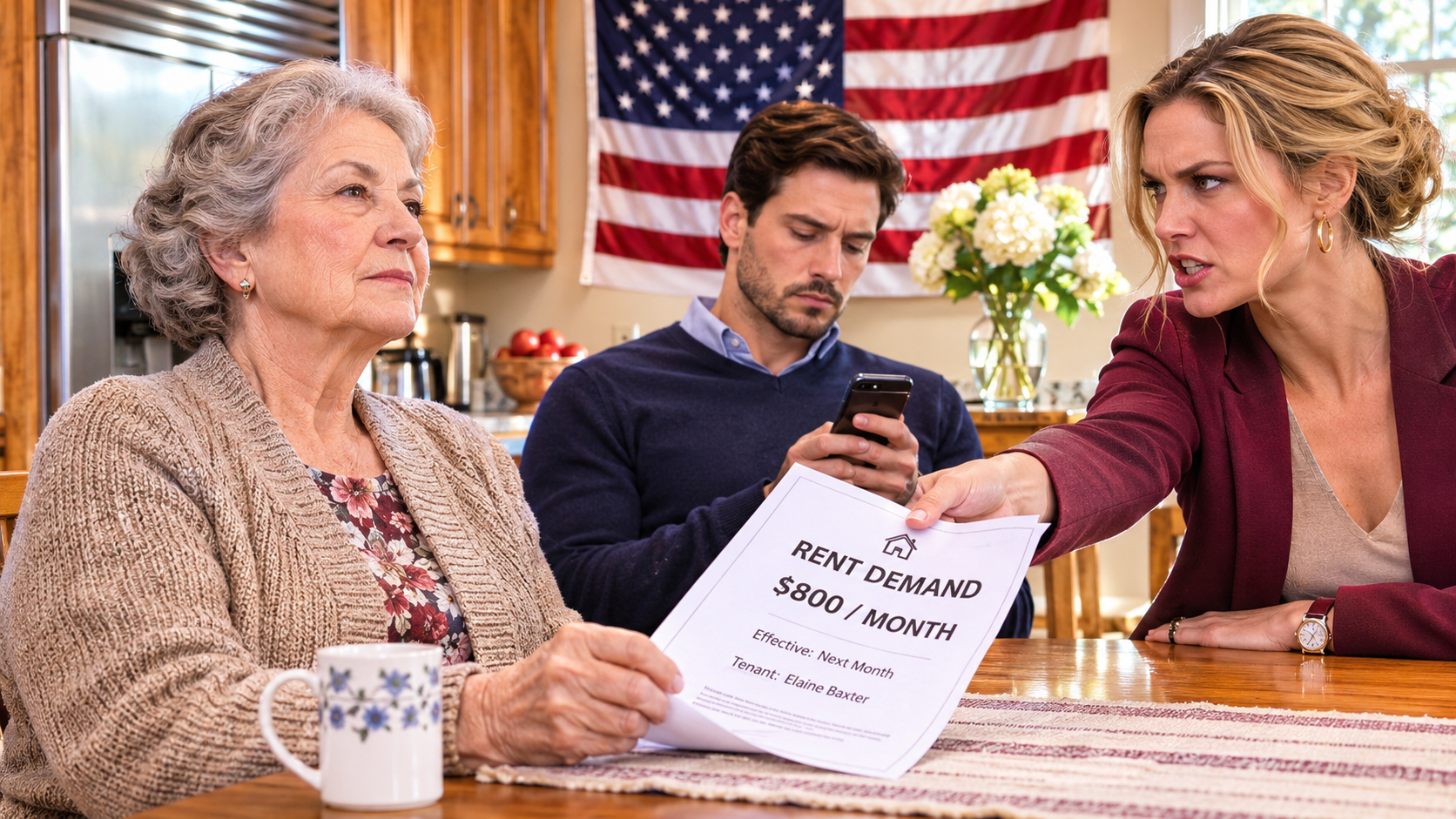
“ELAINE, WHAT DID YOU DO?” SLOAN SCREAMED INTO THE PHONE. “THE HEATING COMPANY SAYS WE OWE THEM $1,840, AND GAVIN SAYS YOU’VE MOVED OUT! YOU CAN’T JUST ABANDON YOUR RESPONSIBILITIES!”
I was driving through Connecticut when my phone connected to the car’s Bluetooth.
The autumn trees were beginning to turn gold along the highway. My old coffee maker sat in the passenger seat, secured with a seat belt because I hadn’t trusted the movers with it.
I recognized Sloan’s voice immediately.
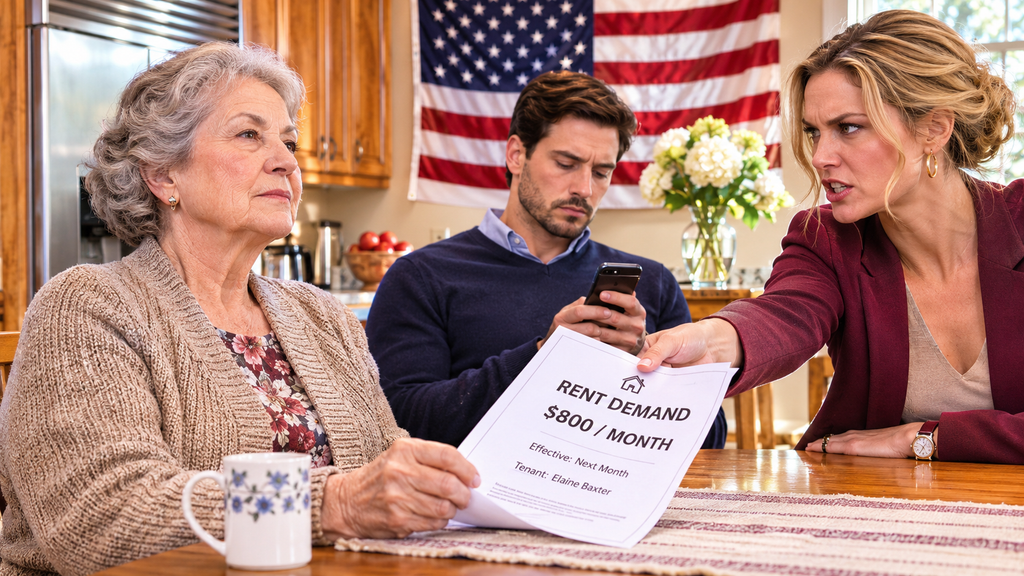
It was the same voice she’d used six days earlier when she placed an eight-hundred-dollar rent demand beside my breakfast.
Calm then.
Furious now.
“Good morning, Sloan.”
“Don’t good-morning me! Where are you?”
“On my way to New Hampshire.”
“What?”
“I’ve moved.”
There was a brief silence.
Then she laughed.
Not because anything was funny.
Because she believed I was bluffing.
“Elaine, stop being ridiculous. You can’t just move out without telling us.”
“I left a letter on the kitchen island.”
“That’s not telling us!”
I glanced at the highway ahead.
She inhaled sharply.
“And what about the bills?”
I smiled faintly.
“What about them?”
“The oil company says the automatic payment has been canceled!”
“Yes.”
“And the insurance agent says the policy won’t renew under your name!”
“Correct.”
She raised her voice.
“You’ve been handling those things for years!”
I took a slow breath.
“Exactly, Sloan. I have.”
My daughter-in-law seemed to believe the word homeowner was a title that came with privileges but no responsibilities.
She loved telling people that Gavin owned a beautiful Brooklyn house.
She loved arranging expensive furniture against the walls Warren had painted.
She loved inviting friends over and describing the property as something she and Gavin had worked hard to acquire.
What she didn’t love was paying to maintain it.
For seven years, I had quietly taken care of every expensive detail.
The property taxes alone exceeded nine thousand dollars annually.
Insurance cost thousands more.
Heating, water, electricity, repairs, chimney inspections, pest control, and maintenance added up quickly.
And that didn’t include groceries.
Or the children’s school supplies.
Or the hundreds of little purchases nobody noticed.
I had done those things because Gavin was my son.
Because Sloan was his wife.
Because their two children were my grandchildren.
And because, after Warren died, helping my family gave my days purpose.
But at seventy, I was finally beginning to understand something.
There is a difference between being needed and being valued.
For years, my son and daughter-in-law had needed me.
That didn’t mean they appreciated me.
“Elaine!”
Sloan’s voice brought me back to the road.
“Are you even listening?”
“Yes.”
“Then turn around!”
“No.”
Her breathing became sharp.
“Gavin needs to talk to you.”
I heard movement.
Then my son’s voice.
“Mom?”
I swallowed.
“Hello, Gavin.”
“Where are you going?”
“My condo.”
“In New Hampshire?”
“Yes.”
He sounded genuinely confused.
“Why?”
For a moment, I couldn’t answer.
Because I remembered him as a little boy, standing in our kitchen with scraped knees and a missing front tooth.
I remembered Warren teaching him to build birdhouses.
I remembered his college graduation.
His wedding.
The day he called to announce that I was going to become a grandmother.
And now, after seventy years of living and loving and sacrificing, my own son couldn’t understand why I didn’t want to pay rent to sleep in a bedroom inside a house I’d given him.
“Gavin,” I said quietly, “your wife told me I was a financial burden.”
He sighed.
“Mom, that’s not what she meant.”
“She handed me a rent demand.”
“We’re trying to be fair.”
I looked toward the mountains in the distance.
“Then you should be pleased. I’m no longer occupying the room.”
Gavin went quiet.
Then he said, “We need you to keep paying the bills until we figure everything out.”
I nearly laughed.
There it was.
Not Are you okay?
Not Did you get somewhere safe?
Not even I’m sorry we hurt you.
Just another request for money.
“Gavin, I’ve provided written notice to the service companies and given you the account details. The insurance remains active through its stated expiration date. You have time to arrange your own coverage.”
He exhaled.
“But the oil company says there’s an outstanding balance.”
“Then you’ll need to check the invoices.”
“Mom, I don’t have eighteen hundred dollars lying around!”
I felt my chest tighten.
“Then you and Sloan need to make a household budget.”
He sounded offended.
“You’re my mother.”
“Yes.”
“And you’re really going to let us struggle?”
I took a breath.
“Gavin, I have been helping you for years.”
He said nothing.
“I’m not going to keep paying for a house I don’t own while your wife charges me rent to live there.”
His voice hardened.
“So this is revenge.”
I shook my head.
“No, sweetheart.”
I paused.
“THIS IS WHAT OWNERSHIP COSTS.”
Then I ended the call.
I reached the lake condo late that afternoon.
The building sat on a quiet road in southern New Hampshire, surrounded by tall pines and maple trees.
Warren and I had purchased it twenty-three years earlier.
Back then, we’d imagined retiring there together.
We planned to spend summers on the lake and autumn weekends watching the leaves change.
He used to joke that he’d finally learn to fish properly once he had enough time.
But he died before we could make that dream happen.
For years, I kept the condo rented because I couldn’t bear the thought of living there without him.
Now, standing at the front door with my suitcase, I felt his absence more sharply than ever.
I unlocked the door.
The air smelled of fresh paint and cedar.
The living room was small.
One bedroom.
A narrow kitchen.
A balcony overlooking the water.
Nothing like the Brooklyn house.
But the condo was peaceful.
And it belonged to me.
I placed my suitcase beside the wall.
Then whispered:
“Warren, I’m finally here.”
The first night was difficult.
I heated soup in a saucepan because I hadn’t unpacked my kitchen things yet.
I ate at a folding table beside the window.
Then I sat in an old wooden chair we’d purchased at a flea market years ago.
The lake was dark.
A few porch lights reflected across the water.
My phone remained silent until nearly ten.
Then Gavin sent a message.
Mom, Sloan is really upset. You could’ve handled this differently.
I stared at it.
Then typed:
I agree. We should have discussed living arrangements before anyone demanded rent.
I waited.
A moment later, three dots appeared.
Disappeared.
Then appeared again.
Finally, he replied:
We’ll talk later.
I set the phone down.
For the first time in months, I slept through the night.
By Wednesday, the real bills had started arriving.
Not because I’d deliberately created an emergency.
I hadn’t.
I had simply stopped allowing automatic withdrawals from my accounts for services associated with property I no longer owned.
Every company had been given the proper notice.
Every account had a transition date.
And I’d informed Gavin in writing so he could make arrangements.
But my son had apparently spent years ignoring the cost of maintaining a house.
Now he was discovering it all at once.
First came the heating-oil balance.
Then the annual furnace maintenance agreement.
Then the internet account.
And finally, a reminder about the upcoming homeowners insurance renewal.
None of those bills was imaginary.
None was a punishment.
They were ordinary expenses.
The sort of things Warren and I had paid without complaint for decades.
But when Gavin saw them together, he panicked.
On Thursday morning, Sloan called again.
This time, she sounded less angry.
More frightened.
“Elaine, can we talk?”
I was sitting on the balcony with coffee.
“Of course.”
She hesitated.
“Gavin says the insurance company needs us to arrange a policy before yours ends.”
“Yes.”
“And the annual premium is much higher than we expected.”
I nodded.
“Insurance has become expensive.”
She went quiet.