
 Reading Time: 17 minutes
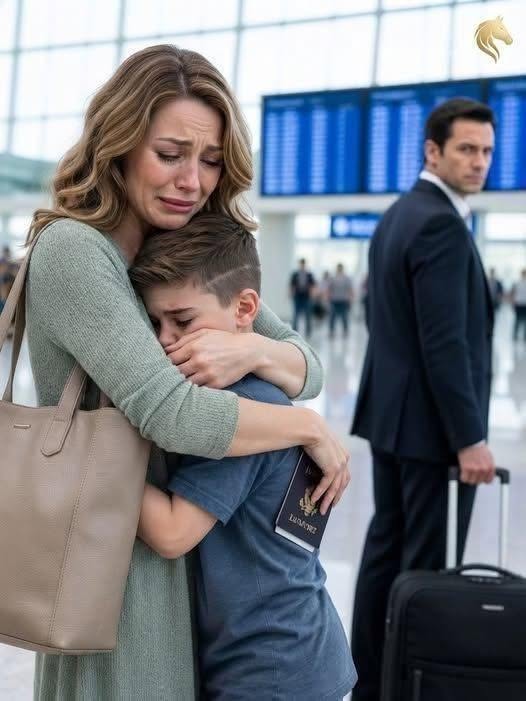
After our divorce hearing, my twelve-year-old son chose to live with his father and told the judge, “Mom can’t give me a future.” I walked away without arguing. But at the airport, he hugged me, slipped a black card into my pocket, and whispered, “Don’t cry, Mom. Wait for me.”
Minutes later, a message appeared on my phone. There were six million dollars connected to that card. And my son had only pretended to betray me because he was terrified of what his father would do if he learned the truth.
My name is Sabrina Chappell. The day my son rejected me in court was a Tuesday.
I remember because Tuesdays had always been ordinary in our family.
Grocery shopping.
Laundry.
Soccer practice.
Nothing dramatic.
Then one Tuesday morning inside Family Court in Columbus, Ohio, my entire life divided into before and after.
I sat at a long wooden table with my attorney, Karen Willis, while my ex-husband sat across from me.
Ellis looked flawless.
Tailored gray suit.
Silver cuff links.
Expensive watch.
Perfect haircut.
He looked like a man attending an awards ceremony, not a hearing to decide where his child would live.
Beside him sat Noah.
Our twelve-year-old son.
My only child.
He wore a navy blazer Ellis had bought for him.
His hair was combed neatly to one side.
His hands rested on his knees.
He did not look at me.
Not once.
That frightened me more than anything.
Noah had always looked for me.
At school assemblies.
Soccer games.
Dentist appointments.
Even when he was angry, his eyes found mine.
That morning, he stared straight ahead.
Ellis’s attorney, Marjorie Dean, spoke first.
She was polished and calm.
She listed every advantage Ellis could provide.
Large home in Upper Arlington.
Private school.
International summer programs.
Financial stability.
Business connections.
She made fatherhood sound like a luxury package.
Then she talked about me.
No current independent income.
Small savings account.
Limited recent work history.
Temporary housing after the divorce.
No private health insurance of my own yet.
Every statement was technically true.
That was what made it hurt.
No one mentioned why.
Fifteen years earlier, when Noah was born, Ellis had told me to leave my career in pharmaceutical sales.
“You raise him,” he said.
“I’ll provide.”
I believed him.
For fifteen years, I organized our life around his.
I packed lunches.
Scheduled doctors.
Handled homework.
Sat beside Noah through every fever.
Volunteered at his school.
Managed our home.
Waited for Ellis through business dinners that became midnight arrivals.
But family court did not hand out medals for remembering which dinosaur-shaped vitamins your child preferred at age six.
On paper, Ellis earned the money.
I did not.
Then the judge asked to speak with Noah.
I held my breath.
Judge Harmon leaned forward.
“Noah, I understand this is difficult. There is no correct answer. I only want to understand how you feel.”
Noah nodded.
My fingers tightened around each other.
The judge asked, “Where would you prefer to live primarily?”
Silence.
For half a second, I thought Noah might cry.
Instead, he stood.
His voice came out steady.
“I want to live with my dad.”
My heart stopped.
Judge Harmon asked gently, “Can you tell me why?”
Noah finally looked toward me.
Only for a second.
His face was cold.
Too cold.
Then he said, “My mom can’t give me anything.”
The courtroom became very quiet.
He continued.
“Dad can give me a future. Better schools. Travel. College. Mom doesn’t even have a real job.”
I felt something break inside me.
No dramatic sound.
No scream.
Just a quiet internal crack.
I had packed that boy’s lunch the morning of every exam.
Sat awake beside his bed during pneumonia.
Sold my grandmother’s bracelet to pay for a summer robotics camp one year when Ellis claimed cash flow was tight.
And now my son was telling a judge I could not give him anything.
I looked at Ellis.
He barely smiled.
A tiny movement.
But I saw it.
Satisfaction.
My attorney whispered, “Sabrina, don’t react.”
I didn’t.
Maybe people expected me to plead.
Maybe they expected tears.
I simply stared at Noah.
Something about his expression felt wrong.
Not cruel.
Afraid.
But then the moment passed.
The hearing continued.
Judge Harmon ultimately granted Ellis primary temporary physical custody while additional arrangements were finalized.
I would have regular parenting time.
It was not a complete loss.
But it felt like one.
Outside the courthouse, I walked toward the parking lot alone.
I was almost at my car when Ellis called my name.
“Sabrina.”
I stopped.
He came toward me holding a black leather wallet.
Noah stood several steps behind him beside a rolling suitcase.
Ellis looked pleased.
Not happy.
Victorious.
“I’m not heartless,” he said.
He took out a bank card.
“There’s two hundred thousand dollars available here.”
I stared at him.
“For what?”
“Rent a place. Get yourself together. Start over.”
I did not take it.
His smile disappeared slightly.
“You’re going to need money.”
“I’ll manage.”
“Don’t be stupid.”
I looked past him.
Noah still would not meet my eyes.
Ellis lowered his voice.
“Take it, Sabrina. Start over and stay out of my life and my son’s.”
My son.
Not our son.
Something hot moved through my chest.
“Why are you doing this to me?”
Ellis laughed once.
Dry.
Almost bored.
“Because you don’t fit into my life anymore.”
I stared at him.
He adjusted his cuff.
“I need a woman who can keep up with me. Not someone who spent fifteen years buried in dishes and school uniforms.”
There are insults so cruel they become clarifying.
I looked at the man I had loved since I was twenty-six.
Suddenly I saw him clearly.
Not because he had changed overnight.
Because I had stopped making excuses.
I pushed the card back toward him.
“Keep it.”
His expression hardened.
“Pride won’t pay your rent.”
“No.”
I looked at Noah.
“But neither will selling myself cheap.”
Then I walked away.
That night, I moved into a small apartment in Franklinton.
One bedroom.
Damp wall near the bathroom.
A kitchen window facing an alley.
I owned one old suitcase and three shopping bags of clothes.
The rest would be divided later.
I sat on the floor because I had no furniture yet.
Then I cried.
Not elegantly.
Not quietly.
I cried until my face hurt.
Not because I missed Ellis.
Because of Noah.
The sentence kept replaying.
Mom can’t give me anything.
For three nights, I barely slept.
Then, exactly one week after the hearing, Ellis called.
I almost ignored him.
I answered on the fourth ring.
“What?”
“I’m taking Noah to Atlanta tomorrow.”
My body stiffened.
“For what?”
“Business.”
“Noah has school.”
“Private tutoring.”
“You can’t just—”
“My attorney already sent yours the temporary travel notice.”
I closed my eyes.
He had planned everything.
Then he said, “If you want to say goodbye, be at the airport early.”
I nearly said no.
Part of me wanted Noah to feel what rejection felt like.
That thought lasted less than one second.
A mother goes.
Even when her heart is broken.
Especially then.
The next morning, I arrived at John Glenn Columbus International Airport before seven.
Ellis was near security talking to two men in business suits.
Noah stood beside him with a backpack and carry-on.
He looked smaller without the courtroom blazer.
Just twelve.
Jeans.
Sneakers.
Hair falling into his eyes.
My son.
For several minutes, he did not approach me.
I stood twenty feet away.
Then the boarding announcement sounded.
Ellis finished his conversation.
Noah walked toward me.
Slowly.
My throat tightened.
“Have a safe trip,” I said.
That was all I trusted myself to say.
He looked at me.
His eyes filled.
Then he suddenly threw his arms around me.
Hard.
The hug surprised me.
It did not feel like goodbye.
It felt desperate.
His mouth was close to my ear.
“Don’t cry, Mom.”
I froze.
His hand moved between us.
Something slipped into my coat pocket.
“Wait for me.”
I pulled back.
“What?”
His eyes darted toward Ellis.
Fear.
Real fear.
Then he stepped away.
Ellis called, “Noah.”
Noah turned.
He did not look back again.
I stood there until they disappeared beyond security.
Then I took a taxi home.
Halfway to Franklinton, I remembered my pocket.
I reached inside.
A black card.
No logo.
No name.
No bank printed on it.
Just a chip.
At that exact moment, my phone vibrated.
Unknown number.
Mom. There are six million dollars in that account. PIN is your birthday. Don’t use it yet. Don’t trust anyone. Wait for me until I come back.
I read it three times.
Then another message appeared.
Dad thinks I chose him because I hate you. Let him keep thinking that.
My hands began trembling.
The taxi driver glanced at me in the mirror.
“You okay, ma’am?”
“Yes.”
I was not.
Another message.
I heard Dad talking about money in accounts with my name. He said when I turn thirteen things get easier. I found documents.
Another.
I’m scared he knows I know.
I felt cold all over.
I typed:
Noah, are you safe?
The response came quickly.
For now. Don’t call me. He checks my phone.
I stopped typing.
Then one last message.
The card isn’t yours. It’s proof. Please take it to someone you trust.
That sentence changed everything.
The card was not a gift.
My twelve-year-old son had not handed me six million dollars.
He had handed me evidence.
I told the taxi driver to change direction.
“Downtown.”
“Where?”
I gave him my attorney’s office address.
Karen Willis was in court.
Her assistant tried to schedule me for that afternoon.
I placed the black card on her desk.
Then showed her the messages.
Five minutes later, I was sitting in Karen’s conference room.
She entered carrying her laptop.
“What happened?”
I told her.
Every word.
She did not touch the card.
Good lawyers become very careful when money appears unexpectedly.
“You have not accessed the account?”
“No.”
“Do not.”
“I won’t.”
“Do not check the balance.”
“I already know what Noah said.”
“That is not the same as verifying it.”
She took photographs of the card.
Screenshots of the messages.
Then said, “I want another attorney involved.”
“What kind?”
“Financial crime.”
My stomach dropped.
“Karen.”
“Listen to me. There may be an innocent explanation.”
“Do you believe that?”
“I believe we do not guess.”
Twenty minutes later, a man named Thomas Reed joined us.
Former federal prosecutor.
Now a private attorney handling corporate investigations and financial fraud.
He read Noah’s messages twice.
Then asked, “What does your husband do?”
“Private investments. Real estate. Logistics. I never understood all of it.”
Thomas looked at Karen.
She looked back.
That exchange frightened me.
“What?”
Thomas asked, “During your marriage, did Ellis ever open accounts in Noah’s name?”
“College savings.”
“Anything else?”
“I don’t know.”
“Trusts?”
“I don’t know.”
“Companies?”
“No.”
He leaned back.
“How much control did you have over finances?”
“Almost none.”
That sounded terrible when spoken aloud.
Ellis paid bills.
Handled investments.
Filed taxes through his accountant.
I signed where he asked.
Just like I had managed the house, he managed the money.
At least that was what I believed.
Thomas said, “The card could be connected to a legitimate trust or investment structure.”
“Then why is my son scared?”
“That is the question.”
He contacted someone.
Not police immediately.
Not dramatic raids.
First came preservation.
Documents.
Custody orders.
Legal strategy.
Karen filed an emergency request related to Noah’s safety and travel.
Thomas advised that the card and messages be turned over properly through counsel rather than used.
I followed every instruction.
I did not touch the money.
I did not try the PIN.
I did not call Ellis.
I did not call Noah.
Those were the longest forty-eight hours of my life.
Then Ellis called.
Not angry.
Cheerful.
Too cheerful.
“Just checking in.”
I sat at Karen’s office.
“Why?”
“To see how you’re adjusting.”
“I’m fine.”
“Good.”
Pause.
Then:
“Did Noah say anything unusual at the airport?”
Every hair on my arms lifted.
“No.”
“You sure?”
“Yes.”
“He’s been emotional.”
“I noticed.”
Ellis laughed lightly.
“You know kids.”
No.
I knew my kid.
And my kid was terrified.
I asked, “When are you coming back?”
“Friday.”
“Put Noah on.”
“He’s busy.”
“Doing what?”
“Swimming.”
“In Atlanta?”
“At the hotel.”
I looked at Karen.
She wrote on a legal pad:
Do not push.
So I said, “Fine.”
Ellis continued.
“Sabrina, we need to get through this divorce like adults.”
“Agreed.”
“I’d still give you that money.”
“I don’t want it.”
“You always make things harder.”
Then he hung up.
Friday came.
Ellis did not return.
He texted through the parenting app that business required them to remain away for another week.
Karen immediately filed.
Then the first financial information arrived.
Thomas came to my apartment personally.
He carried a folder.
“Sit down.”
I hated those words.
“What did you find?”
“The card is tied to an account structure connected to a custodial entity bearing Noah’s name.”
My heart raced.
“So Noah owns six million dollars?”
“Not exactly.”
He opened the folder.
The money had moved through several companies.
Some domestic.
Some foreign.
Some connected to Ellis.
One company had Noah listed as a beneficial interest holder.
Another trust document appeared to make Noah a future beneficiary.
But the dates were strange.
Transactions repeated.
Money moved in and out.
Thomas said, “I am not going to tell you what this means yet.”
“Why?”
“Because there are legitimate structures that can look complicated.”
“But?”
“But your son should not be secretly carrying access credentials to an account with this amount of activity.”
I stared at the papers.
“How did he get it?”
“We don’t know.”
Then came the part that frightened me most.
“There are also signatures attributed to you.”
I looked up.
“What?”
He slid one page over.
Sabrina Chappell.
My name.
My supposed signature.
I stared.
“That isn’t mine.”
“You’re certain?”
“Yes.”
It looked close.
But I always looped the S differently.
This one did not.
“There are several.”
My mouth went dry.
“How long?”
“Years.”
While I was packing lunches, someone had been signing my name.
Thomas closed the folder.
“This is now larger than the divorce.”
Law enforcement became involved soon afterward.
I cannot pretend I understood every agency.
Financial crimes detectives.
Federal investigators.
Forensic accountants.
Subpoenas.
Bank records.
Corporate filings.
The process was quiet.
That surprised me.
Movies teach us investigations arrive with sirens.
Real ones often arrive as emails, preservation notices, and people carrying laptops.
Meanwhile, my biggest concern was Noah.
Judge Harmon scheduled an emergency hearing.
Ellis appeared by video.
Noah was not visible.
Ellis claimed the child was safe.
His attorney argued I was using financial allegations to disrupt custody.
Then Karen produced the messages.
Not everything.
Only enough.
Judge Harmon’s expression changed.
“Mr. Chappell, where is your son?”
Ellis said, “At school activities.”
The judge replied, “I asked where he is.”
Silence.
“Atlanta.”
“What address?”
Ellis hesitated.
That was enough.
The court ordered Noah returned to Ohio immediately pending review.
Ellis resisted.
For less than a day.
Then something changed.
Maybe his lawyer explained the consequences.
Maybe investigators contacted him.
Maybe he finally realized the situation was no longer something money could smooth over.
Noah landed in Columbus on Sunday evening.
I waited in a private family area with Karen and a court-appointed guardian.
He walked through the door holding the same backpack.
The moment he saw me, his face collapsed.
“Mom.”
I ran to him.
He hit me so hard with the hug I nearly lost my balance.
He cried into my coat.
“I’m sorry.”
“No.”
“I said those things in court.”
“I know.”
“I didn’t mean them.”
“I know.”
“You didn’t know.”
“I know now.”
He pulled back.
His face looked exhausted.
“I thought he’d hurt you.”
My heart stopped.
“Who?”
“Dad.”
The guardian stepped closer.
Karen said gently, “Noah, you do not have to explain everything right now.”
But Noah wanted to.
Children sometimes hold secrets until telling becomes an emergency.
He said it had started six months earlier.
He woke one night and heard Ellis arguing with someone in his office.
He went downstairs for water.
He heard his name.
One man said, “Using the kid creates exposure.”
Ellis replied, “Not once custody is clean.”
Noah did not understand.
Then he heard:
“When he turns thirteen, I can restructure the trust.”
He started watching.
Not because he was investigating.
Because he was scared.
He found papers with his name.
Accounts.
Company names.
Numbers he did not understand.
Then, three weeks before the custody hearing, he heard Ellis arguing with Alicia—not a mistress, not a secret wife, just Ellis’s financial controller—about me.
“The problem is Sabrina,” Ellis said.
“If she keeps custody, we have questions.”
That was when Noah understood enough.
He believed his father wanted custody for money.
Not love.
Control.
He told me, “Dad said if you started asking questions, you could ruin everything.”
I felt sick.
“So you chose him.”
Noah nodded.
“If I chose you, he’d fight harder.”
He cried.
“I thought if he won, he’d stop looking at you.”
That was the dangerous reason.
My child had tried to become bait.
To pull his father’s attention away from me.
At twelve.
I held his face.
“You should never have had to do that.”
“I didn’t know who to tell.”
“You tell me.”
“He said you were broke.”
“I was.”
Noah looked confused.
I laughed through tears.
“Broke is not helpless.”
He cried harder.
Then he explained the black card.
Ellis kept it inside a locked drawer.
Noah had seen the PIN once when Ellis typed it into an app.
My birthday.
That detail nearly broke me.
Ellis had used my birthday for the PIN connected to an account I did not know existed.
Noah took the card the morning of the flight.
He thought if he gave it to me, I would know something was wrong.
He had no idea exactly what six million dollars represented.
Neither did I.
The investigation determined that the funds did not simply belong to Noah.
The account was part of a larger network of holdings and transfers.
I will not pretend every allegation became a conviction.
Real cases do not resolve neatly.
Some money was legitimate.
Some transactions had explanations.
Others did not.
Investigators alleged Ellis and several business partners had moved funds through layered companies while using family trusts and accounts to obscure ownership and obligations.
The signatures bearing my name became especially important.
So did documents involving Noah.
Ellis’s lawyers disputed parts.
Investigators kept working.
Eventually, several accounts were frozen while ownership and tax questions were litigated.
Ellis was removed from direct control over financial structures connected to Noah pending court review.
The black card remained evidence.
I never used it.
Not once.
That mattered to me.
Because people later said things like:
“You had six million dollars in your pocket?”
No.
I had a card tied to six million dollars someone else was trying to hide behind my child.
There is a difference.
The custody decision changed quickly.
Judge Harmon ordered Noah placed primarily with me while the investigation continued.
Ellis received supervised contact initially, subject to review.
When the judge asked Noah whether he felt safe with me, he started crying.
“Yes.”
Then the judge asked, “Why did you say otherwise before?”
Noah looked at me.
I nodded.
He told the truth.
“I thought if Dad believed I hated Mom, he wouldn’t go after her.”
The courtroom went silent.
Judge Harmon removed his glasses.
Then said something I will remember forever.
“No child should ever believe protecting a parent is his responsibility.”
Noah lowered his head.
The judge continued.
“That is an adult’s job.”
I cried.
So did Karen.
Even Ellis looked away.
Afterward, Noah and I went back to my tiny Franklinton apartment.
One bedroom.
Remember?
He took the bedroom.
I slept on the sofa.
The first night, he stood in the doorway.
“Mom?”
“Yeah?”
“Dad was right about one thing.”
My stomach tightened.
“What?”
“This place is tiny.”
I stared at him.
Then he smiled.
For the first time in months.
I threw a pillow at him.
He laughed.
That laugh brought my son back.
We stayed there almost six months.
I found work.
Not glamorous.
A regional medical supplier hired me in client relations because of my old sales background.
My first paycheck was not large.
I framed the stub anyway.
Noah thought I was ridiculous.
“You framed money you already spent?”
“Yes.”
“Why?”
“Because I earned it.”
He nodded like he understood.
Maybe he did.
The divorce became slower once financial discovery expanded.
I learned things about my marriage I wish I had never needed to know.
Properties held through companies.
Loans.
Accounts.
Business arrangements.
Some legitimate.
Some questionable.
All of them hidden from me.
I also learned how much money Ellis had used to control the story.
He had not simply been the provider.
He had made sure I remained financially illiterate because dependence benefited him.
That realization hurt.
But it also freed me.
I started reading everything.
Every bank statement.
Every legal document.
Every tax form.
No more signing because someone said, “It’s routine.”
No more handing over my glasses.
No more trusting money simply because someone else understood the vocabulary.
Nine months after the airport, I sat across from Ellis in mediation.
He looked different.
Still expensive suit.
Still polished.
But tired.
For the first time, I was not afraid of him.
His attorney spoke about settlement.
Property division.
Support.
Custody.
Then Ellis asked for five minutes alone with me.
My attorney objected.
I agreed only if Karen remained outside the glass door.
Ellis sat across from me.
“You turned Noah against me.”
I almost laughed.
“No.”
“You used the investigation.”
“No.”
“He barely speaks to me.”
“That is between you and him.”
His jaw tightened.
“I gave that boy everything.”
I leaned forward.
“That was always your problem.”
His eyes narrowed.
“What?”
“You thought everything could be measured in what you bought.”
He looked away.
“I was protecting our future.”
“Whose future?”
Silence.
I continued.
“You told a twelve-year-old child that money was the reason he should choose you. Then he learned your money might have been the reason you needed him.”
His face changed.
“Be careful.”
There it was.
The old Ellis.
The warning.
The dominance.
I looked at him.
“No.”
His eyebrows lifted.
I had never answered him that way.
I repeated it.
“No.”
“You don’t scare me anymore.”
He sat back.
I stood.
“This meeting is over.”
And walked out.
Eventually, the divorce was finalized.
Not with fireworks.
Paperwork.
A judge’s signature.
Property division.
Support terms.
Custody schedule.
Noah remained primarily with me.
Ellis’s contact increased over time under court supervision and therapeutic guidance.
I did not try to erase him.
That surprised people.
But Ellis was still Noah’s father.
I did not want revenge to become another burden my son carried.
Healing was Noah’s choice.
Not mine.
The financial case continued separately.
Some business partners cooperated.
Some fought.
Certain allegations were resolved.
Others remained under review for a long time.
I learned to stop waiting for one dramatic day when everything would become perfectly fair.
Justice is often slower than pain.
Two years later, Noah was fourteen.
Taller than me.
Voice dropping.
Constantly hungry.
Still left wet towels on the bathroom floor.
Some things survive trauma.
One Saturday, we drove past the courthouse.
He went quiet.
I asked, “You okay?”
“Yeah.”
Then, after a minute:
“I think about what I said.”
“What?”
“That you couldn’t give me anything.”
I kept my eyes on the road.
“I know you didn’t mean it.”
“I still said it.”
“Yes.”
“Did it hurt?”
I almost lied.
Then decided not to.
“Yes.”
He looked down.
“A lot?”
“Yes.”
He nodded.
“I’m sorry.”
I pulled into a parking lot.
Turned off the car.
Looked at him.
“Noah, you were twelve and scared.”
“That doesn’t mean it didn’t hurt.”
“No.”
He looked at me.
“I thought if I made Dad believe it, he’d stop watching you.”
“I understand.”
“I hated doing it.”
“I know.”
He whispered, “Do you forgive me?”
My heart broke.
I took his hand.
“There was never anything to forgive.”
He cried.
Teenage boys cry differently from children.
They fight it.
Like tears are losing an argument.
I pulled him toward me.
“You protected me because you thought you had to.”
He whispered, “I was trying to survive long enough to tell the truth.”
That was exactly what he had done.
And I hated that he ever needed to.
By sixteen, Noah wanted to study forensic accounting.
I blamed Thomas.
Thomas laughed.
“No. He likes puzzles.”
I said, “Apparently expensive ones.”
The black card remained in an evidence file for years.
I never saw it again.
I did not want to.
People sometimes ask what happened to the six million dollars.
That question misses the point.
The money was traced, disputed, frozen in part, released in part, taxed, litigated, and divided according to legal findings I could barely follow.
Some belonged to legitimate business holdings.
Some was connected to trusts.
Some became part of larger financial proceedings.
I never received six million dollars.
Neither did Noah.
And I am grateful.
Because I never wanted the money.
I wanted my child.
I got him back.
The first Christmas after everything changed, Noah and I celebrated in the little apartment.
We bought a tree from a discount lot.
It leaned badly.
Our oven smoked while cooking turkey.
I burned the rolls.
Noah gave me a coffee mug that said WORLD’S MOST ANNOYING MOM.
I gave him headphones.
At dinner, he looked around.
Plastic table.
Mismatched chairs.
Cheap lights.
Then he said, “Dad’s house has three Christmas trees.”
I laughed.
“Sounds exhausting.”
He smiled.
Then said, “I like this one.”
I knew what he meant.
Not the tree.
The life.
It was ours.
Years later, when Noah graduated high school, Ellis attended.
He sat several rows behind me.
We were civil.
No shouting.
No drama.
When Noah crossed the stage, both of us stood.
That moment belonged to him.
Afterward, Ellis approached.
He looked older.
Less polished.
“Congratulations,” he said to Noah.
Noah nodded.
“Thanks.”
Ellis looked at me.
“You did good.”
I almost corrected him.
We did good.
Then I stopped.
Because maybe he meant me.
So I simply said, “Thank you.”
Noah and I walked away together.
In the parking lot, he put an arm around my shoulders.
“Mom?”
“Yes?”
“You know what’s funny?”
“What?”
“The judge asked which parent could give me a future.”
I smiled sadly.
“I remember.”
He looked ahead.
“I thought a future meant money.”
“So did your father.”
He nodded.
“What do you think it means now?”
Noah considered the question.
Then said, “Knowing you have somewhere safe to come back to.”
I stopped walking.
That boy had broken my heart at twelve.
Then taught me something at eighteen.
A future is not a private school.
Not a luxury house.
Not a black card.
Not six million dollars.
Not business connections.
A future is having choices.
Safety.
Truth.
A parent who will still open the door after you say the worst possible thing because you were scared.
That was what Ellis never understood.
He thought money gave him control.
Noah thought money gave him danger.
I learned money was just information.
Useful.
Powerful.
But not love.
The day of the custody hearing, my son looked at a judge and said:
“My mom can’t give me anything.”
For a while, I believed him.
Because I had no house.
No income worth bragging about.
No international education plan.
No tailored attorneys filling the courtroom.
Then my life fell apart.
And I discovered exactly what I could give him.
A safe apartment.
A listening ear.
A lawyer when he needed one.
A promise not to make him responsible for my fear.
A home where he could stop pretending.
A mother who believed him when the truth sounded unbelievable.
That turned out to be enough.
More than enough.
And every year on the anniversary of that airport morning, Noah sends me the same message.
No black card.
No secret account.
Just five words.
Thanks for waiting for me.
I always answer the same way.
Always.
💬THE END! THANK YOU FOR READING!