
 Reading Time: 14 minutes
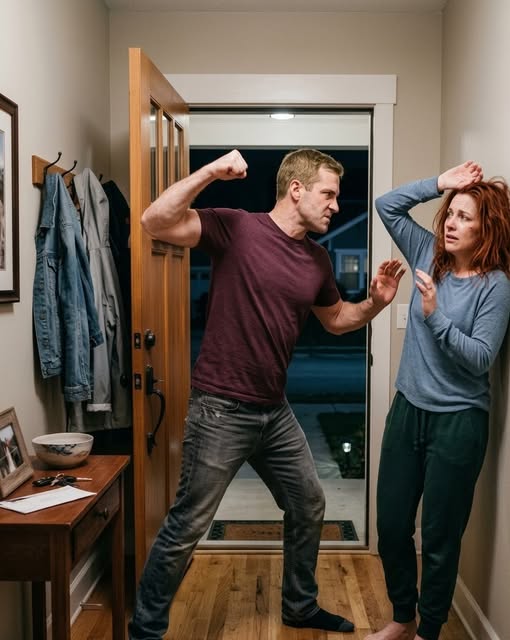
The night Daniel Voss nearly killed my daughter, he made one terrible mistake. He thought the quiet old farmer standing in front of him had nothing left to lose. What he didn’t know was that I had spent twenty years keeping a secret that could destroy everything his powerful family had built.
I stood in front of the closet for a long moment, staring at that old baseball bat.
My wife, Margaret, had bought it at a little sporting goods store in town when Claire was seven. She had tied a blue ribbon around the handle and told me that every father ought to own something he could use to teach his daughter how to swing.
Claire had never been much good at baseball.
But Margaret had laughed every time the ball rolled past her feet.
Margaret had been dead for eleven years.
And that night, as I held the bat in my hands, I would have given everything I owned to hear her voice one more time.
Instead, I heard Claire moan softly from the bedroom.
I looked toward the hallway.
Then I made a decision.
I wasn’t going to let Daniel Voss turn me into the kind of man he could easily destroy.
Not before I made certain he answered for what he’d done.
I carried the bat to my truck.
Then I went back inside and made two telephone calls.
The first was to Sheriff Thomas Bennett.
The second was to a man I hadn’t spoken to in almost eighteen years.
His name was Arthur Caldwell.
And once upon a time, before I became the old farmer everyone ignored, Arthur and I had worked together on the most dangerous investigation Hartwell County had ever seen.
By 5:43 that morning, I was driving toward Daniel Voss’s house.
The sky was still dark.
My headlights swept across empty fields and quiet country roads.
The bat lay beside me on the passenger seat.
And inside my jacket was a small black notebook that had remained locked in my bedroom drawer for nearly two decades.
Daniel lived in a three-story colonial mansion at the edge of town.
White columns. Iron gates. Security cameras.
The kind of place built to remind ordinary people they weren’t welcome.
I parked directly in front of his entrance.
Then I walked up the stone steps and rang the bell.
It took almost two minutes before the door opened.
Daniel stood there wearing silk pajamas, holding a cup of coffee.
His expression shifted from annoyance to amusement.
“Well, well,” he said. “Look who finally showed up.”
His eyes dropped to the bat in my right hand.
He laughed.
“What are you going to do, old man? Hit me?”
I didn’t answer.
Instead, I asked him one question.
“Daniel, do you know what happened to the last man who told me my family was worthless?”
His smile widened.
“Is that supposed to scare me?”
“No.”
I looked him straight in the eyes.
“It’s supposed to remind you that you don’t know who you’re dealing with.”
He snorted.
“You’re a farmer, Sam. You grow hay. That’s it.”
I leaned the bat against the porch railing.
Then I reached inside my jacket and removed the black notebook.
“Tell me something, Daniel. Does your father still keep his private business records in the basement office on Willow Street?”
His coffee cup stopped halfway to his mouth.
For the first time since I’d arrived, his expression changed.
“How do you know about that office?”
I said nothing.
“Answer me.”
I opened the notebook.
“May 14, 2007. Seven hundred thousand dollars transferred through a shell company called Hartwell Agricultural Holdings.”
Daniel’s face drained of color.
I turned a page.
“September 3, 2008. A county property assessment altered without authorization.”
Another page.
“February 19, 2009. A witness paid twenty-five thousand dollars to change his testimony.”
Daniel took a step backward.
“Where did you get that?”
I closed the notebook.
“Your father never told you about me, did he?”
He stared.
“No,” he whispered.
“Of course he didn’t.”
I stepped closer.
“Ask Warren Voss what happened the last time he tried to buy a man’s silence.”
Daniel reached for his phone.
I let him.
Because I wanted his father to know I was coming.
Twenty minutes later, a black Mercedes pulled into the driveway.
Warren Voss climbed out wearing an expensive charcoal suit.
He was seventy-one years old, with silver hair and the same cold eyes I remembered from another lifetime.
Behind him came a younger man carrying a leather briefcase.
Warren took one look at me.
And stopped walking.
“Samuel?”
I watched recognition spread across his face.
“Morning, Warren.”
His gaze shifted to the baseball bat resting against the railing.
Then to the notebook in my hand.
“What are you doing here?”
“Your son hurt my daughter.”
Warren looked toward Daniel.
Daniel immediately began talking.
“Dad, she’s lying. She attacked me first. I barely touched her.”
I felt my fists tighten.
But I kept my voice level.
“Claire has three fractured ribs, a concussion, and injuries that a doctor has documented. Sheriff Bennett has already been contacted.”
Warren’s jaw hardened.
Then he turned back to me.
“I’m sorry about what happened between the young people. We can discuss compensation.”
I almost smiled.
“Compensation?”
He lowered his voice.
“Samuel, don’t make this difficult.”
“Your son left my daughter barefoot and bleeding in the road.”
Warren glanced at the lawyer beside him.
“We can arrange a private settlement.”
I opened the notebook again.
“Just like you arranged a private settlement for Deputy Michael Torres?”
Everything went silent.
Daniel looked confused.
The lawyer stopped moving.
Warren’s eyes narrowed.
“That was a long time ago.”
“Some things don’t get old.”
“Those records were supposed to be destroyed.”
I nodded.
“That’s what you paid people to believe.”
His expression turned dangerous.
“Be careful, Samuel.”
I met his stare.
“For twenty years, I’ve been careful.”
Then I looked at Daniel.
“That’s over.”
I should explain something about the man I used to be.
Before I inherited my father’s farm, I worked as a financial investigator for the state.
I wasn’t famous.
I wasn’t wealthy.
But I was very good at finding things powerful people wanted hidden.
In 2006, Arthur Caldwell and I began investigating corruption involving county development contracts, fraudulent land purchases, and illegal payments to public officials.
Warren Voss was one of our main suspects.
The evidence led through six companies, three banks, and a dozen public offices.
We were close to bringing the case before a grand jury when our principal witness, Deputy Michael Torres, disappeared.
Two days later, his truck was found at the bottom of a ravine.
The death was ruled an accident.
I never believed it.
Neither did Arthur.
But the investigation collapsed when several crucial documents vanished from the evidence archive.
Shortly afterward, my wife became seriously ill.
I resigned to care for her.
For years, people assumed I had simply given up.
What they didn’t know was that before leaving my job, I’d preserved copies of records I was legally permitted to retain, along with my personal investigative notes.
I never had enough admissible evidence to prove who had killed Torres or why.
And I wasn’t going to invent an answer just because I suspected one.
But I knew where the missing money had gone.
I knew which companies had benefited.
And I knew the people Warren Voss had spent twenty years protecting.
When Claire married Daniel, I recognized the name immediately.
I tried to warn her.
But she was in love.
And Daniel was clever enough to make every warning sound like an old man’s prejudice.
So I watched.
I waited.
And I prayed I was wrong.
I wasn’t.
Warren stepped closer to me.
“Whatever happened years ago has nothing to do with my son.”
“It has everything to do with the kind of man you raised.”
“You think you’re going to destroy my family?”
“No, Warren.”
I looked toward the house.
“Your family has done that all by itself.”
Then I heard tires crunching across the driveway.
Two sheriff’s vehicles pulled up behind my truck.
Daniel spun around.
“What the hell is this?”
Sheriff Bennett stepped out of the first vehicle.
He wasn’t alone.
A female deputy followed him, carrying a folder.
Bennett walked toward the porch.
“Daniel Voss?”
Daniel straightened.
“Yes?”
“We need to speak with you regarding an assault reported earlier this morning.”
Warren immediately interrupted.
“My attorney is here. You have no reason to question my son without—”
“Mr. Voss,” Bennett said evenly, “your attorney is welcome to advise him. But I suggest you stop speaking for him.”
Daniel glared at me.
“You called the cops?”
I looked him in the eye.
“I called them before I left the farm.”
His expression twisted.
“You old bastard.”
He lunged forward.
Bennett stepped between us.
“That’s enough.”
Daniel pointed at the bat.
“He threatened me with that!”
The sheriff looked at the bat.
Then at me.
“Sam?”
“I brought it here. I haven’t touched him with it or threatened to strike him.”
Bennett’s face showed no amusement.
“Leave it where it is. We’ll document what happened.”
I nodded.
Daniel kept shouting.
“My wife is unstable! She’s been making things up for months!”
The female deputy opened her folder.
“Mr. Voss, we’ve already spoken with Dr. Ellis. Your wife has injuries that require further hospital examination. We’re also aware of several messages you sent her last night.”
Daniel stopped.
“What messages?”
The deputy looked down.
“At 1:36 a.m., you wrote, ‘If you come back here, I’ll finish what I started.'”
Warren’s lawyer slowly closed his briefcase.
Daniel swallowed.
“That was taken out of context.”
“Then you’ll have an opportunity to explain it.”
The sheriff asked Daniel to come to the station voluntarily for questioning.
Daniel refused.
And that’s when he made his second terrible mistake.
He grabbed the deputy’s arm and tried to shove past her.
Bennett immediately intervened.
Within seconds, Daniel was restrained and placed under arrest for his conduct toward the deputy.
I watched him being led toward the patrol car.
He looked over his shoulder.
“You’ll regret this, Sam!”
I said nothing.
Because for the first time in three years, Daniel wasn’t the one deciding what happened next.
By noon, Claire was at Hartwell Regional Hospital.
Further examinations revealed that her injuries were more serious than we’d first understood.
She had three fractured ribs, significant bruising, and a concussion that required observation.
I sat beside her bed while a nurse adjusted her intravenous line.
Claire stared at the ceiling.
For almost an hour, she barely spoke.
Then she whispered something that broke my heart.
“Daddy, I think I deserved some of it.”
I turned toward her.
“Why would you say that?”
She started crying.
“Because I kept making him angry.”
I took her hand.
“Claire, listen to me.”
She looked at me with her one uninjured eye.
“No argument gives a husband the right to beat his wife.”
Her mouth trembled.
“He said nobody would ever want me after him.”
I squeezed her fingers.
“He’s wrong.”
She shook her head.
“He said you’d be embarrassed.”
“Sweetheart, the only thing I’m embarrassed about is that I didn’t see how badly you were hurting.”
Then she said something I wasn’t prepared to hear.
“It wasn’t the first time.”
The room seemed to tilt.
“What?”
She looked away.
“He hit me six months after the wedding.”
I couldn’t speak.
“Then again on our anniversary. He said I embarrassed him at dinner because I disagreed with his father.”
She pulled the blanket tighter around herself.
“Sometimes he locked me in the guest room. Sometimes he took my phone. He told me that if I ever tried to leave, he’d ruin your farm.”
I stared at her.
My daughter had been suffering for years.
And I’d been worried about saying the wrong thing.
She began crying harder.
“I wanted to tell you, Daddy. I really did.”
I leaned forward and kissed her forehead.
“You’ve told me now.”
Then I made her a promise.
“You will never have to go back to that house.”
Three days later, Arthur Caldwell arrived at my farm.
He was seventy-four now.
Retired.
His hair had turned completely white.
But his eyes were as sharp as they’d been when we’d worked together.
We sat at my kitchen table drinking black coffee.
He opened the notebook.
“You kept everything.”
“Everything I was allowed to keep.”
Arthur turned several pages.
Then he stopped.
“Sam, do you know what this means?”
I nodded.
“It means we may finally have enough to reopen some old questions.”
Arthur looked toward the hallway where Claire was resting.
“Your daughter comes first.”
“She always has.”
He closed the notebook.
“Then we do this properly. No threats. No deals behind closed doors. We give the investigators what they need and let the evidence speak.”
I agreed.
That afternoon, Arthur contacted the state attorney general’s office.
Not long afterward, investigators began reviewing the financial records.
Meanwhile, Claire filed for a protective order.
A local attorney named Rebecca Shaw agreed to represent her.
And slowly, in the quiet safety of the farm, my daughter began telling the truth.
She remembered dates.
She identified witnesses.
She showed us photographs she’d secretly saved.
She provided copies of threatening messages Daniel had sent throughout their marriage.
One message was particularly disturbing.
It had been sent the night before she escaped.
Your father owns nothing I can’t take.
When Rebecca read it, she looked up.
“Claire, why was Daniel threatening your father’s property?”
Claire hesitated.
Then she said something that changed everything.
“Because Dad refused to sell him the south pasture.”
I felt Arthur turn toward me.
“The south pasture?”
I nodded slowly.
Warren had offered to buy that land twice.
Both times I’d refused.
Claire continued.
“Daniel said his father needed it for a development project. He said they could make millions if they connected it to the new highway.”
Arthur’s expression changed.
“Sam, what’s under that pasture?”
“Nothing but clay and limestone.”
He shook his head.
“That’s not what I meant.”
And suddenly I remembered something.
An old survey.
A narrow strip of land.
A proposed access road that had been rejected years earlier.
I stood up.
“Arthur, I think I know why Warren has been trying to buy my farm.”
The original development plans were still stored in the county archives.
Arthur and I spent the next morning reviewing them.
What we discovered made my blood run cold.
The proposed highway extension would connect a new commercial district to the interstate.
Almost every parcel along the route was owned by companies connected to Warren Voss.
Except one.
Mine.
Without access through my south pasture, the development would require an expensive alternative route.
With my land, it would become enormously profitable.
But there was something worse.
A more recent planning document included a signature authorizing a land transfer.
My signature.
Except I had never signed it.
Someone had forged my name.
And the company that submitted the document was owned by Daniel Voss.
Arthur photographed the record.
Then he looked at me.
“Now we have something current.”
I felt sick.
For years, I’d thought Warren wanted my land simply because he was greedy.
Now it appeared Daniel had been helping his father try to take it.
The investigation was no longer just about a decades-old scandal.
There was a possible active fraud involving public records.
And my daughter had been living in the home of one of the men connected to it.
Two weeks later, Warren Voss came to my farm.
He arrived alone.
I was repairing a fence when his Mercedes pulled onto the gravel road.
I watched him walk toward me.
His expensive shoes sank into the damp earth.
“Samuel.”
“Warren.”
He glanced around the property.
“I see you still have the place.”
“That’s right.”
He took a deep breath.
“We need to talk.”
“I’m listening.”
“Your daughter is making very serious accusations.”
“She’s telling the truth.”
He stared at the fence.
“Daniel has a temper. I’ve spoken to him.”
I laid down my hammer.
“Your son nearly killed my daughter.”
Warren didn’t answer.
Then he reached into his jacket.
For a moment, I thought he was reaching for a weapon.
Instead, he pulled out an envelope.
He held it toward me.
“Two million dollars.”
I looked at the envelope.
“What?”
“Two million. Cash settlement. Your daughter withdraws her complaint. You sell the pasture. Everyone walks away.”
I stared at him.
Warren continued.
“Samuel, you’re an old man. Your daughter needs a fresh start. Think about what that money could do for both of you.”
I looked toward the farmhouse.
I thought about Margaret.
About Claire learning to ride her bicycle down that gravel lane.
About the night she arrived on my porch bleeding.
Then I looked back at Warren.
“You know what your problem is?”
He frowned.
“What?”
“You’ve spent your entire life believing everything has a price.”
His eyes hardened.
“Everybody has a price.”
I shook my head.
“Not my daughter.”
Warren’s expression changed.
“You’re making a mistake.”
“No.”
I stepped closer.
“I made my mistake three years ago when I shook your son’s hand and welcomed him into my family.”
I pointed toward his car.
“Leave.”
For several seconds, he didn’t move.
Then he returned to the Mercedes and drove away.
What Warren didn’t know was that my security camera had recorded his entire visit.
And after speaking with our attorney, I preserved the footage for the investigators.
The next several months were difficult.
Daniel’s lawyers challenged Claire’s allegations.
Warren’s business associates insisted the financial records were misunderstandings.
Some people in town defended the Voss family.
Others quietly began telling investigators stories they’d been too frightened to share before.
A former bookkeeper produced records supporting some of the suspicious payments.
A retired county clerk identified irregularities in property filings.
And the handwriting expert retained by investigators concluded that the disputed land-transfer signature was not mine.
The case against Daniel grew stronger as Claire’s medical records, messages, photographs, and testimony were examined.
He was ultimately charged with multiple offenses arising from his abuse of Claire.
Separate investigations proceeded into the suspected land fraud and financial misconduct.
Warren resigned from the county development board while those matters were under investigation.
I didn’t celebrate.
There was nothing joyful about watching a family collapse.
I simply wanted my daughter safe.
And that was what mattered.
Eight months after the night Claire appeared on my porch, Daniel stood before a judge.
I sat in the second row of the courtroom.
Claire sat beside Rebecca.
Her bruises had healed.
But she still sometimes woke screaming in the middle of the night.
She still flinched when a door slammed.
She still apologized when she spilled a glass of water.
Healing, I learned, didn’t happen just because the danger was gone.
It took patience.
And time.
And the quiet reassurance that she no longer had to earn the right to feel safe.
Daniel eventually entered a guilty plea to domestic violence offenses as part of an agreement approved by the court.
He received a prison sentence, and the protective order remained in place.
When the judge allowed Claire to speak, she stood slowly.
Her hands were shaking.
But her voice was steady.
“For three years, my husband told me I was worthless.”
Daniel stared at the table.
“He said nobody would believe me. He told me my father was a nobody.”
Claire paused.
Then she turned toward me.
“My father is a farmer. He wakes up before sunrise. He fixes broken fences. He doesn’t have expensive suits or a powerful family.”
She wiped a tear from her cheek.
“But when I had nowhere else to go, he opened his door.”
The courtroom was silent.
“And he believed me.”
I lowered my head.
Claire faced Daniel again.
“You didn’t destroy me. You just made it harder for me to remember who I was.”
She took a breath.
“But I’m remembering now.”
Then she sat down.
I had never been prouder of anyone in my life.
The investigation into Warren Voss’s business dealings continued beyond Daniel’s sentencing.
Eventually, prosecutors brought charges related to fraudulent property documents and financial transactions.
Some allegations reached trial.
Others were resolved through plea agreements involving different participants.
The old death of Deputy Michael Torres remained officially unresolved.
I hated that.
Arthur hated it too.
But we had learned, long ago, that suspicion and proof weren’t the same thing.
We gave investigators every legitimate lead we had.
And we left the rest to them.
For the first time in years, I was able to sleep without feeling that I had abandoned unfinished business.
That autumn, Claire asked me to teach her how to repair the fence along the south pasture.
I laughed.
“Sweetheart, you used to hate farm chores.”
She smiled.
“Maybe I’ve changed.”
We spent the afternoon replacing broken boards.
The sky was clear.
The air smelled of cut grass and fresh soil.
At one point, she stopped working and looked toward the farmhouse.
“Daddy?”
“Yes?”
“Can I ask you something?”
“Anything.”
“Why didn’t you hit him?”
I looked at her.
She glanced down.
“The morning you went to his house. I saw the bat missing from the closet later.”
I took off my work gloves.
For a long moment, I said nothing.
Then I answered.
“Because when I saw what he’d done to you, I wanted to hurt him.”
Claire’s eyes filled with tears.
“I know.”
“But I also knew that if I let my anger decide what happened next, he might have found a way to make me the criminal.”
She nodded.
“I didn’t want you to lose your home. Or your freedom. Because of me.”
I stepped closer.
“Claire, none of this happened because of you.”
She looked at me.
“His choices were his. The responsibility belongs to him.”
She wrapped her arms around me.
We stood there in the afternoon sunlight, holding each other beside the fence.
Then she whispered, “I miss Mom.”
I closed my eyes.
“So do I, sweetheart.”
A few weeks later, I found Claire in the barn.
She was holding that old baseball bat.
The blue ribbon Margaret had tied around the handle was faded almost white.
Claire ran her fingers across it.
“Do you remember when Mom bought this?”
I smiled.
“You hit the ball exactly once.”
She laughed.
“Twice.”
“Once.”
“Twice, Daddy.”
I shook my head.
“Your mother always counted the second one.”
Claire looked at the bat for a long moment.
Then she handed it to me.
“Do you think Mom would be proud of us?”
My throat tightened.
“I think she’d be proud of you.”
Claire shook her head.
“Both of us.”
I couldn’t answer.
So I pulled her into a hug.
Outside, the late afternoon sun settled over the fields.
The same fields I’d worked for decades.
The same land Warren Voss had wanted to steal.
The same home where my daughter had learned to walk, where Margaret had planted roses, and where three generations of our family had buried their worries in hard work.
For twenty years, people in Hartwell County had called me quiet.
Poor.
Unimportant.
A nobody.
Maybe some of them still did.
But I no longer cared.
Because I had finally understood something that wealth and power could never teach Daniel Voss.
A man’s worth isn’t measured by the size of his house, the money in his bank account, or the number of people afraid to challenge him.
It’s measured by what he protects when protecting it costs him something.
And sometimes the strongest thing a father can do isn’t swing the bat he’s carrying.
It’s put it down.
Stand beside his daughter.
And make sure the truth is heard.
That winter, Claire moved into a small cottage at the edge of my property.
She planted yellow flowers outside the kitchen window.
She adopted a rescue dog.
And one morning, I heard her laughing on the porch for the first time in nearly four years.
I was standing beside my truck when the sound reached me.
I stopped.
Closed my eyes.
And listened.
Because after everything we’d survived, that laughter was worth more than every dollar Warren Voss had ever offered me.
My name is Samuel Reed.
I’m seventy years old.
I cut hay before sunrise.
I repair fences after storms.
And I still keep my opinions mostly to myself.
But there’s one thing I no longer stay silent about.
Nobody gets to tell my daughter she’s worthless.
Not her husband.
Not his powerful father.
Not anyone.
And if the whole world ever turns its back on her again, she knows exactly where to go.
Because the porch light at my farmhouse will always be on.
THE END.