
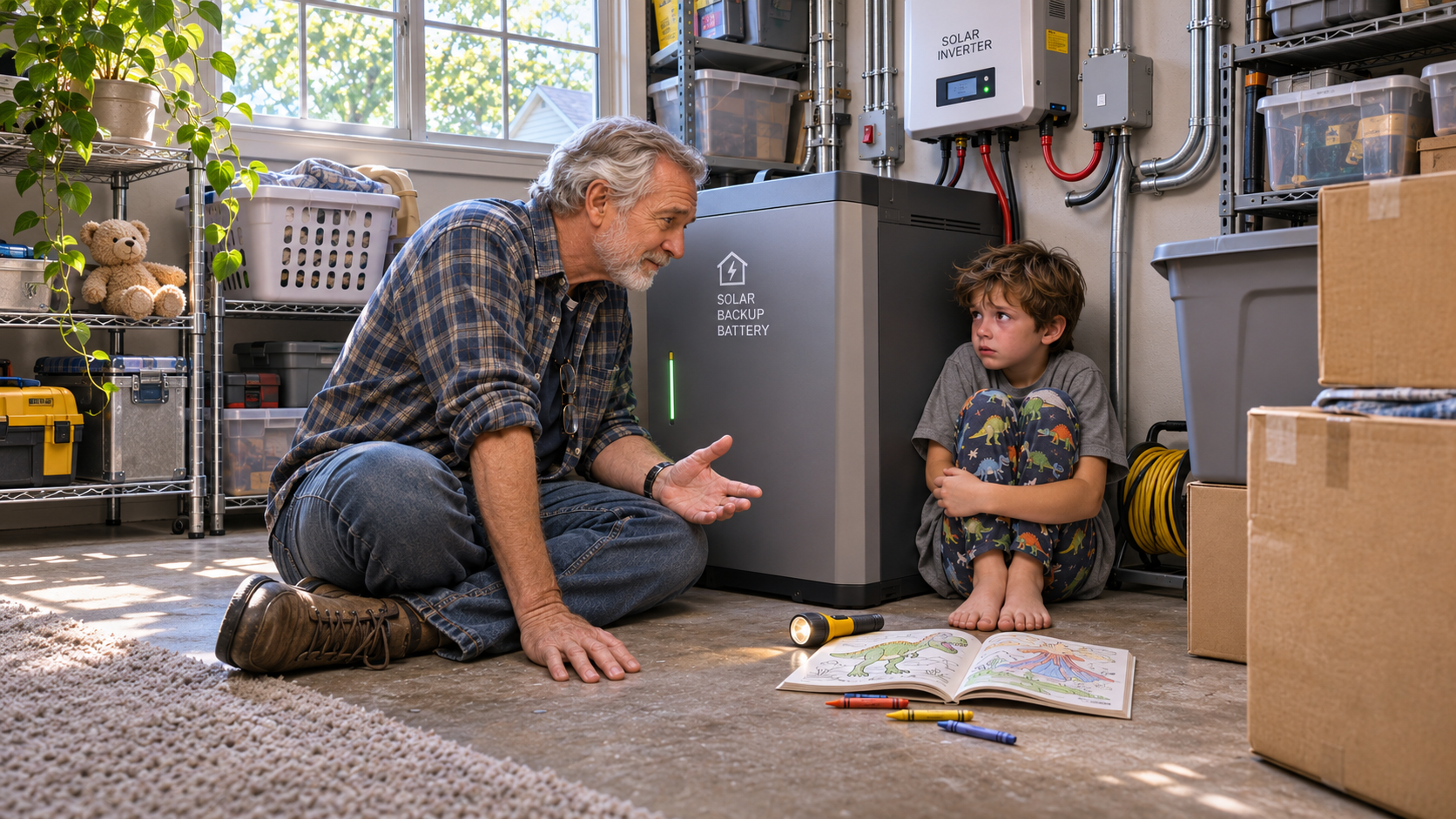
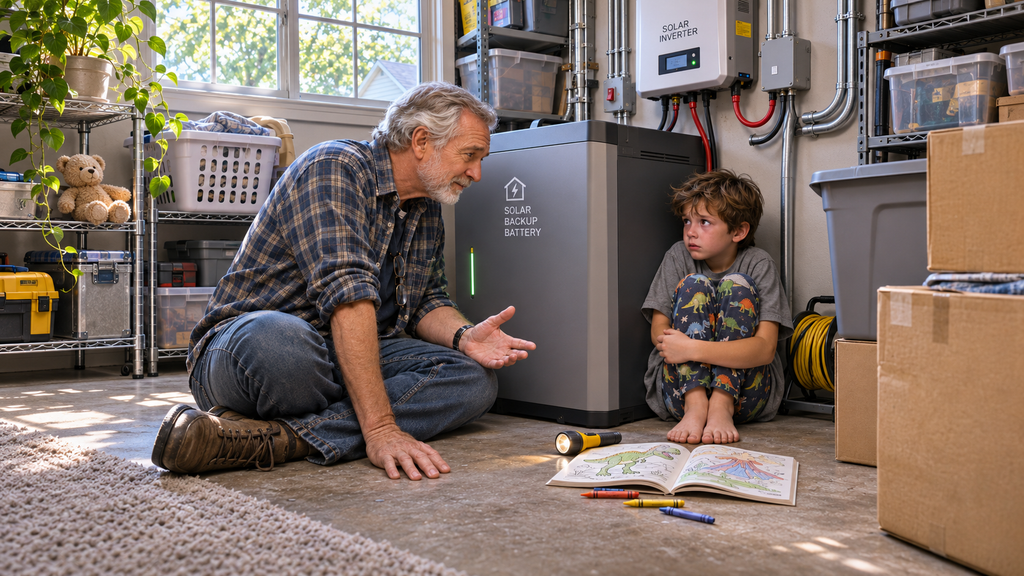
“Did you know I was here?” I swallowed. “No. I thought you were living with your other grandparents in California.” Noah shook his head. “I don’t know anyone in California.” I felt something cold settle in my chest.
For six years, I had believed my grandson was being raised by Daniel’s parents. I had imagined him celebrating birthdays in a comfortable home, attending school, making friends, and growing up surrounded by people who loved him.
Meanwhile, he had been living inside a locked utility room in my own house.
And I had paid the electricity bill.
I pulled out a chair and sat beside him.
“Noah, can I ask you something?”
He nodded.
“Have you always lived upstairs?”
“No.”
“When did you come here?”
He thought for a moment.
“When I was little. Mama brought me here after we moved from the other house.”
“Do you remember where that house was?”
He shook his head.
“Ryan said it wasn’t safe for me to go outside.”
“Why did he say that?”
“Because people might take me.”
I looked toward Hector, who was standing near the kitchen entrance.
He had heard enough to understand that this was no ordinary repair call.
I asked Noah another question.
“Does anyone come upstairs to see you?”
“Sometimes Mama.”
“What about Ryan?”
He lowered his eyes.
“Ryan brings food. But he gets mad if I spill anything.”
“Does he ever hurt you?”
Noah’s fingers tightened around the sandwich.
“He says I make everything difficult.”
I carefully placed my hand on the table.
“You haven’t done anything wrong.”
He looked at me as if he wanted to believe it but didn’t know how.
Then he asked something that made my heart ache.
“Can I stay with you if Mama gets mad?”
I didn’t answer immediately.
I wanted to promise him everything.
But I knew that the adults involved had created a situation that would require more than a grandfather’s promise to fix.
“You’re not going to be left alone,” I told him. “I’m going to make sure the right people help us.”
I called emergency services and explained that I had discovered a young child confined in a locked upstairs room.
I told them exactly what I had seen, including the exterior deadbolt, the handwritten rules, the food schedule, and the condition of the room.
I did not accuse anyone of a crime before the facts were established.
I simply told them that a child needed protection.
The dispatcher asked whether Noah was injured.
“I don’t see any obvious injuries,” I said. “But he’s frightened, hungry, and clearly not comfortable being downstairs.”
An officer arrived first, followed by a child-protection worker.
A paramedic examined Noah.
He was underweight for his age, dehydrated, and had several small bruises on his legs. The paramedic said he needed a proper medical examination.
Noah became frightened when the strangers entered.
I sat beside him.
“This lady is here to help you,” I whispered. “You can tell her anything. Nobody is going to punish you for telling the truth.”
The child-protection worker introduced herself as Melissa.
She spoke gently and asked Noah whether he would be comfortable talking to her.
He looked at me.
I nodded.
He agreed.
While Melissa spoke with him, the officer inspected the upstairs room.
I followed at a distance.
The longer I stood there, the more details I noticed.
The refrigerator contained a few juice boxes, bread, peanut butter, and several small containers of food.
There was no proper bed.
Only a folded moving blanket.
A plastic bucket sat behind the storage boxes.
The window had been covered from the inside with thick black paper.
The room had no proper ventilation.
On the wall, someone had taped a calendar.
There were marks beside certain dates.
Six months.
At least six months of handwritten marks.
I stared at them.
“Was he here all that time?” I asked.
Melissa had come upstairs.
“We’re still trying to establish the timeline,” she replied. “But this appears to have been a prolonged arrangement.”
I looked at the outside deadbolt.
“Who installed this?”
The officer photographed it.
“We’ll investigate.”
Then Hector approached me.
“Frank, there’s something else.”
“What?”
He pointed toward the solar backup unit.
“When I moved the storage boxes to access the inverter, I noticed something strange. There are scratches on the floor behind the battery housing.”
He showed me.
Several marks ran along the concrete.
They weren’t ordinary scratches from moving equipment.
They looked like someone had repeatedly dragged something across the floor.
Beside them was a small plastic container.
Inside were photographs.
I picked up the first one.
It showed Noah sitting on a playground swing.
He looked about three years old.
In the second photograph, he was holding a birthday cake.
The third showed Diane standing beside him.
But there was something written on the back.
Noah — first day at home.
The date was six years earlier.
I turned the photograph over again.
The handwriting was not Diane’s.
It belonged to my late wife, Margaret.
My hands began to tremble.
Margaret had been dead for almost seven years.
I remembered her telling me shortly before she passed that she had something important to discuss about Diane.
She had wanted me to listen carefully.
I had been busy managing her medical appointments and working through the paperwork after her diagnosis.
She never got the chance to finish that conversation.
I placed the photograph back inside the container.
Then I noticed a folded piece of paper underneath it.
It was a handwritten note.
Frank, if you ever find these photographs, please don’t believe everything Diane tells you. There is something about Noah that you need to know.
The note ended there.
No signature.
No explanation.
Just those words.
I read them twice.
Then a third time.
I suddenly remembered something else.
Six years earlier, Diane had visited me with a folder of documents.
She said Daniel’s parents wanted to take Noah to California.
She had cried.
She said she was doing what was best for her child.
I remembered signing a paper she had placed in front of me.
At the time, I thought it was a simple acknowledgment that I had been informed of the arrangement.
I had never asked to see the complete document.
Now I wondered what I had actually signed.
I called my attorney, Robert Hayes.
He had handled the original deed transfer and several family estate matters.
“Robert, I need you to look into something immediately.”
“What happened?”
I explained what I had discovered.
He remained silent for several seconds.
“Frank, do not confront Diane until we understand the legal situation. Preserve everything. Don’t discard anything in that house.”
“I’m not interested in protecting anyone who hurt that boy.”
“I understand. But we need to protect Noah first.”
He asked me to send photographs of the documents.
Before I could do that, my phone rang.
Diane.
I stared at her name.
Then I answered.
“Dad?”
Her voice sounded cheerful.
“Hey! How’s everything?”
“Where are you?”
“In Maui. Why?”
“Your solar system stopped working.”
“Oh, no. Did you get someone to fix it?”
“Yes.”
“Great. Thanks, Dad.”
She paused.
“Is everything okay?”
I looked toward the upstairs staircase.
“No, Diane. Everything isn’t okay.”
Her voice changed.
“What do you mean?”
“There’s a child in your house.”
Silence.
Then she laughed nervously.
“Dad, what are you talking about?”
“A six-year-old boy named Noah.”
Another silence.
Then she said something I will never forget.
“You weren’t supposed to go upstairs.”
I closed my eyes.
There it was.
Not confusion.
Not surprise.
Recognition.
“Diane,” I said quietly, “why is my grandson living behind a battery system?”
She started crying.
“Dad, please. You don’t understand.”
“Then explain it.”
“I can explain everything when I get home.”
“No. You can start now.”
“Ryan said you wouldn’t understand.”
I felt my stomach tighten.
“Ryan?”
She lowered her voice.
“Please don’t let anyone take him.”
I looked through the kitchen doorway.
Noah was sitting beside Melissa, holding a glass of water.
“Diane, someone already took six years from him.”
She began sobbing.
Then the call disconnected.
I stood there holding my phone.
A few seconds later, another message arrived.
It was from Ryan.
Frank, whatever Diane told you, don’t believe it. Noah isn’t who you think he is.
I read it once.
Then again.
And for the first time that day, I wondered whether the secret was even bigger than I had imagined.
PART 3 — THE TRUTH BEHIND THE LOCKED ROOM
Robert arrived at the house shortly after noon.
He was carrying a leather briefcase and wearing the serious expression he usually reserved for difficult legal situations.
He examined the photographs, the notebook, the food schedule, and the letters.
Then he asked me to sit down.
“Frank, do you remember signing a document six years ago concerning Noah?”
“Yes. Diane told me it was related to his grandparents taking him to California.”
“Did you keep a copy?”
“No.”
Robert opened his briefcase.
“I found something in our archived records.”
He removed a folder.
Inside was a photocopy of the document I had signed.
At first glance, it looked ordinary.
But when I read the heading, my hands went cold.
Temporary Caregiver Consent and Financial Guardianship Authorization.
I looked up.
“What is this?”
Robert adjusted his glasses.
“This document authorized Diane to arrange temporary care for Noah through a third party. It also authorized certain financial arrangements involving money held for his benefit.”
“What money?”
Robert turned another page.
“There was a small life insurance policy from Daniel. It was intended to support Noah.”
I remembered Daniel.
He had been a good man.
Quiet, hardworking, and devoted to Diane.
He died in a car accident when Noah was still an infant.
His life insurance had been approximately $180,000.
I had assumed the money had been placed in an account for Noah.
“Where did it go?”
Robert examined the paperwork.
“The documents show that funds were transferred into an account controlled by a company associated with Ryan.”
I stared at him.
“How much?”
“Most of it.”
“Why?”
“That is something we need to investigate.”
I stood up.
“Robert, tell me what you think happened.”
He took a breath.
“I think Diane may have used the arrangement with Daniel’s parents as an explanation for removing Noah from your life. But the records suggest the child never went to California.”
I looked at the sealed birthday cards.
Six envelopes.
Six birthdays.
I had sent every one of them.
And every single one had been intercepted.
Robert continued.
“There is another issue. Your daughter may have been receiving financial assistance from a trust established by Margaret.”
My late wife.
I looked at him.
“What trust?”
Robert opened another folder.
“Margaret created a small family trust shortly before her death. She wanted it to benefit Noah when he reached adulthood.”
I felt my knees weaken.
“How much?”
“The original value was approximately $420,000, subject to the investment records and subsequent transactions.”
I stared at the papers.
Four hundred and twenty thousand dollars.
My wife had quietly created a future for her grandson.
And someone might have been using it.
“Did Diane know?”
“Yes. She was listed as the temporary administrator under certain conditions. But the trust contained restrictions.”
Robert pointed to a paragraph.
“Money was supposed to be used only for Noah’s education, medical care, housing, and other direct needs.”
I looked toward the stairs.
Housing.
The boy had been living in a utility room.
I felt anger rise inside me, but Robert raised his hand.
“Frank, we need to be careful. We don’t know whether all the money was misused. We need bank records and a complete accounting.”
I nodded.
“Then get them.”
He made several calls.
One was to the bank.
Another was to a forensic accountant.
A third was to a family-law attorney who specialized in child welfare cases.
Meanwhile, Melissa informed me that Noah would be taken for a medical evaluation and placed somewhere safe while the investigation continued.
I asked whether he could stay with me.
She explained that the authorities needed to complete an initial assessment and determine the safest arrangement.
I understood.
I hated it, but I understood.
Before Noah left, I knelt beside him.
“I’m going to see you again.”
He looked frightened.
“Are you going away too?”
“No.”
“Promise?”
I placed my hand over his small fingers.
“I promise I will keep showing up.”
He looked at me for a long moment.
Then he whispered something.
“Can I take the letters?”
I picked up the six envelopes.
“Every one of them.”
He placed them carefully inside his backpack.
Then he walked out holding Melissa’s hand.
I watched the car disappear down the street.
For the first time in my life, my house felt completely empty.
That evening, I returned to the upstairs room.
I wanted to understand how someone could live there for months without anyone noticing.
I examined the refrigerator again.
Behind it was a narrow cabinet.
Inside were children’s books, old clothes, a broken toy car, and a stack of school worksheets.
One worksheet had a teacher’s name.
Mrs. Anderson — Cedar Grove Elementary.
The worksheet was dated three years earlier.
That meant Noah had attended school at some point.
But there were no recent papers.
I called the school.
They could not share information without the appropriate authorization, but after I explained the child-protection investigation, they directed me to the authorities.
The following morning, Melissa called.
She had an update.
“Noah is medically stable,” she said. “He’s receiving care and will be interviewed by a trained specialist. He’s frightened, but he’s communicating.”
“Did he tell you anything else?”
“Yes. He said he used to attend school. He also described a woman who sometimes visited him.”
“Who?”
“He called her Grandma Linda.”
I frowned.
Daniel’s mother was named Linda.
But Diane had told me Linda lived in California.
“Did he say she came to the house?”
“Yes. He said she visited several times, brought books, and told him to keep a secret.”
My heart sank.
I called Robert immediately.
“Find Daniel’s parents.”
He did.
By the afternoon, he had located an address in Sacramento.
We called the number listed in the old records.
A woman answered.
“Hello?”
“Is this Linda Carter?”
“Yes.”
“My name is Frank. I’m Noah’s grandfather.”
There was a sharp intake of breath.
Then silence.
Finally, she whispered:
“Frank?”
“Yes.”
“Oh, my God.”
I gripped the phone.
“Linda, where is Noah?”
She began crying.
“Is he alive?”
The question nearly stopped my heart.
“Yes. He’s alive. He’s safe right now.”
She sobbed.
“Thank God.”
I waited until she could speak.
Then I asked the question.
“Why did Diane tell me you were raising him in California?”
Linda went quiet.
“Because she asked me to.”
“Did you ever have Noah?”
“No. I begged her to let me take him. Daniel was my only son. I wanted to raise my grandson.”
I sat down.
“What happened?”
Linda explained that after Daniel died, Diane had become overwhelmed.
She had struggled financially and emotionally.
Linda offered to help.
She offered to take Noah temporarily.
But Diane refused.
Instead, she asked Linda to tell people that Noah was living with her.
At first, Linda thought it was simply a private family arrangement.
Then Diane began asking her to confirm the story whenever Frank called.
Linda admitted she had agreed because she believed it was temporary.
She had also visited Noah several times when Diane allowed it.
But after a disagreement with Ryan, she was told not to return.
“Why didn’t you contact me?” I asked.
“I tried.”
“When?”
“Three years ago. I called your old number. Diane answered and told me you were sick and didn’t want to speak to anyone.”
I felt sick.
“That’s not true.”
“I know that now.”
She began crying again.
“Frank, I have something you need to know. Daniel left a letter before he died.”
“What letter?”
“He wrote it when he was in the hospital after the accident. He wanted it given to Noah when he was old enough.”
“Where is it?”
“I still have it.”
“Can you send it?”
“I’d rather bring it myself.”
I agreed.
Before ending the call, Linda said something else.
“Frank, I don’t think Diane was the only person who knew where Noah was.”
I froze.
“What do you mean?”
“Ryan’s mother knew.”
I closed my eyes.
The family secret was becoming darker by the hour.
The next morning, Robert’s forensic accountant called.
He had reviewed the preliminary records.
The money from Daniel’s insurance policy had been moved through several accounts.
Some had gone toward household expenses.
Some had gone toward a luxury vehicle.
And several payments had been made to a private account connected to Ryan’s business.
The trust Margaret created had also experienced unusual withdrawals.
But the accountant found something unexpected.
A large payment had been made every month to a private educational-services company.
The company was registered to Ryan’s sister.
There was no evidence that the company had provided educational services to Noah.
Robert said he would refer the records to the appropriate authorities.
I stared at the paperwork.
“Why would they take money meant for a child and hide him in a room?”
Robert answered carefully.
“That’s what the investigation needs to establish. We shouldn’t assume every transaction has the same explanation.”
I agreed.
Then he handed me another document.
It was an email printed from an account that had been included in the records.
The date was four months earlier.
The sender was Ryan.
The recipient was Diane.
The subject line read:
Keeping Frank Away.
I read the message.
Ryan had written:
Your father is becoming curious again. He asked about Noah last week. We need to make sure he doesn’t visit unexpectedly. The utility room should remain locked. If he asks, tell him the California arrangement is still in place.
Diane’s reply was only one sentence.
I know. I can’t keep doing this forever.
Ryan answered:
You don’t have a choice anymore.
I read it again.
There was fear in Diane’s reply.
But fear did not excuse what had happened to Noah.